
Leptogenys avo
- 学名
- Leptogenys avo
- 族
- Ponerini
- 亜科
- Ponerinae
- 命名者
- Rakotonirina & Fisher, 2014
- 分布
- 0 か国で発見
紹介
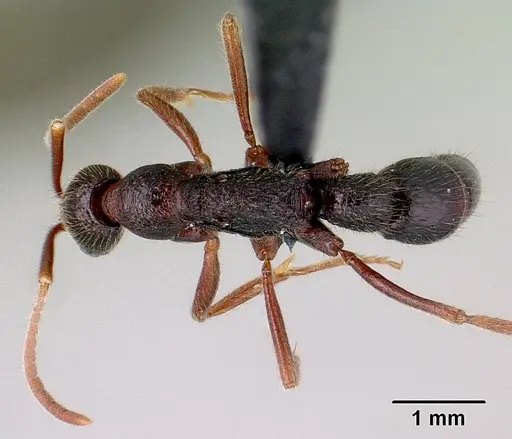
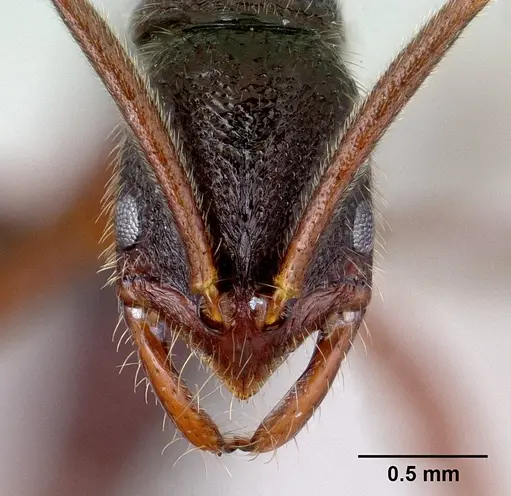
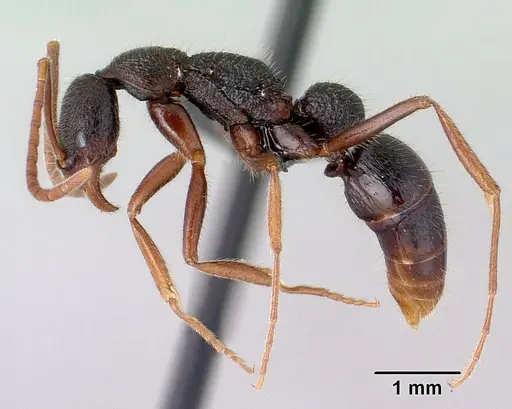
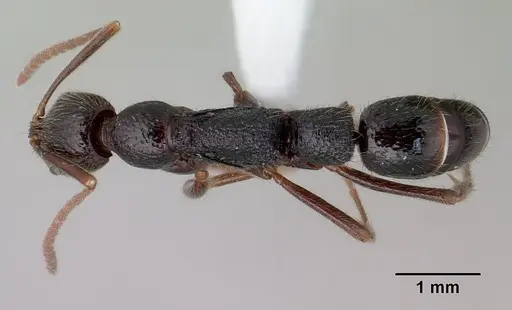
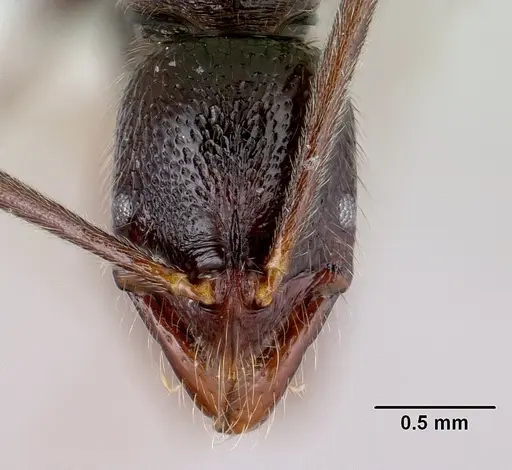
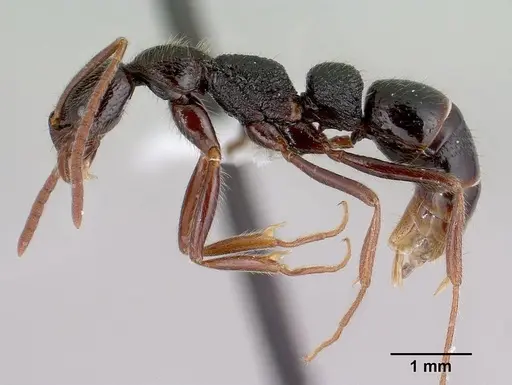
Leptogenys avo is a small predatory ant from the mountains of eastern Madagascar. Workers belong to the toeraniva species group and were formally described in 2014. They have distinctive features including large eyes that slightly protrude from the head, long antennae that extend well past the back of the head, and a propodeum with distinctive transverse striations. They were discovered foraging in the leaf litter of montane rainforest at high altitudes around 1100m. This species is extremely rare in the wild - only two worker specimens have ever been collected, both from separate high-altitude sites in eastern Madagascar.
Quick Summary
- Difficulty: Expert
- Origin & Habitat: Eastern Madagascar, specifically Montagne d'Anjanaharibe (province Toamasina) and Masoala peninsula, at elevations around 1100m in montane rainforest. They live in leaf litter on the forest floor in damp, shaded highland environments. [1]
- Colony Type: Unknown, colony structure has never been documented.
- Size & Growth:
- Queen: Size data unavailable, no queen has been described in scientific literature
- Worker: Approximately 7-8mm, inferred from Leptogenys genus patterns [1]
- Colony: Unknown, only two worker specimens have ever been collected
- Growth: Unknown, no colony development has been documented
- Development: Unknown, no breeding or development data exists for this species (No data exists on egg-to-worker development.)
- Antkeeping:
- Temperature: Cooler conditions recommended, aim for 18-22°C based on their high-altitude montane habitat. Do not overheat.
- Humidity: High humidity required, they come from damp montane rainforest leaf litter. Keep substrate consistently moist but not waterlogged. Provide a humidity gradient with a moist side and slightly drier area for the ants to choose.
- Diapause: Likely yes, as a high-altitude species from Madagascar, they probably experience seasonal temperature changes. Provide a cool period around 12-15°C for 2-3 months during winter.
- Nesting: Based on their leaf litter foraging behavior, they likely nest in small cavities in rotting wood, under stones, or in dense leaf litter. In captivity, a small test tube setup or a soil-based nest with small chambers would work. Keep the nest area humid and dark.
- Behavior: Very little is known about their behavior in captivity. Based on the genus, they are predatory ants that hunt small arthropods. They are likely nocturnal or crepuscular, hunting during cooler parts of the day in their natural habitat. As Ponerinae ants, they possess a stinger but at their small size would be unlikely to penetrate human skin effectively. Escape prevention is important due to their small size, use fine mesh barriers. They are likely stress-sensitive given their extreme rarity in the wild.
- Common Issues: extreme rarity means captive colonies are essentially non-existent, this species has never been kept in captivity, lack of biological data makes proper care extremely difficult to determine, high-altitude origin means they likely have specific temperature requirements that differ from typical tropical ants, stress-sensitive, wild-caught colonies may not adapt to captivity, no information on what foods they accept, must experiment with small live prey
Why This Species Is Extremely Difficult to Keep
Leptogenys avo is one of the least-known ants in the world. Only two worker specimens have ever been collected, both in 2003,and no queen, colony, or biological data has ever been documented. This is not a species you can purchase or keep, it has never been found in sufficient numbers to establish captive colonies, and no ant keeper has ever worked with this species. The information in this caresheet is entirely based on inference from related Leptogenys species and the limited data from the two known specimens. If you are interested in Leptogenys ants, consider looking at more commonly kept species like Leptogenys mutabilis or other Ponerine ants that have established captive populations. [1]
Inferred Care Based on Genus Patterns
Since we have no direct data on L. avo care, we must infer from what we know about the genus Leptogenys and their high-altitude habitat. Leptogenys ants are predatory, hunting spiders and other small arthropods using their long legs and quick movements. They typically live in humid, shaded environments and are more active during cooler parts of the day. Your best approach would be to keep them in a small, humid setup with temperatures between 18-22°C, offering small live prey like springtails, fruit flies, and other tiny arthropods. However, this is entirely speculative, no one has successfully kept this species. [1]
Natural History and Distribution
Leptogenys avo is endemic to eastern Madagascar, found only in two high-altitude locations: Montagne d'Anjanaharibe (province Toamasina, at 1100m elevation) and the Masoala peninsula. Both sites are montane rainforest with high humidity and moderate temperatures. The specimens were collected by sifting through leaf litter, this tells us they are ground-dwelling leaf litter ants, not canopy species. The two known specimens show slight differences in their morphology (eye size, petiole shape, sculpture), suggesting some variation across their limited range. This species was formally described in 2014 as part of a major revision of Malagasy Leptogenys species. [1]
Identification and Morphology
Workers of L. avo can be identified by their large, slightly protruding eyes (larger than the width of their antenna scape), long antennae that extend past the back of the head by about one-third their length, and distinctive propodeal features. The propodeal declivity has transverse striations, and the petiolar node is roughly as tall as it is long when viewed from the side. The body has coarse rugose sculpture with punctures, particularly on the head and mesosoma. These are subtle identification features that distinguish them from other Malagasy Leptogenys in the toeraniva group. [1]
Frequently Asked Questions
Can I keep Leptogenys avo ants?
No, this species has never been kept in captivity. Only two worker specimens have ever been collected in the wild, and no colony has ever been observed. There are no captive-bred colonies available, and we lack basic biological information needed to keep them successfully. Consider other Leptogenys species that have established captive populations instead.
What do Leptogenys avo ants eat?
Unknown for this specific species. Based on genus patterns, Leptogenys ants are predatory and likely hunt small spiders and arthropods. In captivity, you would likely need to offer small live prey like springtails, fruit flies, and other tiny arthropods. Sugar sources are not typically accepted by predatory Leptogenys species.
How big do Leptogenys avo colonies get?
Unknown, colony size has never been documented. Only two individual workers have ever been collected.
What temperature do Leptogenys avo ants need?
Based on their high-altitude montane habitat in Madagascar, they likely prefer cooler temperatures than typical tropical ants. Keep them between 18-22°C. Avoid overheating. This is inferred from their habitat, not confirmed by any study.
Do Leptogenys avo ants need hibernation?
Likely yes, as a high-altitude species from Madagascar, they probably experience seasonal temperature changes. Provide a cooler period around 12-15°C for 2-3 months. However, this is entirely speculative as no biological data exists for this species.
Are Leptogenys avo good for beginners?
No. This species is not only extremely difficult to find (it has never been kept in captivity), but we lack all the basic biological information needed to keep it successfully. It is absolutely not suitable for beginners or even experienced antkeepers. No one has ever kept this species.
Where does Leptogenys avo live in the wild?
Only in eastern Madagascar, specifically in montane rainforest at high elevations (around 1100m) in two locations: Montagne d'Anjanaharibe and the Masoala peninsula. They live in leaf litter on the forest floor in damp, shaded areas.
How were Leptogenys avo ants discovered?
The two known specimens were collected in March 2003 during a biodiversity survey in Madagascar. They were found by sifting through leaf litter in montane rainforest. The species was formally described in 2014 by Rakotonirina and Fisher as part of a revision of Malagasy Leptogenys ants.
Can I find Leptogenys avo in the wild to catch?
Extremely unlikely. Only two specimens have ever been collected despite extensive ant surveys in Madagascar. They are among the rarest ants in the world and have never been found in sufficient numbers to suggest they could be collected. Additionally, they are endemic to protected areas in Madagascar, and collecting would likely be illegal.
Report an Issue
The current care sheet is based fully on literature. See inconsistencies, or something that's incorrect? Please , it will be resolved after review from an admin. Contributing to the blogs tab also helps providing information, to make us be able to further improve the caresheets. Thank you for your support!
References

この飼育シートのライセンスは: CC BY-SA 4.0 .
コミュニティブログ
文献
分布マップを読み込み中...製品情報を読み込み中...