
Leptogenys academica
- 学名
- Leptogenys academica
- 族
- Ponerini
- 亜科
- Ponerinae
- 命名者
- López-Muñoz <i>et al.</i>, 2018
- 分布
- 0 か国で発見
紹介
Leptogenys academica is a small predatory ant species from southern Brazil, recently described in 2018. Workers are estimated at 5-6mm total length based on genus patterns, with an elongated black body and dark reddish-brown legs and antennae. They belong to the crudelis species group and are distinguished by their unique scrobiculate (grooved) metanotal sulcus. This species was discovered on a university campus in Curitiba, Paraná, making it one of the few ant species named for its academic discovery site. Only the worker caste has been described - queens and males remain unknown. These ants inhabit humid subtropical Atlantic forest at about 925m elevation and are primarily ground-dwelling predators .
Quick Summary
- Difficulty: Unknown, limited data available
- Origin & Habitat: Southern Brazil, specifically Curitiba, Paraná state. Found in Atlantic forest (Mata Viva reserve) at 925m elevation within a humid subtropical climate (Cfb Köppen classification). The habitat is secondary forest with emergent Araucaria trees [1][2].
- Colony Type: Unknown, only workers have been collected. No queens or males have been described. The colony structure cannot be determined from available data.
- Size & Growth:
- Queen: Unknown, queen has not been described
- Worker: ~5-6mm, inferred from Leptogenys genus patterns [1]. The mesosoma measures 2.47-2.72mm in length.
- Colony: Unknown, colony size has not been documented
- Growth: Unknown, no development data available
- Development: Unknown, development has not been studied for this species. (No direct measurements exist.)
- Antkeeping:
- Temperature: Based on their subtropical habitat at 925m elevation, aim for moderate temperatures around 20-24°C. Avoid overheating. Room temperature is likely appropriate for this species.
- Humidity: Keep moderately humid. Their native habitat is humid subtropical forest. Provide a moist substrate and ensure the nest does not dry out completely.
- Diapause: Unknown, no data on overwintering requirements. Curitiba experiences cool winters, so they likely tolerate cooler periods, but specific diapause needs are unconfirmed.
- Nesting: Ground-dwelling species. They were collected in pitfall traps, indicating they forage on the forest floor. A naturalistic setup with soil or a plaster nest with moist substrate would be appropriate. Avoid dry conditions.
- Behavior: Leptogenys are predatory ants with smooth, blade-like mandibles used to capture prey. Workers are likely nocturnal or crepuscular foragers based on their large eyes and the pitfall trap collection method. They are probably solitary hunters rather than forming raiding parties. As Ponerine ants, they have a functional stinger for defense. Temperament is likely moderate, they will defend the colony but are not particularly aggressive. Escape prevention should be moderate given their medium-small size.
- Common Issues: limited data available, this is a recently described species with no established care protocols, queen and male unknown, colony founding cannot be practiced without wild-caught queens, predatory diet requirements may be challenging, need constant supply of small live prey, humidity needs are uncertain, must balance moisture with ventilation to prevent mold, no hibernation data, winter care requirements are unknown
Discovery and Naming
Leptogenys academica was formally described in 2018 by López-Muñóz, Villarreal, and Lattke, making it one of the newer ant species available to keepers. The name 'academica' comes from the Latin word for 'academic' or 'academician, ' chosen to honor the fact that these ants were discovered on the Campus Politécnico of the Federal University of Paraná, essentially in someone's backyard at a major university. The type series was collected using pitfall traps placed in a small forest fragment next to the Zoology Department, highlighting how much we still have to learn about ant diversity even in well-studied areas like southern Brazil. Only six workers are known to science, all collected between 2008-2009 [1].
Identification and Morphology
This species belongs to the Leptogenys crudelis-group, a collection of closely related Neotropical ants. Workers are distinctive for having a scrobiculate metanotal sulcus, a grooved structure between the mesonotum and propodeum that sets them apart from other species in the group. They have an elongated head with large eyes placed dorsolaterally, smooth and shiny body surface with scattered punctulae, and a subtriangular petiolar node. Their mandibles are edentate (toothless) but sharp, designed for slicing prey. The body is mostly black with dark ferruginous brown appendages [1].
Natural Habitat
Leptogenys academica is known only from the type locality in Curitiba, Brazil, a city of over 1.8 million people in southern Brazil. They inhabit the Mata Viva forest fragment at 925m elevation within the Atlantic Forest biome. The region has a humid subtropical climate (Cfb classification) with average temperatures ranging from about 15°C in winter to 25°C in summer. The forest is secondary growth with emergent Araucaria angustifolia trees, the iconic Brazilian 'pine' that dominates southern Brazil's highlands. The combination of relatively high elevation and southern latitude suggests this species prefers cooler conditions than many tropical ants [1][2].
Predatory Behavior and Diet
Like all Leptogenys species, L. academica is likely a predatory ant. The genus is known for solitary hunting, workers use their smooth, blade-like mandibles to capture and subdue prey rather than relying on chemical defenses. They probably hunt small invertebrates on the forest floor, including springtails, mites, and other micro-arthropods. The pitfall trap collection method confirms they are ground-active and likely nocturnal or crepuscular, as these traps are most effective at catching ants that move around at night. In captivity, you should offer small live prey such as fruit flies, pinhead crickets, small mealworms, and other tiny invertebrates. Sugar sources may or may not be accepted, offer occasionally but do not rely on them [1][2].
Keeping This Species
Since Leptogenys academica was only described in 2018 and only the worker caste is known, there is no established care protocol for this species. This makes it an advanced species to keep, you will essentially be pioneering captive husbandry for this ant. Based on related Leptogenys species and their subtropical habitat, provide moderate temperatures around 20-24°C, keep the substrate consistently moist but not waterlogged, and offer small live prey regularly. Use a naturalistic setup with soil or a plaster nest that can hold moisture. Escape prevention should be moderate, they are not tiny ants but can still squeeze through small gaps. The biggest challenge is that no one has ever found a queen, so captive breeding is currently impossible unless you catch a founding queen in the wild [1].
Conservation and Collection
This species is known only from a very limited range, a single forest fragment in an urban area. While the area is protected (Mata Viva reserve), the species' tiny known range makes it potentially vulnerable. The discovery of new species in urban fragments underscores how little we know about ant diversity, even in regions with long collecting histories. If you are in southern Brazil and wish to find this species, focus searches in forest fragments during wet, warm months. Look for workers foraging at night on the forest floor using pitfall traps or turning over leaf litter. Finding a queen would be a significant scientific contribution [1].
Frequently Asked Questions
How do I keep Leptogenys academica ants?
Since this species was only described in 2018 and only workers are known, there is no established care protocol. Based on related species and their habitat, provide moderate temperatures (20-24°C), keep the nest substrate moist, and feed small live prey. This is an advanced species best suited for experienced antkeepers who want to pioneer captive husbandry for a newly described species.
Can I breed Leptogenys academica in captivity?
Not at this time. No one has ever found a queen or male of this species, they remain undescribed. Without a queen, captive breeding is impossible. You would need to find a founding queen in the wild in the Curitiba area of Brazil.
What do Leptogenys academica ants eat?
Like other Leptogenys species, they are predatory and likely hunt small invertebrates. Offer small live prey such as fruit flies, small crickets, springtails, and other micro-arthropods. Sugar sources may or may not be accepted, offer occasionally but do not rely on them as a primary food source.
Where does Leptogenys academica live?
Only known from Curitiba, Paraná, Brazil. They inhabit humid subtropical Atlantic forest at 925m elevation in the Mata Viva forest fragment on the Federal University of Paraná campus. This is one of the most urban-discovered ant species known.
How big are Leptogenys academica workers?
Workers are approximately 5-6mm total length, inferred from Leptogenys genus patterns. They have an elongated black body with dark reddish-brown legs and antennae. The mesosoma alone measures 2.47-2.72mm in length.
What temperature do Leptogenys academica ants need?
Based on their subtropical habitat at 925m elevation in southern Brazil, aim for moderate temperatures around 20-24°C. Avoid overheating. Room temperature is likely appropriate. They probably experience cooler conditions than typical tropical ants.
Are Leptogenys academica good for beginners?
No. This is not a species for beginners. There is no established care protocol, no queens have ever been found, and you would essentially be pioneering captive husbandry for a newly described species. Only experienced antkeepers interested in contributing to scientific knowledge should attempt this species.
How were Leptogenys academica ants discovered?
They were collected using pitfall traps in 2008-2009 by M. Mausselen in a forest fragment next to the Zoology Department at the Federal University of Paraná in Curitiba. The discovery was published in 2018,making them one of the more recently described ant species.
Why is this species called Leptogenys academica?
The name 'academica' comes from the Latin word for 'academic' or 'academician.' It was chosen because the type locality is within the Campus Politécnico (Polytechnic Campus) of the Federal University of Paraná, essentially on a university campus, hence the academic reference.
Report an Issue
The current care sheet is based fully on literature. See inconsistencies, or something that's incorrect? Please , it will be resolved after review from an admin. Contributing to the blogs tab also helps providing information, to make us be able to further improve the caresheets. Thank you for your support!
References

この飼育シートのライセンスは: CC BY-SA 4.0 .
コミュニティブログ
CASENT0922947
AntWebで見る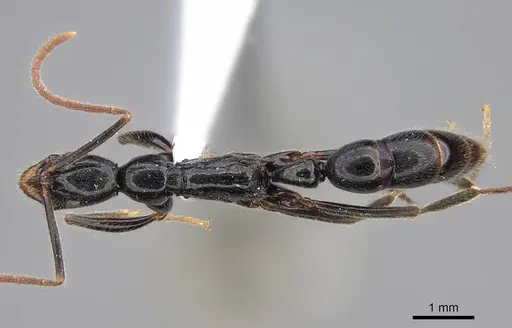
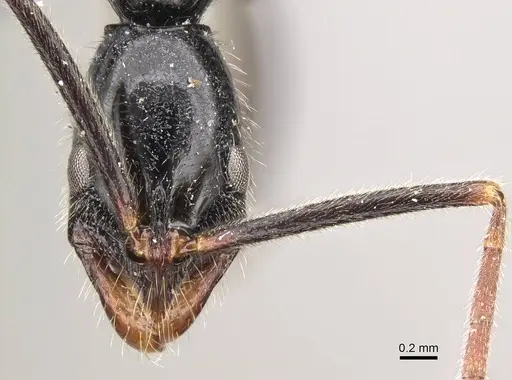
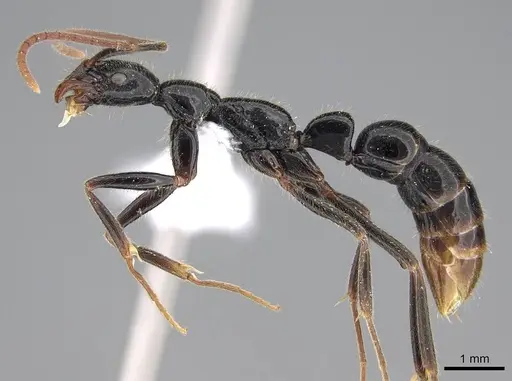
文献
分布マップを読み込み中...製品情報を読み込み中...