
Leptanilla tanakai
- 学名
- Leptanilla tanakai
- 族
- Leptanillini
- 亜科
- Leptanillinae
- 命名者
- Baroni Urbani, 1977
- 分布
- 0 か国で発見
紹介
Leptanilla tanakai is an extremely tiny subterranean ant species known only from Yakushima Island, Japan. The genus Leptanilla contains some of the rarest and most elusive ants, rarely collected in the field due to their completely underground lifestyle . These ants have distinctive morphology including mandibles with four teeth and a strongly constricted abdominal segment IV, which helps distinguish them from other Leptanilla species . This species was originally described in 1977 and remained unknown to science for 35 years until its rediscovery in 2012 at the Onoaida Trail on Yakushima Island at 200m altitude . The entire Leptanilla genus is poorly studied in captivity, and Leptanilla tanakai has no documented husbandry history. What we know about keeping Leptanilla comes from a handful of observations of related species - these are specialized predators that likely require live micro-prey and consistently moist substrate conditions .
Quick Summary
- Difficulty: Expert
- Origin & Habitat: Yakushima Island, Japan (30°20'N,130°31'E) in the Palaearctic Region. Found at approximately 200m altitude, foraging in soil under rotten wood [1]. This is a subtropical island with humid, forested conditions.
- Colony Type: Colony structure is unconfirmed. The genus Leptanilla is known to have tiny colonies. Males are sometimes collected separately by light traps, suggesting they may have nuptial flights [1].
- Size & Growth:
- Queen: Unconfirmed, queen has not been described
- Worker: Size data unavailable, workers are extremely small, among the smallest ants in the world
- Colony: Up to 74 workers documented from a single collection event [1]
- Growth: Unknown, likely slow based on tiny colony sizes
- Development: Unconfirmed, no development data exists for this species (No direct observations exist)
- Antkeeping:
- Temperature: Unconfirmed. Based on Yakushima's subtropical climate, aim for roughly 20-25°C with stable conditions. Start around 22°C and observe colony activity.
- Humidity: High humidity required. In nature they forage in damp soil under rotten wood [1]. Keep the nest substrate consistently moist but not waterlogged.
- Diapause: Unknown for this species. Yakushima has mild winters, so a reduced activity period may occur but is unconfirmed.
- Nesting: Natural nesting occurs in soil under rotten wood [1]. In captivity, a small test tube setup with very fine, moist substrate would be appropriate. Given their tiny size, escape prevention is absolutely critical, they can squeeze through the smallest gaps.
- Behavior: Extremely cryptic. Workers forage underground in soil and under decaying wood [1]. Nothing is known about their temperament in captivity, but the genus is not considered aggressive. Escape risk is extreme due to their microscopic size, even standard test tube setups may allow escape. They are likely specialized micro-predators but specific prey preferences are unconfirmed.
- Common Issues: escape prevention is critical, they are among the smallest ants and can escape through gaps invisible to the human eye, colony size is tiny and growth is likely very slow, patience is essential, virtually no captive care information exists, this is truly an expert-only species, humidity must be carefully balanced, too dry kills them, too wet causes drowning, feeding is challenging, they likely need live micro-prey like springtails or tiny soil mites
Why Leptanilla tanakai is an Expert-Only Species
Leptanilla tanakai represents one of the most challenging ants to keep in captivity, possibly the most challenging non-parasitic species. This is not a species for beginners or even intermediate antkeepers. The primary reason is simple: almost nothing is known about their captive care requirements. Unlike common species like Lasius niger or Camponotus floridanus where generations of keepers have developed reliable protocols, Leptanilla tanakai has no documented captive history whatsoever. Every aspect of their care must be learned through experimentation, and the margin for error is razor-thin given their microscopic size. Additionally, these ants are virtually impossible to acquire, they have only been collected a handful of times in the wild, always in very low numbers. If you do obtain a colony, expect to face significant challenges with feeding, humidity control, and escape prevention. Only experienced antkeepers with specialized setups and access to live micro-prey should consider this species. [1]
Housing and Setup
Housing Leptanilla tanakai requires an extremely fine-tuned setup. Given their natural habitat in soil under rotten wood on Yakushima Island, you should replicate those conditions as closely as possible [1]. A small test tube setup with very fine, moist substrate (like fine sand or a mix of sand and soil) would be the most practical starting point. The key challenge is humidity, these ants live in consistently damp environments but cannot tolerate flooding. The substrate should feel damp to the touch but water should not pool inside the setup. Ventilation must be excellent to prevent mold while maintaining humidity. For escape prevention, standard barriers will likely be insufficient, their tiny size means they can squeeze through gaps that other ants cannot. Use tight-fitting lids and consider applying a barrier like fluon to all edges. A small outworld with a single entrance can help contain them, but even then, expect escape attempts. [1]
Feeding and Nutrition
Feeding is perhaps the biggest challenge with Leptanilla tanakai. In the wild, these ants are believed to be specialized micro-predators, hunting tiny soil arthropods like springtails, mites, and other micro-invertebrates [1]. Nothing is known about their specific diet preferences, but you should plan to provide live micro-prey as their primary food source. Small springtails are the most practical option, they can be cultured in small containers and offer a consistent food source. Other micro-arthropods like tiny isopods or booklice may also be accepted. Sugar sources are unlikely to be accepted given their predatory nature, do not rely on honey or sugar water. Feed small prey items every few days and remove any uneaten prey to prevent mold. Given their tiny colony size, even a single springtail may be a significant meal. Monitor carefully to see what they actually accept. [1]
Temperature and Seasonal Care
Temperature requirements for Leptanilla tanakai are unconfirmed, but we can make educated guesses based on their origin. Yakushima Island has a warm subtropical climate with temperatures ranging from roughly 10°C in winter to 30°C in summer. The species was collected at 200m altitude, suggesting they prefer neither the hot lowlands nor the cooler highlands. Aim for stable temperatures in the low-to-mid 20s Celsius (around 22-25°C) as a starting point. Avoid temperature extremes in either direction. Watch for behavioral cues, if workers become sluggish, the temperature may be too low, if they cluster away from heat sources, it may be too high. No specific diapause requirements have been documented, but given the mild climate of their home island, they may simply reduce activity during cooler months rather than entering true hibernation. Maintain stable conditions year-round and adjust based on colony behavior. [1]
Understanding Their Extreme Rarity
Leptanilla tanakai is one of the rarest ant species in the world in terms of documented sightings. Originally described in 1977 from Yakushima Island, it was not seen again for 35 years until its rediscovery in 2012 [1]. This extreme rarity is characteristic of the entire genus Leptanilla, these are subterranean ants that almost never appear on the surface. Workers forage underground in soil and beneath decaying wood, making them nearly impossible to find through normal ant collecting methods [1]. Males are sometimes captured in light traps or Malaise traps, which is how most specimens are obtained. This lifestyle explains why so little is known about their biology, they simply do not expose themselves to observation. For antkeepers, this rarity means that obtaining a colony is exceptionally difficult, and any captive colony represents a significant opportunity to learn about this mysterious group. The 74 workers collected in 2012 represent essentially all known specimens of this species. [1]
Frequently Asked Questions
Can I keep Leptanilla tanakai as a beginner antkeeper?
No. This is an expert-only species. There is virtually no documented captive care information for this or any Leptanilla species. Their microscopic size makes them extremely difficult to house, feed, and contain. Unless you have extensive experience with other difficult micro-ant species, this species will almost certainly fail in your care.
How do I feed Leptanilla tanakai?
Based on genus behavior, they likely require live micro-prey like springtails, tiny soil mites, or other micro-arthropods [1]. They are too small to tackle typical ant prey like mealworms or fruit flies. Start a springtail culture and offer small individuals. Do not rely on sugar sources, these ants appear to be specialized predators. Remove uneaten prey promptly to prevent mold.
What size is Leptanilla tanakai?
Workers are extremely tiny, among the smallest ants in the world. No full body measurements are available, but they are barely visible without magnification. This tiny size creates enormous challenges for containment and feeding.
Where does Leptanilla tanakai live?
Only from Yakushima Island, Japan. It was originally described in 1977 and was rediscovered in 2012 at the Onoaida Trail at about 200m altitude [1]. This is the only known location for this species.
Do Leptanilla tanakai ants sting?
Unknown and unlikely to be relevant. Given their microscopic size, any sting would be imperceptible to humans even if present. Their tiny mandibles are designed for hunting micro-prey, not defending against large predators.
How big do Leptanilla tanakai colonies get?
Unknown for this specific species, but based on documented collections, colonies are very small, up to 74 workers represents the largest known collection [1].
What temperature should I keep Leptanilla tanakai at?
Unconfirmed, but based on their subtropical origin (Yakushima Island), aim for roughly 22-25°C. Start in the middle of this range and observe colony behavior. Avoid temperature extremes in either direction.
Why is this species so rarely kept?
There are three main reasons: First, they are extremely difficult to find in the wild, only about 80 workers have ever been collected [1]. Second, their microscopic size makes them nearly impossible to contain with standard ant keeping equipment. Third, almost nothing is known about their care requirements, making successful captivity extremely unlikely. This species remains a mystery even to professional myrmecologists.
Can I keep multiple Leptanilla tanakai queens together?
Unknown. Colony structure has never been documented for this species. Do not attempt combining unrelated queens, there is no information to guide this decision and the risk of colony failure is high.
What humidity do Leptanilla tanakai need?
High humidity. In nature they forage in damp soil under rotten wood [1]. Keep the nest substrate consistently moist but not waterlogged. The substrate should feel damp but no water should pool. Balance is critical, too dry kills them, too wet causes drowning.
Report an Issue
The current care sheet is based fully on literature. See inconsistencies, or something that's incorrect? Please , it will be resolved after review from an admin. Contributing to the blogs tab also helps providing information, to make us be able to further improve the caresheets. Thank you for your support!
References

この飼育シートのライセンスは: CC BY-SA 4.0 .
コミュニティブログ
CASENT0911453
AntWebで見る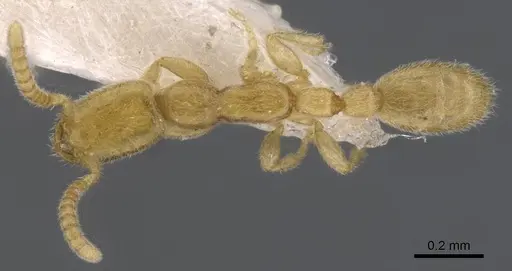
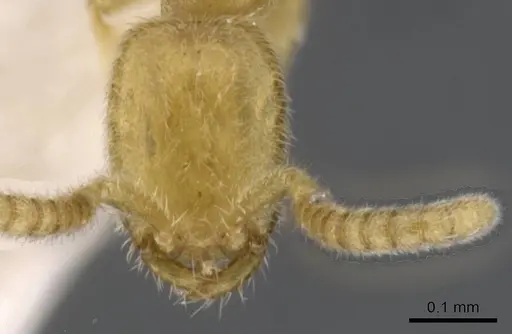
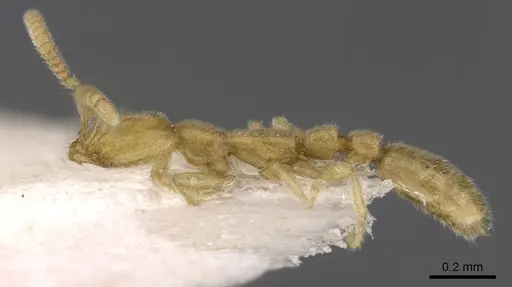
文献
分布マップを読み込み中...製品情報を読み込み中...