
Ectomomyrmex lobocarenus
- 学名
- Ectomomyrmex lobocarenus
- 族
- Ponerini
- 亜科
- Ponerinae
- 命名者
- Xu, 1995
- 分布
- 0 か国で発見
紹介
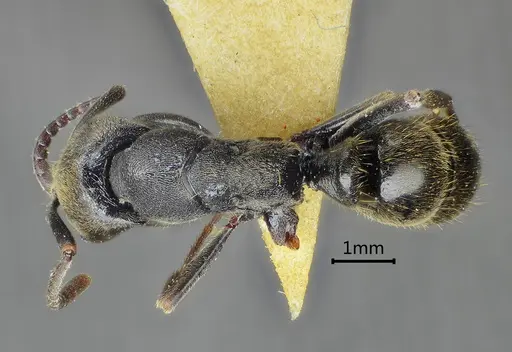
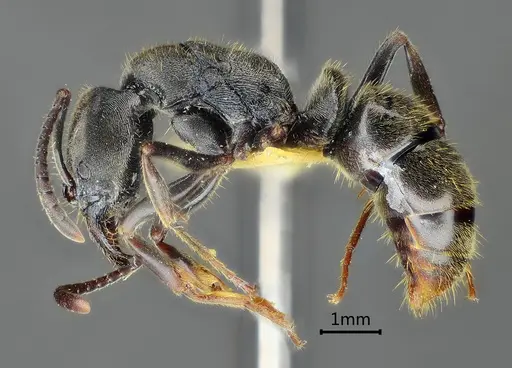
Ectomomyrmex lobocarenus is a medium-sized predatory ant from the subfamily Ponerinae. Workers measure 9.3-10.4mm in total length, with a black body and dark reddish-brown on the mandibles, antenna funiculus, tibiae, tarsi, and gaster tip . This species is native to southern China and northern Vietnam, where it inhabits forest environments. Research shows it occupies primary and secondary forests but is absent from rubber plantations, indicating a reliance on natural forest habitats . A notable aspect of this species is its habitat specificity, it thrives in intact forest settings but cannot survive in agricultural monocultures, making it a specialist of undisturbed ecosystems .
Quick Summary
- Difficulty: Medium
- Origin & Habitat: Southern China (Yunnan province) and northern Vietnam, found in primary and secondary forest habitats at moderate elevations [1][2][3].
- Colony Type: Colony structure is unconfirmed, no scientific data exists on queen number or social structure.
- Size & Growth:
- Queen: Unknown, not described in available literature
- Worker: ~9.3-10.4mm total length [1]
- Colony: Unknown, no colony size data available
- Growth: Unknown, no development data available
- Development: Unknown, no direct data. Based on typical Ponerinae patterns, estimated 6-10 weeks at optimal temperature, but this is inferred and unconfirmed. (Development timeline has not been directly studied for this species.)
- Antkeeping:
- Temperature: Based on their Yunnan forest habitat, room temperature (20-26°C) is likely suitable. Provide a gentle temperature gradient for self-regulation [1][2].
- Humidity: Forest-dwelling species requiring moderate to high humidity. Keep nest substrate consistently moist but not waterlogged, with a humidity gradient.
- Diapause: Unknown, no specific data on overwintering. Their Yunnan habitat experiences cool winters, so a cool period (10-15°C) for several months may be beneficial, but this is inferred and unconfirmed.
- Nesting: Natural nesting habits are undocumented. Like other Ponerines, they likely nest in soil or rotting wood. Y-tong (AAC) nests or naturalistic soil setups work well.
- Behavior: Ponerine ants are typically predatory and defensive. Ectomomyrmex lobocarenus likely hunts small invertebrates and has a functional sting for subduing prey, based on subfamily traits. Workers are moderately large (9-10mm), so escape prevention is straightforward with standard barriers. They are probably more active and aggressive than common Myrmicinae ants.
- Common Issues: unknown colony size makes long-term housing planning difficult, unconfirmed development timeline may lead to incorrect care adjustments, hibernation requirements are unverified, risking colony loss if mishandled, predatory diet needs may challenge beginners in providing consistent food, escape prevention is needed despite size, as they are strong climbers
Appearance and Identification
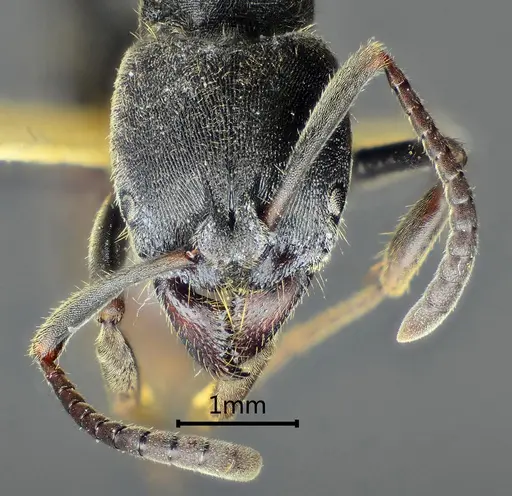
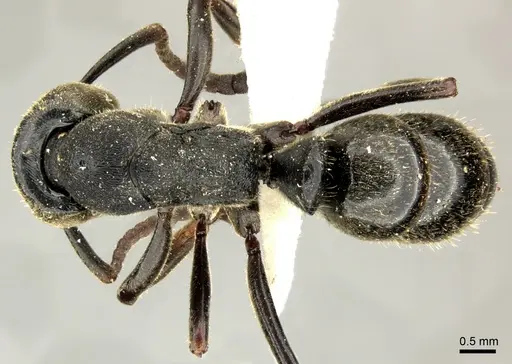
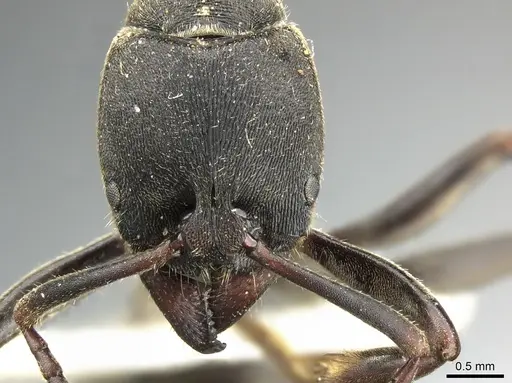
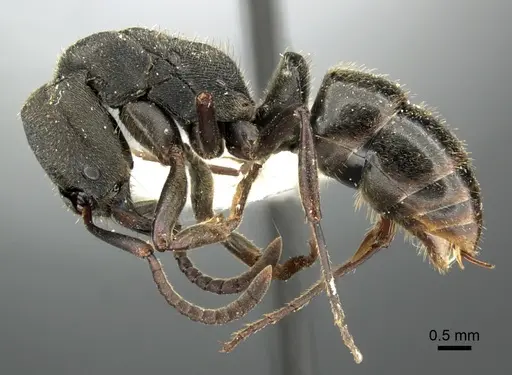
Workers of Ectomomyrmex lobocarenus are substantial ants measuring 9.3-10.4mm in total length, making them noticeably larger than many common ant species [1]. The body is primarily black, with dark reddish-brown coloration on the mandibles, antenna funiculus, tibiae, tarsi, and gaster tip [1]. Key identification features include a concave occipital margin with raised lateral edges, and occipital corners that extend downward into lamellate protrusions. The mandibles have 9 teeth and fine striation, and the body has abundant erect hairs and dense pubescence [1].
Distribution and Habitat
Ectomomyrmex lobocarenus is native to southern China (Yunnan province) and northern Vietnam. The type locality is in Yunnan, specifically the Dali-Lijiang region [1]. It has been collected in the Gaoligong Shan mountains [3] and in Xishuangbanna, where it occupies primary and secondary forests but not rubber plantations [2]. This indicates a strong preference for natural forest habitats with appropriate leaf litter and soil conditions.
Feeding and Diet
As a Ponerine ant, Ectomomyrmex lobocarenus is predatory and likely hunts small invertebrates. Specific prey preferences are undocumented, but they probably accept small arthropods like mealworms or fruit flies. In captivity, offer a varied protein diet 2-3 times per week, adjusting based on consumption. Sugar sources may be accepted but are not primary food sources.
Temperature and Humidity
This species originates from Yunnan's subtropical forests, so room temperature (20-26°C) is likely suitable. Provide a temperature gradient using heating on one side of the nest [1][2]. For humidity, keep the nest substrate consistently moist but not waterlogged, with a gradient for foraging areas.
Nesting in Captivity
Natural nesting behavior is undocumented, but Ponerines typically nest in soil or rotting wood. For captivity, Y-tong (AAC) nests work well for humidity control. Standard test tubes can be used for founding colonies, but upgrade as the colony grows. Ensure adequate ventilation to prevent mold.
Behavior and Temperament
Ponerine ants are primitive hunters with a functional sting for subduing prey, based on subfamily traits. Workers are cautious foragers and likely hunt individually. Their sting may be noticeable to humans, so handle with care. Workers are large (9-10mm), making escape prevention straightforward with standard barriers like Fluon.
Frequently Asked Questions
How long does it take for Ectomomyrmex lobocarenus to produce first workers?
The development timeline is unconfirmed, no scientific data exists. Based on typical Ponerine patterns, expect approximately 6-10 weeks at optimal temperature, but this is an estimate.
What do Ectomomyrmex lobocarenus ants eat?
They are predatory and likely hunt small invertebrates. Offer small insects like mealworms or fruit flies 2-3 times per week. Sugar sources may be accepted but are not essential.
Do Ectomomyrmex lobocarenus ants sting?
Yes, as a Ponerine ant, they have a functional sting for subduing prey. The exact pain level for humans is undocumented, but handle with caution.
Are Ectomomyrmex lobocarenus good for beginners?
They are rated as Medium difficulty. While larger than many beginner species, the lack of documented care information makes them less ideal for complete beginners. Experienced antkeepers comfortable with predatory species will have better success.
What temperature do Ectomomyrmex lobocarenus need?
Based on their Yunnan forest habitat, room temperature (20-26°C) is likely suitable. A range of 22-25°C is a good starting point, with a gradient for self-regulation [1][2].
Do they need hibernation?
Hibernation requirements are unconfirmed. Their Yunnan habitat has cool winters, so a cool period (10-15°C) for 2-3 months may be beneficial, but this is inferred and not confirmed by research.
How big do colonies get?
Colony size is unknown, no data exists on maximum size for this species. Ponerine colonies are typically smaller, likely under a few hundred workers.
Can I keep multiple queens together?
Colony structure is unconfirmed. No data exists on whether they are monogyne or polygyne. Until more information is available, keeping single queens is recommended.
What type of nest should I use?
Y-tong (AAC) nests or naturalistic soil setups work well for Ponerine ants. Standard test tubes can be used for founding, but upgrade as the colony grows.
Where is Ectomomyrmex lobocarenus found?
They are native to southern China (Yunnan province) and northern Vietnam, living in forest habitats, found in primary and secondary forests but not rubber plantations [2].
Report an Issue
The current care sheet is based fully on literature. See inconsistencies, or something that's incorrect? Please , it will be resolved after review from an admin. Contributing to the blogs tab also helps providing information, to make us be able to further improve the caresheets. Thank you for your support!
References

この飼育シートのライセンスは: CC BY-SA 4.0 .
コミュニティブログ
文献
分布マップを読み込み中...製品情報を読み込み中...