
Dorymyrmex santschii
- 学名
- Dorymyrmex santschii
- 族
- Leptomyrmecini
- 亜科
- Dolichoderinae
- 命名者
- Gallardo, 1917
- 分布
- 0 か国で発見
紹介
Dorymyrmex santschii is a small ant native to Argentina, belonging to the Dolichoderinae subfamily. Workers measure approximately 3-4mm with the characteristic cone-shaped head that gives the genus its common name 'cone ants'. The species was described by Gallardo in 1917 and is found primarily in the Entre Ríos province of Argentina . As part of the Opportunist/Dominant Dolichoderinae functional group, these ants are aggressive foragers. Unlike many ants, Dorymyrmex species lack a functional sting and instead use smear defense, secreting defensive chemical compounds from a slit-like opening at the tip of the abdomen.
Quick Summary
- Difficulty: Medium
- Origin & Habitat: Native to the Neotropical region of Argentina, specifically recorded in Entre Ríos province. They inhabit open areas typical of the genus, nesting in soil or under stones in warm, temperate to subtropical climates.
- Colony Type: Colony structure is unconfirmed for this species. Based on typical Dorymyrmex patterns, likely single-queen colonies, though this has not been directly documented.
- Size & Growth:
- Queen: Estimated 6-8mm, inferred from genus patterns, no specific measurements available
- Worker: Approximately 3-4mm, inferred from genus typical sizes
- Colony: Likely several hundred workers, estimated from related Dorymyrmex species
- Growth: Moderate, based on typical Dolichoderinae development
- Development: Estimated 6-8 weeks at optimal temperature based on genus-level data for similar Dolichoderinae (Development time inferred from related species, specific data for D. santschii is unavailable)
- Antkeeping:
- Temperature: Keep at 22-26°C. They prefer warm conditions typical of their Argentine habitat. A heating cable on one side of the nest can create a suitable gradient.
- Humidity: Moderate humidity around 50-60%. Allow the nest substrate to dry partially between waterings. These ants prefer drier conditions compared to many other ant species.
- Diapause: Winter rest period may not be required, this species is from the Neotropical region of Argentina where winters are mild. Some keepers recommend a brief cooling period (2-3 months at 15-20°C) but this is not well-documented for this species.
- Nesting: Natural nesting involves soil nests, often under stones or in open ground. In captivity, a Y-tong (AAC) nest or plaster nest works well. Provide a dry to moderately humid nest chamber with access to an outworld for foraging.
- Behavior: Dorymyrmex santschii is an aggressive forager. Workers are fast-moving and will readily defend the colony using smear defense rather than stinging. They are diurnal foragers, actively searching for food during daylight hours. Escape prevention is important, while not among the smallest ants, they are quick and will exploit any gaps. They have a characteristic rapid, erratic running style. As opportunistic foragers, they will collect a variety of food sources.
- Common Issues: limited species-specific information makes precise care guidance challenging, aggressive temperament requires careful handling and secure housing, winter diapause requirements are not confirmed for this Neotropical species, fast movement means escape prevention must be reliable, limited availability in the antkeeping hobby
Housing and Nest Setup
Dorymyrmex santschii can be housed in various nest types, but Y-tong (AAC) nests or plaster nests work best for this genus. The nest chamber should be relatively dry, these ants prefer conditions that are not overly humid. Provide a water test tube in the outworld for drinking water, but the nest itself should stay relatively dry. The outworld should be spacious enough for foraging, with a secure lid since these ants are quick and can exploit small gaps. Use a barrier like fluon around the edges of the outworld to prevent escapes. [1]
Feeding and Diet
As opportunistic foragers, Dorymyrmex santschii will accept a variety of foods. Offer protein sources such as small insects (fruit flies, small crickets, mealworms), and provide sugar water, honey, or diluted syrup as an energy source. They are active foragers and will readily collect food from the outworld. Feed every 2-3 days, removing any uneaten prey after 24 hours to prevent mold. Fresh water should always be available. [1]
Temperature and Seasonal Care
Maintain nest temperatures between 22-26°C for optimal colony development. These ants come from temperate Argentina, so they do best in warm conditions but can tolerate room temperature. Some keepers recommend a brief cooling period during winter months (roughly June to August in the Southern Hemisphere), but this species may not require true diapause given its Neotropical origin. Monitor colony activity, if workers become sluggish, temperatures may be too low. [1]
Defense Mechanism
Dorymyrmex santschii lacks a functional sting. Instead, they use smear defense, secreting defensive chemical compounds from a slit-like opening at the tip of the abdomen. This is typical of the Dolichoderinae subfamily. Workers are aggressive defenders and will readily emerge when the nest is disturbed. The chemical secretions can be irritating but are not medically significant for healthy humans. These ants are best observed through the nest walls rather than handled directly. They are diurnal foragers, most active during daylight hours.
Frequently Asked Questions
How long does it take for Dorymyrmex santschii to produce first workers?
Based on typical Dolichoderinae development, expect first workers (nanitics) approximately 6-8 weeks after the queen lays eggs, assuming optimal temperatures around 24-26°C. Specific development data for this species is not available.
What temperature is best for Dorymyrmex santschii?
Keep them at 22-26°C. They prefer warm conditions consistent with their Argentine habitat. A heating cable on part of the nest can help maintain optimal temperatures.
Do Dorymyrmex santschii need hibernation?
This species is from the Neotropical region of Argentina and may not require true diapause. Some keepers recommend a brief cooling period during winter months, but this is not well-documented for this species.
How big do Dorymyrmex santschii colonies get?
Colony size is not specifically documented, but based on related Dorymyrmex species, colonies likely reach several hundred workers over 2-3 years.
What do Dorymyrmex santschii eat?
They are opportunistic foragers that accept both protein and sugar sources. Offer small insects (fruit flies, pinhead crickets, mealworms) for protein, and sugar water, honey, or diluted syrup for carbohydrates.
Are Dorymyrmex santschii good for beginners?
This species is rated as medium difficulty. While not the most challenging species, the limited available care information and their aggressive temperament with chemical defense make them better suited for keepers with some experience.
Can I keep multiple Dorymyrmex santschii queens together?
Colony structure is not confirmed for this species. Based on typical Dorymyrmex patterns, they likely form single-queen colonies. Combining unrelated queens is not recommended without specific documentation.
When should I move Dorymyrmex santschii to a formicarium?
Move to a formicarium once the colony reaches 20-30 workers. For founding colonies, keep them in a simple test tube setup until they have established a stable worker population.
How often should I feed Dorymyrmex santschii?
Feed every 2-3 days. Offer protein (insects) 2-3 times per week and keep sugar water available at all times. Remove uneaten food after 24 hours to prevent mold.
Report an Issue
The current care sheet is based fully on literature. See inconsistencies, or something that's incorrect? Please , it will be resolved after review from an admin. Contributing to the blogs tab also helps providing information, to make us be able to further improve the caresheets. Thank you for your support!
References

この飼育シートのライセンスは: CC BY-SA 4.0 .
コミュニティブログ
CASENT0911533
AntWebで見る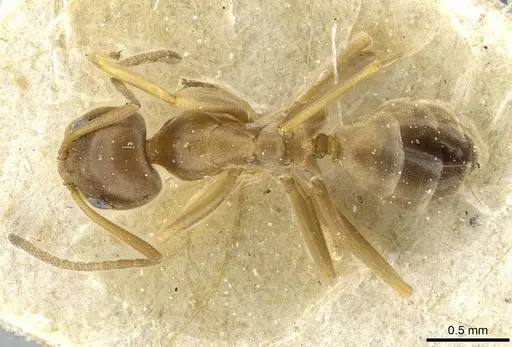
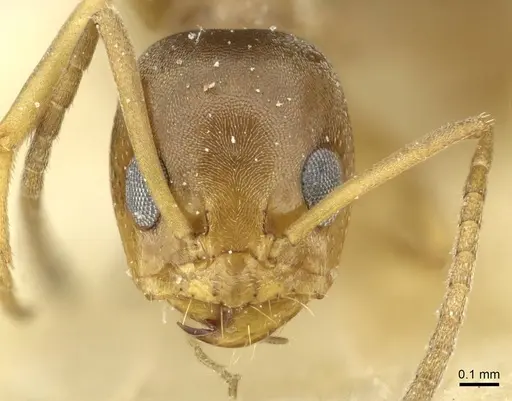
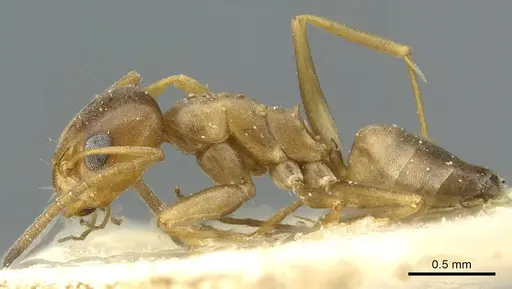
文献
分布マップを読み込み中...製品情報を読み込み中...