
Diacamma violaceum
- 学名
- Diacamma violaceum
- 族
- Ponerini
- 亜科
- Ponerinae
- 命名者
- Forel, 1900
- 分布
- 0 か国で発見
紹介
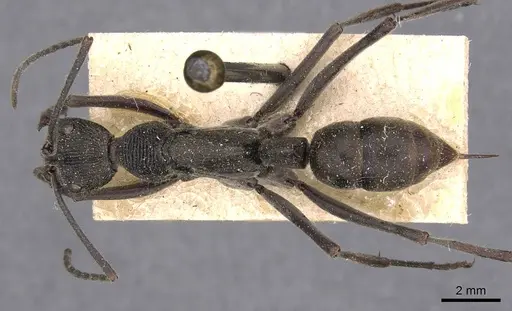
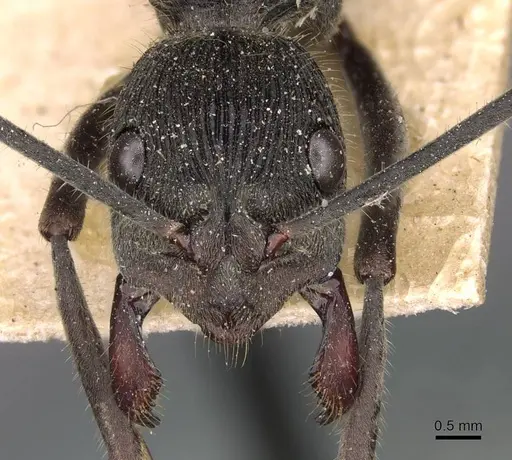
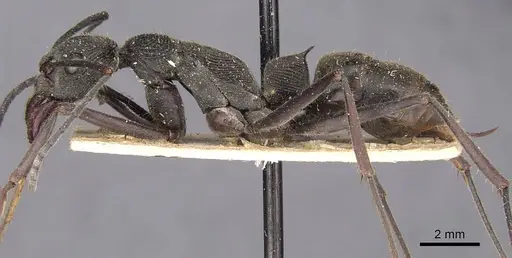
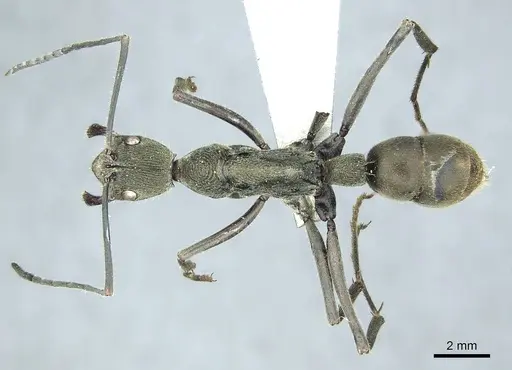
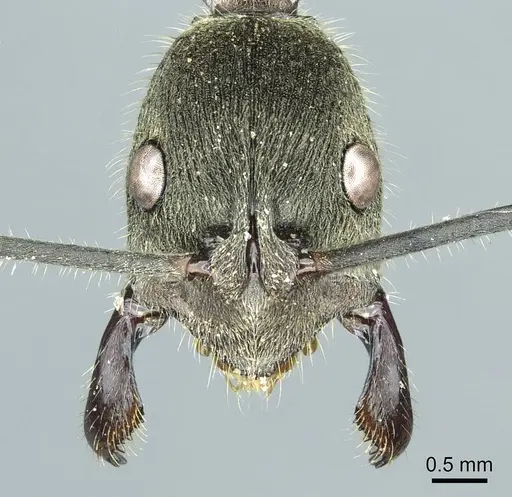
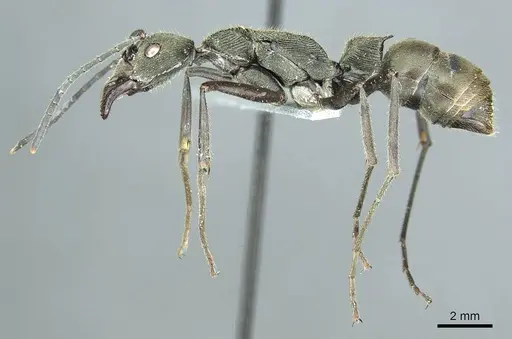
Diacamma violaceum is a large, striking ponerine ant native to Southeast Asia, found in Myanmar and northern Thailand . Workers are impressively sized at 16-17.9mm, making them one of the larger ant species kept in captivity. They have a distinctive appearance: a black body that can show a subtle purple shimmer, reddish-brown markings on the gaster and subpetiolar process, and coarse striations running across the mesosoma and petiole . The elongated head and small eyes give them a unique look among hobby ants. This species is closely related to Diacamma scalpratum but can be distinguished by the longitudinal striation on the dorsal petiole and the relatively longer antennal scapes . Despite being visually striking, biological information about D. violaceum in captivity remains extremely limited. AntWiki explicitly notes that nothing is known about the biology of this species . What we can infer comes from general Diacamma genus behavior: they are predatory ponerines with functional stingers, and the genus is known for having gamergate reproduction where workers can become replacement reproductives. Keepers should approach this species with realistic expectations about the knowledge gaps and be prepared to document their own observations.
Quick Summary
- Difficulty: Expert
- Origin & Habitat: Native to Myanmar and northern Thailand in the Indomalaya region. Found at elevations around 900-1000m in Chiang Mai and Mae Hong Son provinces, including Doi Suthep, Doi Inthanon National Park, and Tham Lod Forest Park [1][3]. The mountainous northern Thailand habitat suggests preference for cooler, more humid conditions compared to lowland tropical ants.
- Colony Type: Queenless, no distinct queen caste, reproduction by gamergates (reproductive workers).
- Queen Status: Queenless Colony
- Size & Growth:
- Queen: Queenless species, reproduction by gamergate (reproductive worker) instead of a distinct queen caste.
- Worker: 16.04-17.93mm total length [1].
- Colony: Unknown, no colony size data exists for this species [2].
- Growth: Unknown, no development timing has been documented [2].
- Development: Unconfirmed. Based on typical Ponerinae patterns and similar large tropical ants, estimate 2-4 months at optimal temperature, but this is a rough guess for an unstudied species. (No direct development data exists. Ponerine ants typically have slower development than many Myrmicinae species, but this is inferred from related species, not specifically studied.)
- Antkeeping:
- Temperature: Based on the high-elevation Thai habitat (900-1000m), aim for cooler conditions than typical tropical ants, around 22-26°C. A temperature gradient allows the colony to choose its preferred zone. Start around 24°C and adjust based on activity [1][3].
- Humidity: Requires higher humidity, the natural habitat in northern Thailand mountain forests is relatively humid. Keep the nest substrate consistently moist but not waterlogged. Provide a water source and mist the outworld occasionally. The substrate should feel damp to the touch with some variation between damp and slightly drier areas [3].
- Diapause: Unknown. Northern Thailand experiences seasonal temperature variations, so a slight winter slowdown may occur, but this has not been documented for this species. If the colony becomes less active in winter, reduce feeding and allow cooler temperatures (15-18°C) for a few months [2].
- Nesting: No specific nesting data exists. Based on the genus and habitat, they likely prefer humid, dark spaces like rotting wood or deep soil. In captivity, a naturalistic setup with moist substrate (dirt-filled formicarium or Y-tong with damp plaster) would be appropriate. Provide deep chambers and minimal light exposure to the nest area [2].
- Behavior: Not specifically documented, but Diacamma species are generally predatory and possess functional stingers. They are likely more defensive than typical house ants and may use their stingers if threatened. Workers are large and relatively slow-moving. Escape prevention is important but not due to small size, these are large ants that simply need secure containers with tight-fitting lids. The genus is known for gamergate reproduction, meaning colonies can potentially survive without a queen if workers become reproductives, but this specific behavior in D. violaceum is unconfirmed.
- Common Issues: lack of biological data makes captive care uncertain, be prepared to document your own findings, no documented diet acceptance, start with live prey (insects) and observe what they accept, colony structure and queen behavior unconfirmed, you may not know if your colony is truly queenless or has gamergates, high humidity requirements may lead to mold problems if ventilation is inadequate, large size requires appropriately sized enclosures but they are not escape artists due to their size
Appearance and Identification
Diacamma violaceum is a large and impressive ant species. Workers measure 16-17.9mm in total length, making them significantly larger than most common ant species kept in captivity [1]. The body is primarily black, sometimes displaying a subtle purple shimmer across the trunk. The head is elongated with moderately convex sides, and the eyes are small and not protruding. One of the most distinctive features is the coarse striation, parallel ridges, covering the mesosoma and petiole, giving them a textured appearance. The petiole (the narrow 'waist' segment) is strongly compressed and has longitudinal striation on the dorsal surface. The subpetiolar process (a projection beneath the petiole) is prominent and strongly concave. Reddish-brown markings appear on the gaster (the rear segment), particularly at the posterior margins of the tergites and sternites [1]. The legs and antennae can show variable coloration, often with reddish tibiae. Males have not been described in the available literature.
Natural Distribution and Habitat
This species is known from a relatively limited range in Southeast Asia. D. violaceum has been documented in Myanmar and northern Thailand, specifically in mountainous areas of Chiang Mai Province (including Mae Sa Waterfall, Doi Suthep, and Doi Inthanon National Park) and Mae Hong Son Province (Tham Lod Forest Park) [1][3]. The elevation range of 900-1000m above sea level is notable, this is significantly higher than typical lowland tropical ant habitats. The northern Thailand mountains experience cooler temperatures and higher humidity than the surrounding lowlands, suggesting this species prefers these cooler, more humid conditions. The habitat type appears to be forested areas, likely with dense ground cover and rotting wood where they could nest. This high-elevation distribution is important for keepers to understand, these ants are not typical warm-tropical species and may not thrive in hot, dry conditions.
Feeding and Diet
The diet of Diacamma violaceum has not been specifically documented in scientific literature [2]. However, Diacamma belongs to the subfamily Ponerinae, which are primarily predatory ants that hunt live prey. In captivity, you should start by offering small live insects appropriate to their size, small crickets, mealworms, fruit flies, and other arthropods are appropriate. Since they are large ants, they can tackle prey that smaller ants cannot. Observe carefully to see what they accept. Unlike some ants that readily take sugar, Ponerinae species are typically more focused on protein prey. You may want to occasionally offer a drop of honey or sugar water to test for sugar acceptance, but do not rely on it as a primary food source. Feed protein prey 2-3 times per week, removing any uneaten prey after 24-48 hours. Always ensure fresh water is available.
Temperature and Humidity Requirements
Because this species comes from high-elevation northern Thailand (900-1000m), it likely prefers cooler and more humid conditions than typical tropical ants. Based on the habitat data, aim for temperatures in the low-to-mid 20s°C (approximately 22-26°C). A temperature gradient is ideal, allow the ants to choose their preferred zone. If you notice workers clustering near heat sources, the colony may be too cold, if they avoid heated areas, it may be too warm. Start around 24°C and adjust based on colony behavior. Humidity should be kept relatively high, think damp forest floor conditions. The nest substrate should remain consistently moist but never waterlogged. Allow some variation within the enclosure so the ants can choose between damper and slightly drier areas. Poor humidity can lead to mortality, especially during molting. [1][3]
Nesting and Colony Setup
No specific nesting data exists for D. violaceum, but they are ground-nesting ants from forested habitats. In captivity, they need a nest environment that is dark, humid, and protected from vibrations. A naturalistic setup with moist substrate works well, a dirt-filled formicarium or a Y-tong (AAC) nest with damp plaster or soil. The chambers should be appropriately sized for their large body size, though they do not require extremely wide tunnels. Provide a deep enough substrate or chamber system to allow them to create brood chambers. The outworld should be simple and easy to clean, with a secure lid since these large ants can push against loose covers. Ensure the nest area remains humid while the outworld can be drier. Minimal light exposure to the nest area is best, these are not brightly lit nest dwellers. [2]
Understanding the Knowledge Gaps
It is important for prospective keepers to understand that Diacamma violaceum is an unstudied species in captivity. AntWiki states that nothing is known about the biology of this ant [2]. This means there is no published information on their founding behavior, colony structure, development timeline, specific dietary needs, or overwintering requirements. Everything in this caresheet is either directly from the limited taxonomic literature or inferred from general Diacamma genus behavior and related species. This makes them an expert-level species, you should be prepared to document your own observations and potentially discover new information about their care. Keep detailed notes on feeding acceptance, temperature preferences, colony growth, and behavior. Your observations could contribute valuable knowledge to the antkeeping community for this poorly understood species.
Frequently Asked Questions
How long does it take for Diacamma violaceum to go from egg to worker?
The development timeline is unconfirmed for this species, no research has documented their egg-to-worker time. Based on typical Ponerinae patterns for large ants, estimate 2-4 months at optimal temperature, but this is a rough guess. You will need to document your own observations.
What do Diacamma violaceum ants eat?
Their diet is not specifically documented, but as Ponerinae, they are predatory. Offer live small insects (fruit flies, small crickets, mealworms) as a primary food source. They may accept sugar sources experimentally, but protein prey should be the main diet. Feed 2-3 times per week.
What temperature should I keep Diacamma violaceum at?
Based on their high-elevation Thai habitat (900-1000m), aim for cooler conditions than typical tropical ants, around 22-26°C. A temperature gradient allows the colony to choose its preferred zone. Start around 24°C and adjust based on activity.
Can I keep multiple Diacamma violaceum queens together?
Unknown, their colony structure (single queen vs. multiple queens) has not been documented. The genus Diacamma is known for gamergate reproduction (workers becoming reproductives), but whether D. violaceum is monogyne, polygyne, or uses this system is unconfirmed.
How big do Diacamma violaceum colonies get?
Unknown, no colony size data exists for this species. The workers are large (16-17.9mm), but maximum colony size in the wild or captivity has not been documented.
Do Diacamma violaceum ants need hibernation or diapause?
Unknown for this specific species. Northern Thailand does experience seasonal temperature changes, so a slight winter slowdown may occur, but this has not been documented. If the colony becomes less active in cooler months, reduce feeding and allow cooler temperatures (15-18°C).
Is Diacamma violaceum good for beginners?
No, this is an expert-level species. Their biology is essentially unstudied, with no information on founding behavior, diet acceptance, development time, or colony structure. You should have experience with other ant species before attempting this one.
What humidity level do Diacamma violaceum ants need?
High humidity is likely required based on their moist forest habitat in northern Thailand. Keep the nest substrate consistently moist but not waterlogged. The substrate should feel damp to the touch. Provide a water source and ensure good ventilation to prevent mold.
When should I move Diacamma violaceum to a formicarium?
No specific guidance exists. For large ground-nesting ants, wait until the colony has established workers and a stable population (at least 10-20 workers). They need a humid nest environment, consider a naturalistic setup with moist substrate or a Y-tong with damp areas.
What makes Diacamma violaceum different from other ant species?
They are one of the larger ant species kept in captivity (16-17.9mm workers), with distinctive striated body sculpture and reddish-brown markings. They come from a limited range in northern Thailand/Myanmar at high elevation. Their biology is essentially unknown compared to well-studied species.
Why is Diacamma violaceum so hard to find in the antkeeping hobby?
This species has a limited natural distribution (Myanmar and northern Thailand) and their biology is unstudied. They are not commonly available because they have not been bred in captivity extensively, and the lack of published care information makes them risky for breeders. Their expert-level difficulty also limits hobby interest.
Report an Issue
The current care sheet is based fully on literature. See inconsistencies, or something that's incorrect? Please , it will be resolved after review from an admin. Contributing to the blogs tab also helps providing information, to make us be able to further improve the caresheets. Thank you for your support!
References

この飼育シートのライセンスは: CC BY-SA 4.0 .
コミュニティブログ
文献
分布マップを読み込み中...製品情報を読み込み中...