
Cyphomyrmex bicornis
- 学名
- Cyphomyrmex bicornis
- 族
- Attini
- 亜科
- Myrmicinae
- 命名者
- Forel, 1895
- 分布
- 0 か国で発見
紹介
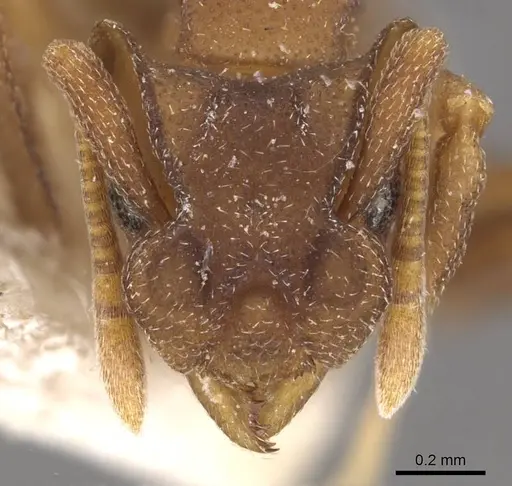
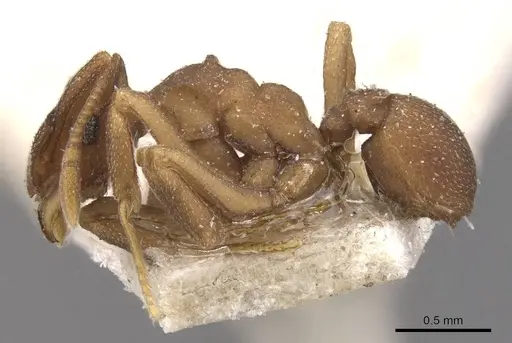
Cyphomyrmex bicornis is a tiny brown ant measuring just 3.2mm in total length, belonging to the fungus-growing tribe Attini . The head and gaster are slightly darker than the thorax, and the entire body has a densely granular, opaque texture. This species gets its name from the two horn-like projections on its head, which are actually the unusually enlarged and ear-shaped occipital lobes. The workers have distinctive conical spines on the mesonotum and a uniquely shaped postpetiole that is notably broad and transverse. This rare and cryptic species has only been collected twice in history - once in the Mantiqueira Mountains of Rio de Janeiro, Brazil, and more recently in Amazonian Colombia where it was found nesting in soil at 100mm depth in primary forest . As a fungus-growing ant, this species cultivates a fungal garden for food, a trait shared with leafcutter ants and other Attini. They require the specific microhabitat conditions of shaded, moist forest floors with native leaf litter for nesting and foraging .
Quick Summary
- Difficulty: Expert
- Origin & Habitat: Southern Brazil (Mantiqueira Mountains, Rio de Janeiro State) and Amazonian Colombia. Found in primary forest environments requiring specific conditions of shading, moisture, and native forest litter for nesting and foraging [1].
- Colony Type: Unknown, queen and male have never been described [3]. Colony structure in the wild has not been documented.
- Size & Growth:
- Queen: Unknown, queen has never been described [3]
- Worker: 3.2mm total length [3]
- Colony: Unknown, only two worker specimens have ever been collected [3]
- Growth: Unknown
- Development: Unknown, no development data exists for this species (No brood development studies have been conducted for this species.)
- Antkeeping:
- Temperature: Estimated at 24-28°C based on tropical forest origin. Use a heating cable on one side of the nest to create a gentle gradient.
- Humidity: Requires high humidity, keep the nest substrate consistently moist but not waterlogged. These ants naturally live in damp forest floor environments with plenty of leaf litter [1].
- Diapause: Unknown, no seasonal data exists. As a tropical species from Brazil and Colombia, they likely do not require a diapause period. Maintain stable temperatures year-round.
- Nesting: Use a naturalistic setup with moist substrate (soil or plaster) and plenty of leaf litter or debris on the surface. The Colombian specimen was found in soil 100mm deep, suggesting they prefer deeper, more enclosed nesting sites [2].
- Behavior: This is a shy, cryptic species that avoids confrontation. Workers are slow-moving and spend most of their time tending their fungal gardens. They possess a stinger but are not aggressive toward humans. Escape risk is moderate, they are small but not particularly agile. They rely heavily on their fungal crop and will abandon or neglect their garden if conditions become unsuitable.
- Common Issues: This species is extremely rare in the hobby and has never been successfully kept by hobbyists, no established care protocols exist., Fungus-growing ants require specialized knowledge and a fungal starter culture, they cannot survive on standard ant foods alone., The deep-soil nesting preference means they need a nest with significant depth or a naturalistic setup., As a poorly known species, there is no information on what they eat or how to maintain their fungal garden., Wild-caught colonies may be impossible to obtain given how rarely this species is found.
Fungus-Growing Biology
Cyphomyrmex bicornis belongs to the tribe Attini, a group of ants that have evolved a mutualistic relationship with fungi. Unlike leafcutter ants that cut and carry fresh leaf material, Cyphomyrmex species typically cultivate their fungi on smaller organic substrates including dead plant material, insect frass, and detritus. The ants tend their fungal gardens, weeding and maintaining them, and the fungi serve as the primary food source for the colony [1].
This is the critical challenge for keeping Cyphomyrmex bicornis, they cannot survive on typical ant foods like sugar water, protein, or seeds. They require a functioning fungal garden. The difficulty is compounded by the complete lack of information about what specific fungus this species cultivates or what substrate it uses. Related species in the genus Cyphomyrmex often use decomposing vegetable matter, but substrate preferences vary significantly between species.
Natural History and Distribution
This species has one of the most limited collection histories of any ant. The type specimen was collected by Dr. E.A. Göldi in the late 1800s at Colonia Alpina near Theresopolis (now Teresópolis) in Rio de Janeiro state, Brazil, in the Mantiqueira Mountains [4]. The second known specimen was collected over a century later in Amazonian Colombia from a soil sample taken at 100mm depth in primary forest [2].
These two collection sites are widely separated geographically, southeastern Brazil versus Amazonian Colombia, and represent very different habitats (mountain woodland versus lowland Amazonian forest). This suggests the species may have a broader but patchy distribution in suitable forest habitats across northern South America. The Colombian specimen confirms they nest in soil, while the Brazilian collection site was in mountainous woodland.
Housing and Nest Setup
Given their natural history, Cyphomyrmex bicornis requires a setup that mimics damp forest floor conditions. A naturalistic terrarium-style enclosure works best, fill with moist soil (at least 100mm deep based on collection data) and add leaf litter, small twigs, and other forest floor debris on the surface. This provides both nesting sites and foraging material.
The nest area must remain consistently humid while still having some ventilation to prevent mold. A substrate mix of peat moss and soil works well for maintaining moisture. Avoid completely sealed nests, these ants need some air flow. The foraging area should contain plenty of organic material where the fungal garden can be established. Test tube setups are not recommended due to the species' deep-soil nesting preference and fungus-growing requirements.
Feeding and Nutrition
As a confirmed fungus-growing ant, Cyphomyrmex bicornis cannot be fed like a typical ant. They do not eat sugar, honey, seeds, or standard protein sources. Instead, they require a fungal garden that they tend and harvest for food. The challenge is that we do not know what specific fungus this species cultivates or what substrate it grows on.
Experimental approaches might include providing various organic substrates (dead leaves, small pieces of fruit, insect frass, rotting wood) and hoping a suitable fungus establishes. However, this is essentially guesswork with no guarantee of success. This species is best considered a specialist that requires either established fungal cultures from related species or expert mycological knowledge to maintain. The complete lack of any captive husbandry records makes this an experimental endeavor at every step. [1]
Temperature and Humidity
Based on the species' origin in Brazilian and Colombian tropical forests, temperatures in the range of 24-28°C are estimated as suitable. The Mantiqueira Mountains in Rio de Janeiro are subtropical, so temperatures can occasionally cool, but the species appears to prefer warmth. A heating cable on one side of the nest creates a gradient allowing the ants to self-regulate.
Humidity is critical. These ants naturally occur in moist forest floor environments with high ambient humidity. The nest substrate should feel consistently damp but never waterlogged. Leaf litter and debris on the surface helps maintain humidity and provides microhabitats. Monitor for mold growth, which can be problematic in high-humidity setups. Some dry areas within the foraging area allow the ants to escape overly damp conditions if needed. [1]
Frequently Asked Questions
Can I keep Cyphomyrmex bicornis like other ant species?
No. This is a fungus-growing ant that requires a fungal garden for survival. Standard ant foods like sugar water, protein, and seeds will not sustain them. They are fundamentally different from typical ant species and require specialized knowledge to keep.
How do I feed Cyphomyrmex bicornis?
You cannot feed them directly. As fungus growers, they need a living fungal garden. Provide organic substrates like dead leaves, small fruit pieces, or rotting wood and hope a suitable fungus establishes. This is experimental, no one has documented successfully maintaining this species in captivity.
What size is Cyphomyrmex bicornis?
Workers are tiny at just 3.2mm total length. The queen has never been described, so her size is unknown.
Where does Cyphomyrmex bicornis live?
This species is known from only two locations: the Mantiqueira Mountains in Rio de Janeiro, Brazil, and Amazonian Colombia. They live in primary forest environments, nesting in soil at depths around 100mm.
Are Cyphomyrmex bicornis ants aggressive?
No. This is a shy, cryptic species that avoids confrontation. They possess a stinger but are not aggressive toward humans or other ants.
Do Cyphomyrmex bicornis need hibernation?
Unknown. As a tropical species from Brazil and Colombia, they likely do not require diapause. Maintain stable warm temperatures year-round.
How big do Cyphomyrmex bicornis colonies get?
Unknown. Only two worker specimens have ever been collected in history. Colony size in the wild has never been documented.
Is Cyphomyrmex bicornis suitable for beginners?
No. This species is rated Expert difficulty due to its fungus-growing biology, complete lack of captive husbandry information, deep-soil nesting requirements, and extreme rarity. Even experienced antkeepers should approach this species with caution.
What does the queen of Cyphomyrmex bicornis look like?
The queen has never been described. Despite being collected twice (once in the 1800s and once in 2018), no queen or male specimens have ever been documented.
Can I find Cyphomyrmex bicornis in the wild?
Extremely unlikely. This is one of the rarest ant species known, with only two collection records in over 125 years. They are found in primary forest in remote locations in Brazil and Colombia.
Report an Issue
The current care sheet is based fully on literature. See inconsistencies, or something that's incorrect? Please , it will be resolved after review from an admin. Contributing to the blogs tab also helps providing information, to make us be able to further improve the caresheets. Thank you for your support!
References

この飼育シートのライセンスは: CC BY-SA 4.0 .
コミュニティブログ
CASENT0909373
AntWebで見る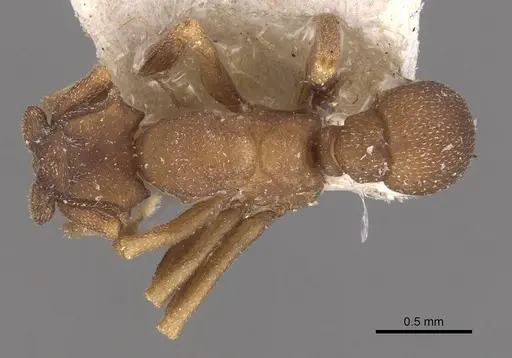
文献
分布マップを読み込み中...製品情報を読み込み中...