
Crematogaster acaciae
- 学名
- Crematogaster acaciae
- 族
- Crematogastrini
- 亜科
- Myrmicinae
- 命名者
- Forel, 1892
- 分布
- 0 か国で発見
紹介
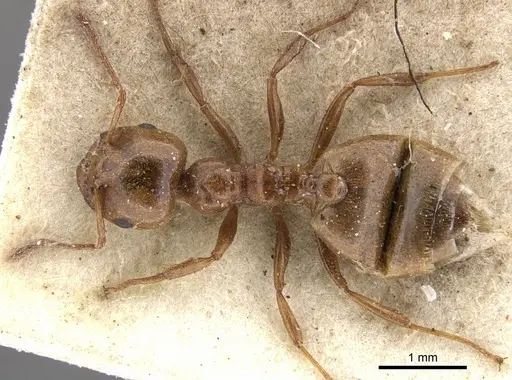
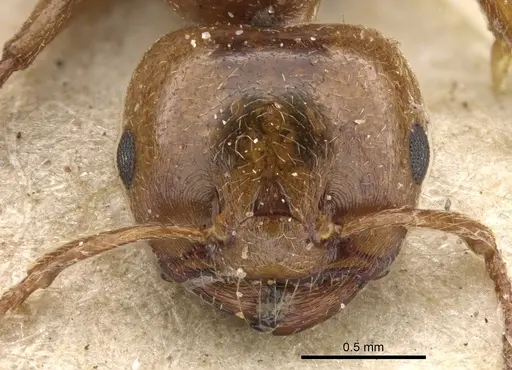
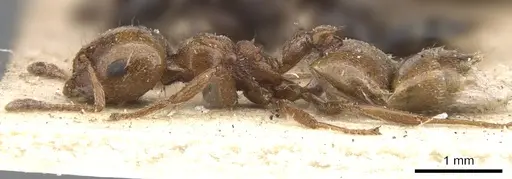
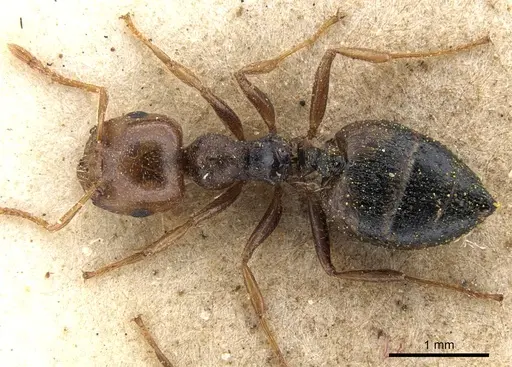
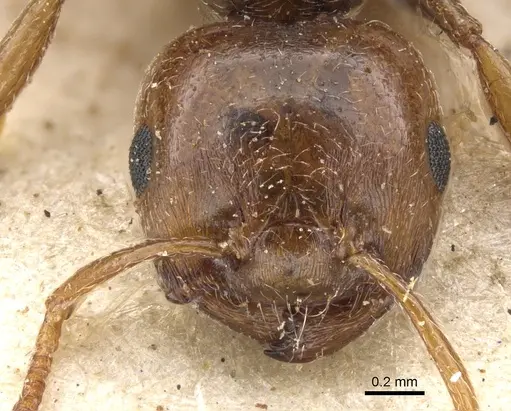
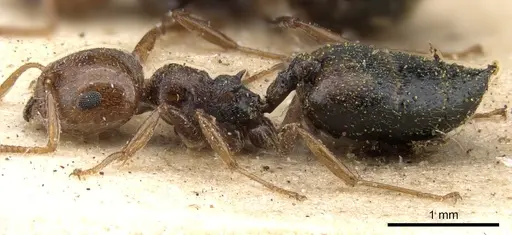
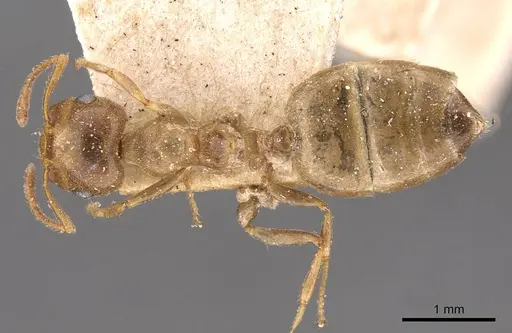
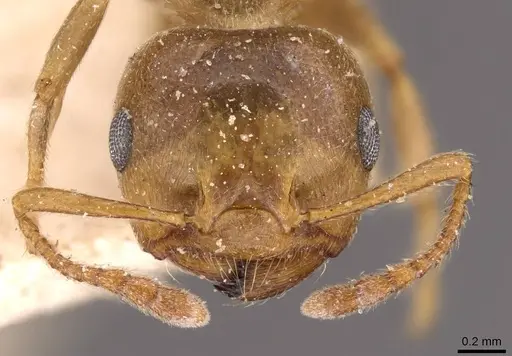
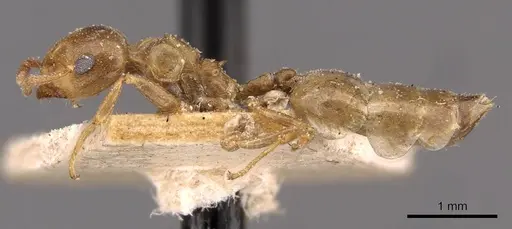
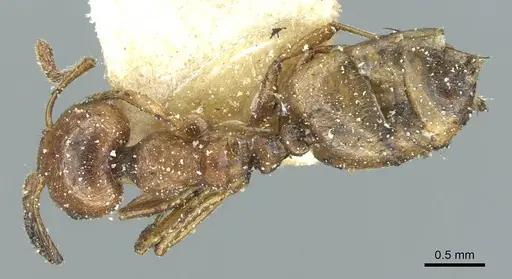
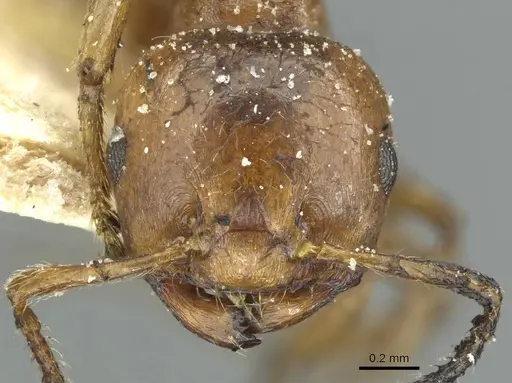
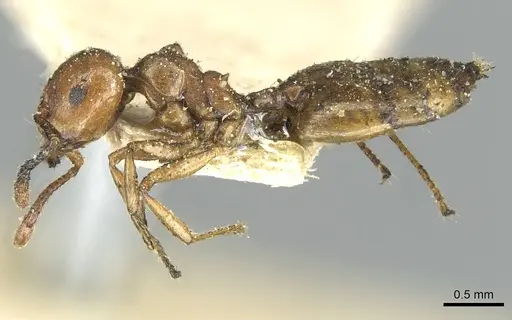
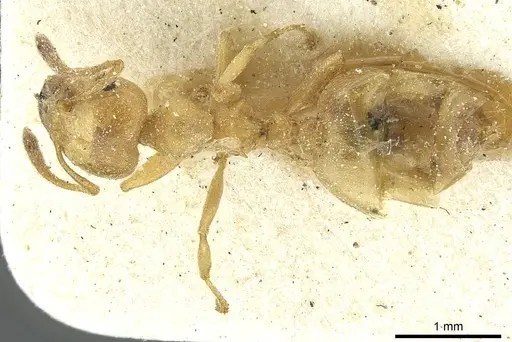
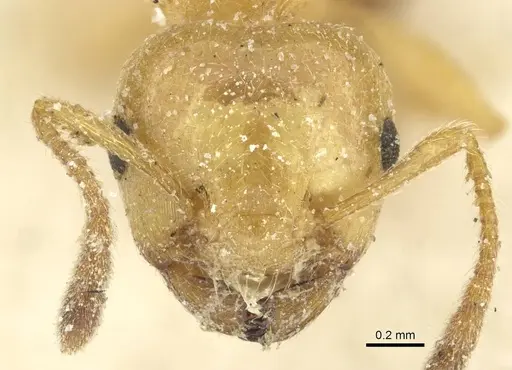
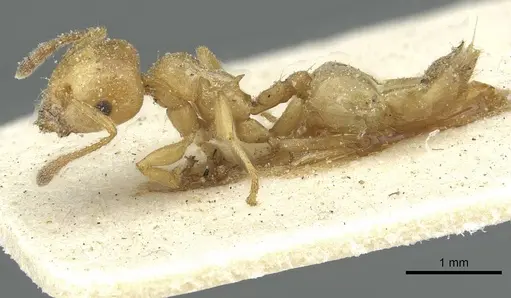
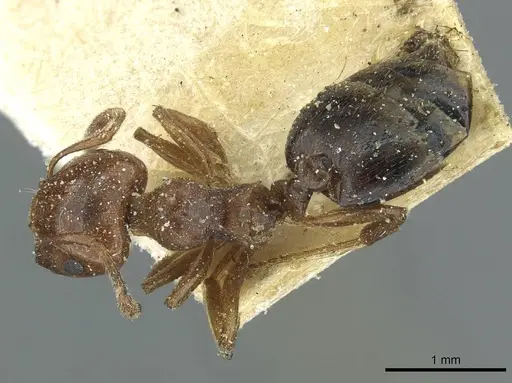
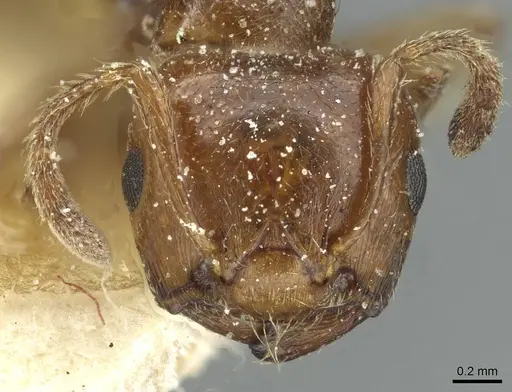
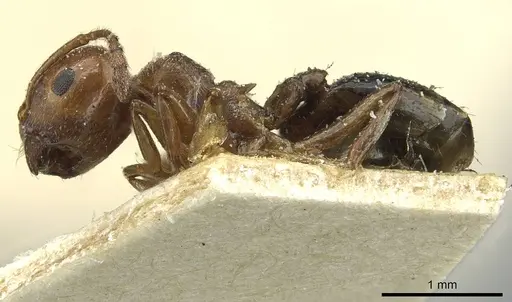
Crematogaster acaciae is a small ant measuring 3-5mm in total length . The body is uniformly yellow with a shining appearance, and they have distinctive long, sharp propodeal spines that are longer than their bases . Their antennal scapes are short and do not reach the posterior margin of the head, and the postpetiole appears broader at the back than at the front when viewed from above . This species was originally described from Ethiopia and is now known across the Afrotropical region, from Somalia south to South Africa, with isolated populations in the Arabian Peninsula (Oman, Saudi Arabia, Yemen) . These ants are typically found nesting in and around acacia trees (Vachellia species) in savannah habitats, though they have also been recorded on other savannah trees like Heywoodia lucens . The genus Crematogaster is known for their distinctive heart-shaped gaster that they raise when threatened, and they use a smear defense mechanism where they wipe venom onto enemies rather than stinging . This species represents a taxonomically challenging group with some morphological variation between the three described subspecies.
Quick Summary
- Difficulty: Medium
- Origin & Habitat: Afrotropical region, originally from Ethiopia, now known from Democratic Republic of Congo, Somalia, South Africa, Zambia, Oman, Saudi Arabia, and Yemen. Found in savannah habitats, typically associated with acacia trees (Vachellia) [2][1][3].
- Colony Type: Colony structure is unconfirmed. Based on typical Crematogaster patterns, they may form polygynous colonies through budding, though this has not been directly documented for this species.
- Size & Growth:
- Queen: size data unavailable, worker size is 3-5mm [1]
- Worker: 3-5mm [1]
- Colony: Unknown for this specific species
- Growth: Moderate
- Development: estimated 4-8 weeks based on typical Crematogaster development (Development time is estimated from related Crematogaster species. Warmer temperatures within their preferred range may accelerate development.)
- Antkeeping:
- Temperature: As an Afrotropical species, keep them warm, aim for 24-28°C. A gentle temperature gradient allows workers to regulate their conditions. Room temperature in most homes (20-24°C) is acceptable as a starting point.
- Humidity: Moderate humidity. These are savannah-associated ants, so they prefer drier conditions than rainforest species. Allow the nest area to partially dry between water additions. Mist sparingly and ensure good ventilation to prevent mold.
- Diapause: Unconfirmed, Afrotropical species may not require true hibernation, but may reduce activity during cooler winter months if room temperature drops significantly.
- Nesting: In nature, they nest in hollow twigs, under bark, and in galls on acacia trees [1]. In captivity, they do well in test tubes for founding colonies, then can be moved to Y-tong nests, plaster nests, or naturalistic setups with wood and branches. They prefer tight, enclosed spaces. Avoid overly wet substrates, they favor drier nest conditions.
- Behavior: Crematogaster acaciae is a relatively calm species that forages actively on trees and vegetation. Like other Crematogaster, they raise their heart-shaped gaster when threatened as a defensive display, they use a smear defense mechanism to wipe venom onto enemies rather than stinging [2]. Workers are agile foragers and may be quick to escape if not contained properly. Their small size (3-5mm) means escape prevention must be excellent, they can slip through tiny gaps. They are arboreal nesters, so they benefit from climbing structures in their outworld.
- Common Issues: escape prevention is critical due to their tiny 3-5mm size, use fine mesh and tight-fitting lids, overheating can be a problem, keep below 30°C as they come from warm but not extreme habitats, too much humidity causes mold issues, these are savannah ants that prefer drier conditions, wild-caught colonies may have parasites that can decimate the colony in captivity, slow founding stage, queens may take several months to raise first workers, patience is required
Nest Preferences and Housing
In the wild, Crematogaster acaciae nests in natural cavities found in acacia trees, including hollow twigs, old beetle burrows in wood, and sometimes galls [1]. They are arboreal nesters, so they prefer enclosed spaces with some wood or bark material. For captive care, start with a simple test tube setup for the founding queen, fill a test tube about 1/3 with water, plug with cotton, and place the queen in the empty portion. Once you have 20+ workers, you can transition to a Y-tong nest, plaster nest, or a naturalistic setup with cork, wood, or plant stems.
These ants do not require high humidity like some tropical species. A test tube water reservoir works well for the founding stage. For established colonies, occasional misting of the outworld is sufficient, avoid saturating the nest area. They do best with a temperature gradient of 24-28°C, with the nest on the warmer side. Include small climbing structures in the outworld since they naturally forage on vegetation.
Feeding and Diet
Crematogaster acaciae is an omnivorous forager, like most Crematogaster species. They collect honeydew from aphids and scale insects, and will also hunt small insects and arthropods. In captivity, offer a varied diet: sugar water or honey as an energy source (place a drop on cotton wool to prevent drowning), and protein sources like small crickets, mealworms, fruit flies, or other small insects. They are small ants, so prey items should be appropriately sized, tiny fruit flies and springtails are ideal.
Feed sugar sources consistently (honey water or a drop of honey) and offer protein 2-3 times per week. Remove any uneaten prey after 24 hours to prevent mold. Because they are arboreal foragers, they may prefer feeding from elevated positions, you can place food on small platforms or plant stems in their outworld. Observe your colony's preferences and adjust feeding frequency accordingly.
Temperature and Seasonal Care
As an Afrotropical species from savannah habitats, Crematogaster acaciae prefers warm conditions. Keep the nest area at 24-28°C for optimal brood development. A heating cable or heating mat on one side of the nest creates a gentle gradient that workers can use to regulate their conditions. Avoid temperatures above 30°C or direct heat sources that could dry out the nest too quickly.
Regarding diapause or winter rest: this species comes from regions near the equator where temperatures remain warm year-round. They likely do not require a true hibernation period. However, if your room temperature drops significantly in winter (below 18°C), you may see reduced activity. Simply maintain room temperature above 20°C and they should remain active year-round. Do not force hibernation on tropical species, it can be harmful rather than beneficial. [2]
Behavior and Colony Dynamics
Crematogaster acaciae displays typical Crematogaster behavior. Workers are active foragers that travel along trails, both on the ground and up vegetation. When threatened, they raise their distinctive heart-shaped gaster and may smear venom onto enemies as a defensive spray, this is the characteristic Crematogaster defense mechanism [2]. They are not particularly aggressive toward keepers but will defend their nest vigorously.
Colony growth is moderate, expect the first workers (nanitics) to emerge 4-8 weeks after the queen lays eggs, depending on temperature. Once established, colonies can grow to several hundred workers. The colony structure is not directly documented for this species. Workers have a lifespan of several months, and the colony will gradually expand through continuous brood production.
Handling and Escape Prevention
Due to their very small size (3-5mm), excellent escape prevention is essential. Workers can slip through incredibly tiny gaps, even the space between a lid and container rim. Use tight-fitting lids, apply fluon (ant barrier) to the rim of the outworld, and use fine mesh (at least 0.5mm or smaller) for any ventilation. When observing or working with the colony, do so quickly and carefully, they are fast movers and can escape in seconds.
When moving colonies, use smooth surfaces they cannot grip (like glass or plastic). Avoid using cotton balls directly in the outworld as bridges, if they need to cross, use paper strips or other materials you can remove. For test tube setups, ensure the cotton plug is packed firmly. These ants are not dangerous to humans, they may mildly bite or smear venom, but the sensation is minor. The main challenge is simply keeping them contained.
Frequently Asked Questions
How long does it take for Crematogaster acaciae to raise first workers?
Based on typical Crematogaster development, expect 4-8 weeks from egg to first worker at optimal temperature (24-28°C). The exact timeline depends on temperature, warmer conditions speed development, while cooler temperatures slow it down. Be patient during the founding stage as queens may take time to lay their first eggs.
What do Crematogaster acaciae eat?
They are omnivorous. Offer sugar sources (honey water, sugar water, or a drop of honey) continuously as energy, and protein (small insects like fruit flies, crickets, mealworms) 2-3 times per week. They are small ants, so keep prey items appropriately sized.
Do Crematogaster acaciae ants sting?
They do not have a painful sting like some ants. When threatened, they raise their heart-shaped gaster and may smear venom onto enemies, this causes mild irritation at most. They are not considered dangerous to humans.
What temperature do Crematogaster acaciae need?
Keep them warm at 24-28°C. A heating cable or mat on part of the nest creates a gradient. Avoid temperatures above 30°C. Room temperature (20-24°C) is acceptable as a starting point but may slow development.
Are Crematogaster acaciae good for beginners?
They are rated as Medium difficulty. They are small and require excellent escape prevention, which can be challenging for complete beginners. However, they are relatively hardy and forgiving once established. Their warm temperature needs and moderate humidity requirements are manageable.
How big do Crematogaster acaciae colonies get?
The exact maximum colony size is unknown for this species. Based on genus patterns, they likely reach several hundred workers. Growth is moderate, expect several months to reach significant numbers.
Do Crematogaster acaciae need hibernation?
No, they come from Afrotropical regions near the equator where temperatures remain warm year-round. They do not require a true hibernation period. Simply maintain normal warm conditions (above 20°C) year-round.
Can I keep multiple Crematogaster acaciae queens together?
The colony structure is not directly documented for this species. Based on typical Crematogaster behavior, they may support multiple queens and may form colonies through budding. However, combining unrelated foundress queens has not been studied, it is not recommended as queens may fight initially.
What nest type is best for Crematogaster acaciae?
They do well in test tubes for founding, then can be moved to Y-tong nests, plaster nests, or naturalistic setups with wood and branches. They prefer enclosed spaces and drier conditions compared to many tropical ants. Avoid overly wet substrates.
Why are my Crematogaster acaciae escaping?
Their small 3-5mm size makes escape likely without proper barriers. Use fine mesh (0.5mm or smaller), tight-fitting lids, and apply fluon to container rims. Check for any tiny gaps around tubing connections. They are excellent climbers and can scale smooth surfaces.
Report an Issue
The current care sheet is based fully on literature. See inconsistencies, or something that's incorrect? Please , it will be resolved after review from an admin. Contributing to the blogs tab also helps providing information, to make us be able to further improve the caresheets. Thank you for your support!
References

この飼育シートのライセンスは: CC BY-SA 4.0 .
コミュニティブログ
文献
分布マップを読み込み中...製品情報を読み込み中...