
Colobopsis longi
- 学名
- Colobopsis longi
- 族
- Camponotini
- 亜科
- Formicinae
- 命名者
- Forel, 1902
- 分布
- 0 か国で発見
紹介
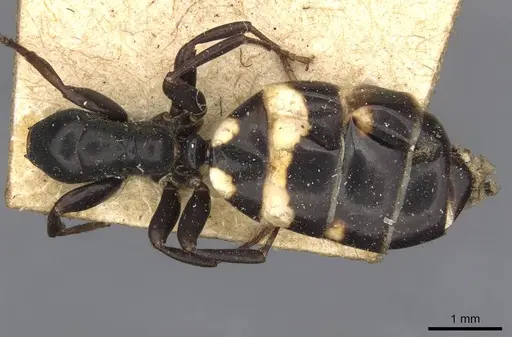
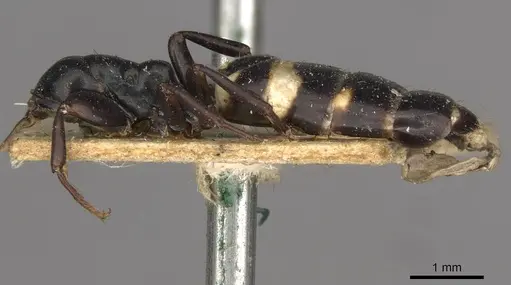
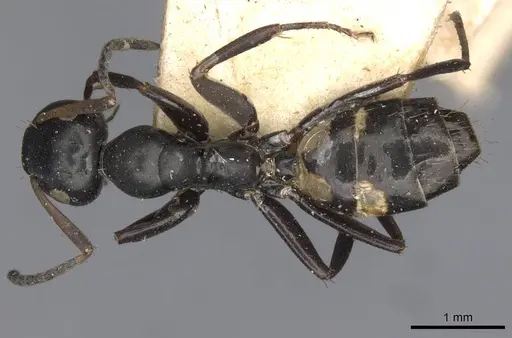
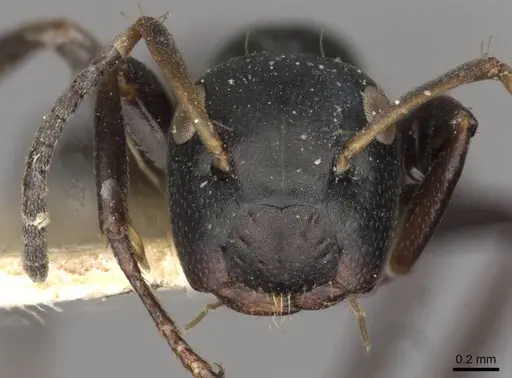
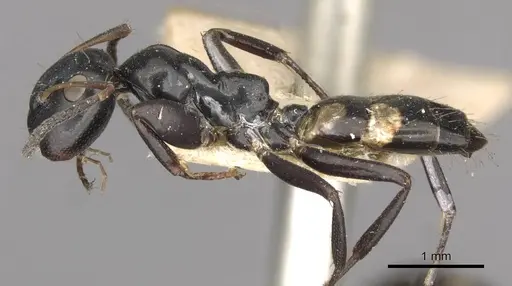
Colobopsis longi is a small carpenter ant native to the Himalayan region of India and Nepal. Originally described as Camponotus longi in 1902, it was reclassified to the genus Colobopsis in 2016 . Workers are dark brown to black with lighter brown legs and antennae. Minor workers have a distinctive elongated neck region extending from the back of the head, giving them a unique appearance . This species remains poorly studied - queens and males have not been described in scientific literature . As a member of the Formicinae subfamily, they lack a stinger but can spray formic acid as a defense.
Quick Summary
- Difficulty: Medium
- Origin & Habitat: Native to the Indomalaya region, specifically the Indian states of Assam, Meghalaya, and Arunachal Pradesh, with a recent record in Nepal [2][3]. These ants inhabit subtropical forest environments in the Himalayan foothills at moderate elevations.
- Colony Type: Colony structure is unconfirmed. No queen specimens have been described in scientific literature [1].
- Size & Growth:
- Queen: Size data unavailable, no queen specimens have been described [1].
- Worker: Size data unavailable, no total length measurements exist for this species. Minor workers are described as very small based on related species patterns.
- Colony: Colony size data unavailable.
- Growth: Growth rate data unavailable.
- Development: Development timeline unconfirmed for this species. (No specific development data exists. Related small Camponotus species typically take 6-8 weeks from egg to worker.)
- Antkeeping:
- Temperature: Keep around 22-26°C. Being from the subtropical Himalayan foothills, they likely tolerate 20-28°C. A temperature gradient allows workers to self-regulate.
- Humidity: Moderate to high humidity around 60-80%. The natural habitat in Assam and Nepal experiences monsoonal rainfall. Keep the nest substrate moist but not waterlogged.
- Diapause: Likely a mild winter slowdown period. Being from a subtropical region, they may not require true hibernation but will reduce activity in cooler months. Consider a brief 2-3 month period at 15-18°C during winter.
- Nesting: In the wild, Colobopsis species typically nest in rotting wood, under bark, or in hollow plant stems. For captivity, a Y-tong (AAC) nest or plaster nest with appropriately scaled chambers works well.
- Behavior: These ants are generally peaceful and not aggressive toward keepers. Like most Colobopsis species, they are arboreal or semi-arboreal. Workers are small but active foragers. Their tiny size means they can slip through small gaps, use fine mesh and tight-fitting lids. They likely forage for honeydew and small insects.
- Common Issues: tiny worker size makes escape prevention critical, even small gaps in tubing or lids can lead to escapes, no published care information means husbandry is pioneering for this species, queen morphology is unknown, so identifying a real queen may be difficult, humidity control is important, too dry and brood will fail, too wet and mold becomes a problem
Housing and Nest Setup
Because of their small size, Colobopsis longi needs appropriately scaled housing. A Y-tong (AAC) nest with narrow chambers or a small plaster nest works well. The chambers should be tight enough that workers feel secure but wide enough for traffic. Test tube setups can work for founding colonies but may need upgrading as the colony grows. Ensure all connections between the nest and outworld use fine mesh or cotton, these workers can push through standard cotton plugs if determined. Provide a water tube attached to the nest for humidity, and consider a small sponge or cotton wick to help maintain moisture in the nest chamber.
Feeding and Diet
Like other Formicinae species, Colobopsis longi is omnivorous with a preference for sugar sources and protein. Offer sugar water, honey, or diluted maple syrup as a constant carbohydrate source. For protein, small prey items like fruit flies, pinhead crickets, or tiny mealworms work well. Given their small worker size, prey items should be appropriately sized, springtails are an excellent choice. They likely also collect honeydew from aphids in the wild. Feed protein 2-3 times per week, and keep sugar water available at all times. Remove uneaten prey after 24-48 hours to prevent mold.
Temperature and Seasonal Care
Maintain temperatures between 22-26°C for optimal colony activity and brood development. This species comes from the subtropical Himalayan foothills where temperatures are moderate year-round. A small heating cable on one side of the nest can create a gradient, allowing workers to move between warmer and cooler areas as needed. During winter in temperate climates, consider reducing temperatures to 15-18°C for 2-3 months to simulate seasonal changes. Avoid temperatures below 15°C or above 30°C for extended periods.
Colony Growth Expectations
Starting a colony of this poorly studied species requires patience. Expect the first workers to emerge several weeks after the queen lays eggs, assuming optimal temperature and feeding. Initial colony growth will be slow. Do not overfeed or flood the nest with food, this species cannot process large quantities of prey efficiently. Quality over quantity applies to both food and patience.
Handling and Observation
These small ants are not dangerous to humans, they lack a stinger and their bite is negligible due to their small size. They can spray formic acid as a defense, but this is harmless to keepers. Their small size makes them vulnerable to environmental stress and easily lost or crushed, so be gentle when working with the colony. Use red film or lighting if you want to observe without disturbing them.
Frequently Asked Questions
How long does it take for Colobopsis longi to produce first workers?
Development timeline is unconfirmed for this species. Related small Camponotus species typically take 6-8 weeks from egg to worker at optimal temperature.
What do Colobopsis longi ants eat?
They eat sugar water, honey, or maple syrup for carbohydrates, and small protein sources like fruit flies, springtails, or tiny mealworms for protein. Feed protein 2-3 times per week and keep sugar water available constantly.
Are Colobopsis longi ants good for beginners?
This species is rated Medium difficulty. While not aggressive, they require careful attention to escape prevention and humidity. They're a good choice if you have experience with small ant species but want something unique.
Do Colobopsis longi ants need hibernation?
They likely need a mild winter rest period rather than true hibernation. Reduce temperatures to 15-18°C for 2-3 months during winter to simulate their natural subtropical environment.
How big do Colobopsis longi colonies get?
Colony size data is unavailable for this species.
What temperature should I keep Colobopsis longi at?
Keep them at 22-26°C. A slight temperature gradient is ideal so workers can choose their preferred warmth. Avoid temperatures below 15°C or above 30°C.
Can I keep multiple Colobopsis longi queens together?
Not recommended. Colony type is unconfirmed for this species, but most carpenter ants form single-queen colonies. Combining unrelated queens would likely result in fighting.
What makes Colobopsis longi different from other carpenter ants?
Their small size and the distinctive elongated neck region on minor workers make them unique. Originally classified as Colobopsis longi, they were reclassified to Colobopsis in 2016.
Why are my Colobopsis longi dying?
Common causes include: too dry conditions (keep substrate moist), escape through tiny gaps (use fine mesh), overfeeding leading to mold, or temperatures outside their 22-26°C range. Their small size makes them vulnerable to environmental stress.
Report an Issue
The current care sheet is based fully on literature. See inconsistencies, or something that's incorrect? Please , it will be resolved after review from an admin. Contributing to the blogs tab also helps providing information, to make us be able to further improve the caresheets. Thank you for your support!
References

この飼育シートのライセンスは: CC BY-SA 4.0 .
コミュニティブログ
文献
分布マップを読み込み中...製品情報を読み込み中...