
Cladomyrma hobbyi
- 学名
- Cladomyrma hobbyi
- 族
- Lasiini
- 亜科
- Formicinae
- 命名者
- Donisthorpe, 1937
- 分布
- 0 か国で発見
紹介
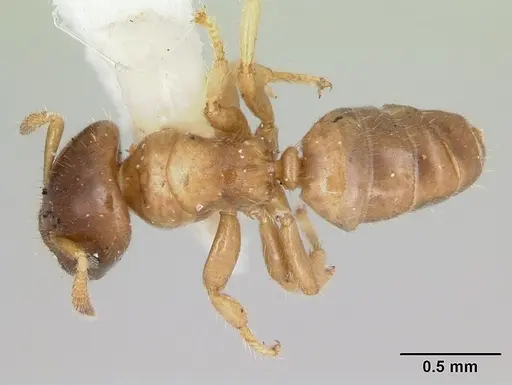
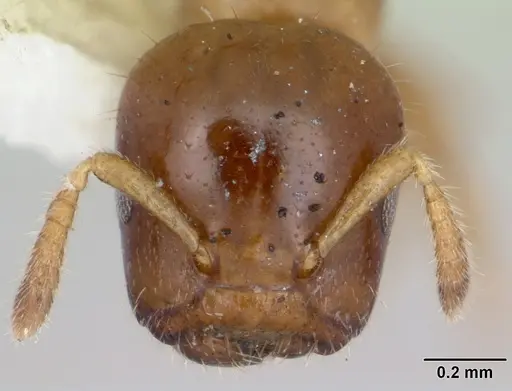
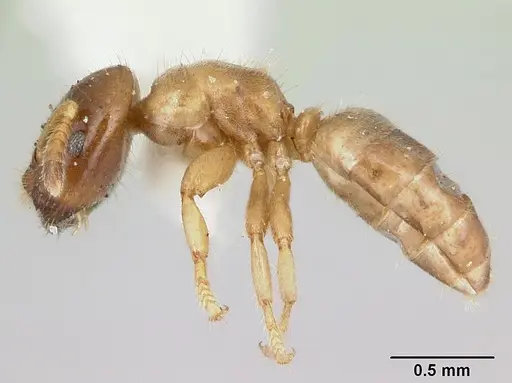
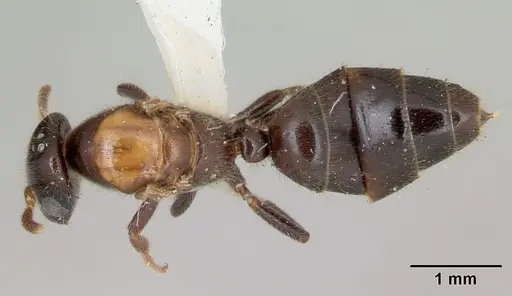
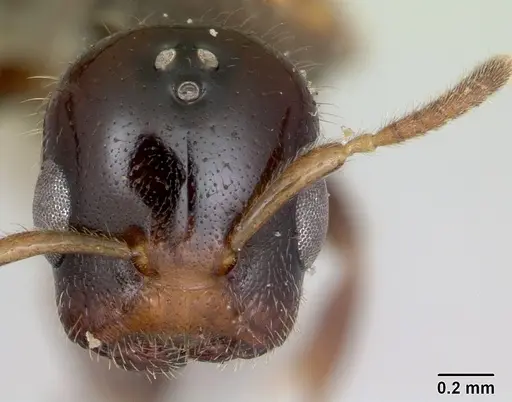
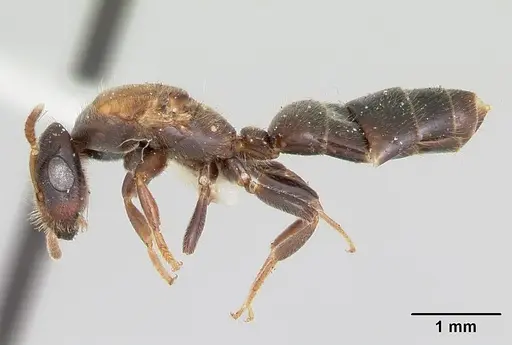
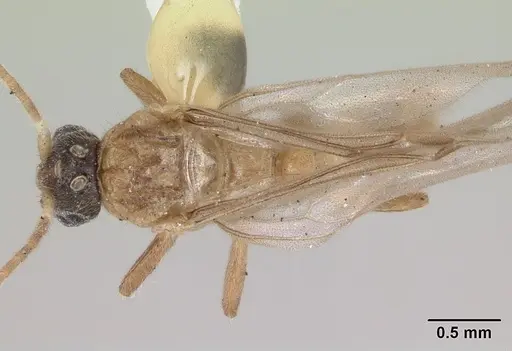
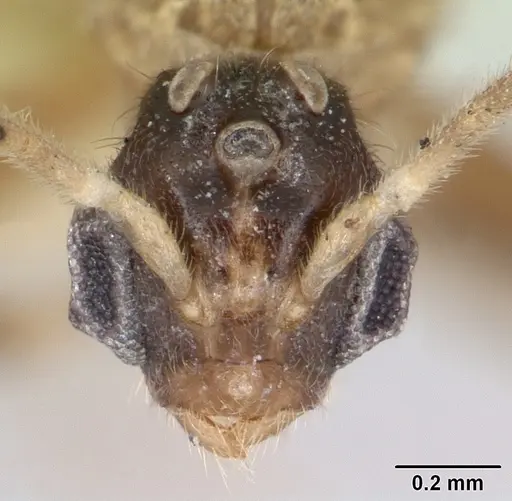
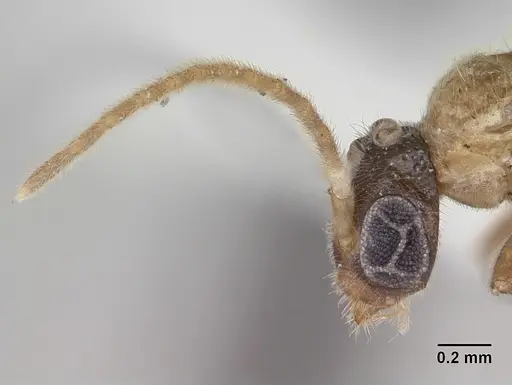
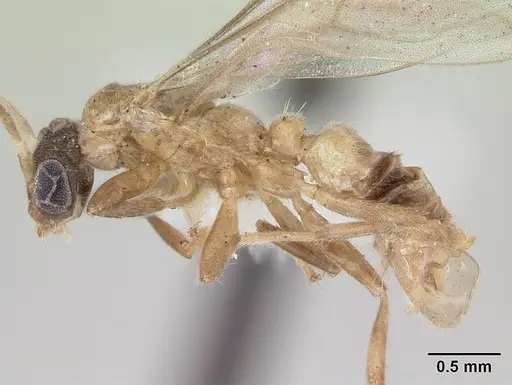
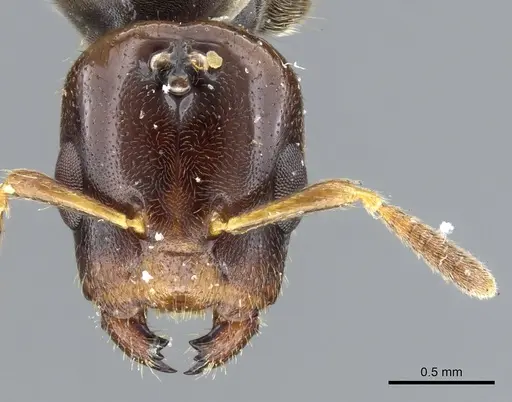
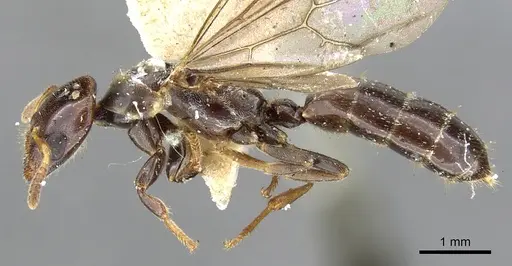
Cladomyrma hobbyi is an extremely small plant-ant from Borneo and nearby parts of Southeast Asia. Workers are tiny, their exact total body length hasn't been recorded in studies, which only measured body parts like the head and middle section . They are yellowish-brown, with a brownish-red upper middle section (alitrunk) that stands out against the lighter head and rear . Queens are larger, but again total length is not known; they have an elongated head and a low, gently sloping petiole (the narrow waist segment) . This species belongs to the “depressed petiole” group within Cladomyrma, meaning the petiole is low and slopes back rather than standing upright . Type specimens were collected in Sarawak in 1932 at about 1350 meters elevation, in moss forest, using light traps . The most unusual thing about C. hobbyi is that it lives on plants, specifically the woody liana Spatholobus oblongifolius and the understory tree Drypetes longifolia . In exchange for food and shelter, the ants likely defend their host plants from herbivores. This plant-ant lifestyle is very different from ground-nesting ants, which makes keeping them in captivity a special challenge.
Quick Summary
- Difficulty: Expert
- Origin & Habitat: Borneo (Sarawak, Malaysia) and Indonesia, found in tropical rainforests from lowlands up to about 1370 m in moss forest [1][2]
- Colony Type: Colony structure is unconfirmed, this poorly studied tropical plant-ant has no documented colony observations.
- Size & Growth:
- Queen: Unknown, only partial measurements (mesosomal length 1.84-2.16 mm) are recorded, total length data unavailable [1]
- Worker: Unknown, only partial measurements (mesosomal length 0.57-1.08 mm) are recorded, total length data unavailable [1]
- Colony: Unknown, no colony size data exists
- Growth: Unknown
- Development: Unknown, based on related tropical Formicinae, likely 4-8 weeks at optimal warm temperatures, but this is unconfirmed (No direct development data exists for this species.)
- Antkeeping:
- Temperature: Likely needs warm, stable conditions around 24-28°C based on tropical rainforest origin, no direct data, so start here and observe colony behavior
- Humidity: High humidity required, these rainforest plant-ants need consistently moist but not waterlogged substrate, with good ventilation to prevent mold
- Diapause: Unlikely, being a tropical species, they probably do not need winter dormancy. Seasonal slowdowns may occur during cooler or drier periods
- Nesting: This species lives on plants (plant-ant), not in ground nests. A naturalistic setup with live or artificial plants would be most appropriate. Small test tubes may work for founding, but they will eventually need access to plant-like cavities. Y-tong or plaster nests with added plant material might work.
- Behavior: Cladomyrma hobbyi is a plant-ant that lives on host plants. Workers are extremely small, escape prevention is critical as they can slip through the tiniest gaps. Temperament is unknown, but plant-ants are typically defensive of their host plants. They are not likely to be dangerous to humans, as their minute size makes effective stinging or biting very unlikely.
- Common Issues: extremely small size makes escape prevention very difficult, use fine mesh barriers (0.5 mm or tighter)., no established captive care, expect a steep learning curve and likely colony loss., host plant requirements are unclear, may not adapt to artificial setups., high humidity needs can cause mold problems if ventilation is poor., wild-caught colonies may fail due to stress and lack of appropriate plant housing.
Understanding Cladomyrma Hobbyi as a Plant-Ant
Cladomyrma hobbyi is a specialized plant-ant, living closely with specific host plants instead of nesting in soil or wood. Research has documented this species on two plant types: the woody liana Spatholobus oblongifolius (legume family) and the understory tree Drypetes longifolia [1]. The ants likely live inside hollow stems or plant cavities, feeding on honeydew produced by the plant or scale insects. It’s a mutualistic relationship, plants get protection from herbivores, ants get food and shelter. In captivity, replicating this plant-based lifestyle is essential but tough. You could try bamboo sections, artificial vines, or other structures that mimic natural plant cavities.
Housing and Nest Setup
Because C. hobbyi is a plant-ant, standard ground-nesting setups (like regular test tubes) probably won't work long-term. For founding colonies, a small test tube can serve as a temporary home, especially if it’s humid and the queen can seal herself in. For established colonies, aim for a naturalistic setup: small bamboo sections, artificial vines, or a container with plant material. The enclosure must be escape-proof, workers are extremely small, so use fine mesh (0.5 mm or tighter). Provide a water source (a test tube with cotton or a small cotton ball) and ensure the setup has both humid and well-ventilated areas.
Feeding and Nutrition
As a plant-ant, C. hobbyi likely feeds mainly on honeydew and nectar in the wild, plus small insects. In captivity, offer sugar water or diluted honey constantly as an energy source. For protein, give tiny live prey like springtails, fruit flies, or other very small insects. Standard ant feeders like mealworms are too large, focus on the smallest prey you can get. It’s unknown how well they accept artificial sugar sources, so offer both sugar and live prey and watch what they take. Remove uneaten food quickly to avoid mold in the humid environment.
Temperature and Humidity Management
Tropical rainforest ants from Borneo need warm, humid conditions. Aim for temperatures around 24-28°C. A small heating mat on one side of the enclosure can help, but always provide a temperature gradient so the ants can move to cooler spots if needed. Humidity should be high, think damp forest conditions. Keep the nesting material consistently moist but not waterlogged. Poor ventilation combined with high humidity invites mold, which can kill the colony. Use adequate ventilation (a fine mesh panel or small holes) while maintaining moisture.
Challenges and Experimental Care
Honestly, Cladomyrma hobbyi has never been successfully kept in captivity as far as is known. There is no standard care protocol, no documented captive breeding, and very little scientific data. Everything above is inferred from their natural habitat and related ant biology. That makes this an experimental species for expert antkeepers only. If you get a colony (likely wild-caught), expect a learning process. Watch colony behavior closely: active foraging means conditions are likely okay, sluggish or dying workers mean something is wrong, adjust temperature, humidity, or feeding. The biggest risks are escape (tiny size), mold (humidity balance), and stress from captivity preventing colony growth. Success would be a real achievement and would help the antkeeping community understand this species.
Frequently Asked Questions
How do I keep Cladomyrma hobbyi ants?
This is an expert-level species with no established captive care protocol. They are tropical plant-ants that live on vegetation, not in ground nests. Provide a warm (24-28°C), humid setup with access to plant material or structures that mimic plant cavities. Use very fine mesh for escape prevention because workers are minute.
What do Cladomyrma hobbyi ants eat?
As plant-ants, they likely eat honeydew and nectar in the wild, plus small insects. In captivity, offer sugar water or honey water constantly, plus tiny live prey like springtails or fruit flies. Standard ant feeders are too large for these minute ants.
How big do Cladomyrma hobbyi colonies get?
Colony size is unknown, no scientific data exists. As plant-ants, colonies are probably smaller than ground-nesting species, possibly under 100 workers, but this is just a guess.
Can beginners keep Cladomyrma hobbyi?
No. This species is rated Expert because there is no captive care information available, they have very specific plant-ant needs, and their tiny size makes husbandry challenging. Only experienced antkeepers should attempt this species.
Do Cladomyrma hobbyi need hibernation?
Unlikely, being a tropical species from Borneo, they probably do not need a winter dormancy period. They may slow down during cooler or drier seasons in the wild, but captive colonies should be kept warm year-round.
What is the egg to worker timeline for Cladomyrma hobbyi?
Unknown, no development data exists for this species. Based on related tropical Formicinae, development likely takes 4-8 weeks at optimal warm temperatures, but this is an estimate.
Can I keep multiple Cladomyrma hobbyi queens together?
Unknown, colony structure has not been documented for this species. Do not attempt combining unrelated queens until more is known.
Why are my Cladomyrma hobbyi dying?
Without established care protocols, colony failure is likely due to incorrect temperature, humidity, or lack of appropriate plant-based housing. Wild-caught colonies may also struggle with captive conditions. Ensure warm temperatures (24-28°C), high humidity, fine escape prevention, and appropriate tiny prey.
What nest type is best for Cladomyrma hobbyi?
Traditional nests may not work well for this plant-ant. A naturalistic setup with plant material, bamboo sections, or artificial structures that mimic plant cavities is most appropriate. Test tubes can work temporarily for founding colonies.
Report an Issue
The current care sheet is based fully on literature. See inconsistencies, or something that's incorrect? Please , it will be resolved after review from an admin. Contributing to the blogs tab also helps providing information, to make us be able to further improve the caresheets. Thank you for your support!
References

この飼育シートのライセンスは: CC BY-SA 4.0 .
コミュニティブログ
文献
分布マップを読み込み中...製品情報を読み込み中...