
Cephalotes taino
- 学名
- Cephalotes taino
- 族
- Attini
- 亜科
- Myrmicinae
- 命名者
- De Andrade, 1999
- 分布
- 0 か国で発見
紹介
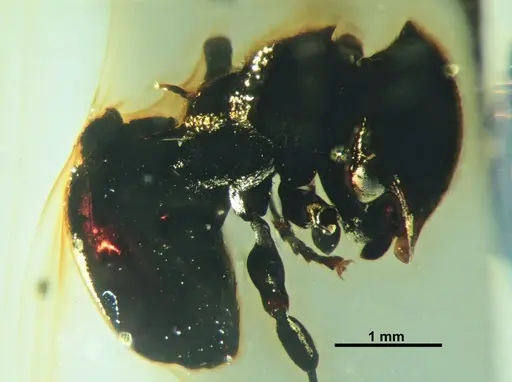
Cephalotes taino is an extraordinary ant species known only from fossil specimens preserved in Dominican copal, a young amber dating to less than 280 years old. Workers measure 6.48 mm in total length, making them relatively large for the genus. They belong to the hamulus clade, characterized by distinctive sinuous body sculpture and a first gastral tergite that is entirely reddish-brown - a striking feature contrasting with their otherwise black coloration. The species was described in 1999 by de Andrade and Baroni Urbani from a single worker preserved in copal. The deep piligerous foveae on the gastral dorsum represent one of the most distinctive identifying characters. Given the young age of Dominican copal, researchers speculate this species may still exist undiscovered on Hispaniola today .
Quick Summary
- Difficulty: Unknown, species only known from fossil specimens
- Origin & Habitat: Dominican Republic, Hispaniola Island in the Greater Antilles. Known only from copal (young amber) deposits, suggesting a potential arboreal or semi-arboreal nesting habitat similar to other Cephalotes species [1][2].
- Colony Type: Unknown, no living colonies have been documented
- Size & Growth:
- Antkeeping:
- Temperature: Unknown, no living specimens available for care
- Humidity: Unknown, no living specimens available for care
- Diapause: Unknown, no living specimens available for care
- Nesting: Presumed similar to other Cephalotes species: likely nests in hollow twigs, branches, or rotting wood in arboreal settings. No direct observations exist for this species [3].
- Behavior: Behavior unobserved, no living specimens documented. Based on genus patterns, Cephalotes ants are typically arboreal, docile, and use their heads as a door for nest defense.
- Common Issues: This species is only known from fossil specimens, no living colonies exist in captivity, The species may be extinct if not rediscovered on Hispaniola, No captive breeding programs or established lineages exist, Care requirements are entirely speculative based on genus-level information
Species Status and Discovery
Cephalotes taino represents one of the most intriguing cases in ant taxonomy, a species known only from fossil specimens in Dominican copal, yet potentially still extant. The species was described in 1999 by Maria L. de Andrade and Cesare Baroni Urbani from a single worker specimen preserved in copal collected from the Dominican Republic. The copal itself is dated to less than 280 years old, which is remarkably young for fossil amber. This has led researchers to speculate that C. taino might still survive undiscovered on Hispaniola today, making it a potential living fossil waiting to be found. The species name taino honors the Taino people, the indigenous inhabitants of Hispaniola at the time of European contact [1][2].
Identification and Morphology
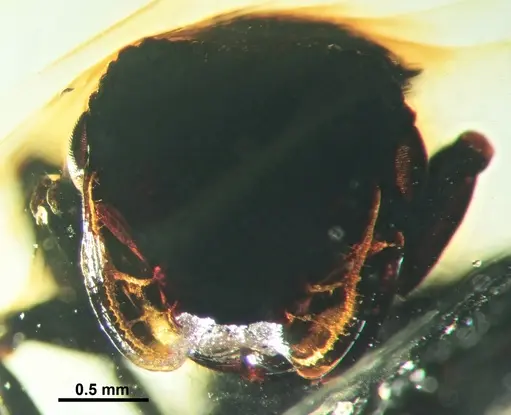
Workers of Cephalotes taino can be identified by a combination of unique characters placing them in the hamulus clade. The most distinctive feature is the presence of relatively deep piligerous foveae on the gastral dorsum, these are more deeply impressed than in related species like Cephalotes flavigaster and Cephalotes argentiventris. The body sculpture is sinuous, and the first gastral tergite is entirely reddish-brown, creating a striking contrast with the otherwise black body. Additional identifying features include black coloration with dark orange to light brown tips on the propodeal spines, scapes, and tarsomeres. The worker measures 6.48 mm in total length [2].
Taxonomic Relationships
Cephalotes taino shows clear evolutionary relationships with two other recent living species: Cephalotes flavigaster and Cephalotes argentiventris. These three species share the sinuous body sculpture, the absence of rugosities on the anterior fourth of the gastral dorsum, and a narrow basal face of the propodeum. The reddish-brown first gastral tergite is shared with Cephalotes flavigaster and Cephalotes vinosus, though C. vinosus differs in having much denser pilosity and more regular striae. C. taino also shares with Cephalotes resinae (another copal species) the presence of pilosity hiding the sculpture on the basal face of the propodeum, but C. resinae can be distinguished by its more regular striation and completely black body [2].
Defense Mechanism
Cephalotes taino belongs to the subfamily Myrmicinae and tribe Attini. Members of this group possess a functional stinger used to inject venom, though the sting is less medically significant to humans than that of fire ants.
Cephalotes Genus Care Notes
While specific care information for C. taino does not exist (as no living colonies have been documented), general guidance for the genus Cephalotes can be inferred from related living species. Cephalotes ants are commonly called turtle ants due to their unique ability to tuck their heads beneath their pronotum for defense. They are typically arboreal or semi-arboreal, nesting in hollow twigs, branches, and rotting wood in forest habitats. Colonies often have polymorphic workers, including larger soldier castes with enlarged heads. In captivity, most Cephalotes species accept sugar water, honey, and small insects. They prefer warm, humid conditions and benefit from vertical nesting structures that mimic their natural arboreal habitats. However, these are general genus observations and should not be assumed to apply specifically to C. taino [3].
Frequently Asked Questions
Can I keep Cephalotes taino ants as a pet?
No, Cephalotes taino is only known from fossil specimens in Dominican copal. No living colonies have ever been documented, and the species may be extinct. Even if it survives undiscovered on Hispaniola, wild collection would be extremely difficult and potentially harmful to endangered populations. No captive-bred colonies exist in the antkeeping hobby.
Is Cephalotes taino still alive today?
We do not know. The species was described from fossil specimens in Dominican copal that is less than 280 years old. Researchers have noted that because the copal is so young, C. taino might still be discovered living on Hispaniola today. However, no living specimens have ever been recorded since the original fossil description in 1999 [1].
What does Cephalotes taino look like?
Workers are approximately 6.48 mm in total length. They are primarily black with a distinctive reddish-brown first gastral tergite. The body has a characteristic sinuous sculpture pattern, and the head bears deep pit-like foveae. The propodeal spines and leg tips are dark orange to light brown [2].
Where does Cephalotes taino live?
The only known specimens come from Dominican copal deposits on the island of Hispaniola in the Greater Antilles. If the species still exists, it would likely be found in forest habitats similar to other Cephalotes species, potentially in arboreal situations [1][2].
How do I identify Cephalotes taino?
Cephalotes taino workers can be identified by: total length of 6.48 mm, sinuous body sculpture, entirely reddish-brown first gastral tergite contrasting with black body, deep piligerous foveae on the gastral dorsum, and dark orange tips on propodeal spines and tarsomeres. It belongs to the hamulus clade of the genus Cephalotes [2].
Are there similar ants I can keep instead?
Yes, several living Cephalotes species are available in the antkeeping hobby. Related species like Cephalotes flavigaster, Cephalotes argentiventris, and other members of the hamulus clade may share similar morphology and care requirements. These arboreal ants typically nest in wood and twigs and prefer warm, humid conditions. Always ensure any ants you purchase are captive-bred and legally obtained [3].
What is Dominican copal?
Copal is a young, semi-fossilized tree resin that is younger than true amber. Dominican copal is between 20-280 years old, making it very recent geologically. Unlike amber which is millions of years old, copal can preserve relatively recent insects, in this case, potentially still-extant species like C. taino [1].
Why is Cephalotes taino important?
Cephalotes taino represents a potential living fossil, a species known only from very recent fossils that might still exist undiscovered. If the species is indeed extinct, it represents a recent extinction event. If it survives, it would be a significant discovery for myrmecology. The species also provides evolutionary insights into the relationships within the Cephalotes genus [1][2].
Report an Issue
The current care sheet is based fully on literature. See inconsistencies, or something that's incorrect? Please , it will be resolved after review from an admin. Contributing to the blogs tab also helps providing information, to make us be able to further improve the caresheets. Thank you for your support!
References

この飼育シートのライセンスは: CC BY-SA 4.0 .
コミュニティブログ
SMNSDOC3014
AntWebで見る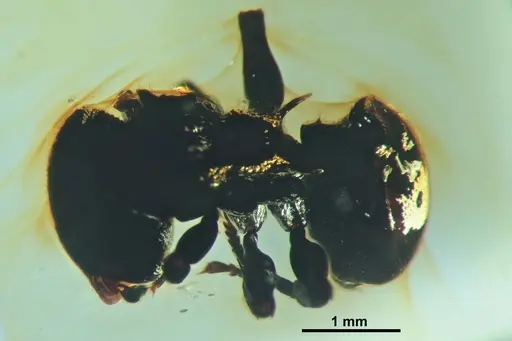
文献
分布マップを読み込み中...製品情報を読み込み中...