
Centromyrmex hamulatus
- 学名
- Centromyrmex hamulatus
- 族
- Ponerini
- 亜科
- Ponerinae
- 命名者
- Karavaiev, 1925
- 分布
- 0 か国で発見
紹介
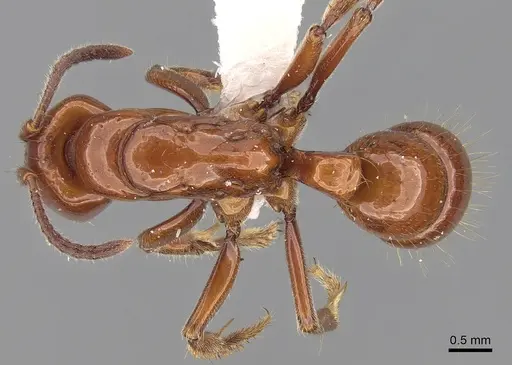
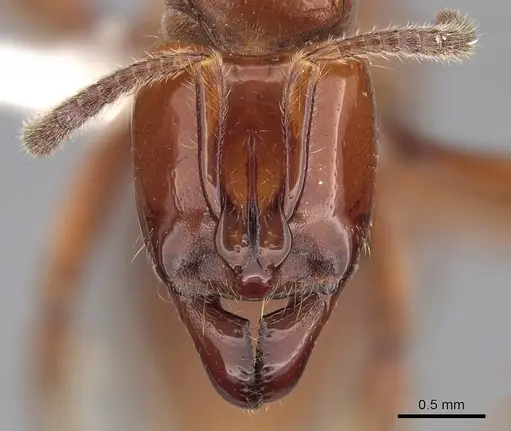
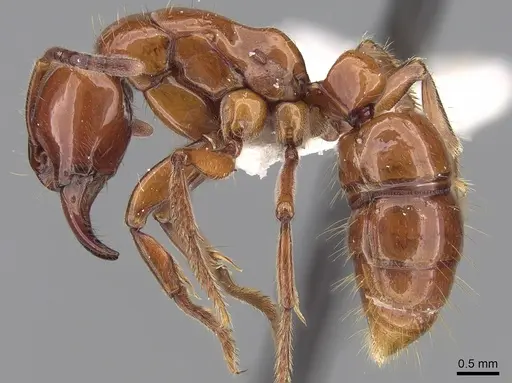
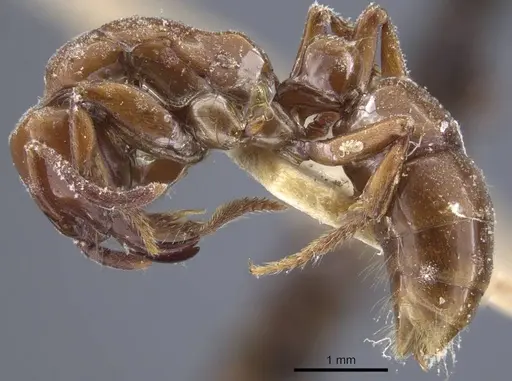
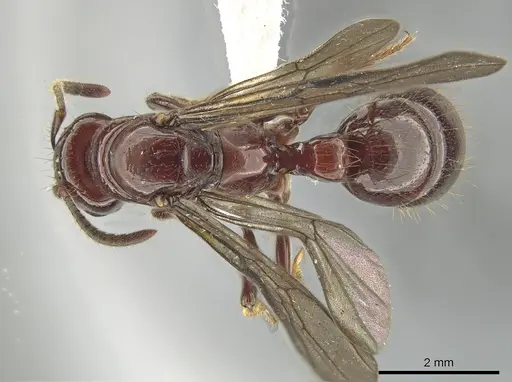
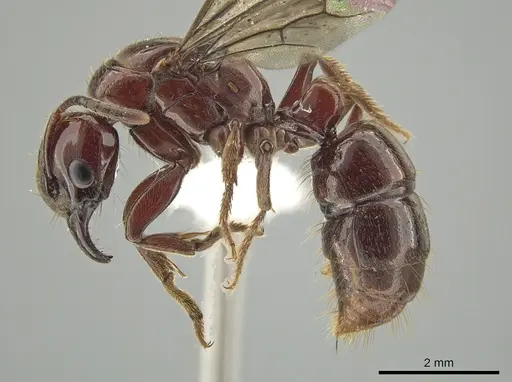
Centromyrmex hamulatus is a medium-sized ponerine ant native to the Malesian region, found in Indonesia (Sumatra) and Singapore. Workers measure 7-9mm and have a distinctive reddish rust-brown coloration with a smooth, shiny body. This species is unique as the sole member of the hamulatus species group, forming a morphological bridge between the bequaerti and feae species groups within the genus. The workers feature unusual characteristics including a strong constriction of the second gastral segment with cross-ribbing, a subpetiolar process with stout teeth, and reduced eyes typical of subterranean or cryptic nesting habits. Nothing is known about the biology of this species in the wild, making it one of the least studied ants in the Ponerinae subfamily.
Quick Summary
- Difficulty: Expert
- Origin & Habitat: Found in the Malesian region, specifically Indonesia (Sumatra) and Singapore in the Indomalaya region [1][2]. The original specimens were collected from Siak, Sungei Pinang in Sumatra, often associated with termite nests (Capritermes, Mirotermes, and Eutermes) [3].
- Colony Type: Colony structure is unconfirmed. Only the queen and male have been described (Karavaiev 1926), but colony founding behavior and queen number have not been documented.
- Size & Growth:
- Queen: size data unavailable, queen has been described but no measurements exist in available literature
- Worker: 7-9mm [3]
- Colony: Unknown, no colony size data available
- Growth: Unknown, no development data available
- Development: unconfirmed, no direct measurements exist (Development timeline is completely unstudied for this species.)
- Antkeeping:
- Temperature: No specific thermal data exists for this species. As a tropical Malesian species, keep at 24-28°C and use a heating cable on one side of the nest to create a gentle gradient.
- Humidity: No humidity data exists. As a species associated with termite nests in tropical Sumatra, aim for 70-80% relative humidity. Keep the nest substrate consistently moist but not waterlogged.
- Diapause: Unlikely, as a tropical species from near the equator, they probably do not require a diapause period.
- Nesting: No direct nesting observations exist. The original specimens were collected with termites, suggesting they may nest in close association with termite colonies or in rotting wood. In captivity, a naturalistic setup with moist substrate or a Y-tong/plaster nest works well for Ponerinae species. The reduced eyes suggest cryptic, subterranean nesting habits.
- Behavior: Behavior is completely unstudied. Based on genus-level patterns, Centromyrmex species are typically cryptic, slow-moving predators. The reduced eyes and smooth, shiny body suggest specialized subterranean or cryptic foraging. Workers likely forage individually rather than in groups. Escape risk is moderate, workers are 7-9mm so standard barriers should work, but their cryptic nature means they may escape through small gaps if overlooked.
- Common Issues: completely unstudied biology means all care recommendations are estimates based on genus patterns, no confirmed diet, Ponerinae are typically predatory, but specific prey acceptance is unknown, no data on founding behavior, queen may be claustral or semi-claustral is unknown, association with termites in the wild suggests possible predatory or inquiline relationship, keep separate from any termite colonies, slow growth typical of Ponerinae may frustrate beginners expecting rapid colony development
Species Identification and Morphology
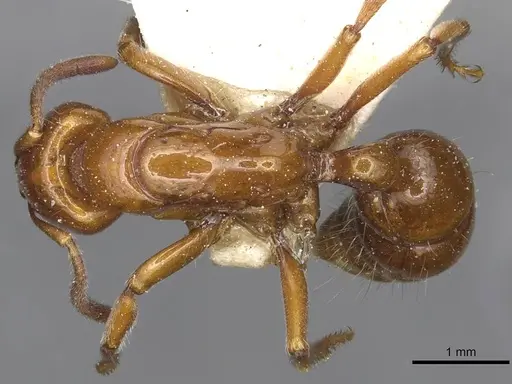
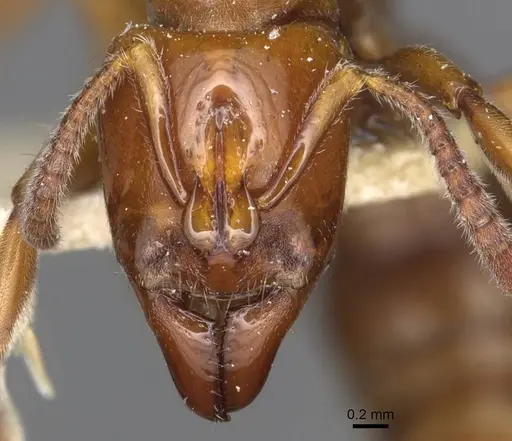
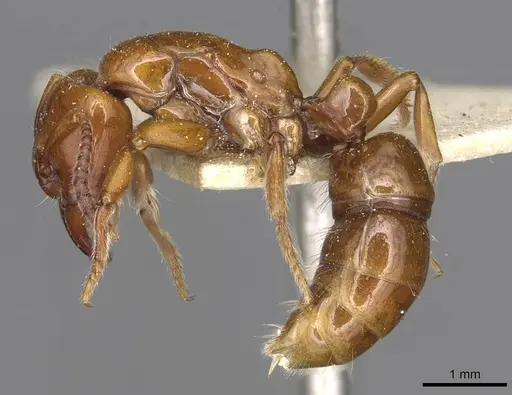
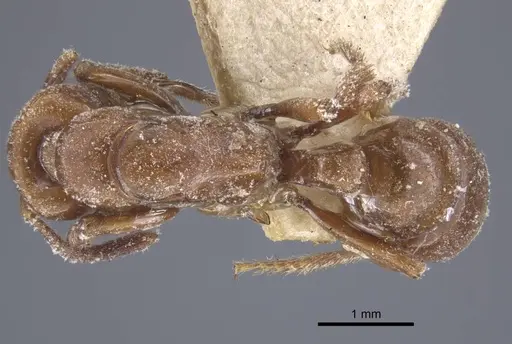
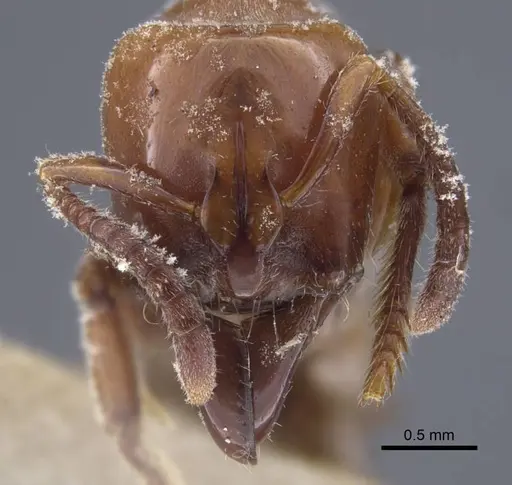
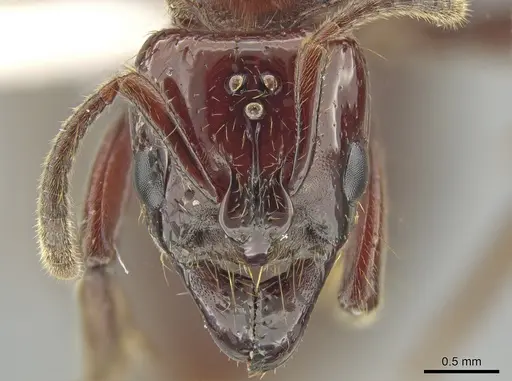
Centromyrmex hamulatus workers are distinctive 7-9mm ants with a smooth, shiny reddish rust-brown body. The species is unique as the sole member of the hamulatus species group, characterized by several unusual features: mesotibia and metatibia each with only one spur (most Centromyrmex have two on the mesotibia), a subpetiolar process with a pair of stout teeth, a mesopleuron with a weak transverse sulcus, and most notably a strong constriction of the second gastral segment that is conspicuously cross-ribbed. The eyes are extremely rudimentary, appearing as small dots with barely visible facets, this reduction is typical of ants that live in dark, cryptic microhabitats. The mandibles are elongated and curved, adapted for predatory behavior. Workers are monomorphic, meaning all workers look the same size and shape. The original description noted specimens were collected alongside termites (Capritermes, Mirotermes, and Eutermes), suggesting possible predatory or ecological association with termite colonies. [1][2][3]
Distribution and Habitat
This species is known only from the Malesian region, specifically Sumatra (Indonesia) and Singapore. The type locality is Siak, Sungei Pinang in Sumatra, where the original specimens were collected by O. John in 1912-1913. The Malesian region encompasses the tropical areas of Southeast Asia including the Malay Peninsula, Indonesia, and the Philippines, this is one of the most biodiverse regions for ants. The association with termites in the original collection data is noteworthy, specimens were found alongside Capritermes, Mirotermes, and Eutermes termites. This could indicate nesting in or near termite colonies, predatory behavior on termites, or simply shared microhabitat preferences. The tropical rainforest environment of Sumatra features high humidity and warm temperatures year-round. [1][2][3]
Known Biology and Care Challenges
It must be emphasized that absolutely nothing is known about the biology of Centromyrmex hamulatus, this is one of the least studied ant species in the Ponerinae subfamily. No observations exist on colony size, founding behavior, diet preferences, reproductive biology, or any aspect of their natural history. The genus Centromyrmex contains around 10 species distributed across the Old World tropics. What little is known about the genus suggests these are cryptic, slow-moving predators that nest in rotting wood or soil, often in association with termite colonies. For this species, all care recommendations must be considered estimates based on genus-level patterns and the general requirements of other Ponerinae ants. [1][2]
Housing and Nesting Recommendations
Since nothing is known about this species' nesting preferences, recommendations must be based on genus patterns and what little can be inferred from morphology. The reduced eyes suggest they are adapted to low-light conditions and likely nest in cryptic locations, possibly in rotting wood, under stones, or in close association with termite colonies. A naturalistic setup with moist substrate (like a terrarium-style formicarium) would be a good starting point. Y-tong or plaster nests also work well for Ponerinae species, as they allow you to maintain high humidity while observing the colony. The nest should be kept dark or dimly lit, reflecting their cryptic nature. Given the association with termites in collection data, avoid housing them near any termite colonies, the relationship (if any) is unknown and could be predatory. Provide multiple chambers at different humidity levels so the ants can self-regulate.
Feeding and Diet
Diet is completely unconfirmed for this species. As a Ponerine ant, they are expected to be predatory, but the specific prey types they accept are unknown. Based on genus patterns, offer small live prey such as fruit flies, small crickets, mealworms, and other appropriately-sized insects. Some Ponerinae accept sugar sources, but this varies by species. Given their cryptic nature and the unknown specifics of their diet, be prepared to experiment with different prey types. Start with small live prey and observe acceptance.
Temperament and Defense
Ponerine ants are typically well-equipped for defense, with potent stings and strong mandibles. This species belongs to the Ponerinae subfamily, which is known for having functional stings. Workers are 7-9mm, large enough to deliver a noticeable sting. Based on genus patterns, expect them to be somewhat docile when undisturbed but capable of defensive stinging if threatened. Their slow movement and cryptic nature suggest they are not aggressive foragers but will defend the nest if necessary. [1][2]
Frequently Asked Questions
How difficult is Centromyrmex hamulatus to keep?
This species is rated Expert difficulty because virtually nothing is known about its biology. All care recommendations are estimates based on genus patterns rather than species-specific data. You should have experience with other Ponerinae species before attempting this ant.
What do Centromyrmex hamulatus eat?
Diet is unconfirmed. Based on genus patterns, they are likely predatory and may accept small live prey like fruit flies, small crickets, and mealworms. Experiment with different prey types to see what they accept.
What temperature should I keep Centromyrmex hamulatus at?
No specific data exists. As a tropical species from Sumatra, keep them at 24-28°C. Use a heating cable on one side of the nest to create a gentle gradient.
Do Centromyrmex hamulatus need hibernation?
Unlikely. As a tropical species from near the equator in Indonesia, they probably do not require a diapause period. A slight seasonal temperature reduction may be beneficial but is not required.
How big do Centromyrmex hamulatus colonies get?
Unknown, no colony size data exists for this species.
What type of nest should I use for Centromyrmex hamulatus?
No specific nesting data exists. Based on their reduced eyes and cryptic nature, use a naturalistic setup with moist substrate or a Y-tong/plaster nest. Keep the nest area dark or dimly lit. Provide multiple chambers at different humidity levels.
Where is Centromyrmex hamulatus found?
This species is known only from the Malesian region, specifically Sumatra (Indonesia) and Singapore. The original specimens were collected from Siak, Sungei Pinang in Sumatra.
How long does it take for Centromyrmex hamulatus to develop from egg to worker?
Unconfirmed, no development data exists for this species.
Can I keep multiple Centromyrmex hamulatus queens together?
Unknown, colony structure has never been documented for this species. Do not attempt combining unrelated queens until more is known about their natural colony structure.
Report an Issue
The current care sheet is based fully on literature. See inconsistencies, or something that's incorrect? Please , it will be resolved after review from an admin. Contributing to the blogs tab also helps providing information, to make us be able to further improve the caresheets. Thank you for your support!
References

この飼育シートのライセンスは: CC BY-SA 4.0 .
コミュニティブログ
文献
分布マップを読み込み中...製品情報を読み込み中...