
Carebara raja
- 学名
- Carebara raja
- 族
- Crematogastrini
- 亜科
- Myrmicinae
- 命名者
- Forel, 1902
- 分布
- 0 か国で発見
紹介
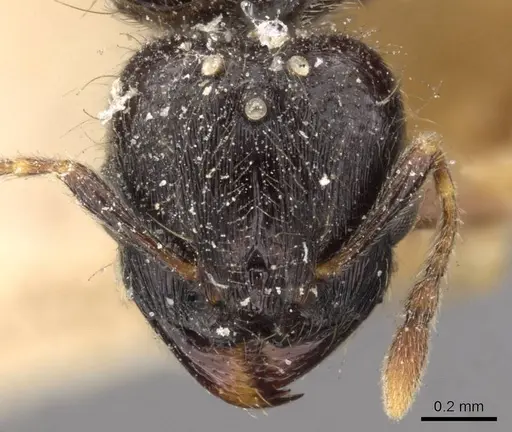
Carebara raja is a rare ant species from the Himalayan Foothills of Pakistan and India. Queens are small at 5.3-5.4mm with a dark brown to blackish body and distinctive 9-segmented antennae with a 2-segmented club . This species belongs to the C. lignata group and is remarkable because the major worker caste has never been documented - only queens have been collected from the wild . They nest in rotting wood in pine forest areas with sufficient moisture, typically at elevations between 192-1260 meters . The most unusual aspect of this species is that no workers have ever been observed, making it one of the few ant species where the worker caste remains completely unknown to science .
Quick Summary
- Difficulty: Expert
- Origin & Habitat: Himalayan Foothills of Pakistan and India, specifically pine forest areas in Rawalpindi and Islamabad districts. They nest in rotting wood with sufficient moisture levels [1].
- Colony Type: Extremely unusual, only queen caste has been documented. No workers (major or minor) have ever been observed in wild collections [1]. This makes colony structure difficult to determine.
- Size & Growth:
- Queen: 5.3-5.4 mm [1]
- Worker: Worker caste has never been documented
- Colony: Unknown, worker populations have never been documented
- Growth: Unknown
- Development: Unknown, worker development has never been observed (This is one of the most significant knowledge gaps for this species. Without workers ever being documented, we cannot determine if they have a different social structure or if workers develop differently.)
- Antkeeping:
- Temperature: Based on related Carebara species from similar habitats, aim for 24-28°C as a starting point. Adjust based on colony activity.
- Humidity: High humidity required, they live in rotting wood in moist pine forests. Keep nest substrate consistently damp but not waterlogged.
- Diapause: Unknown for this species. Related tropical Carebara species may not require hibernation.
- Nesting: Natural nesting is in rotting wood, a naturalistic setup with damp wood pieces or a well-humidified Y-tong (AAC), plaster, or soil nest would be appropriate. They appear to need moisture-retaining nest materials.
- Behavior: Behavior is largely unstudied due to the absence of worker observations. Based on related Carebara species, they are likely secretive nesters with typical myrmicine foraging patterns. Escape risk cannot be assessed without workers.
- Common Issues: no workers exist in captivity, only wild-caught queens can be obtained, making established colonies essentially unavailable, worker caste biology is completely unknown, we cannot determine development timelines or colony growth, this is a research-level species rather than a practical keeping species, availability is extremely limited, no established captive husbandry protocols exist because the worker caste has never been documented, wild populations face threats from urbanization, ethical sourcing is a major concern
The Mystery of the Missing Workers
Carebara raja represents one of the most unusual cases in ant taxonomy, the worker caste has never been documented despite multiple collections spanning over a century. Queens have been collected from India (original description in 1902) and Pakistan (first record in 2020), but in every collection, only queens were found [1]. This could mean several things: either the workers are extremely small and have been overlooked, the species has an unusual social structure, or there's something unique about their colony cycle that prevents workers from being collected at certain times. The species belongs to the C. lignata group which typically has polymorphic workers, making this absence even more puzzling [1]. This knowledge gap fundamentally limits what we can understand about keeping this species in captivity.
Natural Habitat and Nesting
In the wild, Carebara raja has been found nesting in rotting wood within pine forest areas of the Himalayan Foothills. The specimens from Pakistan were collected from two locations: Trail 5 in Islamabad at 192m elevation (November 2015) and Kotlisattian in Rawalpindi at 1260m elevation (October 2016) [1]. Both locations were described as having sufficient moisture levels in the rotting wood, suggesting this species requires damp, humid nest conditions. The pine forest habitat indicates they prefer cooler mountainous environments rather than tropical lowlands. This aligns with what we know about the Himalayan Foothills ecosystem, moderate temperatures with seasonal moisture variations.
Queen Morphology and Identification
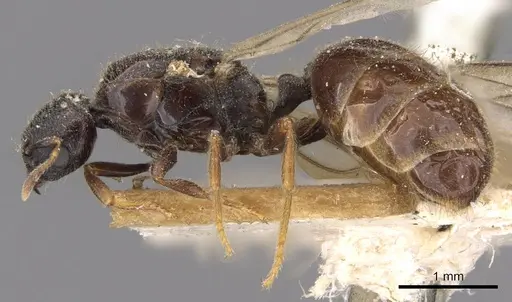
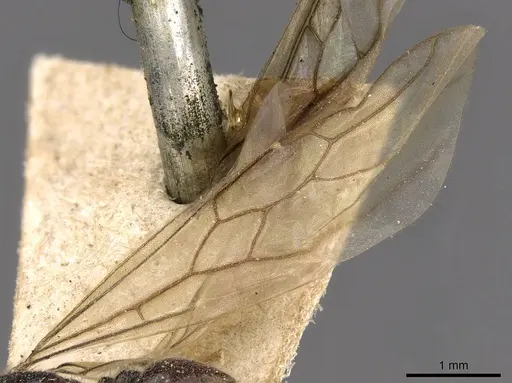
The queens of Carebara raja are distinctive and relatively small at 5.3-5.4mm total length [1]. Their most notable features include: 9-segmented antennae with a 2-segmented club (the club is the thickened end segments used for sensing), a rectangular head that is longer than broad with longitudinal striations, mandibles with 5 blunt teeth, and a clypeus that is smooth with lateral carinae and has a slightly emarginated (notched) anterior margin [1]. The body is very dark brown to blackish in color, and the mesosoma and abdomen are smooth and shining while the petiole is punctate [1]. They can be distinguished from the closely related C. leei by their smaller size (5-5.5mm vs 7-8mm) and the emarginated clypeus [1].
Keeping Considerations
This species is NOT recommended for typical antkeeping. The fundamental issue is that no one has ever documented workers in this species, meaning there are no established captive colonies to obtain. While you might find wild-caught queens, there is no documented protocol for successfully raising them because we don't know what the first workers would look like or how they develop. If you obtain a queen, you would need to treat it as an experimental species, provide a humid, warm test tube setup with damp nesting material (like rotting wood or highly humid plaster) and hope for the best. However, without any reference for what to expect, success would be extremely unlikely. For practical antkeeping, choose species where the full colony cycle (queen to workers) is well-documented.
Conservation and Ethical Considerations
Carebara raja faces significant threats in its limited range. The Pakistan populations are threatened by rapid urbanization, farming, overgrazing, tourism development, and housing society development in protected areas [1]. Pakistan itself has only 3.36% forest land remaining (down from 5.6% in 2000), making habitat loss a serious concern [1]. Additionally, because this species is only known from a few scattered locations and has never been documented with workers, any wild collection could potentially impact already limited populations. If this species were to become available through any future breeding programs, ethical sourcing from established captive colonies would be essential rather than wild collection.
Frequently Asked Questions
Can I keep Carebara raja ants?
Practically speaking, no, this species is not available for antkeeping because only queens have ever been documented, with no workers ever observed. There are no established captive colonies to obtain, and without knowing how workers develop, successful captive breeding would be essentially impossible.
Why don't Carebara raja have workers?
This is one of the great mysteries of ant taxonomy. The worker caste has simply never been collected or documented despite queens being found in multiple locations across India and Pakistan over more than a century. Possible explanations include: workers being extremely small and overlooked, unusual colony timing, or an unknown social structure. Scientists simply don't know yet.
Where does Carebara raja live?
They are found in the Himalayan Foothills of Pakistan (Rawalpindi and Islamabad districts) and India. They nest in rotting wood within pine forests at elevations between 192-1260 meters, requiring moist conditions [1].
How big are Carebara raja queens?
Queens are small at 5.3-5.4mm total length, with a dark brown to blackish body color [1]. They have distinctive 9-segmented antennae with a 2-segmented club.
Are Carebara Raja ants dangerous?
Unknown, no workers have ever been documented, so their defensive capabilities are completely unstudied. Related Carebara species have typical myrmicine stings, but this species' behavior is entirely unknown.
What do Carebara Raja ants eat?
Unknown, without workers, we have no observations of their foraging behavior or diet. Related Carebara species are omnivorous and likely eat small insects, honeydew, and seeds, but this is entirely speculative for C. raja.
Do Carebara Raja ants need hibernation?
Unknown, their seasonal biology has not been studied. The Himalayan Foothills experience cool winters, so they may have some dormancy period, but this is unconfirmed.
How fast do Carebara Raja colonies grow?
Unknown, this is perhaps the biggest knowledge gap for this species. Without any workers ever being documented, we have no data on colony development, growth rates, or maximum colony size.
Is Carebara Raja good for beginners?
Absolutely not. This is an expert-level species in the sense that it requires research-level knowledge that doesn't exist. There are no established husbandry protocols, no documented worker development, and no source for established colonies. Choose a species with well-documented care requirements instead.
Report an Issue
The current care sheet is based fully on literature. See inconsistencies, or something that's incorrect? Please , it will be resolved after review from an admin. Contributing to the blogs tab also helps providing information, to make us be able to further improve the caresheets. Thank you for your support!
References

この飼育シートのライセンスは: CC BY-SA 4.0 .
コミュニティブログ
CASENT0908913
AntWebで見る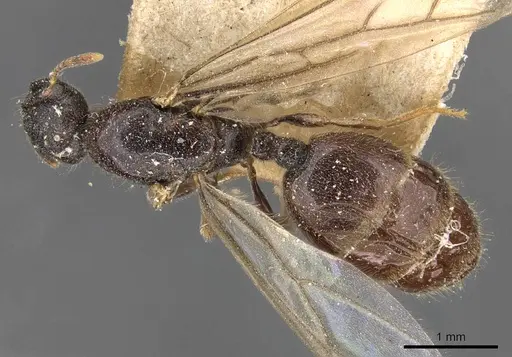
文献
分布マップを読み込み中...製品情報を読み込み中...