
Cardiocondyla longiceps
- 学名
- Cardiocondyla longiceps
- 族
- Crematogastrini
- 亜科
- Myrmicinae
- 命名者
- Seifert, 2003
- 分布
- 0 か国で発見
紹介
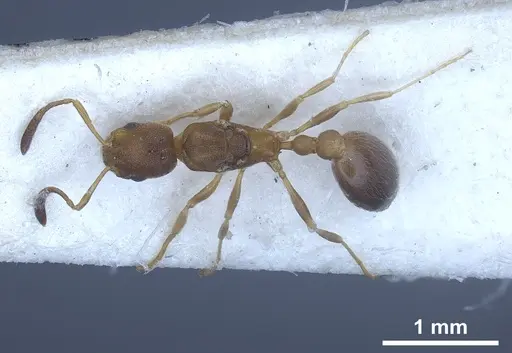
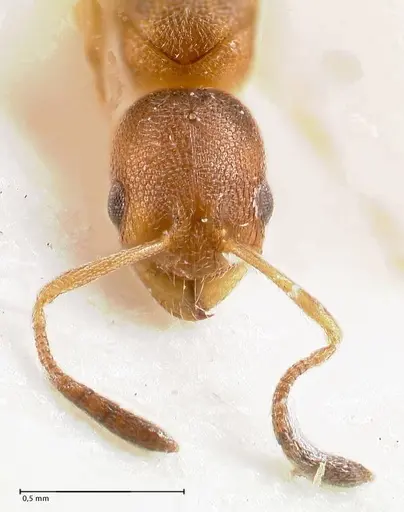
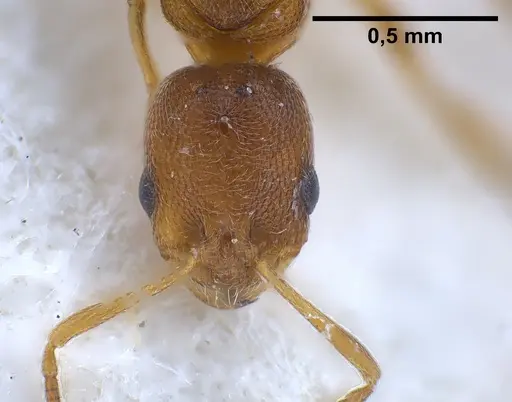
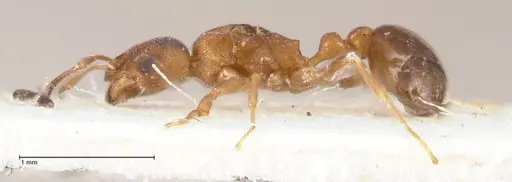
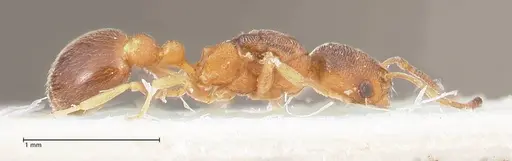
Cardiocondyla longiceps is an extremely small ant species endemic to the Socotra Archipelago and Ta'iz region of mainland Yemen. Queens are among the smallest ant queens known, with a distinctive extremely elongated head (CL/CW 1.254) - the highest recorded for the genus. The species is immediately recognizable by its bearded appearance caused by profuse erect pubescence on the anterior clypeus, and reduced propodeal spines appearing as blunt angles. The body is covered in long, profuse pubescence, with a color pattern featuring light yellowish-brown lateral mesosoma and distinctly darker head, gaster, and dorsal mesosoma. This species belongs to the Cardiocondyla shuckardi-group and is most similar to Cardiocondyla fajumensis but can be distinguished by non-overlapping morphometric measurements and the characteristic clypeal pubescence. Workers have never been described, and virtually nothing is known about the ecology or biology of this species in the wild .
Quick Summary
- Difficulty: Expert
- Origin & Habitat: Endemic to the Socotra Archipelago and Ta'iz region of mainland Yemen. Found in the Hadibo area of Socotra Island. The specific habitat type is unknown, but Socotra has a subtropical climate with monsoonal influences [2][3].
- Colony Type: Unknown. Colony structure has not been documented. Many Cardiocondyla species are polygynous (multiple queens), but this has not been confirmed for C. longiceps.
- Size & Growth:
- Queen: ~2mm, inferred from Cardiocondyla genus patterns (queens of this genus typically range 1.5-3mm total length). The only available measurement is cephalic size (CS 560-586μm), which represents head size only, not full body length [1].
- Worker: Unknown, workers have never been described [3][2].
- Colony: Unknown. Likely small colonies based on related species.
- Growth: Unknown.
- Development: Unknown. No research has documented development timeline for this species. (No direct data exists.)
- Antkeeping:
- Temperature: Based on Socotra's subtropical climate, aim for warm conditions around 24-28°C. Provide a gentle temperature gradient so ants can self-regulate.
- Humidity: Socotra has moderate to high humidity. Keep nest substrate moderately moist but not waterlogged. Provide a humidity gradient with both moist and slightly drier areas.
- Diapause: Unknown. Socotra has a mild climate without harsh winters. A short cool period may be beneficial but is likely not required.
- Nesting: Natural nesting is unconfirmed. Based on related species, likely nests in small cavities in soil, under stones, or in rotting wood. In captivity, a small test tube setup or miniature formicarium with tight chambers scaled to their tiny size would work well. Avoid large, open spaces.
- Behavior: Behavior is unstudied. Based on genus patterns, these are likely docile, non-aggressive ants that forage individually for small prey and honeydew. Their extremely small size means escape prevention is critical, they can squeeze through the tiniest gaps. Handle with extreme care due to their minute size.
- Common Issues: Extremely small size makes them difficult to house and feed, standard setups may be too large., No established care guidelines exist, this is an expert-only species for experienced keepers., Workers unknown means you cannot confirm species identity if keeping wild-caught colonies., Escape prevention is paramount due to their minute size., Virtually no biological data exists, keepers are essentially pioneering captive husbandry.
Species Overview and Identification
Cardiocondyla longiceps is one of the most distinctive species within the Cardiocondyla shuckardi-group, primarily due to its extremely elongated head. The cephalic index (CL/CW) of 1.254 is the highest recorded for the genus, making this species immediately recognizable. The species was originally described by Seifert in 2003 from winged gynes collected in Socotra and Ta'iz, Yemen. The most striking morphological features include the profuse erect pubescence on the anterior clypeus (giving a bearded appearance), reduced propodeal spines appearing as blunt angles, and the distinctly bicolored body with light yellowish-brown lateral mesosoma contrasting against darker head and gaster. Workers remain unknown to science, which is unusual for a described ant species and limits our ability to confirm species identification in the field [1][2][3].
Distribution and Habitat
Cardiocondyla longiceps is endemic to the Socotra Archipelago and the Ta'iz region of mainland Yemen. The type locality is Hadibo City on Socotra Island, where the holotype and paratypes were collected in April 1993. Additional specimens were collected from Ta'iz on the Yemen mainland in August 1998. Socotra is a subtropical island in the Indian Ocean with a unique biodiversity, known for its distinctive flora and fauna. The specific microhabitat and nesting preferences of C. longiceps remain unknown. The island features a variety of habitats from coastal plains to mountainous regions, with most ant activity occurring during the monsoon seasons. Nothing has been documented about the species' ecological preferences, nesting sites, or foraging behavior in the wild [4][2][3].
Challenges of Keeping This Species
Cardiocondyla longiceps represents one of the most challenging ant species to keep in captivity due to the complete lack of biological data and the extremely small size of the queens. Workers have never been described, meaning there is no reference for identifying this species if you collect wild colonies. The queen's head size of 560-586μm is smaller than many mite species and approaches the lower limits for ant queens entirely. This creates significant housing challenges, standard test tubes and formicarium chambers are vastly oversized for these ants. There are no established feeding guidelines, no documented development timelines, and no confirmed colony structure information. This is truly a species for expert antkeepers willing to experiment and document their findings. You will essentially be pioneering captive husbandry for this species, which carries significant risk of colony failure due to our complete lack of knowledge about their requirements [1][2][3].
Housing and Setup Recommendations
Given the extreme small size of C. longiceps, housing requires creative solutions. Standard test tube setups will likely be too large and allow ants to wander away from the water reservoir. Consider using micro-scaled setups such as very small test tubes (like those used for springtails or very small ant species), or custom mini-formicariums with chambers scaled to 2-3mm passageways. Escape prevention is absolutely critical, these ants can likely squeeze through gaps smaller than 0.5mm. Use tight-fitting lids, fine mesh barriers, and consider applying fluon or other barriers to all openings. The nest material should be kept moderately moist but not saturated. Given the lack of data, err on the side of slightly drier rather than too wet, as mold is a major risk with such small colonies in enclosed spaces. Provide a small outworld area for foraging that is also escape-proof.
Feeding and Nutrition
Feeding guidelines are entirely unconfirmed for this species. Based on genus-level patterns for Cardiocondyla, these ants likely accept small live prey (springtails, tiny fruit fly larvae, and other micro-arthropods), honeydew from aphids or scale insects, and sugar sources like diluted honey or sugar water. However, given their minute size, standard ant feeders are completely inappropriate. Any prey offered must be extremely small, likely no larger than 1mm. Start with live springtails (which are already tiny arthropods) as a protein source, and offer tiny drops of diluted honey or sugar water. Feed sparingly and remove uneaten food quickly to prevent mold in the small enclosures. Do not expect this species to take larger prey items typical for bigger ant species.
Temperature and Seasonal Care
Based on Socotra's subtropical climate, these ants likely prefer warm conditions year-round. Aim for temperatures in the range of 24-28°C, with a slight gradient allowing ants to move between warmer and cooler areas. A heating cable or mat on one side of the nest can provide this gradient, place it on top of the nest material rather than underneath to avoid excessive drying. Regarding diapause or winter rest, Socotra has a mild climate without freezing temperatures. A short cool period at 15-18°C for 2-3 months during winter months may be beneficial but is likely not required for colony health. Monitor colony activity, if workers remain active and brood continues developing, they may not need a true diapause. The key is stability, avoid sudden temperature fluctuations.
Frequently Asked Questions
How long does it take for Cardiocondyla longiceps to go from egg to worker?
This is unknown. No research has documented the development timeline for this species.
What do Cardiocondyla longiceps ants eat?
Unconfirmed. Based on genus patterns, they likely accept small live prey (springtails, tiny fruit fly larvae), honeydew from aphids or scale insects, and sugar sources. Due to their minute size, any prey must be extremely small, no larger than 1mm. Start with springtails and tiny drops of diluted honey.
Can beginners keep Cardiocondyla longiceps?
No. This is an expert-only species. Workers have never been described, there are no established care guidelines, and the extremely small queen size creates housing and feeding challenges that even experienced antkeepers will struggle with. You would essentially be pioneering captive husbandry with high failure risk [1][3].
What temperature do Cardiocondyla longiceps need?
Based on Socotra's subtropical climate, aim for 24-28°C with a gentle gradient. Provide a heating cable on one side of the nest to create warmer and cooler zones. Avoid temperatures below 20°C or above 32°C.
Do Cardiocondyla longiceps ants sting?
Unknown. Cardiocondyla species are generally non-aggressive and docile, with stings that are ineffective due to their tiny size. Given the minute size of this species, any sting would be imperceptible to humans if it exists at all.
How big do Cardiocondyla longiceps colonies get?
Unknown. No colony size data exists. Based on related small Cardiocondyla species, colonies likely remain small.
Can I keep multiple Cardiocondyla longiceps queens together?
Unknown. Colony structure has not been documented for this species. Many Cardiocondyla are polygynous (multiple queens), but this varies by species. Do not attempt combining unrelated queens without prior research on this specific species.
What nest type is best for Cardiocondyla longiceps?
Standard nests are too large. Use micro-scaled setups with chambers and passageways scaled to 2-3mm. Very small test tubes or custom mini-formicariums work best. Keep substrate moderately moist and ensure excellent escape prevention.
Do Cardiocondyla longiceps need hibernation?
Unknown. Socotra has a mild climate without harsh winters. A short cool period may be beneficial but is likely not required. Monitor colony activity to determine what works best.
Why are my Cardiocondyla longiceps dying?
Without established care guidelines, failure is common. Potential issues include: enclosure too large causing workers to wander and become lost, escape due to inadequate barriers, mold from overwatering or uneaten food, temperature stress from being too cold or too hot, and inappropriate prey size. Document your conditions carefully and adjust incrementally.
Report an Issue
The current care sheet is based fully on literature. See inconsistencies, or something that's incorrect? Please , it will be resolved after review from an admin. Contributing to the blogs tab also helps providing information, to make us be able to further improve the caresheets. Thank you for your support!
References

この飼育シートのライセンスは: CC BY-SA 4.0 .
コミュニティブログ
FOCOL0738
AntWebで見る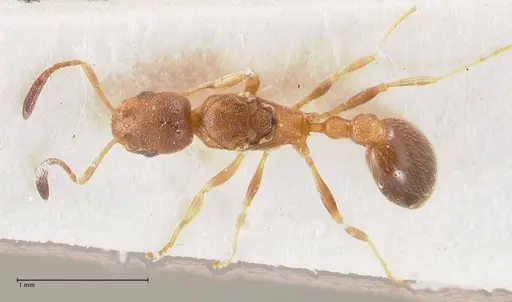
文献
分布マップを読み込み中...製品情報を読み込み中...