
Cardiocondyla gallilaeica
- 学名
- Cardiocondyla gallilaeica
- 族
- Crematogastrini
- 亜科
- Myrmicinae
- 命名者
- Seifert, 2003
- 分布
- 0 か国で発見
紹介
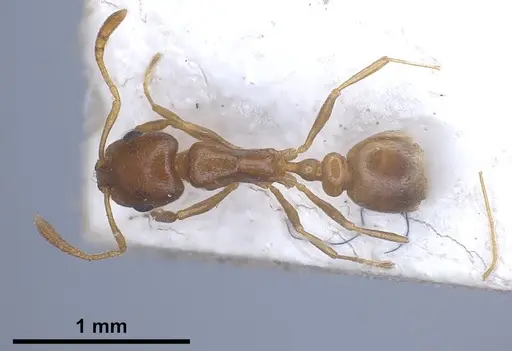
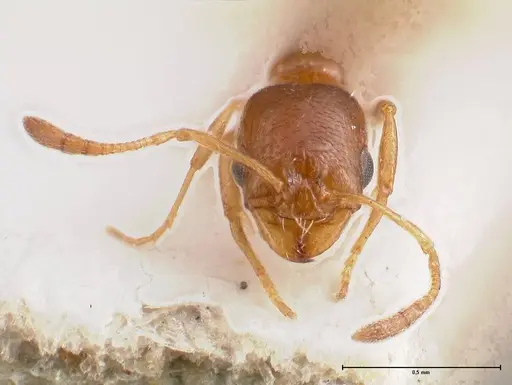
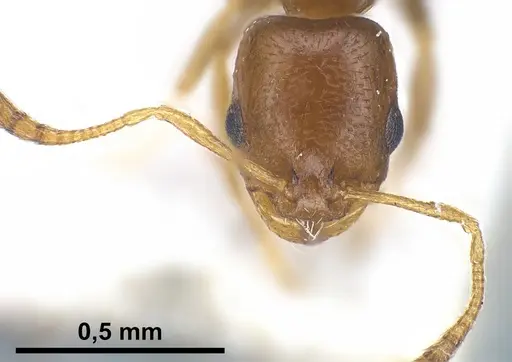
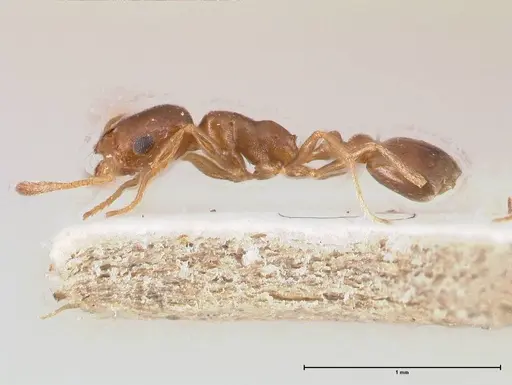
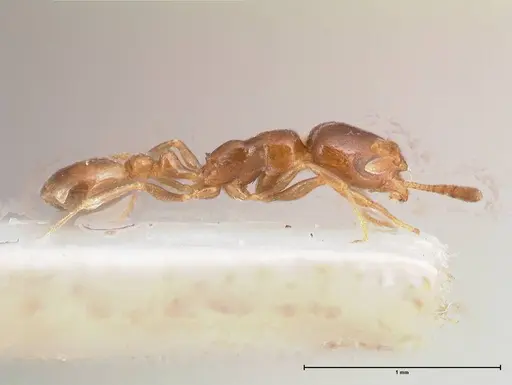
Cardiocondyla gallilaeica is one of the rarest ant species in the world, known from only a single worker specimen collected in Israel in 1983. It belongs to the Cardiocondyla bulgarica species group and is distinguished by its notably excavated hind margin of the head, very narrow frontal carinae, relatively large eyes, and short but sharp propodeal spines . The body color ranges from pale yellowish brown to dark brown. This species has only ever been found at its type locality in Sedé Eliyyahu, Israel (Jordan Valley). No colony, queen, or male specimens have been documented, only a single worker was collected in 1983.
Quick Summary
- Difficulty: Unknown
- Origin & Habitat: Endemic to Israel, specifically the Jordan Valley region near Sedé Eliyyahu (32.440°N,35.510°E) [1][3].
- Colony Type: Unknown, only a single worker has ever been collected. The colony structure has never been documented.
- Size & Growth:
- Queen: No queen specimens known
- Worker: Size data unavailable
- Colony: Unknown
- Growth: Unknown
- Development: Unknown, no breeding or development data exists for this species (No data exists on any aspect of colony development. Related Cardiocondyla species typically develop from egg to worker in 4-8 weeks at warm temperatures, but this is a rough genus-level estimate only.)
- Antkeeping:
- Temperature: Unknown, based on the type locality in the warm Jordan Valley, likely warm (24-28°C). No specific data [1].
- Humidity: Unknown, based on the dry Mediterranean climate of the Jordan Valley, likely low to moderate.
- Diapause: Unknown, the Jordan Valley has mild winters, so hibernation may not be required, but unconfirmed.
- Nesting: No nesting data exists. Most Cardiocondyla species nest in soil under stones or in shallow ground cavities [2]. A small test tube setup with minimal water reservoir would be a reasonable starting point.
- Behavior: Behavior is completely unstudied. Based on genus patterns, these are likely docile, non-aggressive ants that forage individually for small prey and honeydew [2]. As a member of the tribe Crematogastrini, they likely possess a spatulate stinger used to smear venom rather than inject it. Their extremely small size means they cannot sting humans, but escape prevention is critical.
- Common Issues: no captive breeding records exist, this species may not have been kept in captivity at all., extremely small size makes feeding and escape prevention challenging., no information on queen acceptance or colony founding success., related species can be slow to establish and prone to colony failure., lack of any biological data makes proper care difficult to determine.
Species Overview and Identification
Cardiocondyla gallilaeica is known from only one worker holotype from Israel (1983), described by Seifert in 2003 [4][1]. It belongs to the Cardiocondyla bulgarica group and can be identified by its notably excavated hind margin of the head, very narrow frontal carinae (the narrowest within its species group), relatively large eyes, and short but sharp propodeal spines. The body color ranges from pale yellowish brown to dark brown. This species represents an extreme in miniaturization, though no total body length measurements exist.
Distribution and Habitat
This species is endemic to Israel, known only from the type locality of Sedé Eliyyahu in the Jordan Valley (32.440°N,35.510°E, at approximately 191 meters below sea level) [1]. The Jordan Valley region has a warm, Mediterranean to subtropical climate with hot, dry summers and mild, relatively wet winters. This suggests the species likely prefers warm, drier conditions compared to many other ant species. However, no specific microhabitat information exists, we don't know what type of nesting sites it prefers, what foods it collects, or what other species it interacts with [5][3].
Keeping Considerations
Cardiocondyla gallilaeica presents an extreme challenge for antkeepers because absolutely no captive husbandry information exists. This is not a species you can simply purchase and expect to keep successfully, no one has documented successful captive breeding. If a colony were to become available, care would need to be based entirely on related Cardiocondyla species. These tiny ants would require very small prey items (springtails, fruit flies, or other micro-arthropods), likely a sugar source (honey water or sugar water), and warm temperatures around 24-28°C. The nesting setup would need to be scaled to their minute size, with very small chambers and narrow passages. Escape prevention would be critical, their tiny size means they could potentially squeeze through barriers that work for larger ants. This species is truly one for advanced researchers rather than hobbyist antkeepers.
Related Species and Care Context
While Cardiocondyla gallilaeica itself has no documented biology, the Cardiocondyla genus as a whole provides some context. Most Cardiocondyla species are small, docile ants that nest in soil or under stones in warm, often dry habitats [2]. Many species in the genus are known for their ergatoid (wingless) males, which remain in the nest and mate with newly emerged queens. Colony sizes are typically small to moderate, usually up to a few hundred workers. Founding is typically claustral (queen seals herself in and lives off stored fat). However, these are generalizations, and C. gallilaeica may have unique requirements that differ from its relatives. Any successful captive husbandry of this species would represent a significant contribution to antkeeping knowledge.
Frequently Asked Questions
Can I keep Cardiocondyla gallilaeica as a pet ant?
This species is not recommended for antkeepers. No captive breeding records exist, and no biological information is available. Only a single worker has ever been collected, meaning no queens or colonies are available in the antkeeping hobby. Even if specimens were obtained, there is no established care protocol.
How big do Cardiocondyla gallilaeica colonies get?
Unknown, no colony data exists for this species. Based on related Cardiocondyla species, colonies likely reach up to a few hundred workers at most, but this is purely speculative.
What do Cardiocondyla gallilaeica ants eat?
Unknown, no feeding observations exist. Based on genus patterns, they likely accept small live prey (micro-arthropods) and honeydew/sugar sources. However, this is inferred, not confirmed.
Do Cardiocondyla gallilaeica ants sting?
Their minute size makes them harmless to humans, they cannot sting or bite through skin.
What temperature do Cardiocondyla gallilaeica need?
No specific data exists. Based on their Israeli habitat and related species, warm conditions around 24-28°C would likely be appropriate, but this is an estimate only.
Does Cardiocondyla gallilaeica need hibernation?
Unknown, no seasonal data has been collected. The Jordan Valley has mild winters, so they may not require a true hibernation period, but this is unconfirmed.
Are Cardiocondyla gallilaeica good for beginners?
Absolutely not. This is one of the least-known ant species in the world with no captive husbandry information. No established protocol exists for keeping this species alive.
How long does it take for Cardiocondyla gallilaeica to develop from egg to worker?
Unknown, no breeding or development data exists for this species. Related Cardiocondyla species typically take 4-8 weeks at warm temperatures, but this is a rough genus-level estimate only.
Can I keep multiple Cardiocondyla gallilaeica queens together?
Unknown, no colony structure data exists. The number of queens per colony has never been documented for this species.
Where does Cardiocondyla gallilaeica live in the wild?
Only known from Sedé Eliyyahu in Israel's Jordan Valley [1][3]. This is one of the lowest points on Earth, with a warm, dry climate.
Report an Issue
The current care sheet is based fully on literature. See inconsistencies, or something that's incorrect? Please , it will be resolved after review from an admin. Contributing to the blogs tab also helps providing information, to make us be able to further improve the caresheets. Thank you for your support!
References

この飼育シートのライセンスは: CC BY-SA 4.0 .
コミュニティブログ
FOCOL0734
AntWebで見る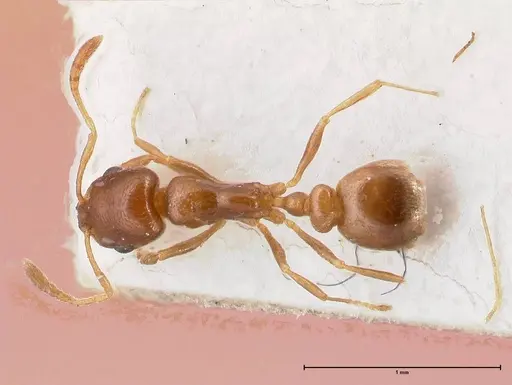
文献
分布マップを読み込み中...製品情報を読み込み中...