
Cardiocondyla dalmaticoides
- 学名
- Cardiocondyla dalmaticoides
- 族
- Crematogastrini
- 亜科
- Myrmicinae
- 命名者
- Seifert, 2023
- 分布
- 0 か国で発見
紹介
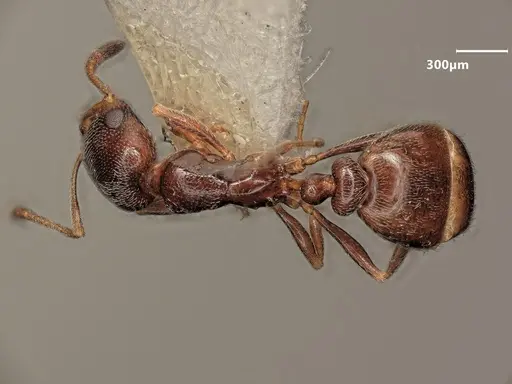
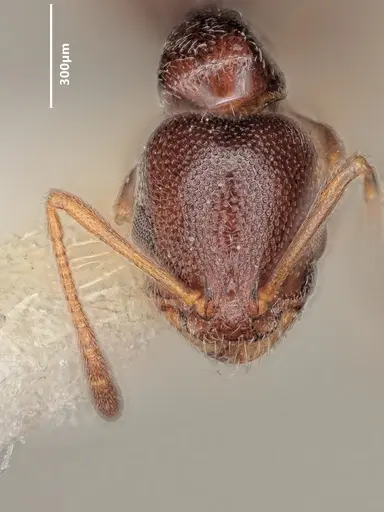
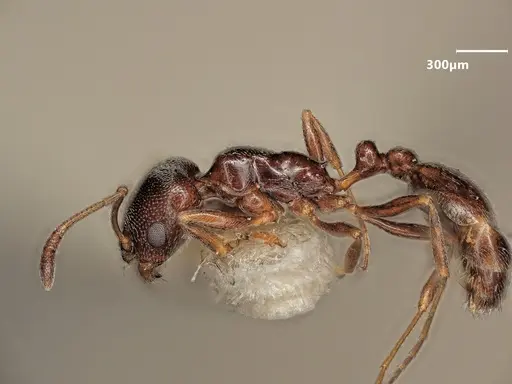
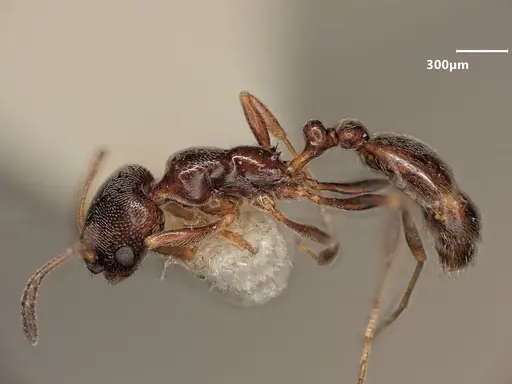
Cardiocondyla dalmaticoides is a recently described species from Turkey, first identified in 2023. Workers are small ants, approximately 2-2.5mm in total length - inferred from Cardiocondyla genus patterns. They have a short head, long scapes, and short but sharply pointed propodeal spines. They have a distinctive narrow and tall petiole, and the propodeum (the section behind the waist) is completely smooth and glabrous - a key identifying feature. The body is dark to medium brown, while the mandibles, scapes, legs, and tip of the abdomen are yellowish-brown. Dense, long pubescence covers most of the body. This species belongs to the elegans group and is only known from two locations in southern Turkey between 100 and 1000 meters elevation . Nothing is known about the biology of this Turkish endemic. Like other Cardiocondyla species, they likely nest in soil or under stones in warm, semi-open habitats, but specific details about their colony structure, founding behavior, and diet remain unconfirmed. The genus Cardiocondyla is known for having both winged and wingless (ergatoid) males in some species, and many species can form multi-queen colonies, but whether C. dalmaticoides exhibits these traits is unknown.
Quick Summary
- Difficulty: Unknown, biology unconfirmed
- Origin & Habitat: Endemic to Turkey (Asia Minor), found at two sites between 100-1000m elevation in southern Turkey [1][2]. Likely warm, semi-open habitats typical of the genus.
- Colony Type: Unconfirmed, colony structure has not been documented. Many Cardiocondyla species are polygynous (multiple queens), but this varies by species.
- Size & Growth:
- Queen: Not documented, no queens have been described [1]
- Worker: Approximately 2-2.5mm, inferred from Cardiocondyla genus patterns
- Colony: Unknown, only 6 workers known from type specimens
- Growth: Unknown, no development data exists
- Development: Unknown, no direct data. Based on typical Cardiocondyla patterns, estimate 4-8 weeks at warm temperatures, but this is a rough guess. (No development studies exist for this species. Related species in the genus typically develop relatively quickly in warm conditions.)
- Antkeeping:
- Temperature: Likely prefers warm conditions like other Cardiocondyla species. Based on Turkish distribution and genus patterns, aim for roughly 22-28°C with a gradient. Adjust based on colony activity.
- Humidity: Likely adaptable given the semi-arid nature of their Turkish range. Provide a moisture gradient with a damp area and drier areas for choice.
- Diapause: Unknown, no seasonal data exists. Turkey has cold winters, so some form of winter rest is likely, but specifics are unconfirmed.
- Nesting: Natural nesting is undocumented. Based on genus patterns, they likely nest in soil or under stones in warm, semi-open areas. In captivity, standard test tubes or small nests work well for this tiny species. Provide a moisture gradient.
- Behavior: Behavior is unstudied. Based on genus patterns, they are likely generalist foragers that scavenge and collect honeydew. Escape prevention is critical, at around 2-2.5mm, they can squeeze through small gaps. Use fine mesh and tight-fitting barriers. Aggression levels are unknown but likely low to moderate like most Cardiocondyla.
- Common Issues: biology is completely unconfirmed, all care advice is based on genus-level estimates, escape prevention is critical due to small size, no colony development data exists, growth may be slow or fast, unknown, winter care is unclear, Turkey has cold winters but specific diapause requirements unknown, only known from 6 workers in museum collections, captive colonies may not yet exist in the hobby
Species Discovery and Taxonomy
Cardiocondyla dalmaticoides was only recently described in 2023 by Bernhard Seifert, making it one of the newest recognized ant species. It belongs to the elegans species group within the genus Cardiocondyla. The species was identified from just 6 worker specimens collected at two sites in southern Turkey, one near Hatay at 100m elevation and another near Antalya at 1000m elevation. This extremely limited known range makes it one of the rarest Cardiocondyla species in the Palaearctic region. The type specimens were collected in June 1993 but only formally described 30 years later. The species can be distinguished from its closest relatives (C. dalmatica and C. elegans) by its more closely spaced propodeal spine bases, narrower petiole, completely smooth propodeum, and very acute spines [1][2].
Identification and Morphology
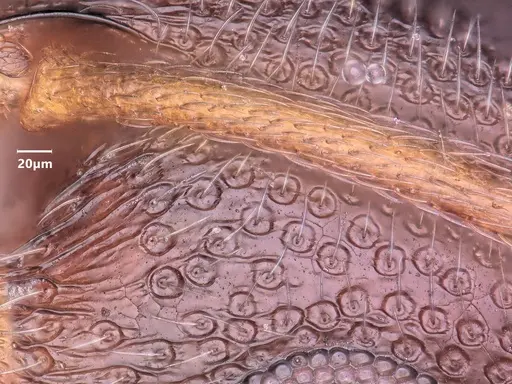
Workers measure approximately 2-2.5mm in total length (inferred from Cardiocondyla genus). They have a relatively short head, long antennae, and medium-sized eyes. The propodeal spines are short but very sharp and pointed, with bases that are more closely spaced than in related species. The petiole is notably narrow and tall, much higher than wide, with a very steep front face. The postpetiole is wide and moderately high. A key identifying feature is the completely glabrous (smooth, hairless) propodeum. The body is mostly dark to medium brown, while the mandibles, antennae, and legs are yellowish-brown. Dense, long pubescence covers most body surfaces. These measurements and features were used to formally describe the species in 2023 [1][2].
Known Distribution
This species is currently known only from Turkey, making it an endemic species with a very restricted range. Specimens have been collected at two locations: one at low elevation (around 100m near Hatay in southern Turkey) and another at higher elevation (around 1000m near Antalya). This elevation range of 100-1000m suggests the species can tolerate varying conditions. The Hatay site was described as a roadside habitat (Strassenrand), indicating the species may tolerate some disturbance. No other populations have been documented despite extensive ant surveys in the region, suggesting this is either a genuinely rare species or one that is difficult to distinguish from related species in the field [1][2].
Keeping Cardiocondyla dalmaticoides
Since this species has never been kept in captivity (no colonies exist in the hobby as of yet), all care recommendations are estimates based on genus-level patterns. Start with standard Cardiocondyla setup: a test tube setup for founding colonies, transitioning to a small nest as the colony grows. Given their Turkish origin, they likely prefer warm conditions, aim for 24-28°C with some variation. Provide a moisture gradient so ants can choose their preferred humidity. Because they are small, escape prevention must be excellent. Use tight-fitting lids and fine mesh barriers. Feed standard ant foods: sugar water or honey for carbohydrates, and small protein sources like fruit flies or tiny insects. Since nothing is known about their specific diet, start with generalist offerings and observe what they accept. Be patient, with no known development data, colony growth may be slow or fast, and you may be the first to document their behavior in captivity.
What We Don't Know
It is important to emphasize that literally nothing is known about the biology of Cardiocondyla dalmaticoides. We do not know: colony structure (single queen or multi-queen), founding behavior (whether queens seal themselves in or forage during founding), nuptial flight timing, development time from egg to worker, diet preferences, overwintering requirements, aggression levels, or any aspect of their behavior. This is one of the least-known ant species in the hobby. Any colony you obtain would be pioneering the species in captivity, and you may discover aspects of their biology that have never been documented. Keep detailed notes on behavior, development, and care responses to contribute to our knowledge of this rare Turkish endemic.
Frequently Asked Questions
How long does it take for Cardiocondyla dalmaticoides to go from egg to worker?
This is completely unknown, no development data exists for this species. Based on typical Cardiocondyla patterns, a rough estimate would be 4-8 weeks at warm temperatures (around 26°C), but this is just an educated guess.
What do Cardiocondyla dalmaticoides ants eat?
Diet is unconfirmed. Based on genus patterns, they likely accept sugar sources (honey, sugar water) and small protein items (fruit flies, tiny insects). No specific dietary studies exist for this species.
Can I keep multiple Cardiocondyla dalmaticoides queens together?
Unknown, colony structure has not been documented. Many Cardiocondyla species can form multi-queen colonies, but we don't know if this species does. Do not combine unrelated foundress queens without documentation of their behavior.
Do Cardiocondyla dalmaticoides ants sting?
Given their small size, any sting would be negligible even if present. Most Cardiocondyla species are not considered stinging ants.
What temperature should I keep Cardiocondyla dalmaticoides at?
Based on their Turkish distribution and genus patterns, aim for warm conditions around 24-28°C. Provide a temperature gradient so the ants can choose their preferred spot.
Does Cardiocondyla dalmaticoides need hibernation?
Unknown, no seasonal data exists. Turkey has cold winters, so some form of winter rest is likely, but the specific temperature and duration requirements are unconfirmed.
Are Cardiocondyla dalmaticoides good for beginners?
Not recommended for beginners. This is a newly described species with absolutely no biological data, all care is based on guesses. Additionally, their small size makes them challenging to house and observe.
How big do Cardiocondyla dalmaticoides colonies get?
Unknown, only 6 workers are known from museum specimens. Related Cardiocondyla species typically form colonies of a few hundred to a few thousand workers.
When do Cardiocondyla dalmaticoides have nuptial flights?
Unknown, nuptial flight timing has not been documented. The type specimens were collected in June, which may or may not indicate flight season.
What type of nest should I use for Cardiocondyla dalmaticoides?
Standard test tubes work for founding colonies. For established colonies, small nests with narrow chambers suit their small size. Provide a moisture gradient.
Is Cardiocondyla dalmaticoides aggressive?
Aggression levels are unstudied. Based on genus patterns, they are likely not highly aggressive but will defend their nest if threatened.
Where can I get Cardiocondyla dalmaticoides?
This species is extremely rare in the hobby, it may not exist in captive colonies yet. The only known specimens are 6 workers in museum collections from Turkey. You would need to locate a specialized keeper or researcher working with this specific species.
Report an Issue
The current care sheet is based fully on literature. See inconsistencies, or something that's incorrect? Please , it will be resolved after review from an admin. Contributing to the blogs tab also helps providing information, to make us be able to further improve the caresheets. Thank you for your support!
References

この飼育シートのライセンスは: CC BY-SA 4.0 .
コミュニティブログ
ANTWEB1048510
AntWebで見る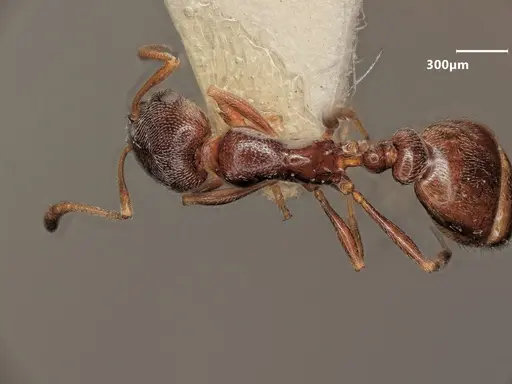
文献
分布マップを読み込み中...製品情報を読み込み中...