
Camponotus florius
- 学名
- Camponotus florius
- 亜属
- Myrmacrhaphe
- 族
- Camponotini
- 亜科
- Formicinae
- 命名者
- Santschi, 1926
- 分布
- 0 か国で発見
紹介
Camponotus florius is a carpenter ant species native to the Democratic Republic of Congo in Central Africa . Workers are polymorphic, but specific body sizes are unknown . The species inhabits tropical forest environments . This ant is notable for its presence in the DRC, though detailed biological data is limited.
Quick Summary
- Difficulty: Medium
- Origin & Habitat: Democratic Republic of Congo in tropical forest environments [1].
- Colony Type: Unconfirmed, no specific data on queen number or social structure.
- Size & Growth:
- Queen: Size data unavailable
- Worker: Size data unavailable, workers are polymorphic
- Colony: Unknown
- Growth: Unknown
- Development: Unknown, no species-specific data available (Development time likely depends on temperature conditions)
- Antkeeping:
- Temperature: Keep warm, roughly 24-28°C, based on tropical habitat patterns [2].
- Humidity: Keep substrate consistently moist but not waterlogged [2].
- Diapause: No, tropical species do not require hibernation [2].
- Nesting: Nests in wood in nature, in captivity, use Y-tong or plaster nests with damp substrate [2].
- Behavior: Temperament unknown, but based on Camponotus patterns, likely moderately active and defensive [2]. Escape risk is moderate due to worker size.
- Common Issues: temperature drops below 22°C can harm the colony, keep warm, low humidity can cause desiccation, maintain moist substrate, slow growth during founding is normal, queens may not emerge for weeks
Nest Preferences
Camponotus florius likely nests in wood, as typical for carpenter ants [2]. In captivity, Y-tong or plaster nests with damp substrate are suitable [2]. Test tubes can be used for founding colonies, but move to a larger nest as the colony grows [2].
Feeding and Diet
Carpenter ants are omnivorous, feeding on sugar sources and protein [2]. Offer sugar water or honey constantly, and provide insects like fruit flies or mealworms for protein [2]. Remove uneaten prey after 24 hours to prevent mold.
Temperature and Care
As a tropical species, keep temperatures around 24-28°C [2]. Use a heating cable to create a gradient for self-regulation [2]. No hibernation needed, maintain stable conditions year-round [2].
Frequently Asked Questions
How long does it take for Camponotus florius to have first workers?
Unknown, no species-specific data. Based on Camponotus patterns, it may take 6-8 weeks at warm temperatures [2].
Can I keep Camponotus florius in a test tube?
Yes, test tubes work for founding colonies [2]. Once the colony grows, transfer to a proper nest [2].
What temperature do Camponotus florius need?
Keep them at 24-28°C based on tropical habitat [2]. Avoid temperatures below 22°C.
How big do Camponotus florius colonies get?
Colony size is unknown, no data available.
Do Camponotus florius need hibernation?
No, as a tropical species, they do not require hibernation [2].
What do Camponotus florius eat?
They need sugar sources like honey and protein from insects [2].
Are Camponotus florius good for beginners?
They are intermediate difficulty due to warmth and humidity needs [2].
When should I move Camponotus florius to a formicarium?
Move from test tube once the colony has several workers, but specific timing is unknown [2].
Can I keep multiple Camponotus florius queens together?
Unconfirmed, no data on queen compatibility. Based on Camponotus patterns, it is not recommended [2].
Report an Issue
The current care sheet is based fully on literature. See inconsistencies, or something that's incorrect? Please , it will be resolved after review from an admin. Contributing to the blogs tab also helps providing information, to make us be able to further improve the caresheets. Thank you for your support!
References

この飼育シートのライセンスは: CC BY-SA 4.0 .
コミュニティブログ
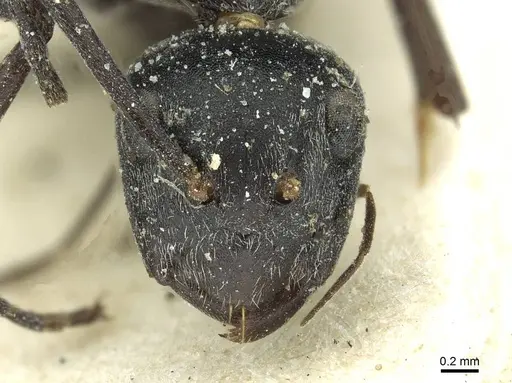
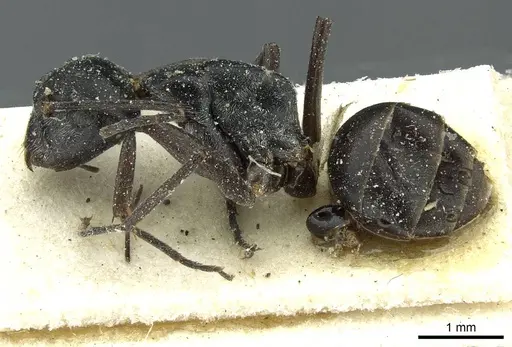
CASENT0911652
AntWebで見る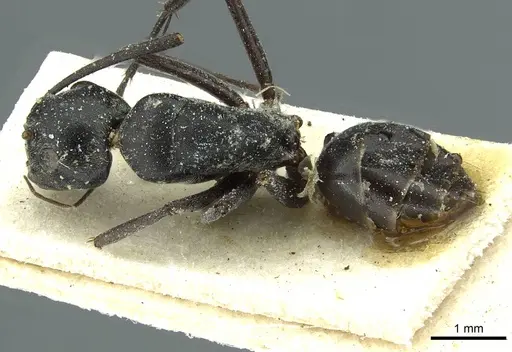
文献
分布マップを読み込み中...製品情報を読み込み中...