
Camponotus falco
- 学名
- Camponotus falco
- 亜属
- Myrmaphaenus
- 族
- Camponotini
- 亜科
- Formicinae
- 命名者
- Forel, 1902
- 分布
- 0 か国で発見
紹介
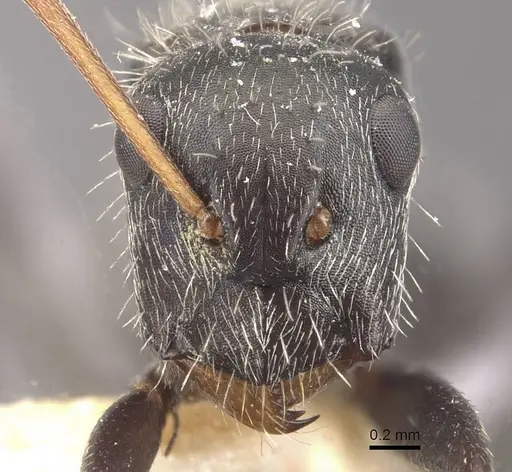
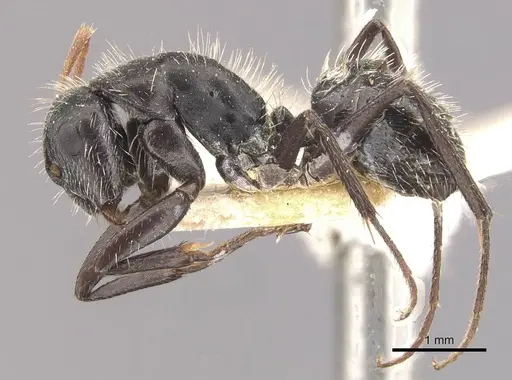
Camponotus falco is a small black ant species native to Colombia, belonging to the subgenus Myrmaphaenus. Workers are black with erect hairs covering all body surfaces and a distinctive golden pubescence that is especially noticeable on the head and gaster . Only the minor worker caste has been described; queens and major workers remain unknown . This species is found in the La Guajira and Meta regions of Colombia . It is not frequently collected and may be synonymous with the related species Camponotus naegelii . The closely similar Camponotus germaini is ferruginous red to dark brown, which helps distinguish C. falco as a black species .
Quick Summary
- Difficulty: Unknown
- Origin & Habitat: Colombia (La Guajira and Meta regions) in the Neotropical region [2][1]. Specific habitat preferences are unknown.
- Colony Type: Colony structure has not been documented for this species.
- Size & Growth:
- Antkeeping:
- Temperature: Unknown for this species. Based on its Colombian origin, keep conditions warm and stable in the low-to-mid 20s°C range. Observe colony activity and adjust as needed.
- Humidity: Unknown. As a Neotropical species from Colombia, likely prefers moderate humidity. Keep the nest substrate moist but not waterlogged.
- Diapause: Unknown. As a tropical species from Colombia, may not require a true diapause, but may show reduced activity during dry seasons.
- Nesting: Natural nesting habits are unconfirmed. In captivity, a Y-tong or soil nest with moist substrate works well for Camponotus species.
- Behavior: Not documented for this species. As a Camponotus species, they may defend the nest if threatened. Use standard Camponotus escape prevention. As a small species, ensure barriers are secure.
- Common Issues: no biological data exists, this is one of the least studied Camponotus species with no documented keeping history, queen and major worker castes have not been described, making colony identification uncertain, may be synonymous with Camponotus naegelii, which complicates species identification [1], no information on founding behavior or development timeline, tropical origin means temperature and humidity requirements are uncertain
Species Identification and Taxonomy
Camponotus falco belongs to the subgenus Myrmaphaenus, a group of New World carpenter ants. The species was originally described by Forel in 1902 from specimens collected in the Sierra Nevada de Santa Marta region of Colombia [1]. The minor workers are small and entirely black, covered with erect hairs on all body surfaces. The golden appressed pubescence is especially noticeable on the head and gaster, giving them a slightly iridescent appearance in good lighting [1]. This species may be synonymous with Camponotus naegelii, and the two are very similar in appearance [1]. The related species Camponotus germaini is similar but is ferruginous red to dark brown rather than black, which helps distinguish C. falco [1]. Only minor workers have been described for this species, queens and major workers remain unknown [1].
Distribution and Habitat
Camponotus falco is known from only a few locations in Colombia, specifically the La Guajira and Meta regions [2][1]. The original type locality is in the Sierra Nevada de Santa Marta, San Antonio, at an elevation where the species was collected between February and March 1896 [3]. This species is considered rare and is not frequently collected within its range [1]. It may also be present in neighboring Venezuela, though this is probable rather than confirmed [1]. The specific microhabitat preferences are unknown.
Defense Mechanism
Camponotus falco belongs to the subfamily Formicinae and tribe Camponotini. Like other ants in this group, they lack a functional sting. Their primary defense mechanism involves biting the target and spraying a stream of concentrated formic acid from an acidopore into the wound.
Keeping Considerations
This is one of the least documented Camponotus species in captivity, with no established keeping history or care guidelines. There is no information on founding behavior, development timeline, temperature preferences, humidity needs, or colony size for this species [1]. If you acquire this species, you will essentially be pioneering its captive care. Start with standard Camponotus husbandry: keep the nest at around 24-26°C with moderate humidity, provide sugar water and protein sources, and use secure containment. Observe your colony carefully and adjust conditions based on their behavior and brood development. Document your findings carefully, as any captive records would be valuable contributions to our knowledge of this species. Given the uncertainty around species identification (possible synonymy with C. naegelii), ensure your source provides accurate identification.
Future Research Needs
Camponotus falco represents a significant gap in our knowledge of New World Camponotus ants. The species has never been studied in detail, and basic biological information including queen morphology, colony structure, nuptial flight timing, founding behavior, and development is completely lacking [1]. Even basic information like maximum colony size and worker polymorphism (major workers) remains unknown. If you keep this species, your observations could provide the first captive records of this poorly understood ant. Consider documenting colony development, feeding preferences, temperature tolerance, and any unique behaviors. Any photographs of queens, majors, or founding colonies would be particularly valuable for advancing our understanding of this species.
Frequently Asked Questions
How do I keep Camponotus falco ants?
There is no established care guide for this species, it is one of the least studied Camponotus species with no documented captive history. Start with standard Camponotus care: keep the nest around 24-26°C, maintain moderate humidity, provide sugar water and protein (insects), and use secure containment. Observe your colony and adjust based on their behavior.
What do Camponotus falco eat?
Not documented for this species. Based on typical Camponotus diet, they likely accept sugar sources (honey, sugar water) and protein (insects).
How long does it take for Camponotus falco to develop from egg to worker?
Unknown, this has never been studied for this species.
Are Camponotus falco good for beginners?
Unknown, this species has no established keeping history. It cannot be recommended for beginners until basic care requirements are documented. The lack of any biological data makes this a species for experienced antkeepers who can adapt to unknown requirements.
Do Camponotus falco queens need to hibernate?
Unknown. As a tropical species from Colombia, they may not require a true diapause. However, seasonal activity reduction may occur. Observe your colony for signs of reduced activity and adjust feeding accordingly.
How big do Camponotus falco colonies get?
Unknown, no colony size data exists for this species.
Can I keep multiple Camponotus falco queens together?
Not documented. Combining unrelated queens is not recommended without evidence they accept multiple queens.
What is the difference between Camponotus falco and Camponotus naegelii?
These species are possibly synonymous, C. falco may be a synonym of C. naegelii [1]. They are very similar in appearance. Accurate identification may require examination of type specimens.
Where is Camponotus falco found?
This species is known only from Colombia, specifically the La Guajira and Meta regions [2][1]. The type locality is in the Sierra Nevada de Santa Marta [3].
Report an Issue
The current care sheet is based fully on literature. See inconsistencies, or something that's incorrect? Please , it will be resolved after review from an admin. Contributing to the blogs tab also helps providing information, to make us be able to further improve the caresheets. Thank you for your support!
References

この飼育シートのライセンスは: CC BY-SA 4.0 .
コミュニティブログ
CASENT0910637
AntWebで見る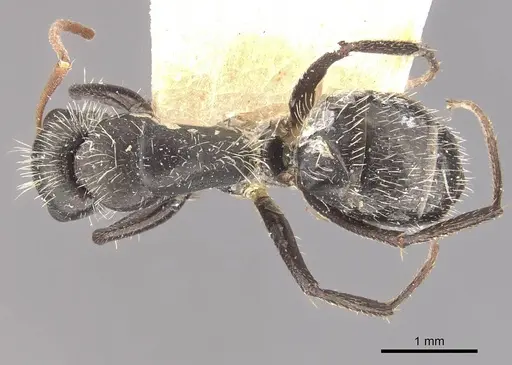
文献
分布マップを読み込み中...製品情報を読み込み中...