
Brachymyrmex oculatus
- 学名
- Brachymyrmex oculatus
- 族
- Myrmelachistini
- 亜科
- Formicinae
- 命名者
- Santschi, 1919
- 分布
- 0 か国で発見
紹介
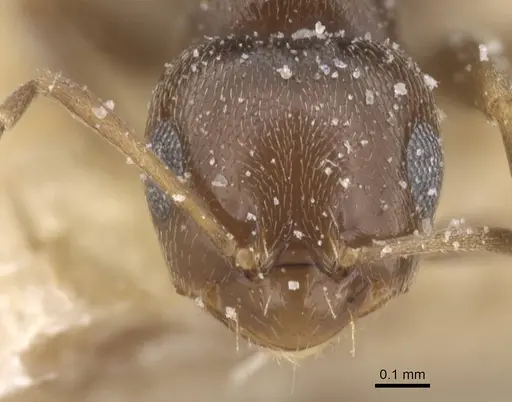
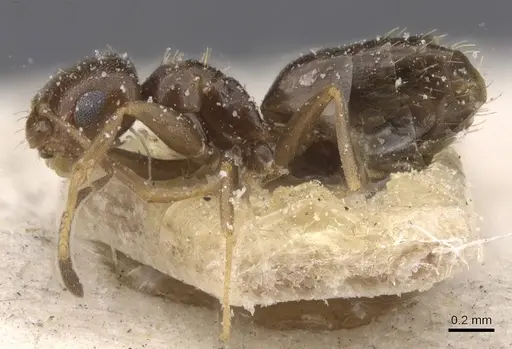
Brachymyrmex oculatus is a very small ant native exclusively to Argentina. Workers measure just 0.71-0.92 mm in total length . They are uniformly brown with lighter legs and antennae, and have a smooth, shiny body . This species is most easily told apart from similar ants by its unusually large eyes, the eye diameter reaches about one-third of head length, with more than 14 lenses (ommatidia) along the longest axis . Brachymyrmex oculatus belongs to the subfamily Formicinae and has been recorded in Buenos Aires, Santa Fe, Entre Ríos, Córdoba, and Chubut provinces of Argentina . Its biology is completely unstudied in scientific literature , so all care advice here is based on genus-level estimates.
Quick Summary
- Difficulty: Hard
- Origin & Habitat: Native to central and northern Argentina, recorded in Buenos Aires, Santa Fe, Entre Ríos, Córdoba, and Chubut provinces [1][3]. Found in the Caldenal district and Mesopotamia region [5][6]. Assigned to the Tropical Climate Specialists / Climate Specialists functional group, suggesting a preference for warm conditions [6].
- Colony Type: Colony structure has not been documented in scientific literature [2]. It is unknown whether colonies are monogynous (single queen) or polygynous (multiple queens).
- Size & Growth:
- Queen: Queen size has not been documented.
- Worker: 0.71-0.92 mm total length [1].
- Colony: Colony size has not been documented. Based on the very small worker size and related Brachymyrmex species, colonies likely remain small (probably a few hundred workers at most), but this is an estimate only.
- Growth: Unknown, no growth studies exist.
- Development: Unknown, no direct measurements exist. Based on their tiny size, development is likely faster than larger ants, but this is an estimate only. (No specific development data exists for this species.)
- Antkeeping:
- Temperature: Based on their Argentine distribution and assignment to the Tropical Climate Specialists group, keep nest areas warm, around 22-26°C [6]. Provide a gentle temperature gradient so workers can self-regulate. Room temperature in heated homes (around 22-24°C) should work well.
- Humidity: No specific data exists. Keep nest substrate lightly moist but not waterlogged. A humidity gradient is recommended, allowing the colony to choose their preferred moisture level. A moderate humidity (roughly 50-70%) is likely appropriate.
- Diapause: Diapause requirements are unknown. Their Argentine range includes mild winters, so full hibernation may not be necessary. If colony activity drops in winter, consider a slight temperature reduction to 18-20°C with reduced feeding. Otherwise, standard care can continue.
- Nesting: No specific nesting data exists. In captivity, use test tubes for founding. For larger colonies, provide small chambers in Y-tong (AAC), plaster, or 3D-printed nests scaled to their minute size. Avoid large open spaces, these ants prefer tight, confined areas.
- Behavior: Behavior is unstudied. Their tiny size suggests they are likely docile and non-aggressive, but escape prevention is critical. They are too small to sting a human. Workers may forage individually or in small groups.
- Common Issues: escape prevention is critical due to their extremely small size (0.71-0.92 mm), they can squeeze through gaps that larger ants cannot, no biological data exists, all care must be based on genus-level estimates, increasing risk of errors, overfeeding can cause mold and mite problems in small setups, remove uneaten food promptly, wild-caught colonies may carry unknown parasites or pathogens because biology is unstudied, any stress (temperature swings, vibration, disturbance) may cause colony failure since we know nothing of their natural tolerances
Getting Started
Because Brachymyrmex oculatus biology is completely unstudied [2][4], finding a colony will be difficult. This species is not commonly kept in the antkeeping hobby. Your best options are finding a specialized supplier who exports wild colonies from Argentina, or locating a more common Brachymyrmex species to gain experience first. If you obtain B. oculatus, start with a small test tube setup, a quiet, dark place with no disturbance until the first workers appear.
Housing and Escape Prevention
Workers are only 0.71-0.92 mm long [1]. This makes escape prevention your top priority. In a test tube, pack the cotton plug very tightly. For any outworld or nest, use fine mesh with gaps of 0.5 mm or smaller. Even standard PTFE barriers may not be enough, they can walk over thin layers. Avoid tall, open spaces, provide small, confined chambers. Y-tong (AAC), plaster, or 3D-printed nests with small chambers work well. Keep the setup on a stable surface to minimize vibrations, which can stress tiny colonies.
Temperature and Heating
Based on their Argentine distribution and assignment to the Tropical Climate Specialists group [6], keep nest temperatures between 22-26°C. Use a heating cable on one side of the nest to create a gradient. Room temperature in heated homes (22-24°C) usually falls within this range. Extended exposure below 18°C is not recommended. If the colony shows reduced activity in winter, a slight cool-down to 18-20°C may be appropriate, but full diapause is not confirmed.
Feeding and Diet
No dietary studies exist for B. oculatus. Based on typical Formicinae patterns, they likely accept sugar sources (honey water, sugar water) and small protein items. Because they are so tiny, prey must be very small, flightless fruit flies, springtails, or pinhead crickets work well. Offer sugar constantly and provide protein 2-3 times per week. Remove uneaten food after a day to prevent mold. Start with small portions and adjust based on how much they eat. [2]
Growth and Development
Development from egg to worker has not been studied [2]. Based on their tiny size, development is probably faster than larger ants, but this is an estimate. Expect first workers to appear in about 4-8 weeks at warm temperatures, a rough guess only. Colonies will grow slowly and likely remain small. Patience is essential, do not expect rapid expansion.
Seasonal Care
Diapause requirements are unknown. Their Argentine range includes regions with mild winters, so full hibernation likely isn't needed. During the Southern Hemisphere winter (June-August), you can reduce the temperature slightly to 18-20°C and cut back feeding. If the colony remains active year-round, standard care can continue. Monitor activity and adjust as needed, there is no one right answer. [6]
Identifying Brachymyrmex oculatus
To separate B. oculatus from similar species, look at the eyes under good magnification. The eye diameter reaches about one-third of head length, and there are more than 14 ommatidia along the longest axis [2][3]. Workers are uniformly brown with lighter legs and antennae [1]. The scapes (first antennal segment) extend past the back of the head by about one-quarter of their length. The body is smooth and shiny. They closely resemble B. bruchi and B. patagonicus, but the larger eyes are the best clue. For a confident identification, compare the detailed measurements in Quirán et al. (2004) [1] and Ortiz‑Sepulveda et al. (2019) [2].
Frequently Asked Questions
How long does it take for Brachymyrmex oculatus to produce first workers?
The exact time is unknown, no studies exist. Based on their tiny size (0.71-0.92 mm workers) and typical Brachymyrmex patterns, first workers likely appear about 4-8 weeks after the queen lays eggs at around 24°C. This is an estimate only.
What do Brachymyrmex oculatus ants eat?
Specific diet studies are lacking. Based on typical Formicinae behavior, they probably accept sugar water or honey for energy and small protein sources like fruit flies, springtails, or tiny crickets. Offer sugar constantly, protein 2-3 times weekly. Remove leftovers promptly.
Are Brachymyrmex oculatus ants aggressive?
Aggression has not been studied, but Brachymyrmex species are generally docile. Their tiny size also means they cannot sting a person. They are unlikely to be aggressive toward the keeper.
Do Brachymyrmex oculatus need hibernation?
Diapause needs are unknown. Their Argentine distribution includes mild winters, so full hibernation might not be necessary. A slight temperature reduction to 18-20°C during winter months with less food may help if activity drops. Watch the colony and adjust accordingly.
What temperature is best for Brachymyrmex oculatus?
Based on their Tropical Climate Specialists label and Argentina range, keep nest temperatures between 22-26°C [6]. Room temperature in heated homes (22-24°C) usually works. A gentle gradient is ideal.
How big do Brachymyrmex oculatus colonies get?
Colony size is unconfirmed. Based on related Brachymyrmex species and the tiny worker size, colonies likely top out at a few hundred workers, an estimate only. Do not expect large colonies.
Can I keep multiple Brachymyrmex oculatus queens together?
Colony structure (single vs multiple queens) has not been documented. Without data, it is safest to house any foundresses separately until you see whether they tolerate co‑founding.
Why are my Brachymyrmex oculatus escaping?
Workers are only 0.71-0.92 mm long [1]. They can slip through gaps that seem tiny. Pack test tube cotton tightly, use fine mesh (0.5 mm or smaller) on all openings, and check every connection. Even standard fluon barriers may not stop them if the layer is thin.
Are Brachymyrmex oculatus good for beginners?
No, this species is not recommended for beginners. Its biology is completely unstudied, so all care is guesswork. The tiny size also makes escape prevention challenging. Start with a well‑documented species first.
Where is Brachymyrmex oculatus found?
This ant is endemic to Argentina. It has been recorded in Buenos Aires, Santa Fe, Entre Ríos, Córdoba, and Chubut provinces [1][3]. It is not found anywhere else in the world.
Report an Issue
The current care sheet is based fully on literature. See inconsistencies, or something that's incorrect? Please , it will be resolved after review from an admin. Contributing to the blogs tab also helps providing information, to make us be able to further improve the caresheets. Thank you for your support!
References

この飼育シートのライセンスは: CC BY-SA 4.0 .
コミュニティブログ
CASENT0911605
AntWebで見る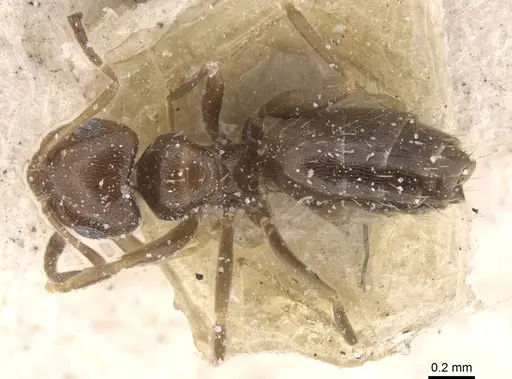
文献
分布マップを読み込み中...製品情報を読み込み中...