
Bothroponera sanguinea
- 学名
- Bothroponera sanguinea
- 族
- Ponerini
- 亜科
- Ponerinae
- 命名者
- Santschi, 1920
- 分布
- 0 か国で発見
紹介
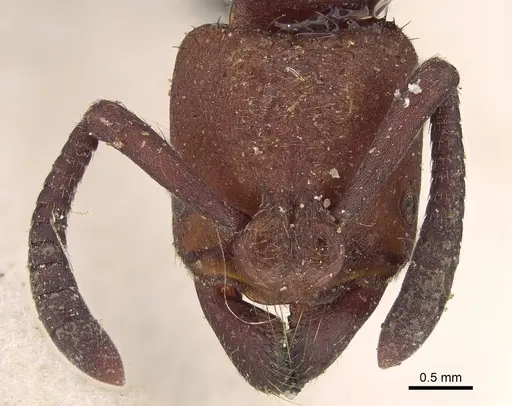
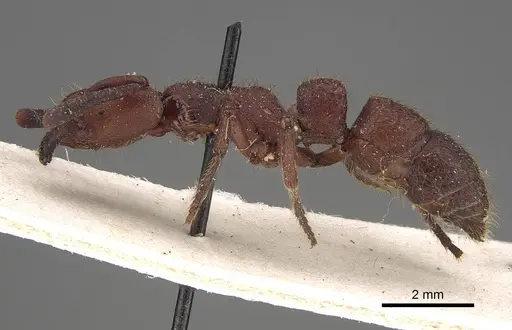
Bothroponera sanguinea is a medium-sized ponerine ant native to Central Africa. Workers measure approximately 10.7mm in total length, with a robust brown to brownish-red body covered in distinctive golden to reddish erect hairs . This species belongs to the Bothroponera talpa species complex and is distinguished from related species by having very little fine striation on its surfaces . The mandibles feature 7 teeth, and the clypeus has a straight to slightly concave lower medial margin without a carina . B. sanguinea inhabits the Northwestern and Northeastern Congolian Lowland Forests as well as the Northern Congolian Forest-Savanna Mosaic in the Democratic Republic of Congo, Central African Republic, and Congo Brazzaville .
Quick Summary
- Difficulty: Medium
- Origin & Habitat: Democratic Republic of Congo, Central African Republic, and Congo Brazzaville. Inhabits Northwestern and Northeastern Congolian Lowland Forests and Northern Congolian Forest-Savanna Mosaic [2].
- Colony Type: Unconfirmed, only workers have been described, female and male are unknown [1][2].
- Size & Growth:
- Queen: Unknown, queen has not been described [1][2].
- Worker: Workers approximately 10.7mm total length [1][2].
- Colony: Unknown, colony size has not been documented.
- Growth: Unknown, development timeline has not been studied.
- Development: Unknown, specific development data does not exist for this species. (Development has not been studied for B. sanguinea.)
- Antkeeping:
- Temperature: Keep nest area at 25-28°C. As a tropical forest species from Central Africa, they need warm, stable conditions. Use a heating cable on one side of the nest to create a gentle gradient if room temperature is below 25°C.
- Humidity: Maintain moderate to high humidity, similar to their forest floor habitat. Keep the nest substrate consistently moist but not waterlogged. Provide a water tube for drinking water.
- Diapause: Unknown, this is a tropical species from a region with minimal seasonal temperature variation. They likely do not require a formal hibernation, but may slow down slightly during cooler periods.
- Nesting: In nature, they likely nest in soil or rotting wood in forest habitats. In captivity, a naturalistic setup with moist substrate or a Y-tong/plaster nest works well. They prefer tight, dark chambers.
- Behavior: Ponerine ants are typically predatory and have a functional sting. B. sanguinea is likely moderately aggressive when defending the nest. They are active foragers that hunt small invertebrates. Workers are large enough to handle most prey items. Escape prevention is important, while not tiny, they are strong climbers and can escape through small gaps. Use standard barriers.
- Common Issues: limited information, this is a poorly studied species with no documented captive husbandry., tropical humidity needs, dry conditions will cause colony decline., predatory feeding requirements, they need live or freshly killed prey items., unknown sting potency, Ponerinae have stings, though pain level varies by species.
Nest Preferences
Bothroponera sanguinea is a forest-dwelling species found in the Congolian lowland forests. In captivity, they do well in naturalistic setups with moist substrate that allows for digging, or in Y-tong/plaster nests that maintain humidity. They prefer dark, tight chambers and will typically nest in the moistest areas of their enclosure. Provide multiple chambers of varying sizes to allow the colony to choose their preferred microclimate. A layer of leaf litter or decorative elements on the surface can help them feel secure. [2]
Feeding and Diet
As a Ponerinae ant, B. sanguinea is predatory and needs a protein-rich diet. Feed them small live insects such as fruit flies, pinhead crickets, small mealworms, or other appropriately sized arthropods. They will also accept freshly killed prey if live prey is not available. Sugar sources like honey or sugar water may be accepted but should not be the primary food source. Feed protein prey 2-3 times per week, and provide a constant source of sugar water. Remove uneaten prey after 24-48 hours to prevent mold.
Temperature and Care
This is a tropical species from Central Africa, so they need warm conditions. Keep the nest area at 25-28°C with minimal temperature fluctuations. A heating cable placed on one side of the nest can create a temperature gradient, allowing the ants to self-regulate. Room temperature in most homes may be too cold, so supplemental heating is often necessary. Monitor temperature with a thermometer placed near the nest. Avoid direct sunlight which can cause overheating and drying. [2]
Behavior and Temperament
Ponerine ants are generally more aggressive and have functional stings compared to many common ant genera. B. sanguinea workers are around 10.7mm, making them large enough to deliver a noticeable sting if threatened. They are active foragers and will hunt prey rather than relying solely on scavenged food. When disturbed, they may raise their abdomen in a threat display. Always use caution when working with this species. [1][2]
Acquiring This Species
Bothroponera sanguinea is not a common species in the antkeeping hobby. It is rarely available and may be difficult to acquire. If available, wild-caught colonies are the most likely source since captive breeding is uncommon. When obtaining a colony, ensure you understand the legal requirements for your region. This species has a limited natural range in Central Africa.
Frequently Asked Questions
How long does it take for Bothroponera sanguinea to develop from egg to worker?
The specific development timeline has not been studied for this species. There is no available data on egg-to-worker development time for B. sanguinea.
What do Bothroponera sanguinea ants eat?
They are predatory ants that need protein-rich food. Feed them small live insects like fruit flies, pinhead crickets, or small mealworms. They may accept freshly killed prey if live prey is not available. Sugar sources like honey water may be offered as a supplement but should not be the primary food.
What temperature do Bothroponera sanguinea need?
Keep them at 25-28°C. This is a tropical forest species from Central Africa that requires warm, stable conditions. Supplemental heating is usually necessary since room temperature is often too cool.
Are Bothroponera sanguinea good for beginners?
No, this species is not recommended for beginners. It is a poorly studied species with limited availability, and there is no established captive husbandry information. Additionally, Ponerinae require more specific care than many common ant species.
How big do Bothroponera sanguinea colonies get?
The maximum colony size is unknown, this species has not been studied in detail. Female and male castes have never been described, so we do not know colony structure details.
Do Bothroponera sanguinea need hibernation?
Probably not. This is a tropical species from a region with minimal seasonal temperature variation. They likely do not require a formal hibernation period, though they may reduce activity during cooler periods.
What humidity do Bothroponera sanguinea need?
They need moderate to high humidity, similar to their forest floor habitat in Central Africa. Keep the nest substrate consistently moist but not waterlogged. Monitor regularly and rehydrate when the substrate surface begins drying.
Can I keep multiple Bothroponera sanguinea queens together?
This is unknown. The colony structure has not been studied, only workers have been described, and the queen and male are unknown. Do not attempt combining unrelated queens without evidence they can coexist.
What is the best nest type for Bothroponera sanguinea?
A naturalistic setup with moist digging substrate or a Y-tong/plaster nest works well. They prefer dark, tight chambers and will nest in the moistest areas. Provide multiple chamber sizes and ensure humidity can be maintained.
Report an Issue
The current care sheet is based fully on literature. See inconsistencies, or something that's incorrect? Please , it will be resolved after review from an admin. Contributing to the blogs tab also helps providing information, to make us be able to further improve the caresheets. Thank you for your support!
References

この飼育シートのライセンスは: CC BY-SA 4.0 .
コミュニティブログ
CASENT0922362
AntWebで見る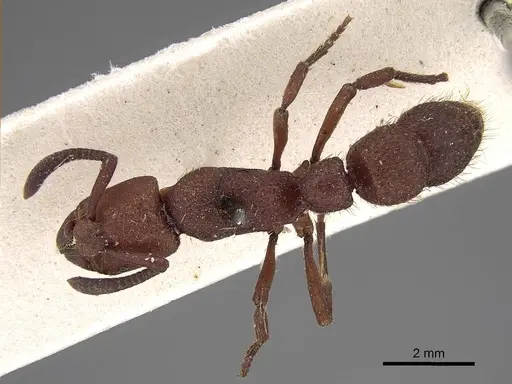
文献
分布マップを読み込み中...製品情報を読み込み中...