
Aphaenogaster saharensis
- 学名
- Aphaenogaster saharensis
- 族
- Stenammini
- 亜科
- Myrmicinae
- 命名者
- Bernard, 1953
- 分布
- 0 か国で発見
紹介
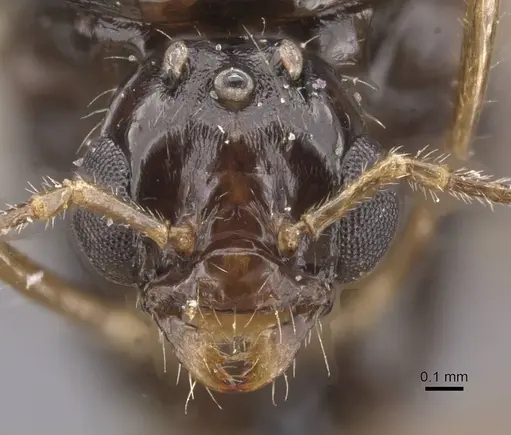
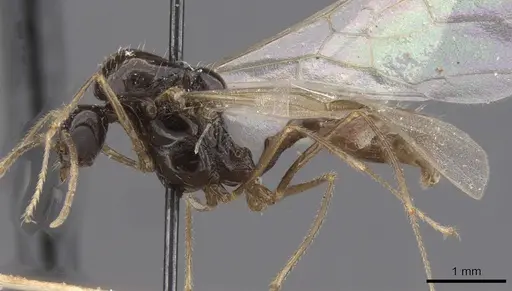
Aphaenogaster saharensis is a mysterious ant from the mountains of the Algerian Sahara. Scientists have described only the males, which are small, shiny black ants about 4.9mm long with brownish legs and antennae . Bernard discovered the species in 1953 in a deep canyon at 1320 meters altitude, living in a moist, enclosed environment with ponds and waterfalls, despite being in the desert . Recent research shows the identity of this species is uncertain and needs further study to clarify its position within the genus . No one has described the workers or queens, and scientists have not studied the colony biology. In antkeeping terms, this makes them a complete unknown - you would be keeping a species that science has barely documented.
Quick Summary
- Difficulty: Expert
- Origin & Habitat: Algeria, specifically the Tassili des Ajjer mountains at 1320m altitude in canyon torrent beds with ponds [1][3][4].
- Colony Type: Unknown, based on typical Aphaenogaster patterns, colonies likely have a single queen, but this is unconfirmed.
- Size & Growth:
- Queen: Unknown.
- Worker: Unknown, the only described specimen is a 4.9mm male [1].
- Colony: Unknown.
- Growth: Unknown.
- Development: Unknown. (No data exists on development speed.)
- Antkeeping:
- Temperature: Unknown, the type locality was a moist canyon at 1320m altitude, suggesting moderate conditions around 20-25°C rather than extreme desert heat [1].
- Humidity: Unknown, the habitat description mentions ponds and damp canyon walls, indicating moderate to moist conditions [1].
- Diapause: Unknown, likely required given the Palearctic mountain location at 1320m altitude, but unconfirmed [3].
- Nesting: Unknown, probably nests in soil crevices or under stones in canyon walls similar to other Aphaenogaster species [1].
- Behavior: Unknown temperament, the genus Aphaenogaster is generally active but not aggressive, though this species is essentially unstudied [4].
- Common Issues: identity uncertain, Schifani et al. 2022 found this taxon needs further investigation to clarify its position [2]., no confirmed captive care information exists, you would be pioneering care methods., risk of desiccation if kept like typical desert ants, the canyon habitat was moist with ponds [1]., virtually unavailable in the antkeeping trade.
Taxonomic Uncertainty
Schifani et al. (2022) and subsequent research in 2023 identified Aphaenogaster saharensis as a species requiring further investigation to clarify its position within the genus [2]. Bernard described the species in 1953 based solely on a single male specimen from Algeria [1]. No worker or queen castes have been formally described in the available literature, and the species' relationship to other Aphaenogaster species remains unclear. For antkeepers, this means any colony obtained as 'A. saharensis' may be misidentified, and the true biology of this species is essentially unknown.
Natural History and Habitat
The only known specimens come from a very specific microhabitat in the Tassili des Ajjer mountains of Algeria. The type locality was station 85 at Aguelmane Aourari,1320 meters above sea level, described as a deep torrent bed with ponds, very enclosed under cliffs over 130 meters high [1]. This was a damp, sheltered canyon environment, not the open sand dunes many imagine when they think of the Sahara. The original description notes this represents a relict population with Mediterranean distribution patterns, suggesting the species prefers cooler, moister conditions than the surrounding desert [1].
Inferred Care Guidelines
Since no captive breeding records exist, any care guidelines are speculative. Based on the mountainous canyon habitat and comparison to similar Aphaenogaster species, you should probably maintain moderate temperatures around 20-25°C rather than hot desert conditions [1]. Humidity should be moderate to moist, not arid. A naturalistic setup with soil, rocks, and areas of moisture might replicate the canyon wall habitat [1]. However, these are educated guesses, the species may have very different requirements.
Why This Species Is Not Recommended
You should not attempt to keep Aphaenogaster saharensis unless you are an experienced researcher. The identity of the species is questionable [2], meaning specimens sold under this name may be something else entirely. There is no information available about queen size, colony founding behavior, diet preferences, or temperature requirements. Without knowing whether queens are claustral or semi-claustral, what they eat, or how large colonies grow, you cannot provide proper care. Additionally, the species is likely extremely rare in collections and may be difficult to source ethically.
Frequently Asked Questions
What do Aphaenogaster saharensis look like?
Only the males have been described. They are small black ants about 4.9mm long with a shiny body, brownish legs and antennae, and a gaster with brown reflections [1]. Workers and queens remain unknown.
How big do Aphaenogaster saharensis colonies get?
Colony size is completely unknown. No one has studied the colony structure of this species.
Do Aphaenogaster saharensis need hibernation?
This is unknown. They come from the Palearctic region at 1320m altitude in mountains [3][1], which suggests they might experience cooler winters, but whether they require diapause in captivity is unconfirmed.
What do Aphaenogaster saharensis eat?
Their diet is unknown. Most Aphaenogaster species are omnivorous, eating seeds, insects, and honeydew, but specific dietary requirements for this species have not been studied [4].
Are Aphaenogaster saharensis good for beginners?
No. This species is suitable only for expert antkeepers or researchers because virtually nothing is known about their biology, colony structure, or care requirements [2].
Can I keep multiple Aphaenogaster saharensis queens together?
This is unknown and not recommended. The colony structure (single queen vs multiple queens) has never been documented for this species.
Where do Aphaenogaster saharensis nest in the wild?
The only known specimens were collected in a deep canyon torrent bed with ponds, under high cliffs [1]. They likely nest in soil crevices or under stones in these moist, enclosed canyon environments.
Report an Issue
The current care sheet is based fully on literature. See inconsistencies, or something that's incorrect? Please , it will be resolved after review from an admin. Contributing to the blogs tab also helps providing information, to make us be able to further improve the caresheets. Thank you for your support!
References

この飼育シートのライセンスは: CC BY-SA 4.0 .
コミュニティブログ
CASENT0913608
AntWebで見る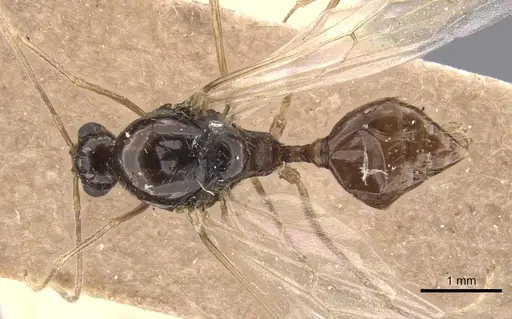
文献
分布マップを読み込み中...製品情報を読み込み中...