
Aphaenogaster burri
- 学名
- Aphaenogaster burri
- 族
- Stenammini
- 亜科
- Myrmicinae
- 命名者
- Donisthorpe, 1950
- 分布
- 0 か国で発見
紹介
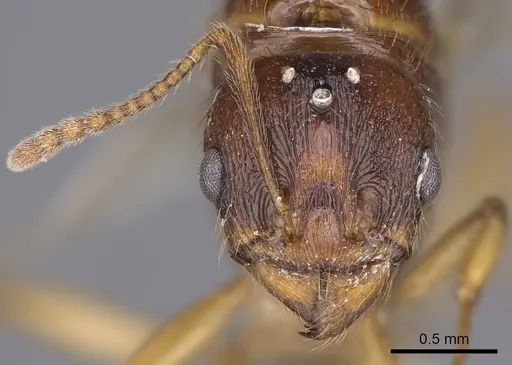
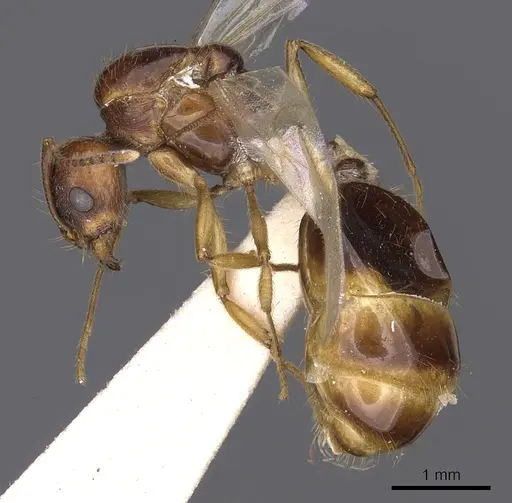
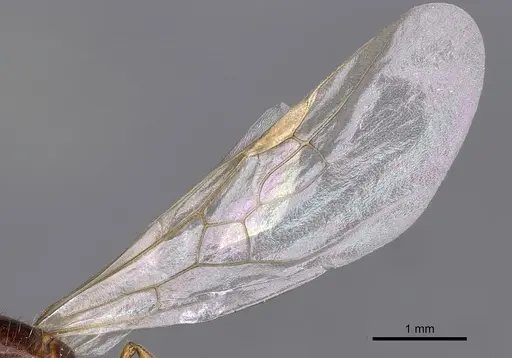
Aphaenogaster burri is known only from three queen specimens collected in 1950 on the Black Sea coast of Turkey . Scientists originally described these as Goniomma burri before moving them to Aphaenogaster in 1995,but recent research confirms the species requires further investigation to clarify its position within the genus . No workers, males, or nests have ever been found. The type series consists of three syntype queens collected by C. Kosswig at Hopa, Turkey, now deposited in the Natural History Museum in London . Because no living colonies have ever been observed, almost nothing is known about the biology or care requirements of this species.
Quick Summary
- Difficulty: Expert
- Origin & Habitat: Turkey, specifically the Black Sea coastal region near Hopa [1][3]. The climate is temperate and extratropical at approximately 39°N latitude [3].
- Colony Type: Unknown. Based on typical Aphaenogaster patterns, colonies are likely monogyne (single queen), but this remains completely unconfirmed [1].
- Size & Growth:
- Antkeeping:
- Behavior: Unknown [1].
- Common Issues: species exists only as three museum specimens collected in 1950, no living colonies are available., taxonomic identity is uncertain and may not belong in the genus Aphaenogaster., no captive breeding records exist, founding behavior is completely undocumented., effectively unavailable to antkeepers due to extreme rarity in collections.
Taxonomic Uncertainty
Aphaenogaster burri represents a true taxonomic mystery. The three known specimens are syntype queens collected by C. Kosswig in 1950 from Hopa on the Turkish Black Sea coast [1]. These were originally described as Aphaenogaster burri by Donisthorpe in 1950,then moved to Aphaenogaster by Bolton in 1995 [1]. Recent research by Schifani et al. (2022) found the identity of this taxon to be uncertain, and Zięcina et al. (2024) note that because Aphaenogaster burri is known only from a sexual form, they could not verify its species group affiliation within the genus [2]. Acosta Salmerón (1981) could not study the species due to lack of specimens [4]. The species appears in Turkish ant checklists as Aphaenogaster burri [5]. No workers, males, or nests have ever been documented.
Inferred Care Based on Genus Patterns
Since no biological data exists for Aphaenogaster burri specifically, any care guidelines must be inferred from the genus Aphaenogaster generally. Most Aphaenogaster species are claustral, meaning the queen seals herself in a chamber and lives off stored body fat until her first workers hatch. They typically nest in soil or rotting wood and are generalist foragers. However, applying these general patterns to Aphaenogaster burri is risky given its uncertain taxonomic placement. The species comes from temperate Turkey at approximately 39°N latitude [3], suggesting it experiences seasonal temperature changes and likely requires a winter rest period (diapause), though this is unconfirmed.
Availability and Legal Status
Aphaenogaster burri is effectively unavailable to antkeepers. The only known specimens are the type series deposited in the Natural History Museum in London (BMNH) [1]. The species is native to Turkey and has never been recorded as introduced elsewhere [6]. It is not considered invasive, but given its extreme rarity and taxonomic uncertainty, any collection or trade would require proper scientific permits. For practical purposes, this species cannot be obtained through commercial channels or typical field collection.
Frequently Asked Questions
Can I keep Aphaenogaster burri as a pet?
No. This species is effectively impossible to keep. Only three queen specimens exist in museum collections, collected in 1950. No living colonies have ever been observed or made available to keepers [1].
What do Aphaenogaster burri eat?
Their diet is completely unknown. While other Aphaenogaster species are generalist foragers that eat seeds, insects, and honeydew, we have no specific data for this species [1].
How long does Aphaenogaster burri take from egg to worker?
The development timeline is unknown. No one has ever observed brood development in this species [1].
Does Aphaenogaster burri need hibernation?
Probably, but unconfirmed. They come from temperate Turkey where winters are cool, suggesting they likely need a winter rest period (diapause), but this has never been documented [3][1].
Is Aphaenogaster burri dangerous or do they sting?
Unknown. While most Aphaenogaster have stingers, they are typically too small to penetrate human skin effectively. However, since no living specimens have been studied, the sting capability of this specific species is unconfirmed [1].
Why is Aphaenogaster burri so rare?
We do not know if the species is naturally rare or simply under-collected. It has not been seen since the original 1950 collection, suggesting it may be extremely localized, cryptic, or potentially even extinct in that specific location [1][4].
Is Aphaenogaster burri really an Aphaenogaster?
Scientists are not sure. Recent taxonomic revisions note that its placement in the genus Aphaenogaster is uncertain and requires further investigation [2]. It was originally described as Aphaenogaster burri [1].
Report an Issue
The current care sheet is based fully on literature. See inconsistencies, or something that's incorrect? Please , it will be resolved after review from an admin. Contributing to the blogs tab also helps providing information, to make us be able to further improve the caresheets. Thank you for your support!
References

この飼育シートのライセンスは: CC BY-SA 4.0 .
コミュニティブログ
CASENT0900459
AntWebで見る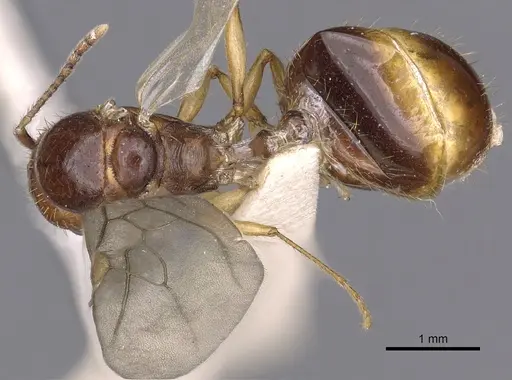
文献
分布マップを読み込み中...製品情報を読み込み中...