
紹介
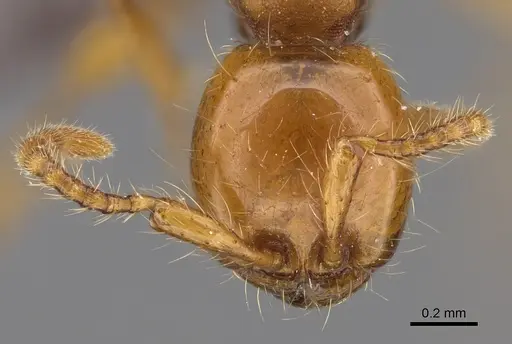
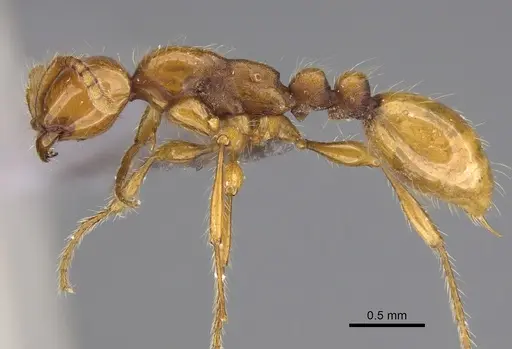
Aenictus ugaduwensis are tiny army ants from the Sahelian savannahs of West Africa, specifically known from Burkina Faso and Senegal . Workers have yellowish-brown to brown bodies with noticeably short antennae and a distinctively quadrate head shape that separates them from close relatives like Aenictus rotundatus and Aenictus guineensis . This species belongs to the rotundatus species complex within the Aenictus genus . Scientists have only ever collected four worker specimens, three from Ougadougou, Burkina Faso and one from Senegal, making this one of the rarest ants described . As army ants in the subfamily Dorylinae, they likely exhibit the nomadic, predatory lifestyle typical of their group, though no behavioral observations exist for this species.
Quick Summary
- Difficulty: Expert
- Origin & Habitat: West Africa (Burkina Faso and Senegal), Sahelian savannah habitats [1]
- Colony Type: Unknown, army ants in this genus typically form large colonies, but this remains unconfirmed for this species
- Size & Growth:
- Queen: Unknown, queens have not been described [1]
- Worker: ~2 mm total length, inferred from Aenictus genus patterns (WL 1.01mm mesosoma) [1]
- Colony: Likely large (thousands of workers) based on genus patterns
- Growth: Unknown
- Development: Unknown (No development data exists for this species. Related tropical army ants typically develop quickly in warm conditions.)
- Antkeeping:
- Temperature: Likely 25-30°C based on Sahelian climate, provide a gradient and observe colony response
- Humidity: Sahelian savannah suggests tolerance for moderate humidity, keep nest area slightly damp but not wet
- Diapause: Unlikely, tropical species from West Africa likely does not require winter hibernation
- Nesting: Army ants do not build permanent nests, they form temporary bivouacs. Standard formicaria and test tubes are unsuitable.
- Behavior: Expected to be aggressive predators typical of army ants, hunting in swarms. Their extremely small size makes escape containment very difficult with standard antkeeping equipment [1].
- Common Issues: obtaining specimens is practically impossible, only four specimens exist in scientific collections., extremely small size means they can escape through gaps smaller than standard antkeeping mesh or barriers., army ant colonies require massive space and continuous food sources that are not feasible in home setups., no captive care protocols exist for this species, everything would be experimental., specialized predatory diet requires live ant or termite colonies, which are difficult to maintain as food sources.
Extreme Rarity and Legal Status
Aenictus ugaduwensis is one of the rarest ants on Earth. Scientists know this species from exactly four worker specimens collected in 1970 and described in 2022 [1]. Three workers came from Ougadougou, Burkina Faso, and one from Senegal [1][2]. Because the species is so poorly known and likely has a restricted range, obtaining specimens would require permits under international wildlife trade agreements and potentially local conservation laws. This species is not available through antkeeping suppliers, and collecting them yourself would require scientific permits and specialized fieldwork in West African savannahs.
Army Ant Biology Versus Standard Antkeeping
These ants belong to the army ant subfamily Dorylinae, which means they behave very differently from typical pet ants. Army ants do not dig permanent nests in soil or wood. Instead, they form temporary living structures called bivouacs where the workers link their bodies together to protect the queen and brood [2]. The colony is nomadic, moving frequently to new hunting grounds. This lifestyle makes them impossible to house in standard formicaria, test tubes, or Y-tong nests. They need massive, sealed environments with soil substrates for bivouac formation and constant access to large amounts of live prey.
Containment and Escape Risks
At roughly 2 millimeters long, these workers are smaller than most antkeeping equipment is designed to contain [1]. They can squeeze through tiny gaps in acrylic nests, pass through standard stainless steel mesh, and escape from seemingly sealed containers. Army ants are relentless explorers that will test every seam and corner. Keeping them would require specialized fine mesh and completely sealed systems, which creates ventilation problems. Any escape of a predatory army ant colony poses risks to local ecosystems if you live in a suitable climate, though they likely cannot survive temperate winters.
Feeding and Diet Challenges
Aenictus species are specialized predators that primarily hunt other ants, termites, and small arthropods [2]. They do not eat sugar water or honey like typical pet ants. Instead, they require constant supplies of live prey, often in large quantities to feed massive colonies. In captivity, this would mean maintaining cultures of prey ants or termites specifically as food, which is complex and ethically challenging. Without their natural raiding behavior and colony sizes, they cannot be sustained on standard antkeeping diets of mealworms and sugar water.
Temperature and Environmental Needs
Coming from the Sahelian savannah, these ants likely prefer warm conditions between 25-30°C, with tolerance for cooler nights [1]. Specific requirements are unknown. They likely need moderate humidity levels, damp but not tropical rainforest wet, based on their savannah origin. Heating should be provided via a cable or mat on one side of the enclosure to create a gradient, allowing the colony to self-regulate. Because they are tropical, they probably do not require diapause (winter rest), but seasonal fluctuations might trigger breeding cycles that are not understood.
Frequently Asked Questions
Can I keep Aenictus ugaduwensis as a pet?
No. This species is not available in the antkeeping trade, has never been kept in captivity, and requires specialized care that is not feasible for hobbyists. Only four specimens have ever been collected by scientists.
How rare is Aenictus ugaduwensis?
Extremely rare. Scientists know this species from exactly four worker specimens, three from Burkina Faso and one from Senegal [1][2]. It was described as a new species in 2022 based on these few specimens collected in 1970.
Where does Aenictus ugaduwensis live?
They live in the Sahelian savannah regions of West Africa, specifically known from Ougadougou in Burkina Faso and one location in Senegal [1].
How big are Aenictus ugaduwensis workers?
Workers are tiny, measuring approximately 2 millimeters in total body length [1].
What do Aenictus ugaduwensis eat?
Their diet is unknown, but related Aenictus army ants are specialized predators that hunt other ants, termites, and small arthropods. They do not consume sugary foods.
Do Aenictus ugaduwensis ants sting?
Army ants in this genus rely on their mandibles for hunting rather than stings. They have powerful bites but are too small to harm humans.
Can I buy Aenictus ugaduwensis online?
No. This species is not sold by antkeeping suppliers. Given that only four specimens exist in scientific collections, any trade would be illegal and unethical.
How do you care for Aenictus ugaduwensis?
Captive care is not documented and not recommended. Army ants require massive enclosures, specialized containment for their small size, and constant supplies of live prey that are impractical for home keeping.
Do Aenictus ugaduwensis need hibernation?
Probably not. As a tropical species from West Africa, they likely remain active year-round without a winter diapause period, though specific seasonal behaviors are unknown.
How fast do Aenictus ugaduwensis colonies grow?
Unknown. Army ants typically have fast-growing colonies reaching thousands of workers, but growth rates for this specific species have never been observed.
Report an Issue
The current care sheet is based fully on literature. See inconsistencies, or something that's incorrect? Please , it will be resolved after review from an admin. Contributing to the blogs tab also helps providing information, to make us be able to further improve the caresheets. Thank you for your support!
References

この飼育シートのライセンスは: CC BY-SA 4.0 .
コミュニティブログ
NHMUK012849272
AntWebで見る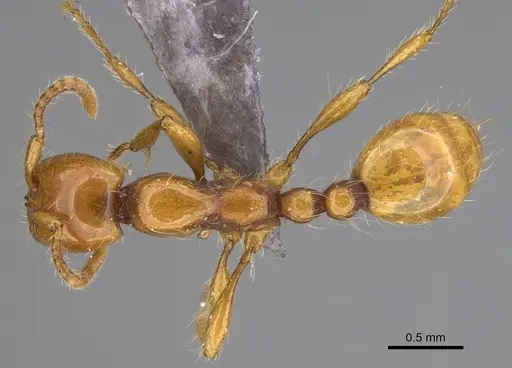
文献
分布マップを読み込み中...製品情報を読み込み中...