
紹介
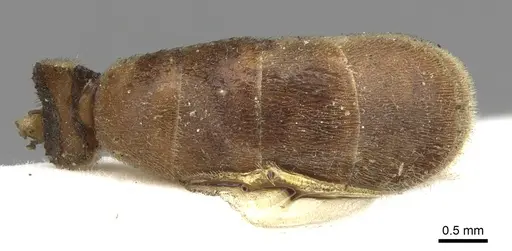
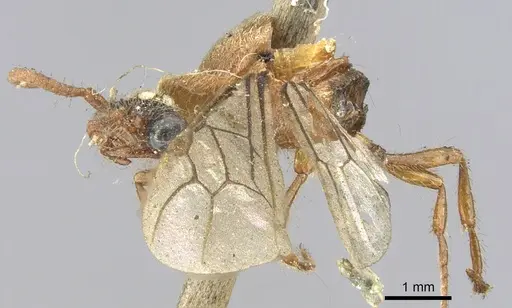
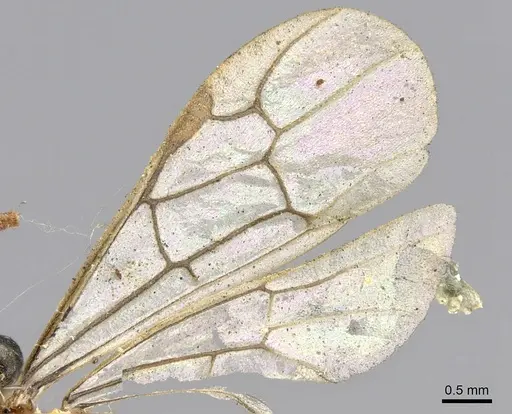
Aenictus certus is an army ant species known only from a single male specimen described by Westwood in 1842. The male has a black head with honey yellow thorax, legs, and abdomen, and is smaller than the related Aenictus ambiguus . The type specimen is in poor condition and lacks collection locality data, though subsequent records confirm the species occurs in India . This species represents one of many army ants that remain practically unknown beyond their initial description. Only the male caste has ever been documented - no one has formally described the workers or queens that would make up a living colony . For antkeepers, this means Aenictus certus exists only in museum collections with no observations of living colonies, no knowledge of nesting habits, and no possibility of obtaining specimens for captive care.
Quick Summary
- Difficulty: Expert
- Origin & Habitat: India [2][3]. Indomalaya region.
- Colony Type: Unknown, only male specimens described [1]
- Size & Growth:
- Antkeeping:
- Temperature: Unknown. Based on Indian distribution, likely requires warm conditions roughly 25-30°C, but this is unconfirmed [1].
- Humidity: Unknown. Tropical Indian habitat suggests high humidity needs, but specific requirements unconfirmed [1].
- Diapause: Unknown [1]
- Nesting: Unknown. Army ants are typically nomadic with no permanent nest structure [1].
- Behavior: Unknown. As an army ant in the subfamily Dorylinae, they likely engage in group raiding and maintain a nomadic lifestyle, but specific temperament has never been observed [1].
- Common Issues: species exists only as a damaged museum specimen with no known living colonies., no commercial or legal source exists for obtaining colonies., army ant biology typically requires massive space and food unavailable in home setups., impossible to identify workers without comparative material from the type specimen.
Taxonomic Status and Known Material
John Obadiah Westwood first described Aenictus certus in 1842 based on a single male specimen [2]. The type locality was not recorded, though later authors suggest India as the likely origin [1]. C. T. Bingham provided a redescription in 1903,noting the specimen was in very bad condition [1]. The male measures smaller than Aenictus ambiguus and shows distinct coloration: black head contrasting with honey yellow thorax, legs, and abdomen [1].
No worker caste has ever been formally described for this species. The holotype remains the only known specimen, making Aenictus certus a nomenclatural entity without modern biological documentation. Without worker descriptions, you could not verify if you had collected the correct species in the field [1].
Why Captive Keeping Is Not Possible
You cannot keep Aenictus certus in captivity. No living colonies have ever been observed or collected. The species is known exclusively from a single damaged male collected in the 1800s [1].
Even if specimens were available, army ants (Dorylinae) present extreme challenges that make them unsuitable for standard antkeeping. They require massive foraging territories, consume enormous quantities of prey daily, and maintain nomadic lifestyles without permanent nests. These biological constraints demand specialized laboratory setups far beyond home antkeeping equipment [1].
Inferred Biology from Army Ant Relatives
While specific data for Aenictus certus is absent, we can make educated guesses based on the genus Aenictus and subfamily Dorylinae. These are true army ants that likely conduct group raids on other arthropods and ant colonies. They probably maintain high humidity requirements consistent with Indian forests and prefer warm temperatures roughly between 25-30°C [1].
However, these are merely hypotheses. The actual biology of Aenictus certus could differ significantly from related species. Without field observations of living colonies, any care recommendations would be pure speculation rather than practical advice.
Frequently Asked Questions
Can I keep Aenictus certus in captivity?
No. This species is known only from a single male specimen collected in the 1800s. No living colonies have ever been observed, and the species cannot be identified without access to the type material [1].
Where do Aenictus certus come from?
India [2][3]. The exact location is unknown because the original specimen lacked collection data, but subsequent checklists confirm it occurs in India.
What do Aenictus certus eat?
Unknown for this specific species. Related Aenictus army ants are specialized predators that hunt other arthropods and raid other ant colonies [1].
How big do Aenictus certus colonies get?
Unknown. No colonies have ever been documented for this species [1].
What do Aenictus certus workers look like?
Unknown. Only the male caste has ever been described. Workers have never been formally documented [1].
Are Aenictus certus good for beginners?
No. This species cannot be kept by anyone due to complete lack of biological data and unavailability of specimens [1].
How long until Aenictus certus get their first workers?
Unknown. Founding behavior has never been observed [1].
Report an Issue
The current care sheet is based fully on literature. See inconsistencies, or something that's incorrect? Please , it will be resolved after review from an admin. Contributing to the blogs tab also helps providing information, to make us be able to further improve the caresheets. Thank you for your support!
References

この飼育シートのライセンスは: CC BY-SA 4.0 .
コミュニティブログ
CASENT0902691
AntWebで見る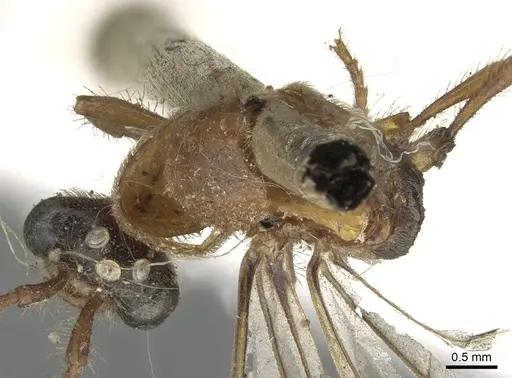
文献
分布マップを読み込み中...製品情報を読み込み中...