
Acanthomyrmex thailandensis
- 学名
- Acanthomyrmex thailandensis
- 族
- Crematogastrini
- 亜科
- Myrmicinae
- 命名者
- Terayama, 1995
- 分布
- 0 か国で発見
紹介
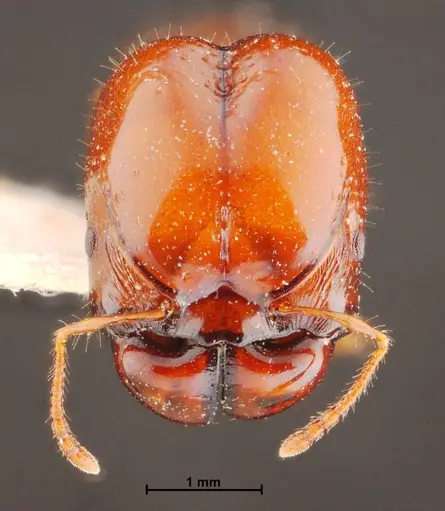
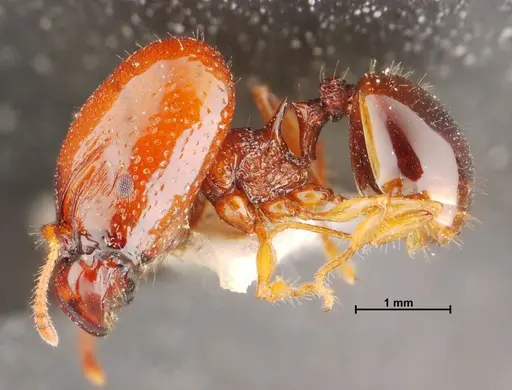
Acanthomyrmex thailandensis is a dimorphic ant species endemic to the mountains of northern Thailand. The species shows dramatic differences between its worker castes: minor workers are small at 3.4-3.5 mm total length with toothed mandibles for general work, while major workers are much larger at 5.5 mm total length with massive, smooth mandibles lacking teeth and hugely enlarged heads . Queens measure 6.0 mm total length and are winged (alate) . All castes share a reddish-brown coloration with darker abdomens and yellowish-brown legs . The species was first described from Doi Puli in Chiang Mai Province at 600 meters elevation, where it inhabits tropical forest habitats . Based on patterns seen in related Acanthomyrmex species, colonies remain small with fewer than 100 workers and nest in pre-existing cavities in dead twigs, rotting wood, or under stones on the forest floor .
Quick Summary
- Difficulty: Expert
- Origin & Habitat: Chiang Mai Province, Thailand, tropical forest floor at 600m elevation in rotting wood and under stones [2][3]
- Colony Type: Likely single-queen colonies with fewer than 100 workers, though exact colony structure remains unconfirmed for this species [3]
- Size & Growth:
- Queen: 6.0 mm total length [1]
- Worker: Minors 3.4-3.5 mm total length, Majors 5.5 mm total length [1]
- Colony: Likely under 100 workers (inferred from related Acanthomyrmex careoscrobis) [3]
- Growth: Slow
- Development: Unknown, estimated 8-12 weeks based on typical tropical Myrmicinae patterns (Timeline is unconfirmed, tropical species generally develop faster than temperate ants but small colony size suggests steady rather than explosive growth)
- Antkeeping:
- Temperature: Keep warm and stable around 24-28°C. As a tropical species from Thailand, they likely need consistent warmth year-round without cooling [2]
- Humidity: High humidity required. Keep nest substrate moist but not waterlogged, mimicking the damp rotting wood and forest floor litter of their natural habitat [3]
- Diapause: No, tropical species that likely remains active year-round [2]
- Nesting: Small cavities in rotting wood or under flat stones. In captivity, use small Y-tong or plaster nests with tight chambers sized to their small scale, or naturalistic setups with twigs and leaf litter [3]
- Behavior: Behavior is poorly documented, but the presence of dimorphic workers with specialized major soldiers suggests majors handle defense or seed-processing while minors perform general duties. They are slow-growing with small colony sizes. Their tiny size (especially minors) means escape prevention must be excellent [1][3]
- Common Issues: founding behavior is completely unconfirmed, queens may fail to raise first workers if conditions are not guessed correctly, extremely small minor workers can escape through the tiniest gaps in mesh or lids, slow growth means colonies remain vulnerable and small for long periods, rarity in captivity means no established care protocols exist, you will be figuring out basic requirements through trial and error, majors have massive heads that may get stuck in narrow passages if nest tunnels are too tight
Nest Preferences and Housing
In the wild, Acanthomyrmex thailandensis nests in small cavities within dead twigs, rotting wood, or under stones on the forest floor [3]. The type specimens were collected from a nest at 600 meters elevation in tropical forest habitat [2]. For captive housing, replicate these tight, humid spaces. Small Y-tong (autoclaved aerated concrete) nests or plaster nests work well, but ensure chambers are appropriately sized, majors have massively enlarged heads that could become stuck in passages that are too narrow, while minors are tiny enough to squeeze through surprisingly small gaps. A naturalistic setup with rotting wood pieces, small stones, and leaf litter may reduce stress for this poorly understood species. Because they are tiny, use fine mesh for ventilation and apply Fluon or baby powder barriers to the outworld rim to prevent escapes.
Feeding and Diet
The exact diet of Acanthomyrmex thailandensis is unknown, but related species Acanthomyrmex careoscrobis stores tiny seeds in their nests [3]. This suggests they may be seed-collectors or at least utilize seeds as part of their diet. Offer a variety of small seeds and observe if they are collected. They likely also need protein sources, offer small live prey such as springtails, fruit flies, or tiny cricket nymphs chopped to appropriate size. Provide sugar sources like honey water or sugar water in small drops. Because colony sizes are small, feed small amounts frequently rather than large boluses that could mold.
Temperature and Seasonal Care
As a tropical species from Chiang Mai Province, Thailand, Acanthomyrmex thailandensis requires warm, stable temperatures year-round [2]. Keep the nest area between 24-28°C with minimal fluctuation. They do not require a winter rest period (diapause), though a slight temperature drop of a few degrees during the cooler months might mimic natural seasonal changes. Use a heating cable or mat on one side of the nest to create a gentle gradient, allowing the ants to choose their preferred temperature. Monitor the colony, if workers cluster near the heat source, they may want it warmer, if they avoid it, reduce the temperature.
Worker Dimorphism and Specialization
This species shows extreme worker dimorphism, meaning they have two distinct worker sizes. Minor workers are small with normal-sized heads and toothed mandibles for general tasks [1]. Major workers are much larger with massively enlarged heads, smooth mandibles lacking teeth, and powerful-looking head muscles [1]. The majors likely serve as soldiers for colony defense or as living seed-mills to crack hard seeds. In captivity, you may notice majors spending more time near the nest entrance or handling food items, while minors forage and tend brood. Ensure your nest has chambers large enough to accommodate the majors' huge heads.
Colony Founding
Founding behavior for Acanthomyrmex thailandensis is completely unconfirmed. Whether queens seal themselves in (claustral founding) or need to forage during the founding stage (semi-claustral) has never been documented. Based on typical patterns in the tribe Crematogastrini, claustral founding is more likely, but this is speculation. If attempting to found a colony from a captured queen, provide a small, humid chamber with minimal disturbance. Offer both a closed dark space and access to food, then observe whether she forages or remains sealed. Success rates are likely low given the experimental nature of keeping this species.
Frequently Asked Questions
How long until Acanthomyrmex thailandensis gets its first workers?
The egg-to-worker timeline is unknown for this species. Based on related tropical Myrmicinae ants, expect roughly 8-12 weeks at 25-28°C, but this is an estimate. Development may be faster for the tiny nanitic first workers and slower for subsequent brood.
Can I keep multiple Acanthomyrmex thailandensis queens together?
Not recommended. While the exact colony structure is unconfirmed, related species form small single-queen colonies. Combining unrelated queens will likely result in fighting and death. Only attempt if you have multiple queens from the same original colony (pleometrosis), and even then, they may eventually fight until only one remains.
What do Acanthomyrmex thailandensis eat?
Their exact diet is unknown, but related species store seeds in their nests. Offer small seeds like chia or poppy seeds, along with protein sources like springtails, fruit flies, or tiny insect pieces. Provide sugar water for energy.
Do Acanthomyrmex thailandensis need hibernation?
No. They come from tropical Thailand and likely remain active year-round. Keep temperatures stable around 24-28°C without a cold winter period [2].
Are Acanthomyrmex thailandensis good for beginners?
No. This is an expert-level species due to their rarity in captivity, unknown founding requirements, tiny size requiring excellent escape prevention, and slow growth. There are no established care guides, so you will be working with incomplete information.
Why are my Acanthomyrmex thailandensis dying?
Common causes include incorrect humidity (too dry or too wet), temperature fluctuations, or escape of tiny minor workers leading to colony collapse. The founding stage is particularly risky since the exact requirements are unconfirmed. Ensure high humidity, stable warmth, and excellent escape prevention.
Can I keep Acanthomyrmex thailandensis in a test tube?
Yes for founding, but be careful. Standard test tubes may be too large or have too much water reservoir for such small ants. Use smaller test tubes or mini-nest setups. Ensure the cotton is tight enough that minors cannot squeeze past it.
How big do Acanthomyrmex thailandensis colonies get?
Likely under 100 workers based on related Acanthomyrmex species. They remain small colonies even when mature, making them suitable for small formicariums [3].
Report an Issue
The current care sheet is based fully on literature. See inconsistencies, or something that's incorrect? Please , it will be resolved after review from an admin. Contributing to the blogs tab also helps providing information, to make us be able to further improve the caresheets. Thank you for your support!
References

この飼育シートのライセンスは: CC BY-SA 4.0 .
コミュニティブログ
THNHM-I-00044
AntWebで見る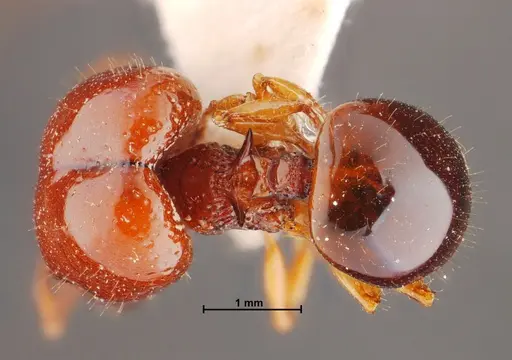
文献
分布マップを読み込み中...製品情報を読み込み中...