
Zasphinctus siamensis
- Nom. sci.
- Zasphinctus siamensis
- Sottofamiglia
- Dorylinae
- Autore
- Jaitrong, 2016
- Distribuzione
- Trovata in 0 paesi
Introduzione
Zasphinctus siamensis is a tiny army ant species endemic to northern Thailand. Workers measure just 3.85-3.95 mm in total length, making them one of the smaller Dorylinae species . They have a distinctive appearance with completely absent eyes, a rare trait among ants, and a unique tubercle (small bump) on the center of their face (clypeus). Their body is reddish-brown to dark brown with yellowish-brown legs and gaster tip, and their smooth, shiny exoskeleton is covered in dense pitted sculpture . This species is known only from Chiang Mai Province in Thailand, where it lives in mountainous hill-evergreen forest areas at around 800 meters elevation. It was originally collected from the soil surface in a shifting agricultural area during the dry season . As a Dorylinae (army ant), this species is predatory, though specific hunting behaviors have not been documented for this particular species.
Quick Summary
- Difficulty: Expert
- Origin & Habitat: Northern Thailand (Chiang Mai Province) in hill-evergreen forest areas at approximately 800m elevation. Found in shifting agricultural areas near forest edges during the dry season [1][2].
- Colony Type: Unknown, only worker caste has been described. As a Dorylinae species, likely forms monogyne (single-queen) colonies, but colony structure has not been documented.
- Size & Growth:
- Queen: Undescribed, no queen specimens have been collected [1]
- Worker: 3.85-3.95 mm total length [1]
- Colony: Unknown, colony size data not available
- Growth: Unknown
- Development: Unconfirmed (Development timeline has not been studied. Based on typical Dorylinae patterns and small worker size, development may be relatively fast, but no specific data exists.)
- Antkeeping:
- Temperature: Inferred: Keep around 24-28°C, reflecting tropical Thai forest conditions. Provide a temperature gradient allowing ants to self-regulate.
- Humidity: Inferred: Keep the nest substrate consistently moist but not waterlogged. The natural habitat near hill-evergreen forest suggests damp conditions.
- Diapause: Unconfirmed, likely no true diapause given the tropical distribution, but may show reduced activity during cooler months.
- Nesting: Inferred: Natural nesting likely occurs in soil. In captivity, a moist soil setup or plaster nest with chambers would probably suit them. Their small size and predatory nature suggest they need secure housing with fine escape prevention.
- Behavior: As a Dorylinae species, Zasphinctus siamensis is predatory. The complete absence of eyes indicates they likely rely on chemical cues and vibrations to hunt prey, similar to other blind army ants. They are probably nocturnal or crepuscular foragers. Their tiny size (under 4mm) means excellent escape prevention is critical, they can squeeze through remarkably small gaps. Temperament is unknown but likely defensive if threatened, as typical of predatory army ants.
- Common Issues: tiny size means escapes are likely without fine mesh barriers and tight-fitting lids, predatory nature requires live prey, colonies may fail without appropriate food, lack of documented care information means keeper experimentation will be necessary, only known from limited specimens, availability in the antkeeping hobby is extremely rare, blind ants may be stressed by excessive disturbance since they rely on chemical sensing
Appearance and Identification
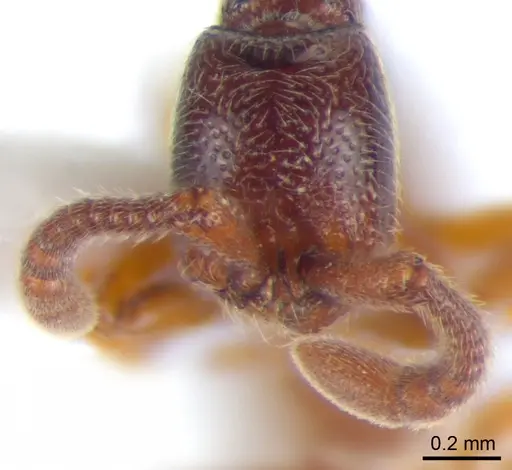
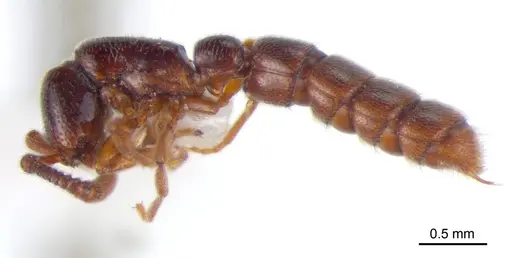
Zasphinctus siamensis is a tiny ant measuring just 3.85-3.95 mm in total length, making it one of the smaller Dorylinae species [1]. The most striking feature is the complete absence of eyes, a rare trait that immediately distinguishes it from most ants [1]. Their 12-segmented antennae have relatively short scapes that do not reach the midpoint of the head. A distinctive tubercle (small pointed bump) sits in the center of their clypeus (the plate above the mandibles), a feature not found in close relatives [1][3].
The body is reddish-brown to dark brown, with the head, mesosoma, and petiole being darker than the gaster. The legs and the tip of the gaster are yellowish-brown, providing nice contrast [1]. Their exoskeleton is smooth and shiny with dense foveolae (small pits) on the head. The gaster (abdomen) shows distinct constrictions between segments, and the pygidium (tail end) has a truncated (cut-off) apex when viewed from above, a key identification feature shared with related species [1].
Distribution and Habitat
This species is known only from Chiang Mai Province in northern Thailand, making it endemic to that region [1][2]. The type locality is in Mae Tang District at approximately 800 meters above sea level. The original specimens were collected from the surface of soil in a shifting agricultural area (a type of slash-and-burn cultivation) near a hill-evergreen forest during the dry season [1].
This habitat suggests the species tolerates edge environments where forest meets agricultural land. The elevation of 800m in northern Thailand means temperatures are cooler than lowland tropical areas but still warm year-round. The dry season collection indicates these ants remain active even when conditions are drier, though they likely have access to moisture from the forest floor [1].
Predatory Behavior and Feeding
As a member of the Dorylinae subfamily (army ants), Zasphinctus siamensis is predatory. However, specific hunting behaviors have not been documented for this species. The complete absence of eyes suggests they rely primarily on chemical cues and vibrations to locate prey, similar to other blind army ants [1].
In captivity, you should offer small live prey appropriate to their tiny size. Based on related Dorylinae species, likely prey items include small soil arthropods such as springtails, mites, and tiny insects. Their small worker size (under 4mm) means prey should be correspondingly small. Sugar sources may be accepted occasionally, but protein from live prey is likely the primary nutritional need. Monitor feeding response and adjust offerings accordingly.
Housing and Nesting
Since this species has not been kept in captivity before, housing recommendations are based on inference from its natural history and Dorylinae biology. The species was collected from soil surfaces in a humid forest environment, suggesting they nest in soil or under ground cover [1].
For housing, a moist soil setup or plaster nest with narrow chambers would be appropriate. The chambers should be scaled to their tiny size, avoid large, open spaces. Keep the nest substrate consistently moist but not waterlogged. A small water reservoir connected to the nest area can help maintain moisture without causing flooding.
Because workers are under 4mm in size, escape prevention must be excellent. Use tight-fitting lids, fine mesh on any ventilation, and consider barrier methods like fluon on container edges. These tiny ants can squeeze through remarkably small gaps.
Temperature and Seasonal Care
Based on the tropical distribution in northern Thailand (around 800m elevation), aim for temperatures in the range of 24-28°C. This is warmer than typical room temperature in many homes, so a small heating element may be necessary. Provide a temperature gradient within the setup so ants can move between warmer and cooler areas as needed.
The natural habitat experiences seasonal variation, with a distinct dry season and wet season. However, being in a tropical mountain area, temperatures likely remain warm year-round with only moderate seasonal swings. A slight reduction in temperature during winter months may be appropriate but is not required to the same extent as temperate species. Monitor colony activity levels and adjust temperatures accordingly, increased foraging activity typically indicates comfortable temperatures. [1]
Challenges and Considerations
Zasphinctus siamensis presents significant challenges for antkeepers. First, this species is extremely rare in the hobby, it has only been described from a handful of specimens collected in Thailand, and live colonies are essentially unavailable [1]. Second, almost no captive care information exists, so keepers will need to experiment and adapt based on related species knowledge.
The complete lack of eyes means these ants are highly sensitive to chemical cues and vibrations. Minimize disturbances and avoid exposing them to strong vibrations or frequent handling. Their predatory nature means they require a constant supply of live small prey, which can be logistically challenging.
Finally, their tiny size demands excellent escape prevention. Even small gaps that other ants cannot pass will not stop these 3-4mm workers. Inspect all housing connections, ventilation holes, and lid edges regularly.
Frequently Asked Questions
How big do Zasphinctus siamensis ants get?
Workers are tiny, measuring only 3.85-3.95 mm in total length [1]. This makes them among the smaller Dorylinae species. Queens have not been described in the scientific literature.
Where is Zasphinctus siamensis found in the wild?
This species is endemic to northern Thailand, specifically Chiang Mai Province. It is known only from the type locality in Mae Tang District at approximately 800 meters elevation in hill-evergreen forest areas [1][2].
Do Zasphinctus siamensis ants have eyes?
No, this species has completely absent eyes, a rare trait among ants [1]. They navigate and hunt using chemical cues and vibrations instead of vision.
What do Zasphinctus siamensis eat?
As a Dorylinae (army ant) species, they are predatory. In captivity, offer small live prey such as springtails, tiny mites, and small insect larvae. Their tiny size means prey should be correspondingly small. Sugar water may be accepted occasionally but protein is likely the primary need [1].
Are Zasphinctus siamensis good for beginners?
No, this species is not recommended for beginners. It is extremely rare in the antkeeping hobby, has no documented captive care information, and requires specific conditions that are still being determined. Additionally, their tiny size demands excellent escape prevention and their predatory nature requires constant access to live prey.
Do Zasphinctus siamensis need hibernation?
Unlikely, as a tropical species from northern Thailand, they probably do not require a true diapause. However, they may show reduced activity during cooler months. Based on their habitat at 800m elevation, a slight temperature reduction in winter may be appropriate but is not required [1].
Can I keep multiple Zasphinctus siamensis queens together?
Unknown, colony structure has not been documented for this species. Only worker specimens have been described, and queen biology is completely unstudied [1]. Until more information is available, keeping single queens is the safest approach.
How long does it take for Zasphinctus siamensis to develop from egg to worker?
Unknown, development timeline has not been studied for this species. Based on typical Dorylinae patterns and their small worker size, development may be relatively fast, but no specific data exists to confirm this [1].
What makes Zasphinctus siamensis unique compared to other ants?
Several features make this species distinctive: the complete absence of eyes (rare among ants), a unique tubercle on the clypeus (face), extremely small worker size at under 4mm, and being one of only a few Zasphinctus species known from mainland Asia [1][3]. It is also one of the rarest species in the antkeeping hobby.
What temperature should I keep Zasphinctus siamensis at?
Based on their tropical distribution in northern Thailand, aim for 24-28°C. This is warmer than typical room temperature, so a small heating element may be needed. Provide a temperature gradient so ants can self-regulate [1].
Do Zasphinctus siamensis ants sting?
Dorylinae ants have functional stingers, though the sting of this tiny species would be negligible to humans. Their small size and predatory nature suggest they may use their stinger on prey items rather than for defense against larger threats.
Is Zasphinctus siamensis available in the antkeeping hobby?
No, this species is essentially unavailable in the antkeeping hobby. It is known only from a handful of specimens collected in Thailand and has never been cultured in captivity. The limited distribution and rarity make it extremely unlikely to appear in commercial trade [1].
Report an Issue
The current care sheet is based fully on literature. See inconsistencies, or something that's incorrect? Please , it will be resolved after review from an admin. Contributing to the blogs tab also helps providing information, to make us be able to further improve the caresheets. Thank you for your support!
References

Questa scheda di allevamento è concessa in licenza con CC BY-SA 4.0 .
Blog della comunità
THNHM-I-00008
Visualizza su AntWeb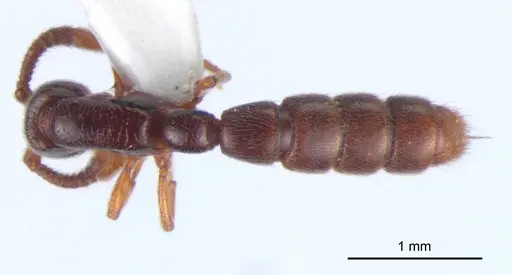
Letteratura
Caricamento mappa di distribuzione...Caricamento prodotti...