
Zasphinctus chariensis
- Nom. sci.
- Zasphinctus chariensis
- Sottofamiglia
- Dorylinae
- Autore
- Santschi, 1915
- Distribuzione
- Trovata in 0 paesi
Introduzione
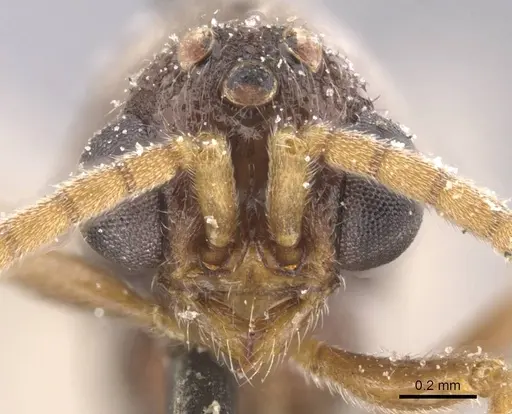
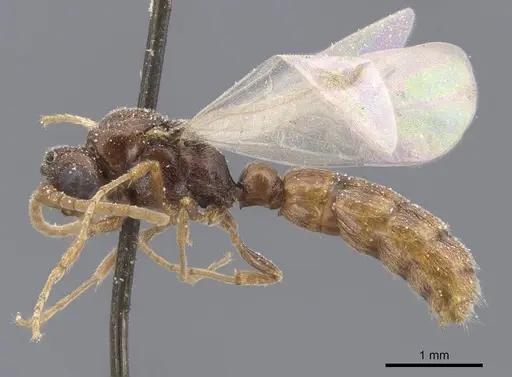
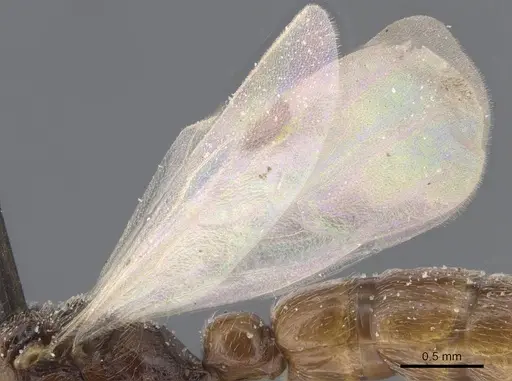
Zasphinctus chariensis is one of the least known ant species in the world. It belongs to the Dorylinae subfamily (army ants) but is known only from a few male specimens collected in Chad in 1915 . The species was described from just two syntype males collected in the Moyen-Chari region. No queens or workers have ever been documented. Beyond records from Chad, Central African Republic, and Mali, nothing is known about its colony structure, natural history, or ecology .
Quick Summary
- Difficulty: Expert
- Origin & Habitat: Known from Chad (type locality Moyen-Chari, Fort Archambault, now Sarh), Central African Republic, and Mali in the Afrotropical region. No habitat details are available [1].
- Colony Type: Unconfirmed – only male specimens have ever been documented. No queens or workers have been observed [1][2].
- Size & Growth:
- Queen: Unknown – no queens have ever been documented
- Worker: Unknown – no workers have ever been documented
- Colony: Unknown
- Growth: Unknown
- Development: Unknown – no brood development has ever been studied (This species is known only from male specimens, no colony development data exists)
- Antkeeping:
- Temperature: Unknown – no temperature data exists. Dorylinae army ants typically prefer warm tropical conditions, but this is an inference without species-specific confirmation.
- Humidity: Unknown – no humidity data exists. Related army ants typically prefer humid conditions, but this is unconfirmed.
- Diapause: Unknown – no seasonal data exists for this species
- Nesting: Unknown – no nesting observations exist. Dorylinae typically nest in soil or rotting wood, but this is unconfirmed for this species
- Behavior: Unknown – no behavioral observations exist. Males are winged and presumably reproductive, but nothing else is known. Based on subfamily patterns, Dorylinae are typically predatory and nocturnal, but this is not confirmed for Zasphinctus chariensis [3].
- Common Issues: this species is essentially unknown in captivity – no established husbandry guidelines exist, only male specimens have ever been documented, meaning colony establishment from wild queens is impossible, no information exists on diet, making feeding recommendations impossible, the species may not be available in the antkeeping hobby at all due to its extreme rarity, any colony attempts would be entirely experimental with no established protocols
Why This Species Is So Poorly Known
Zasphinctus chariensis was described in 1915 by François Santschi from just two male specimens collected in Chad, and no additional specimens have been documented in over a century [1]. This is highly unusual – most ant species are known from workers, but this species is known only from males. The original collector was Decorse in 1904 at Fort Archambault (now Sarh) in Chad's Moyen-Chari region. The species has been moved through several genera (Sphinctomyrmex, Aethiopopone, and now Zasphinctus), but no new biological information has been added since its original description [1]. We have no idea what the workers look like, what they eat, how they nest, or anything about their colony structure.
What We Know About the Genus Zasphinctus
While Zasphinctus chariensis specifically is unknown, the genus Zasphinctus belongs to the Dorylinae subfamily, which contains army ants. These ants are typically predatory on other arthropods and use raiding behavior to capture prey. Dorylinae ants are found across tropical regions worldwide. The genus was revised in 2017 using X-ray micro-CT scanning, which allowed detailed examination of museum specimens, but that study could not add biological information for species known only from males [1]. Related genera include Dorylus (driver ants) and Aenictus (army ants), which are known for their massive colonies, nocturnal raiding, and subterranean nesting. However, Zasphinctus species may behave differently – we simply don't know for this genus or this species specifically.
Is This Species Available to Keepers?
This species is almost certainly not available in the antkeeping hobby. It is known from only a handful of male specimens collected over a century ago in one of the most poorly sampled regions for ants in Africa. No colony, queen, or worker has ever been collected. Even professional myrmecologists working in the region would struggle to locate it – it may already be extinct, or it may simply never have been collected in sufficient numbers. The antkeeping hobby typically works with species that have established captive breeding protocols and available stock. For Zasphinctus chariensis, neither exists. If you are interested in Dorylinae ants, consider more commonly kept army ant species like Dorylus or Aenictus, which have established care protocols and are available from reputable suppliers. [1]
Taxonomic History
The species has undergone multiple taxonomic changes since its initial description. Santschi originally described it in 1915 as Zasphinctus rufiventris st. chariensis (a subspecies of rufiventris) from male specimens collected in Chad [1]. Wheeler raised it to species status in 1922,and Santschi moved it to the genus Aethiopopone in 1930. Brown combined it into Sphinctomyrmex in 1975 and confirmed it as a full species. Finally, Borowiec moved it to Zasphinctus in 2016 during a generic revision of the Dorylinae subfamily [1]. Despite these changes spanning over a century, no new biological information has been added – the species remains known only from those two original male specimens.
Frequently Asked Questions
Can I keep Zasphinctus chariensis ants?
No – this species is essentially unavailable to antkeepers. It has only ever been documented from male specimens collected in 1904 in Chad. No queen, worker, or colony has ever been collected. It may already be extinct, or it simply lives in a region too poorly sampled to find it. Even professional ant researchers have not located additional specimens in over a century [1].
What do Zasphinctus chariensis workers look like?
Unknown – no workers have ever been documented for this species. We do not know their size, color, morphology, or any physical characteristics. This is one of the most poorly known ant species in the world [1][2].
How big do Zasphinctus chariensis colonies get?
Unknown – no colony information exists. Without any specimens beyond males, this information may never be known [1].
What do Zasphinctus chariensis eat?
Unknown – no feeding observations exist. While the genus Zasphinctus belongs to Dorylinae (army ants), which are typically predatory, we have no specific dietary information for this species. Without workers to observe, this information simply does not exist [3].
Where does Zasphinctus chariensis live?
The species is known from Chad (type locality in Moyen-Chari region), Central African Republic, and Mali in the Afrotropical region of Africa. Beyond these country records, no specific habitat information exists – we do not know if they live in forests, savannas, or what their exact microhabitat preferences are [1].
Are Zasphinctus chariensis good for beginners?
No – this species cannot be kept at all. It is known only from male specimens collected in 1904,and no colony, queen, or worker has ever been documented. Even if specimens were found, there would be no established care protocol. This is not a species for any level of antkeeper [1].
How long do Zasphinctus chariensis live?
Unknown – no life cycle information exists. We do not know how long the queen lives, how long development takes from egg to adult, or anything about their lifespan. Without any workers or brood ever being documented, this information is completely unknown [1].
Do Zasphinctus chariensis need hibernation?
Unknown – no seasonal data exists. The species is from a tropical region (Chad, Central African Republic, Mali), so related species might not require hibernation, but we have no specific information about this species' seasonal biology [1].
Can I find Zasphinctus chariensis in the wild?
Extremely unlikely. This species has only been collected once, in 1904,despite over a century of subsequent ant research in Africa. The region (Chad, CAR, Mali) is under-sampled for ants, but this species may be genuinely rare, locally distributed, or possibly extinct. Professional researchers have not found additional specimens despite targeted surveys in some areas [1].
Report an Issue
The current care sheet is based fully on literature. See inconsistencies, or something that's incorrect? Please , it will be resolved after review from an admin. Contributing to the blogs tab also helps providing information, to make us be able to further improve the caresheets. Thank you for your support!
References

Questa scheda di allevamento è concessa in licenza con CC BY-SA 4.0 .
Blog della comunità
CASENT0911269
Visualizza su AntWeb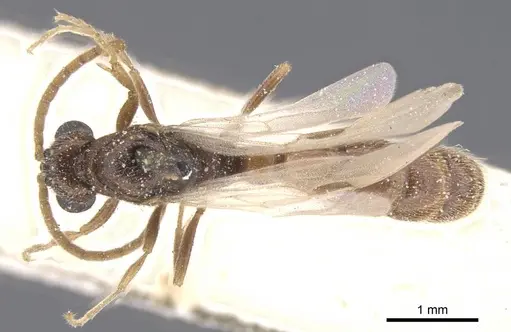
Letteratura
Caricamento mappa di distribuzione...Caricamento prodotti...