
Temnothorax parnonensis
- Nom. sci.
- Temnothorax parnonensis
- Tribù
- Crematogastrini
- Sottofamiglia
- Myrmicinae
- Autore
- Salata & Borowiec, 2022
- Distribuzione
- Trovata in 0 paesi
Introduzione
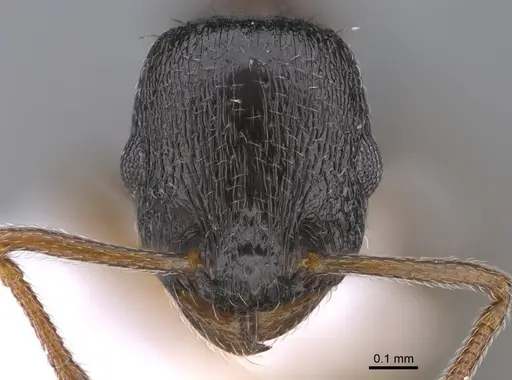
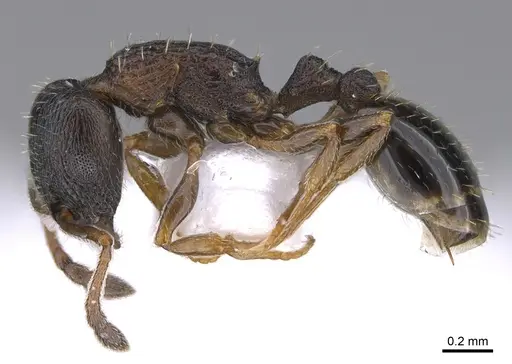
Temnothorax parnonensis is a tiny, recently described ant found only in the mountains of the Peloponnese in Greece. Workers are small (typical for the genus) with a yellowish‑brown to brown body, a paler gaster, and a head covered in fine mesh‑like sculpturing that gives a shiny look . They live in high‑altitude habitats: Mediterranean oak forest, sparse fir forest, and alpine areas above the treeline . Because this species was only described in 2022,almost nothing is known about its captive care - all advice here is based on general patterns for the genus Temnothorax.
Quick Summary
- Difficulty: Medium
- Origin & Habitat: Endemic to the Peloponnese, Greece (Mt. Parnon, Mt. Menalon, Mt. Taygetos) at 550-2100 m. Habitats include Mediterranean oak forest, sparse fir forest, and alpine areas above the forest zone [1].
- Colony Type: Unconfirmed, no data on social structure. Based on Temnothorax patterns they are likely monogyne (single‑queen), but this has not been verified [1].
- Size & Growth:
- Queen: No data available.
- Worker: Estimated ~2.5-3.5 mm total length (inferred from Temnothorax genus). No direct measurements exist [1].
- Colony: Unknown, typical Temnothorax colonies reach up to ~300 workers, but this species has not been observed in captivity [1].
- Growth: Moderate (inferred from genus)
- Development: Estimated 6-10 weeks at 20-24 °C (based on Temnothorax patterns, not confirmed for this species) [1] (Development depends on temperature. First workers (nanitics) will be smaller than mature workers.)
- Antkeeping:
- Temperature: Keep at typical room temperature (20-24 °C). Avoid prolonged heat. Their mountain origin suggests cool, stable conditions [1].
- Humidity: Keep the nest substrate slightly moist but not waterlogged. Provide a humid microclimate, as they come from forested mountains [1].
- Diapause: Yes, as a temperate species, a winter rest period of 3-4 months at 10-15 °C is recommended (November-February) [1].
- Nesting: Use small, tight chambers in Y‑tong (AAC) or plaster. In nature they nest in rock crevices and under stones [1].
- Behavior: Shy and non‑aggressive, workers usually flee from disturbance. They rely on a smearing defense (typical of the Crematogastrini tribe), not a functional stinger. Due to their tiny size, escape prevention is critical.
- Common Issues: escape is extremely likely without fine mesh (0.5 mm) and a fluon barrier, their small size bypasses most gaps., colonies may grow slowly and remain small, which can test patience., overfeeding leads to mold in small nests, offer only small portions of fresh food 2-3 times a week., sensitive to high temperatures and dry air, avoid heat sources and keep humidity stable., wild‑caught colonies may carry parasites, quarantine new stock.
Housing and Nest Setup
Because Temnothorax parnonensis comes from rocky mountain slopes, they feel safest in tight, dark spaces. A small Y‑tong (AAC) nest with narrow chambers works well, as does a naturalistic setup with flat stones over moist substrate. Keep chambers small, wide open spaces stress these tiny ants. The nest should stay slightly damp but ventilated, a small water reservoir or regular misting helps. Most importantly, seal everything: use 0.5 mm mesh on vents and apply fluon or similar slippery coating to all outworld edges. Their small size lets them squeeze through almost any gap [1].
Feeding and Diet
No specific diet studies exist for this species, but like most Temnothorax they are likely omnivorous. Offer small protein sources (fruit flies, pinhead crickets, tiny mealworms) and always have sugar water, honey, or diluted honey available. In nature they probably hunt small insects and collect honeydew from aphids. Feed 2-3 times per week in tiny amounts, a single fruit fly can feed a small colony. Remove leftovers after 24 hours to prevent mold. If they ignore food, try switching prey type or adjusting sugar concentration [1].
Temperature and Seasonal Care
Temnothorax parnonensis lives in high Greek mountains with cool summers and cold winters [1]. In captivity, keep the nest at 20-24 °C year‑round. Room temperature is often perfect. Avoid heat sources and direct sunlight, they don’t tolerate prolonged warmth. A winter diapause is essential: move the colony to 10-15 °C for 3-4 months (roughly November to February). Skipping hibernation can weaken or kill the colony over time. During diapause, reduce feeding but keep the nest slightly damp.
Colony Founding and Growth
No one has documented how this species founds colonies in the wild or in captivity. Based on the genus Temnothorax, a queen likely seals herself in a tiny chamber and raises the first brood without foraging (claustral founding). But this is only a guess, actual founding behavior could differ. Use a test tube or small tight chamber to start a colony. Development from egg to first worker is estimated at 6-10 weeks at moderate temperatures. Growth is slow, a healthy colony may take over a year to reach 30-50 workers. Mature colony size is unknown but probably modest (under 300 workers) [1].
Behavior and Temperament
These ants are peaceful and shy. When disturbed, they flee rather than fight. They rely on a smearing defense (common to the Crematogastrini tribe), a modified stinger that wipes venom onto enemies, but it is not a functional stinger for humans. Workers forage during the day, searching for small prey and sugars. They communicate with pheromones and may use tandem running to lead nestmates to food. Because they are so small, you’ll need good lighting and a magnifying lens to see their activities clearly [1].
Escape Prevention - Critical
Workers are tiny, likely under 3.5 mm, and can slip through any gap wider than 0.5 mm. Standard ant mesh is often too coarse. Always use 0.5 mm or finer mesh on ventilation. Coat all interior outworld edges with fluon or similar barrier. Check connections between nest tubes, water sources, and the outworld for cracks. Even a tiny gap will let them escape. Inspect the setup daily for the first weeks until you are certain it is sealed. These ants are not strong climbers on smooth surfaces, but they are expert gap finders [1].
Frequently Asked Questions
How long does it take for Temnothorax parnonensis to raise first workers?
Not documented for this species. Based on other Temnothorax, expect 6-10 weeks from egg to worker at 20-24 °C. First workers (nanitics) will be smaller than later ones [1].
What size colony does Temnothorax parnonensis reach?
Unknown. Many Temnothorax colonies stay small (up to a few hundred workers). This species has not been kept in captivity long enough to give a reliable number [1].
Do Temnothorax parnonensis ants sting?
No. They belong to a tribe (Crematogastrini) that uses a smearing defense, they wipe venom onto enemies with a flat stinger, not inject it. They cannot sting humans. At worst they might give a tiny bite that is harmless [1].
What temperature do Temnothorax parnonensis need?
Keep them at 20-24 °C. Their native mountain habitat has cool summers, so they don’t tolerate heat well. Room temperature is fine. Avoid direct sun or heating pads [1].
Do Temnothorax parnonensis need hibernation?
Yes. As a temperate species from Greece, they must have a winter diapause. Cool them to 10-15 °C for 3-4 months (roughly November to February). Skipping diapause can weaken or kill the colony over time [1].
Are Temnothorax parnonensis good for beginners?
They are rated Medium, not the easiest but manageable if you are careful. The main challenges: their tiny size makes escape a constant risk, they grow slowly, and they need winter diapause. Beginners should be comfortable with these extra requirements [1].
What do Temnothorax parnonensis eat?
Probably omnivorous, like most Temnothorax. Offer tiny live prey (fruit flies, pinhead crickets) and sugar water or honey constantly. Feed small amounts 2-3 times per week and remove leftovers to prevent mold [1].
Can I keep multiple queens together?
No data for this species. Some Temnothorax are polygynous, but it is safer to separate queens. Combining unrelated queens may lead to fighting [1].
Why are my Temnothorax parnonensis escaping?
Their small size lets them fit through any gap over ~0.5 mm. Check your mesh, fluon application, and all connections. Even tiny cracks in tube joints or lids can be escape routes. Inspect daily until you find and seal every gap [1].
When should I move my colony to a formicarium?
Wait until the colony has at least 30-50 workers. Move them to a nest with tight, small chambers, avoid large open spaces. A test tube works well until then. Moving too early stresses the colony [1].
Report an Issue
The current care sheet is based fully on literature. See inconsistencies, or something that's incorrect? Please , it will be resolved after review from an admin. Contributing to the blogs tab also helps providing information, to make us be able to further improve the caresheets. Thank you for your support!
References

Questa scheda di allevamento è concessa in licenza con CC BY-SA 4.0 .
Blog della comunità
CASENT0923716
Visualizza su AntWeb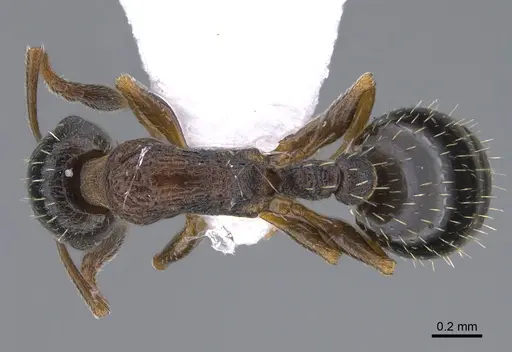
Letteratura
Caricamento mappa di distribuzione...Caricamento prodotti...