
Temnothorax gundlachi
- Nom. sci.
- Temnothorax gundlachi
- Tribù
- Crematogastrini
- Sottofamiglia
- Myrmicinae
- Autore
- Wheeler, 1913
- Distribuzione
- Trovata in 0 paesi
Introduzione
Temnothorax gundlachi is a tiny ant species native to Cuba in the Caribbean. Its worker size isn't documented in the literature, but like most Temnothorax they're very small (likely around 2-4 mm). This species was originally described as Macromischa gundlachi in 1913 and later moved into the genus Temnothorax during taxonomic revisions . They belong to the sallei-clade within the iris-group, a lineage that colonized the Caribbean from North America during the early Miocene . These ants are terricolous, meaning they live on or near the ground . In their natural Cuban habitat they nest in crevices of limestone rocks or cliffs, often building a tubular carton entrance at the nest opening . This rock-crevice nesting habit makes them suited to tight, compact captive nests.
Quick Summary
- Difficulty: Easy
- Origin & Habitat: Cuba (Greater Antilles). They nest in limestone rock crevices and cliffs [2]. The Caribbean environment provides year‑round warm temperatures.
- Colony Type: Colony structure is unconfirmed from the literature. Based on typical Temnothorax patterns, they are likely monogyne (single queen) with small colonies.
- Size & Growth:
- Queen: Queen size not documented, likely slightly larger than workers, around 4-5 mm (inferred from related Caribbean Temnothorax).
- Worker: Worker size not documented, estimated at 2-4 mm based on typical Caribbean Temnothorax species (inferred).
- Colony: Colony size is unknown. Typical Caribbean Temnothorax are small, rarely exceeding a few hundred workers.
- Growth: Unknown, likely slow to moderate based on the small colony size.
- Development: Not documented. Expect several weeks to months, development is temperature dependent. (No precise timeline is available for this species.)
- Antkeeping:
- Temperature: Temperature needs are unknown. As a Caribbean species it likely prefers warm conditions, around 22-26 °C (inferred). Provide a stable temperature without cold drafts.
- Humidity: Humidity needs are unknown. Their natural limestone habitat suggests they tolerate moderate to dry conditions. Offer a moisture gradient, moisten one area of the nest while leaving part dry.
- Diapause: Unknown, but tropical origin suggests no true diapause. You can keep them active year‑round. If room temperature drops in winter, expect reduced activity.
- Nesting: Y‑tong (AAC) blocks or small plaster nests with narrow chambers work well. Their rock‑crevice origin means they prefer tight, enclosed spaces. Keep the nest dry with a small humid corner.
- Behavior: Peaceful and non‑aggressive. These ants do not sting or bite in any meaningful way, their primary defense is smearing venom (they have a flattened stinger). Workers are active foragers but stay calm. Their tiny size means you must take extra care to prevent escapes, check all connections and use fine mesh or fluon on container rims.
- Common Issues: tiny size makes escape prevention critical, use fine mesh barriers and check all connections regularly, slow colony growth means you have to be patient and not overfeed, limited research means most care parameters are estimates based on related species, Caribbean origin means they cannot handle cold, keep them well above 20 °C
Housing and Nest Setup
Temnothorax gundlachi does well in small, compact nests that copy their natural rock-crevice habitat. Y‑tong (AAC) blocks with narrow chambers work well for these tiny ants, chambers should match their small size (too large and they may feel exposed). Small plaster nests or 3D‑printed nests with tight connections are also suitable. Avoid large open chambers.
For the outworld, give moderate floor space for foraging. Because of their tiny size, test‑tube setups work for starting colonies, pack the cotton plug very tightly and consider a separate water tube for humidity. Escape prevention is critical, these ants can slip through gaps that seem impossibly small. Use fluon on the rims of containers and fine mesh over ventilation holes.
In a naturalistic setup, use a thin layer of dry or slightly moist sand or soil. They are terricolous but come from a relatively dry limestone habitat, so avoid keeping the nest soggy. Add a few pieces of limestone or cork for hideouts. [1][2]
Feeding and Diet
Like most Temnothorax, this species is omnivorous. Offer tiny protein sources such as fruit flies, pinhead crickets, or small pieces of mealworm. All food should be small enough for workers to handle. Also provide a source of sugar, a drop of honey, sugar water, or diluted nectar works. Replace sugar sources every few days to stop spoiling.
Feed small amounts 2-3 times per week for established colonies. Remove uneaten protein after 24 hours to prevent mold. During founding, give a tiny drop of honey and occasional small protein (e.g., a half fruit fly).
Temperature and Seasonal Care
As a Caribbean species from Cuba, T. gundlachi likes warmth. Keep the nest area at roughly 22-26 °C (inferred from its origin). If your room is cooler, use a small heating cable on top of the nest (not underneath, to avoid drying the substrate). Place the setup away from cold windows or air conditioning vents. Temperature stability is more important than hitting an exact number, sudden drops can stress the colony and slow brood development.
These ants come from a year‑round warm climate, so they do not need a true diapause. You can keep them active all year. If your home gets cold in winter, they will slow down, that’s fine. Simply keep offering food and warmth as usual.
Colony Development and Growth
No specific colony size or development timeline is documented for this species. Based on related Caribbean Temnothorax, colonies are likely small, probably under 300 workers. The queen probably produces a few dozen workers in the first year, with the colony growing slowly over time. Development from egg to worker likely takes at least a month or two at warm temperatures.
Queen lifespan is not recorded, but Temnothorax queens often live several years. Be patient, this is a slow‑growing species. Don’t expect rapid population explosions. [1]
Behavior and Temperament
These are peaceful, non‑aggressive ants. They do not sting in the usual sense, their primary defense is smearing venom from a flattened, spatulate stinger, a trait common to their tribe (Crematogastrini). They cannot bite or harm keepers. Workers are active foragers but not bold or skittish. Like many Temnothorax, they may use tandem running to guide nestmates to good food sources.
The biggest challenge is their tiny size. They can squeeze through gaps that seem sealed. Use fluon or PTFE on barriers, check all connections, and avoid using loose cotton plugs in test tubes. Their small size also makes them easy to lose in an outworld, so keep the setup enclosed. [1]
Frequently Asked Questions
How long does it take for Temnothorax gundlachi to produce first workers?
The exact development time is not documented. Based on related Caribbean Temnothorax, it probably takes at least 6-10 weeks at warm temperatures (around 24 °C). Be patient, the first workers (nanitics) will be even smaller than usual [1].
What do Temnothorax gundlachi ants eat?
They are omnivorous. Offer tiny protein sources like fruit flies, pinhead crickets, or pieces of mealworm. They also take sugar water, honey, or nectar. Feed small amounts 2-3 times a week and clear leftovers after 24-48 hours.
Do Temnothorax gundlachi ants sting?
They do not sting in the typical piercing way. Instead, their defence is to smear venom using a flattened stinger (a trait of their tribe Crematogastrini). They are harmless to humans and very gentle ants.
What temperature do Temnothorax gundlachi need?
Since they come from Cuba, they prefer warm, stable temperatures. Keep them in the low to mid‑20s °C (22-26 °C is a good guess). Use a small heating cable on top of the nest if your room is cooler. Avoid cold drafts.
How big do Temnothorax gundlachi colonies get?
Colony size is not recorded for this species. Caribbean Temnothorax typically stay small, probably under 300 workers. They don’t form huge colonies, another reason they are easy to house.
Can I keep Temnothorax gundlachi in a test tube?
Yes, test tube nests work well for young colonies. Pack the cotton plug very tightly because these ants are tiny. Add a water tube to give extra humidity. Once the colony grows, move them into a small Y‑tong or plaster nest with narrow chambers.
Do Temnothorax gundlachi need hibernation?
No. As a tropical Caribbean species, they do not require a winter diapause. Keep them warm year‑round. If your home gets cold, they will become less active, but that’s not a problem, just avoid freezing temperatures.
Are Temnothorax gundlachi good for beginners?
Yes, they are easy ants. They are peaceful, need no hibernation, and accept simple foods. The main difficulties are their tiny size (escape prevention) and slow growth. If you are careful with barriers, they are a great starter species.
What type of nest is best for Temnothorax gundlachi?
Choose a nest with small, tight chambers. Y‑tong (AAC) blocks or plaster nests work well. Their natural home is in limestone crevices, so they like cramped spaces. Avoid large chambers, they might feel unsafe. A small outworld with fine sand or soil works too.
Why are my Temnothorax gundlachi escaping?
Because they are incredibly small! They can squeeze through any gap wider than about 0.5 mm. Check all connections in your setup, use fluon or PTFE on rims, and cover ventilation holes with very fine mesh. Even a tiny crack around a water tube can become an escape route.
Report an Issue
The current care sheet is based fully on literature. See inconsistencies, or something that's incorrect? Please , it will be resolved after review from an admin. Contributing to the blogs tab also helps providing information, to make us be able to further improve the caresheets. Thank you for your support!
References

Questa scheda di allevamento è concessa in licenza con CC BY-SA 4.0 .
Blog della comunità
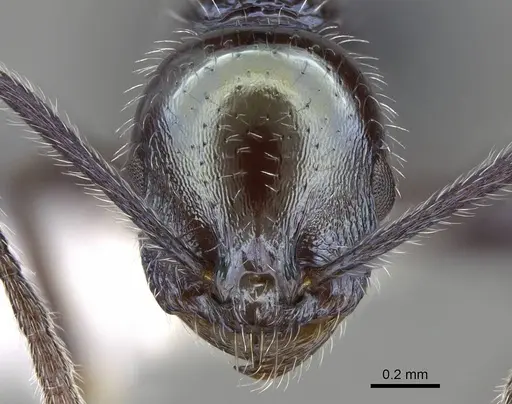
CASENT0912890
Visualizza su AntWeb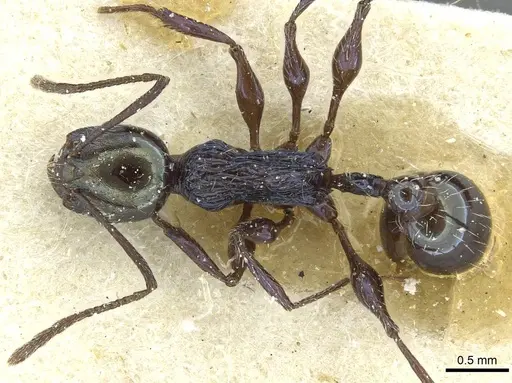
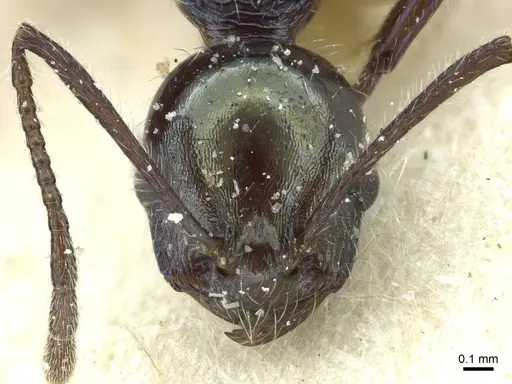
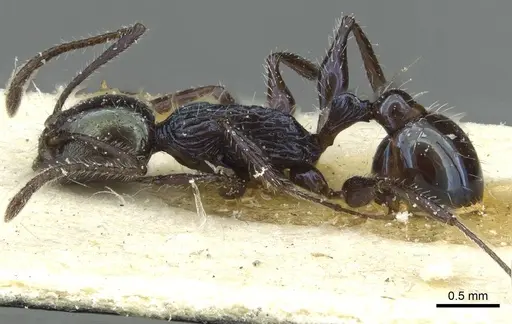
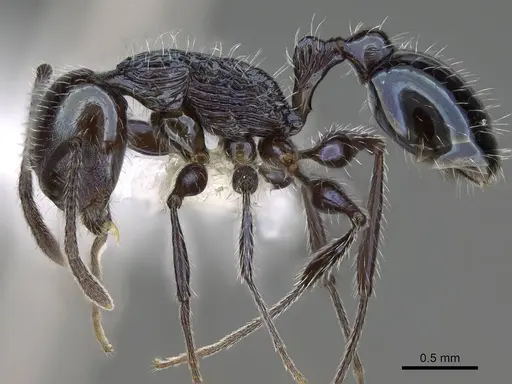
CASENT0916006
Visualizza su AntWeb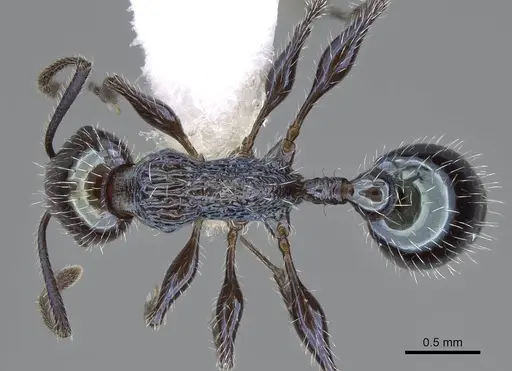
Letteratura
Caricamento mappa di distribuzione...Caricamento prodotti...