
Tapinoma muelleri
- Nom. sci.
- Tapinoma muelleri
- Tribù
- Tapinomini
- Sottofamiglia
- Dolichoderinae
- Autore
- Karavaiev, 1926
- Distribuzione
- Trovata in 0 paesi
Introduzione
Tapinoma muelleri is a small, fast-moving ant species native to the Indomalaya region, with confirmed records in Brunei and Indonesia . Workers are tiny - roughly 2-3mm based on related Tapinoma species - and likely dark brown to black, though no precise description is available. These ants belong to the Dolichoderinae subfamily, meaning they lack a functional sting and instead exude a sticky, foul-smelling secretion from their anal glands when threatened. The species was first described from the Aru Islands of Indonesia in 1926 and remains poorly studied in the hobby . In the wild, they have been collected on tree trunks in lowland dipterocarp forests in Brunei, representing a new record for Borneo and west of Wallace's line . This suggests they are forest-dwelling ants that nest in elevated spots like under bark or in rotting wood. Their small size and speed make them active, trail-forming foragers.
Quick Summary
- Difficulty: Medium
- Origin & Habitat: Indomalaya region, Brunei Darussalam and Indonesia. Found in lowland dipterocarp forests, collected from tree trunks [1].
- Colony Type: Unconfirmed. Many Tapinoma species are polygynous (have multiple queens), but specific data for T. muelleri is lacking [2].
- Size & Growth:
- Queen: Estimated 4-5mm based on typical Tapinoma queen size
- Worker: Estimated 2-3mm based on typical Tapinoma worker size
- Colony: Unknown, likely several hundred workers based on related Tapinoma species
- Growth: Moderate, inferred from genus patterns
- Development: Estimated 6-8 weeks at tropical temperatures (24-28°C) based on related species (No specific data exists for this species)
- Antkeeping:
- Temperature: Keep at 24-28°C. Being a tropical species, they prefer steady warmth. A heating cable on one side of the nest creates a useful gradient.
- Humidity: Moderate to high, they come from damp forest environments. Keep the nest substrate slightly moist but not waterlogged, and ensure good ventilation to avoid mold.
- Diapause: Unlikely, as a tropical species, they probably don't need a true hibernation period. A slight cool-down in winter (to ~20-22°C) may be beneficial but isn't necessary.
- Nesting: Based on their natural tree-trunk habitat [1], they likely prefer nesting in wood or under bark. A Y-tong (AAC) nest, plaster nest, or naturalistic setup with rotting wood pieces works well. Test tubes with a dark cover are also accepted.
- Behavior: Active, fast-moving foragers. As Dolichoderinae, they exude a sticky, foul-smelling secretion when disturbed, but they are not aggressive toward keepers. Their tiny size means they can escape through very small gaps, excellent escape prevention is critical. They likely form trails to food sources and may tend aphids for honeydew.
- Common Issues: escape prevention is critical due to their tiny size, use fine mesh (0.5mm) and tight-fitting lids, limited species-specific information means care is based on genus-level inference, tropical humidity requirements can cause mold if ventilation is poor, fast movement makes them difficult to contain during feeding, wild-caught colonies may carry parasites that can cause colony failure
Housing and Nest Setup
For Tapinoma muelleri, a Y-tong (AAC) nest or a naturalistic setup with rotting wood pieces closely mimics their tree-trunk habitat. They were collected from bark in lowland dipterocarp forests, suggesting they prefer enclosed, slightly elevated nesting sites [1]. A test tube setup works if covered with a dark sleeve, but they may do better in plaster or AAC nests that allow proper humidity control. Regardless of nest type, ensure there are no gaps larger than 1mm, these tiny ants can squeeze through remarkably small openings.
Feeding and Diet
Based on typical Tapinoma feeding behavior, these ants likely accept a varied diet including sugar sources (honey water, sugar water) and protein (small insects, mealworms). In their natural forest habitat, they probably forage for honeydew from aphids and small arthropods. Offer sugar water constantly and protein prey 2-3 times per week. Remove uneaten prey within 24 hours to prevent mold. Given their small size, prey items should be appropriately sized, fruit flies, pinhead crickets, or small mealworm pieces work well.
Temperature and Seasonal Care
As a tropical species from Brunei and Indonesia, Tapinoma muelleri requires warm temperatures in the 24-28°C range. A heating cable placed on one side of the nest creates a temperature gradient allowing the ants to self-regulate. Unlike temperate species, they likely do not require a true hibernation period, but you might reduce temperatures slightly (to around 20-22°C) during winter months to simulate natural seasonal cycles. Avoid sudden temperature drops or drafts. Maintain stable warmth year-round for optimal colony development. [1]
Handling and Temperament
Tapinoma muelleri workers are small but fast-moving. When disturbed, they will retreat quickly rather than stand their ground. Like all Dolichoderinae ants, they lack a sting and instead exude a sticky, foul-smelling secretion from their anal glands as a defense mechanism, this is harmless to humans in small amounts but can be irritating if it gets in eyes or on sensitive skin. They are not aggressive and rarely bite. The main concern for keepers is their tiny size making escape prevention challenging. Use fluon on nest rims, fine mesh on outworlds, and check all connections regularly.
Colony Development
Specific colony development data for Tapinoma muelleri is not available. Based on related Tapinoma species and typical ant development, expect the first workers (nanitics) to emerge 6-8 weeks after the queen lays eggs, assuming temperatures around 26°C. Initial colony growth will be slow as the queen raises her first brood alone. Once workers emerge, colony growth typically accelerates. Mature colonies may reach several hundred workers. Queens of this species have not been documented with ergatoid (wingless) replacement reproductives, so colony longevity depends on the founding queen's lifespan.
Frequently Asked Questions
How long does it take for Tapinoma muelleri to produce first workers?
Based on related Tapinoma species, expect first workers (nanitics) approximately 6-8 weeks after eggs are laid, at optimal temperatures of 26-28°C. This timeline is estimated as no specific development data exists for this species.
Can I keep multiple queens together?
The colony structure of Tapinoma muelleri is unconfirmed. Many Tapinoma species are polygynous (have multiple queens), but combining unrelated foundress queens is not recommended as aggression may occur. Wait until you have an established colony before considering introducing additional queens.
What temperature do Tapinoma muelleri ants need?
Keep them warm at 24-28°C. Being a tropical species from Brunei and Indonesia, they require consistently warm conditions. A heating cable on one side of the nest helps maintain appropriate temperatures.
Are Tapinoma muelleri good for beginners?
This species is rated as Medium difficulty. While not the most challenging species, the lack of species-specific care information and their tiny size requiring excellent escape prevention make them better suited for keepers with some antkeeping experience.
How big do Tapinoma muelleri colonies get?
Colony size is unconfirmed for this specific species. Based on related Tapinoma species, mature colonies likely reach several hundred workers. Growth rate is moderate.
Do Tapinoma muelleri need hibernation?
Probably not. As a tropical species from Southeast Asia, they likely do not require a true hibernation period. A slight temperature reduction during winter months (to around 20-22°C) may be beneficial but is not mandatory.
What do Tapinoma muelleri eat?
Based on typical Tapinoma diet, they likely accept sugar sources (honey water, sugar water) and protein (small insects like fruit flies, pinhead crickets, small mealworms). Offer sugar water constantly and protein prey 2-3 times per week.
Why are my Tapinoma muelleri escaping?
Their tiny size (estimated 2-3mm workers) means they can squeeze through incredibly small gaps. Use fine mesh (at least 0.5mm), apply fluon to nest rims, check all connections, and ensure outworld ventilation ports are properly screened. Escape prevention must be excellent.
Report an Issue
The current care sheet is based fully on literature. See inconsistencies, or something that's incorrect? Please , it will be resolved after review from an admin. Contributing to the blogs tab also helps providing information, to make us be able to further improve the caresheets. Thank you for your support!
References

Questa scheda di allevamento è concessa in licenza con CC BY-SA 4.0 .
Blog della comunità
CASENT0917140
Visualizza su AntWeb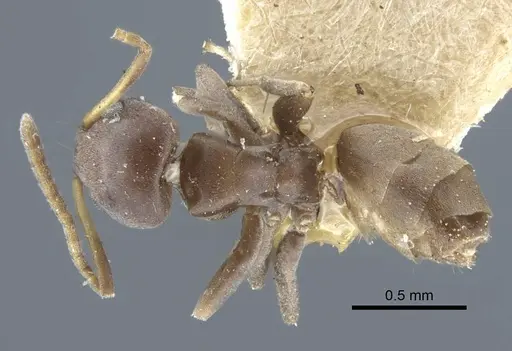
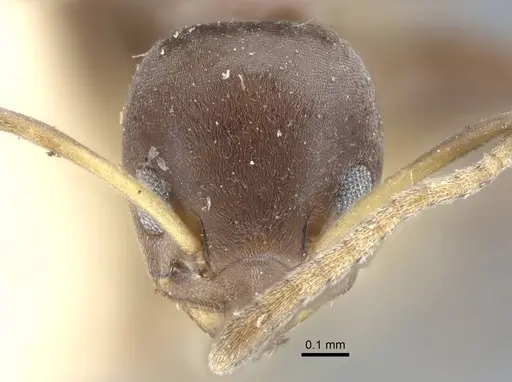
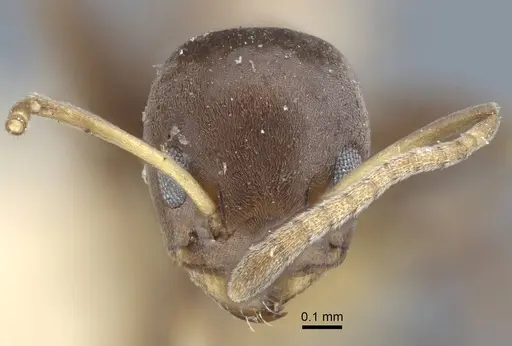
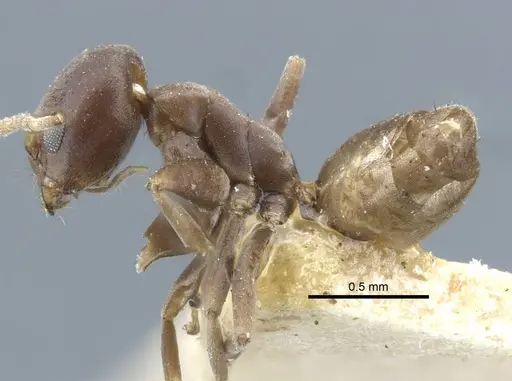
Letteratura
Caricamento mappa di distribuzione...Caricamento prodotti...