
Tapinolepis tumidula
- Nom. sci.
- Tapinolepis tumidula
- Tribù
- Plagiolepidini
- Sottofamiglia
- Formicinae
- Autore
- Emery, 1915
- Distribuzione
- Trovata in 0 paesi
Introduzione
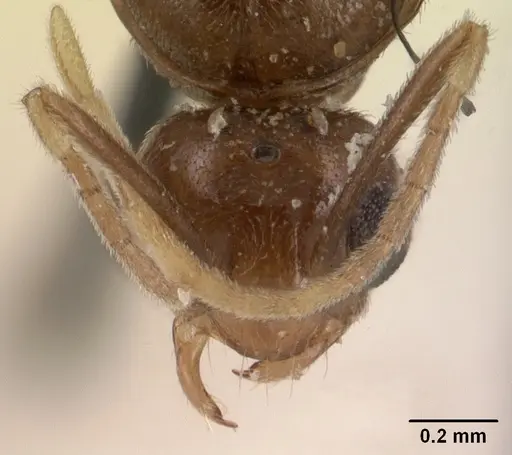
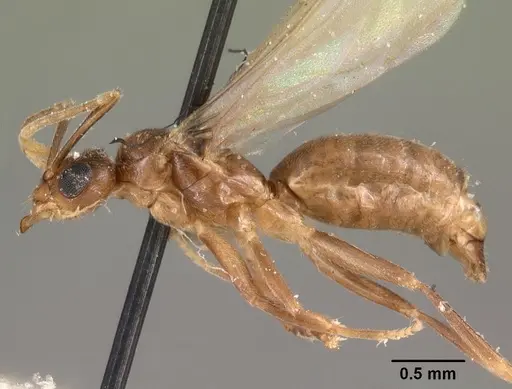
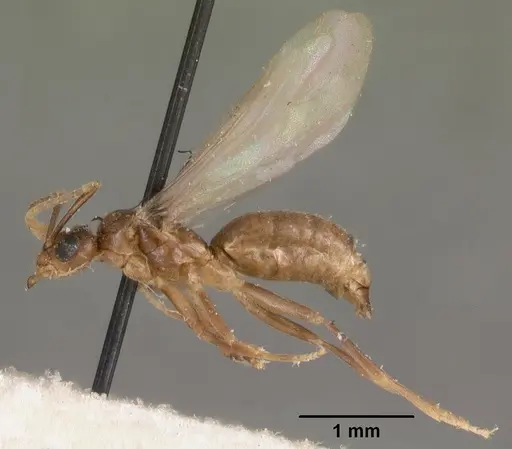
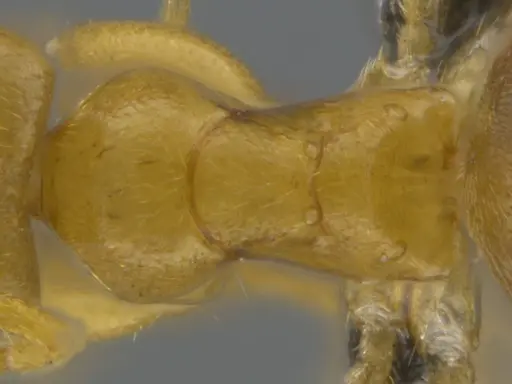
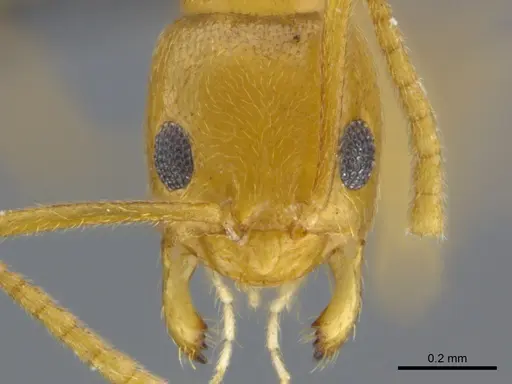
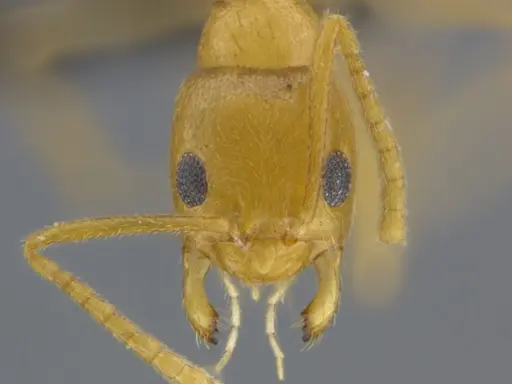
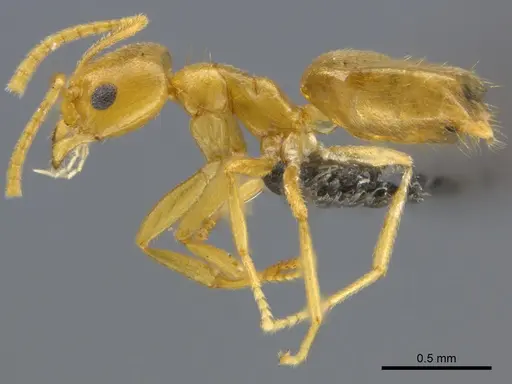
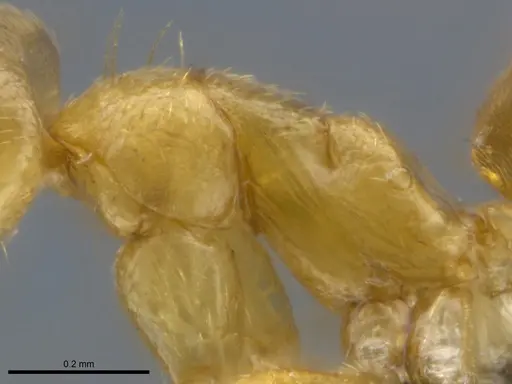
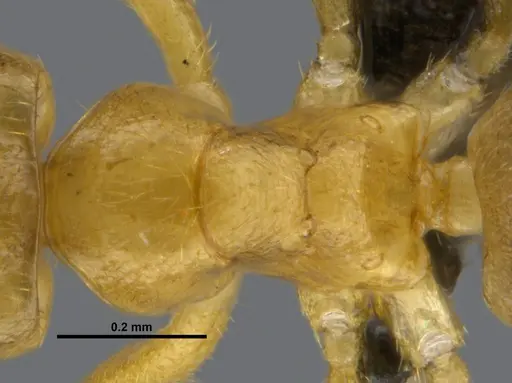
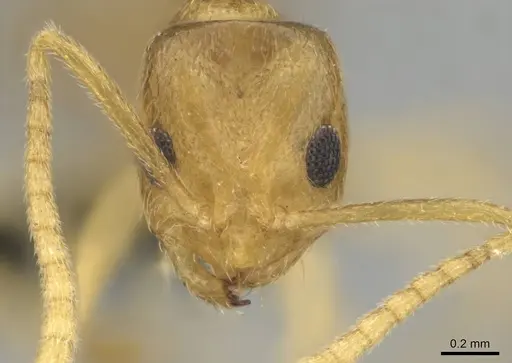
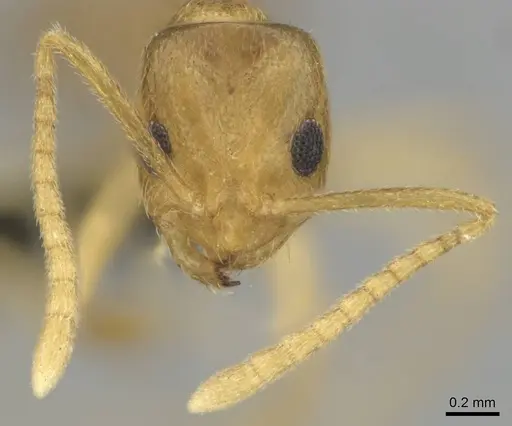
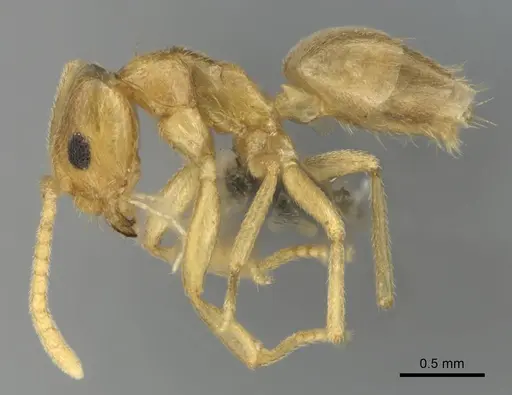
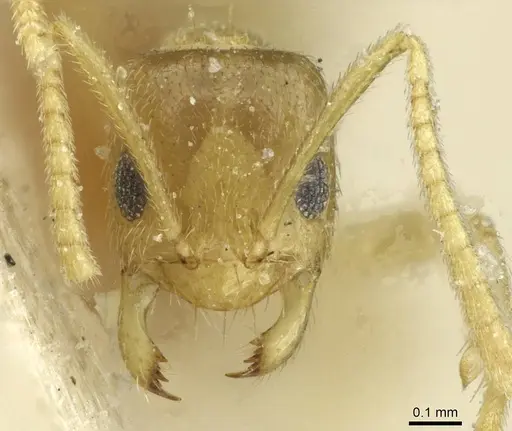
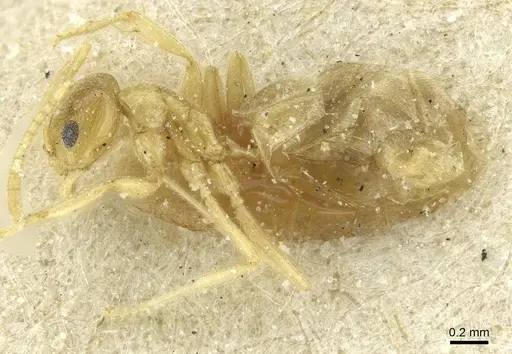
Tapinolepis tumidula is a small ant in the Formicinae subfamily, originally described from Ethiopia in 1915 . It is recorded from Eritrea, Ethiopia, Saudi Arabia, southern Iran (Kerman province), and Iraq . These ants nest in soil, especially clay substrates with low organic matter (0.18%), at depths averaging 25 cm and with multiple room openings (about 7 per nest) . They have been found in disturbed areas like date‑palm groves . This species is poorly studied. Most of what we know comes from ecological surveys rather than dedicated biology. Its exact colony structure, founding behavior, and many care requirements are unconfirmed. The genus Tapinolepis is closely related to Plagiolepis and shares traits with other small Formicinae ants, but species‑specific data are scarce.
Quick Summary
- Difficulty: Medium
- Origin & Habitat: Afrotropical region: Eritrea, Ethiopia, Saudi Arabia [1]. Also recorded in southern Iran (Kerman) and Iraq [3][4]. Inhabits arid to semi‑arid environments, often in disturbed areas (date‑palm groves, urban settings) with clay soils (pH 7.84,low organic matter) [4].
- Colony Type: Unconfirmed. Nest architecture studies show multiple room openings (~7 per nest) with an average of 88 workers per opening [4], but whether colonies are monogyne (single queen) or polygyne (multiple queens) is unknown. The species may form polydomous (multiple connected nests) colonies or single nests with several entrances.
- Size & Growth:
- Queen: Size data unavailable. Inferred from Tapinolepis genus: queens likely ~5-7 mm. No confirmed measurements.
- Worker: Size data unavailable. Inferred from Tapinolepis genus: workers likely ~2-3 mm. No confirmed measurements.
- Colony: Up to approximately 600 workers based on average worker density per opening (87.9) and number of openings (6.87) [4].
- Growth: Moderate (inferred from related small Formicinae).
- Development: Unknown. Estimated 6-10 weeks at 24-28 °C based on related Formicinae. (No species‑specific development data exist.)
- Antkeeping:
- Temperature: Maintain 24-28 °C (inferred from Afrotropical origin). Avoid prolonged temperatures above 32 °C. A thermal gradient is beneficial.
- Humidity: Low. Natural nesting substrate is dry clay with low organic matter [4]. Keep the nest substrate barely moist and well‑ventilated, do not overwater. Provide a dry area.
- Diapause: None required. Maintain warm conditions year‑round. Reduced activity during cool months is not hibernation.
- Nesting: Natural nests in soil, clay substrates, at depths averaging 25 cm with multiple chambers [4]. In captivity, use a naturalistic soil nest or a plaster/Y‑tong nest with small chambers. Avoid acrylic nests. Provide a moisture gradient with a dry zone.
- Behavior: Active foragers. Use formic acid spray for defense (Formicinae trait). Non‑aggressive. Escape risk is high due to small size, use fine mesh (≤0.5 mm) on all ventilation. Tend to form multi‑chamber nests [4].
- Common Issues: escape prevention is critical, their small body size allows them to slip through standard barriers, so use fine mesh and tight seals., limited scientific data means care requirements are estimated from related species rather than direct observation., colony growth may be slow initially, patience is needed during founding., wild‑caught colonies can introduce parasites or pathogens that may cause colony failure., overheating risk, keep below 32 °C., overwatering can lead to mold and drowning, this species is adapted to dry conditions.
Housing and Nest Setup
Tapinolepis tumidula nests naturally in soil, with documented nest depths averaging 25 cm and multiple room openings (average ~7 per nest) [4]. They prefer clay substrates with low organic matter (0.18%) and a pH of 7.84 [4]. For captivity, a naturalistic setup with a soil chamber works best, or you can use a plaster or Y‑tong nest with small chambers. Because the workers are tiny, ensure all passages and chambers are scaled small, tight spaces help them feel secure. Provide a moisture gradient (a slightly moist area and a dry area) to let them self‑regulate. Avoid waterlogging, this species is adapted to relatively dry soils.
Feeding and Diet
As with most Tapinolepis and Plagiolepis species, T. tumidula is likely omnivorous. They have been recorded in date‑palm environments [3], suggesting they tend aphids for honeydew. Offer sugar water or honey as a constant energy source, and provide small protein prey such as fruit flies, springtails, or tiny cricket pieces 2-3 times per week. Remove uneaten prey after 24-48 hours to prevent mold. Given their small size, prey items must be very small.
Temperature and Seasonal Care
Maintain temperatures in the warm range of 24-28 °C, reflecting this species’ origin in Afrotropical and Middle Eastern regions [1][3]. They are adapted to warm conditions and can tolerate brief temperature spikes, but prolonged exposure above 32 °C should be avoided. A heating cable on one side of the nest can create a beneficial gradient, ensure the warm end stays below 30 °C. Unlike temperate species, they likely do not require a true diapause. You may see reduced activity during cooler months if your room temperature drops, but this is not hibernation, simply slower metabolism. Keep them stable and warm year‑round for optimal development.
Behavior and Colony Dynamics
Tapinolepis tumidula shows typical Formicine behavior: active foraging and use of formic acid spray for defense (they do not sting). They are non‑aggressive. Their small size (~2-3 mm) means they can move quickly and slip through tiny gaps, always use fine mesh (≤0.5 mm) for ventilation. Nest architecture studies suggest a multi‑chamber structure with an average of 88 workers per room opening [4]. Be patient during the founding phase, developing from egg to first worker may take 6-10 weeks based on related species, though this is unconfirmed.
Frequently Asked Questions
How long does it take for Tapinolepis tumidula to produce first workers?
The exact timeline is unknown. Based on related Formicinae ants, expect roughly 6-10 weeks from egg to first worker at 24-28 °C. Species‑specific data do not exist.
What do Tapinolepis tumidula ants eat?
They are omnivorous. Offer sugar water or honey as a constant energy source, and provide small protein prey such as fruit flies, springtails, or tiny cricket pieces 2-3 times per week. Their presence in date‑palm groves suggests they also accept honeydew from aphids [3].
Can I keep Tapinolepis tumidula in a test tube?
Test tubes can work for founding colonies, but given their natural multi‑chamber nesting (average depth 25 cm, ~7 openings [4]), they will likely do better in a naturalistic soil setup or a plaster formicarium with multiple small chambers. A test tube is fine initially, but move to a larger setup once the colony reaches 20-30 workers.
Are Tapinolepis tumidula good for beginners?
This species is rated Medium difficulty. While not the most challenging, the lack of species‑specific care data and their small size (escape risk) make them better suited for keepers with some experience who can adapt based on colony behavior.
How big do Tapinolepis tumidula colonies get?
Colony size is estimated at up to about 600 workers based on nest structure data (average 87.9 workers per room opening × about 7 openings) [4]. The maximum is not well documented.
Do Tapinolepis tumidula need hibernation?
No. Given their Afrotropical origin, they do not require a true diapause. Keep them at stable warm temperatures (24-28 °C) year‑round. Reduced activity during cooler months is simply slower metabolism, not hibernation.
Why are my Tapinolepis tumidula dying?
Common causes include: escape (their tiny size allows them to slip through standard barriers), temperature stress (below 20 °C or above 32 °C), humidity imbalance (too wet or too dry, they prefer dry conditions [4]), and pathogens from wild‑caught colonies. Review your setup against their natural preferences: warm, dry, with fine mesh prevention.
When should I move my colony to a formicarium?
Move from a test tube to a larger formicarium or naturalistic setup when the colony reaches 20-30 workers and the test tube appears crowded. Because they naturally build multi‑chamber nests, provide several small chambers instead of one large room.
Can I keep multiple queens together?
The colony structure of this species is unconfirmed. Based on available data, it is not known whether multiple queens can coexist. It is not recommended to attempt co‑founding or combining unrelated queens without further study. If you acquire a wild colony, observe for aggression if more than one queen is present.
Report an Issue
The current care sheet is based fully on literature. See inconsistencies, or something that's incorrect? Please , it will be resolved after review from an admin. Contributing to the blogs tab also helps providing information, to make us be able to further improve the caresheets. Thank you for your support!
References

Questa scheda di allevamento è concessa in licenza con CC BY-SA 4.0 .
Blog della comunità
CASENT0102094
Visualizza su AntWeb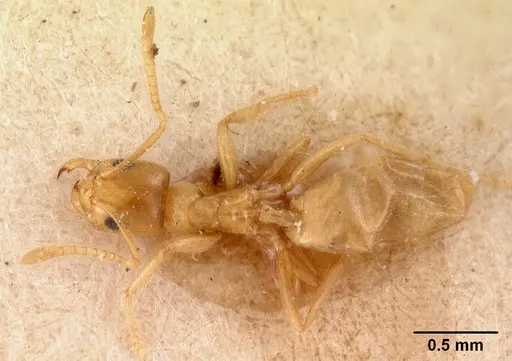
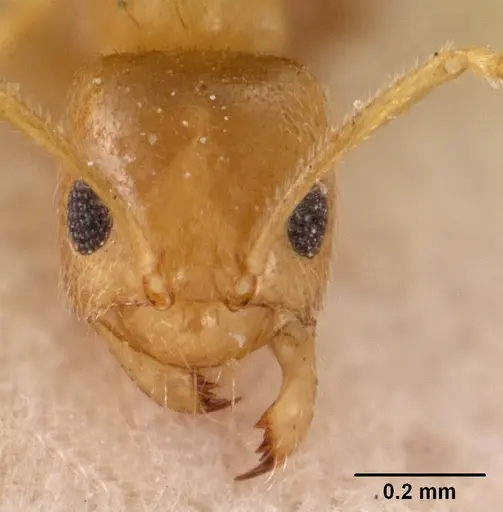
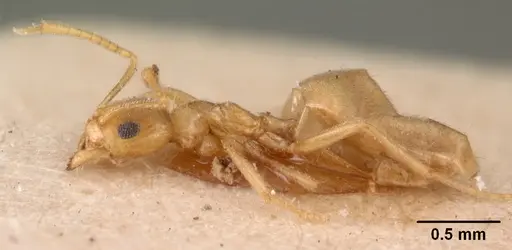
CASENT0102095
Visualizza su AntWeb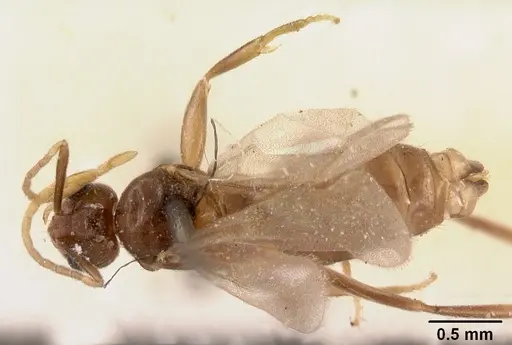
CASENT0250838
Visualizza su AntWeb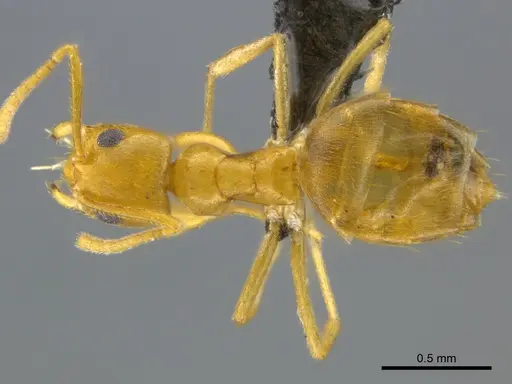
CASENT0250839
Visualizza su AntWeb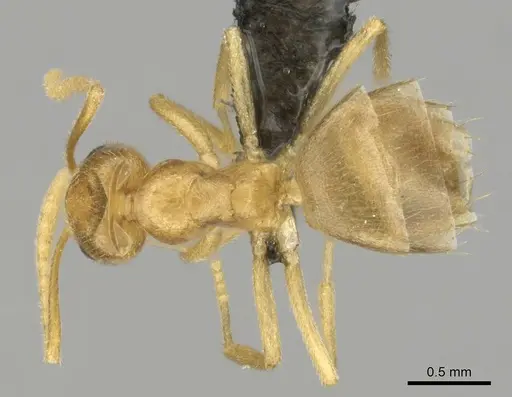
CASENT0912360
Visualizza su AntWeb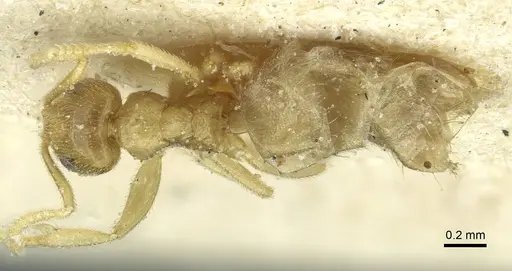
Letteratura
Caricamento mappa di distribuzione...Caricamento prodotti...