
Tapinolepis simulans
- Nom. sci.
- Tapinolepis simulans
- Tribù
- Plagiolepidini
- Sottofamiglia
- Formicinae
- Autore
- Santschi, 1908
- Distribuzione
- Trovata in 0 paesi
Introduzione
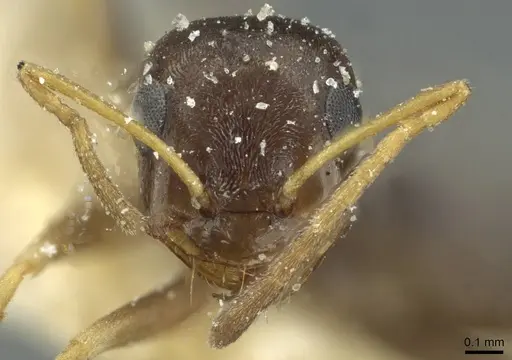
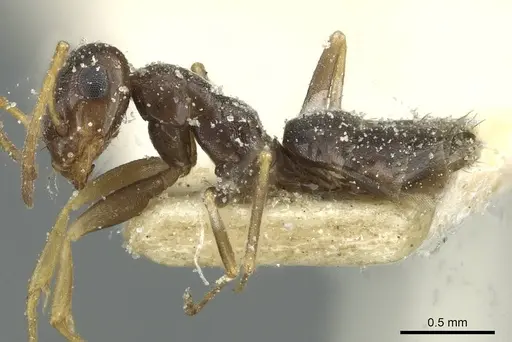
Tapinolepis simulans is a tiny ant from Africa and North Africa. Workers are pale-colored and just a few millimeters long, typical of Plagiolepidini ants. The species was first described from Tunisia in 1908 and has since been recorded in Botswana, Zimbabwe, and Senegal . These ants are Formicinae, meaning they spray formic acid instead of stinging. In the wild, T. simulans nests in abandoned termite cavities under acacia trees in savannah habitat . This shows they're opportunistic nesters that take over existing spaces. Their range stretches from tropical Africa to the southern Palaearctic, suggesting they can handle different climates.
Quick Summary
- Difficulty: Medium
- Origin & Habitat: Native to the Afrotropical region (Botswana, Zimbabwe, Senegal) and the southern Palaearctic (Tunisia). Lives in savannah, nesting in abandoned termite nests under acacia trees [2][1].
- Colony Type: Social structure is not well documented. Probably single-queen colonies (monogyne), but this is not confirmed by research.
- Size & Growth:
- Queen: Approximately 4-5 mm (estimated from related Plagiolepidini, no direct measurements available)
- Worker: Approximately 2-3 mm (estimated from related species, size data unavailable for this species)
- Colony: Unknown, likely several hundred workers at maturity (estimated)
- Growth: Unknown, no specific data
- Development: 6-8 weeks (estimated based on general Formicinae patterns) (No direct data for this species. Estimate assumes warm temperatures (24-28°C).)
- Antkeeping:
- Temperature: Keep warm,24-28°C, based on its African savannah origin. Use a heating cable on one side of the nest to create a gradient. Avoid going above 32°C. No specific temperature studies exist [1].
- Humidity: Moderate, nest substrate should be slightly moist but not wet. Their natural nesting in dry termite cavities suggests they prefer drier conditions. Provide a water tube but don't saturate the nest. Humidity needs are not studied.
- Diapause: Unknown, the species spans tropical and subtropical areas. Northern populations (Tunisia) may naturally slow in winter, but a cool period is not required. If you see reduced activity in winter, you could try a mild cooldown (15-18°C) for a few months, but this is just an idea.
- Nesting: They naturally use pre-existing cavities like abandoned termite nests. In captivity, Y-tong (AAC) blocks, plaster nests, or test tubes with small chambers work well. Avoid wide open spaces, they prefer cramped, narrow passages.
- Behavior: These ants are peaceful, active foragers. As Formicinae, they spray formic acid when threatened but it's harmless to humans. Their tiny size (around 2-3 mm) means escape is a real danger, use Fluon barriers and fine mesh on all openings. They're not aggressive and can be observed easily.
- Common Issues: tiny size makes escape likely unless all gaps are sealed, use Fluon and tight lids, very little scientific data exists, care advice is mostly inferred from related species and may be wrong, slow colony growth possible due to unknown founding needs, overheating risk, avoid temperatures above 32°C, despite their African origin
Housing and Nest Setup
Because T. simulans is so small, your nest should have narrow chambers. Y-tong (AAC) or plaster nests work well, you can carve tiny passages to match what they'd use in nature. A test tube setup is also a good start. Avoid acrylic nests, they don't breathe well and can cause mold. The outworld needs serious escape prevention, apply Fluon to the rim and use fine mesh over ventilation holes. A water tube with a cotton wick provides moisture without flooding. Keep the nest on the drier side, just slightly damp. [2]
Feeding and Diet
Like most Formicinae, T. simulans probably eats honeydew and small insects. In captivity, give them a sugar source (1:3 sugar water or diluted honey) always available. For protein, offer tiny prey like fruit flies, springtails, or small pieces of mealworm. Since they're tiny, prey must be small enough for them to carry. Feed protein 2-3 times a week and remove leftovers after a day to avoid mold. Watch how much they take and adjust.
Temperature and Seasonal Care
Keep the nest between 24-28°C for best activity and brood growth. A heating cable on one side lets them choose their preferred temperature. Avoid letting the nest go above 32°C, even heat-loving ants can overheat. Room temperature (22-24°C) works but may slow development. For winter, no confirmed diapause is needed. If your colony becomes less active in winter (common for Tunisian populations), you could let them rest at 15-18°C for a couple of months, but this isn't required. Just watch them and adjust. [1]
Behavior and Handling
This is a calm ant. They don't sting, just a tiny squirt of formic acid that you won't notice. They forage actively and form clear trails. The main challenge is their size: they can slip through any gap wider than about 0.5 mm. Check all connections often. They carry brood gently and are easy to watch. If you keep them contained, they're a low-hassle species.
Frequently Asked Questions
How long does it take for Tapinolepis simulans to raise their first workers?
The exact timeline isn't documented, but based on typical Formicinae development, expect 6-8 weeks from egg to worker at 24-28°C. Founding queens may be slower.
Can I keep multiple Tapinolepis simulans queens together?
Probably not. The species is assumed to be monogyne, but this isn't confirmed. Combining queens from different colonies would likely cause fighting. Best to keep one queen per setup.
What size colony does Tapinolepis simulans reach?
Exact colony sizes are not recorded. Based on related Plagiolepidini, they likely have several hundred workers at peak. Not a huge colony.
Are Tapinolepis simulans good for beginners?
Medium difficulty. Their tiny size makes escape prevention tricky, but they're peaceful and easy to feed. If you set up good barriers, they can be a good starter species for someone who's careful.
What do Tapinolepis simulans eat?
Sugar water or honey for energy, and tiny insects (fruit flies, springtails) for protein. Prey must be small enough for workers to carry.
Do Tapinolepis simulans need hibernation?
Not required. The species spans tropical and subtropical zones. If your colony slows in winter, a mild cooldown (15-18°C) for a couple of months is optional but not needed.
Why are my Tapinolepis simulans escaping?
Their tiny size lets them get through gaps you can't see. Check all seams, apply Fluon to rims, and use fine mesh. Even a 1 mm gap is enough. Reapply Fluon regularly.
When should I move Tapinolepis simulans to a formicarium?
Wait until the colony has at least a few dozen workers. They do fine in test tubes for a long time. Moving too early can stress a small colony. A Y-tong nest with small chambers is a good upgrade once they outgrow the tube.
Where is Tapinolepis simulans found in the wild?
It's native to the Afrotropical region (Botswana, Zimbabwe, Senegal) and the southern Palaearctic (Tunisia). It lives in savannah, nesting in abandoned termite cavities under acacia trees [2][1].
Report an Issue
The current care sheet is based fully on literature. See inconsistencies, or something that's incorrect? Please , it will be resolved after review from an admin. Contributing to the blogs tab also helps providing information, to make us be able to further improve the caresheets. Thank you for your support!
References

Questa scheda di allevamento è concessa in licenza con CC BY-SA 4.0 .
Blog della comunità
CASENT0912357
Visualizza su AntWeb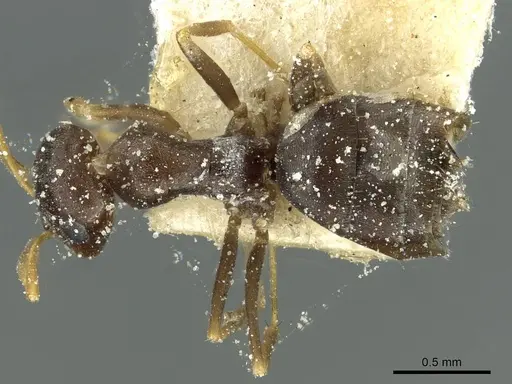
Letteratura
Caricamento mappa di distribuzione...Caricamento prodotti...