
Strumigenys stenorhina
- Nom. sci.
- Strumigenys stenorhina
- Tribù
- Attini
- Sottofamiglia
- Myrmicinae
- Autore
- Bolton, 2000
- Distribuzione
- Trovata in 0 paesi
Introduzione
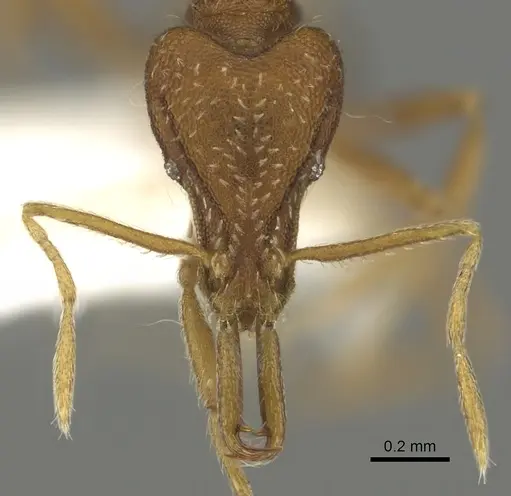
Strumigenys stenorhina is a tiny, specialized predatory ant native to the Ryukyu Islands of Japan (Ishigaki, Iriomote, Yonaguni) and Guangdong in southern China . Workers measure 2.6-2.7 mm in total length and are yellow to brown, with large eyes (around 20 facets) and extraordinarily long, straight mandibles that are nearly half the length of the head . It belongs to the _Strumigenys mayri_ group and can be distinguished from the similar _Strumigenys exilirhina_ by its longer, straighter mandibles . In the wild, colonies nest under stones or decayed wood in subtropical forest habitats .
Quick Summary
- Difficulty: Medium
- Origin & Habitat: Native to the Ryukyu Islands of Japan (Ishigaki, Iriomote, Yonaguni) and southern China (Guangdong). Found in subtropical forest, nesting under stones and decayed wood [1][2].
- Colony Type: Polygynous, colonies contain multiple queens that all reproduce [1].
- Size & Growth:
- Queen: Unknown, no queen size measurements are available in the literature.
- Worker: 2.6-2.7 mm total length [3]
- Colony: Unknown for this species, related _Strumigenys_ may reach several hundred workers, but this specific estimate is unconfirmed.
- Growth: Moderate (estimated based on genus patterns)
- Development: Estimated 6-8 weeks at optimal temperature (based on typical _Strumigenys_ development) (Development time inferred from related species, specific data for _S. stenorhina_ is not available.)
- Antkeeping:
- Temperature: Keep at 22-26°C (inferred from the subtropical origin of this species). No specific studies have determined exact requirements.
- Humidity: Maintain high humidity by keeping the substrate consistently moist but not waterlogged. Their natural habitat under stones and decayed wood is damp.
- Diapause: Unknown. As a subtropical species, a true diapause is likely unnecessary, but this has not been studied.
- Nesting: Provide a naturalistic setup with moist substrate and flat stones or pieces of bark under which they can nest [1]. Y‑tong nests with tight chambers also work. Escape prevention is critical due to their tiny size.
- Behavior: Specialized predator with long, straight mandibles used for capturing small arthropods [4][1]. Non‑aggressive toward humans, they possess a functional stinger but it is not medically significant. Workers are active foragers. Due to their small size, escape risk is high.
- Common Issues: escape prevention is critical, tiny size lets them slip through very small gaps, colony may be slow to start if only one queen is present (though polygynous), specialized live prey (e.g., springtails) may be hard to source consistently, excessive humidity can cause mold growth in the nest, parasites from wild‑caught colonies can devastate a captive colony
Housing and Nest Setup
This species nests under stones or decayed wood in the wild [1]. In captivity, provide a naturalistic setup with a moist substrate (soil or soil/plaster mix) and place flat stones or pieces of bark on top to create dark, enclosed spaces. A Y‑tong (AAC) nest with tight chambers can also be used. Because workers are tiny, even gaps of 1 mm can allow escapes, seal every crack. Include a water source in the outworld to help maintain humidity.
Feeding and Diet
Based on its long, straight mandibles [4], S. stenorhina is a specialized predator of small arthropods. In captivity, offer live prey such as springtails, booklice, or small isopods. The specific dietary requirements have not been studied in detail, so these recommendations are inferred. Avoid offering sugar water or other carbohydrates, as Strumigenys are obligate predators and do not typically accept them. Feed small prey every 2-3 days.
Temperature and Seasonal Care
This species originates from the subtropical Ryukyu Islands [1] and therefore requires warm conditions. Keep the colony at 22-26°C, they will become sluggish below 20°C. A small heating cable placed on top of the nest can provide gentle warmth without drying out the substrate. Because they are subtropical, they likely do not need a winter diapause. If activity slows during cooler months, it is probably a response to cooler room temperatures, simply maintain consistent warmth.
Colony Structure and Dynamics
S. stenorhina is polygynous: a single colony naturally contains multiple queens that all lay eggs [1]. This makes colonies more resilient and can speed up growth, as egg production is distributed. Queens and workers are the only castes, workers are all a single size class. No major/minor worker differentiation is reported.
Handling and Temperament
This ant is docile toward humans. While it possesses a functional stinger (a trait of the subfamily Myrmicinae), it is not used defensively against large animals and poses no medical risk. Their long mandibles are designed for hunting tiny prey, not for biting people. The main challenge for keepers is preventing escapes: tiny workers can squeeze through extremely small gaps. Always use tight‑fitting lids and consider a fluon barrier. When cleaning, work over a white tray to spot any escapees.
Frequently Asked Questions
How long does it take for Strumigenys stenorhina to produce first workers?
Based on typical Strumigenys development, first workers (nanitics) appear about 6-8 weeks after eggs are laid at 24-26°C. Specific data for this species are lacking.
Can I keep Strumigenys stenorhina in a test tube setup?
Test tubes can work for a founding colony if you provide a moist cotton ball and seal the tube against escapes. However, because they need live prey, you should move them to a setup with an outworld for feeding within a few weeks. A naturalistic formicarium with a foraging area is more practical long term.
What do Strumigenys stenorhina ants eat?
They are specialized predators that likely feed on tiny arthropods such as springtails, booklice, and small isopods. Their mandible shape [4] supports a predatory lifestyle. They do not eat sugar or honey. Offer live prey every 2-3 days.
Are Strumigenys stenorhina good for beginners?
They are moderately difficult. The main challenges are their high escape risk, need for live prey, and precise humidity control. If you have experience with small, specialized predators, they can be rewarding.
How big do Strumigenys stenorhina colonies get?
Colony size has not been studied for this species. Related Strumigenys species may reach several hundred workers, but this is unconfirmed for S. stenorhina.
Do Strumigenys stenorhina need hibernation?
Probably not. Since they come from subtropical islands [1], they likely do not require a cold diapause. You may see reduced activity in cooler months, but maintain normal warm conditions and they should remain active.
Why are my Strumigenys stenorhina dying?
Common causes include: substrate too dry (they need constantly moist conditions), wrong prey (they require live tiny arthropods), escapes (check for gaps smaller than 1 mm), mold from excess humidity, and parasites from wild‑caught colonies. Review each factor.
When should I move my colony to a formicarium?
Move them when the colony reaches about 30-50 workers and the test tube becomes cramped. Provide a foraging area where you can offer live prey. Make sure the new nest has no gaps larger than 1 mm.
Report an Issue
The current care sheet is based fully on literature. See inconsistencies, or something that's incorrect? Please , it will be resolved after review from an admin. Contributing to the blogs tab also helps providing information, to make us be able to further improve the caresheets. Thank you for your support!
References

Questa scheda di allevamento è concessa in licenza con CC BY-SA 4.0 .
Blog della comunità
CASENT0900840
Visualizza su AntWeb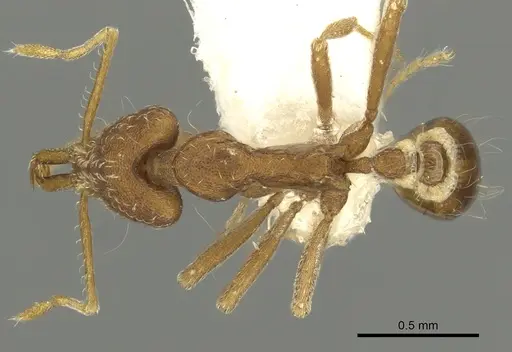
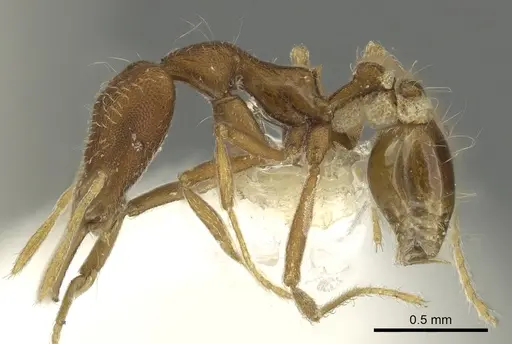
Letteratura
Caricamento mappa di distribuzione...Caricamento prodotti...