
Strumigenys piliversa
- Nom. sci.
- Strumigenys piliversa
- Tribù
- Attini
- Sottofamiglia
- Myrmicinae
- Autore
- Bolton, 2000
- Distribuzione
- Trovata in 0 paesi
Introduzione
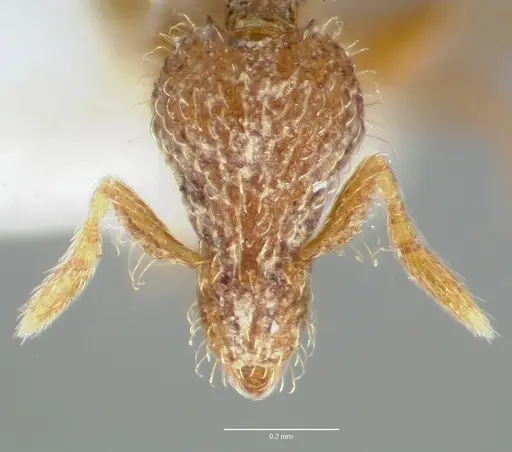
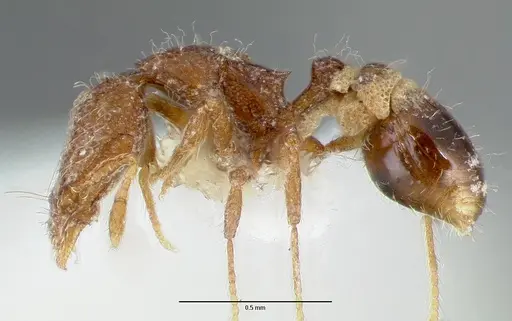
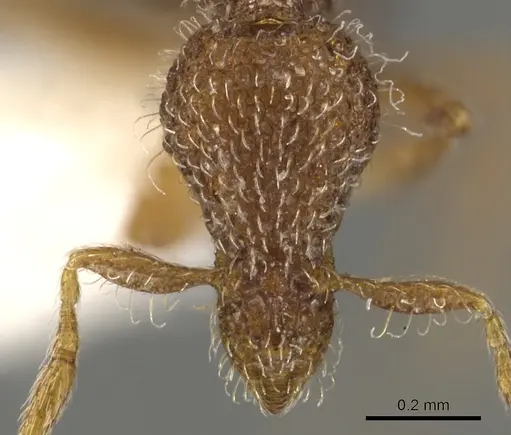
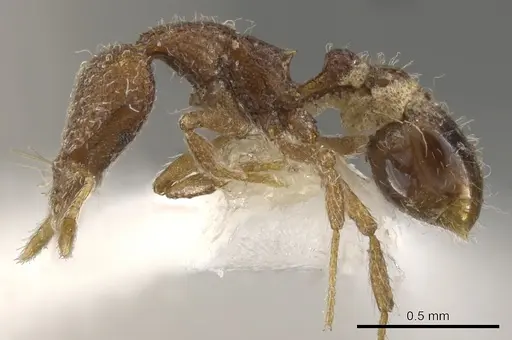
Strumigenys piliversa is a tiny ant, with workers measuring just 2 mm in total length . They have a distinctive appearance: dark brown to black, with a row of four extremely long, erect, filiform hairs on the back of the clypeus (the area just above the jaws) that form a palisade - these hairs are the most conspicuous feature on the whole body . The head and the promesonotum (front part of the thorax) are coarsely sculptured, while the waist segments and the gaster (abdomen) have soft, fine, flexuous hairs only . This species is known only from the Democratic Republic of Congo, specifically from Epulu in the Ituri region at around 750 m altitude, where it was collected from rainforest leaf litter . As a member of the Strumigenys weberi group, it is likely a specialized predator of tiny soil arthropods.
Quick Summary
- Difficulty: Expert
- Origin & Habitat: Democratic Republic of Congo (Ituri region, Epulu,1°25'N,28°35'E,750 m altitude). Collected from rainforest leaf litter [1][2].
- Colony Type: Unknown, no confirmed data on social structure. Likely monogyne (single queen) based on typical Strumigenys genus patterns.
- Size & Growth:
- Queen: Size data unavailable, queen not described.
- Worker: 2.0 mm total length [1]
- Colony: Uncertain, unknown from published data.
- Growth: Unknown
- Development: Unknown, no published data on this species. (No information available for this species. Development times may be inferred from other Strumigenys but not confirmed.)
- Antkeeping:
- Temperature: Tropical rainforest species, keep warm, around 24-28°C, stable. Provide a slight gradient if possible [1].
- Humidity: High humidity essential, keep the nest substrate consistently moist but not waterlogged. Maintain high ambient humidity (e.g.,70-85% RH) [1].
- Diapause: No, tropical species from the Democratic Republic of Congo, no hibernation needed [1].
- Nesting: Prefers tight, small chambers scaled to their 2 mm size. Y-tong (AAC) or plaster nests with narrow passages and a moist area work well. Use dark, humid nest setups [1].
- Behavior: These ants are slow-moving and cautious. Based on their size and habitat, they are likely specialized predators of tiny arthropods like springtails. They are docile toward keepers but can deliver a mild sting if roughly handled. Escape prevention is critical due to their minute size, they can squeeze through gaps that larger ants cannot. They do not recruit nestmates to food, each worker hunts individually [1].
- Common Issues: escape prevention, their 2 mm size means they can slip through standard mesh barriers unless extremely fine., specialized diet, they require live micro-prey such as springtails, which can be hard to source consistently., high humidity needs, maintaining constant dampness without mold is challenging in small setups., very slow growth, tiny colony size and slow development can test patience and tempt overfeeding, which leads to waste and mold.
Housing and Nest Setup
Because Strumigenys piliversa workers are only 2 mm long, standard formicarium chambers are often too large and can stress the colony. Use nests with very small, tight chambers and narrow connecting passages. Y-tong (AAC) or plaster nests work well, as you can carve chambers to the right size. The nest area must be kept consistently moist but not waterlogged. Escape prevention is vital, use ultra-fine mesh (e.g.,0.2 mm) on all vents and seal every gap. A small, simple outworld (e.g., a plastic tub with a secure lid) is adequate. Keep the nest dark or dimly lit, as this is a leaf‑litter species that prefers low light [1].
Feeding and Diet
Strumigenys piliversa appears to be an obligate predator of tiny arthropods. Their natural prey likely includes springtails (Collembola) and other micro-arthropods. Offer live springtails as a staple. Fruit flies (Drosophila) might be accepted, but make sure they are small enough (e.g., vestigial‑winged strains). Never give prey larger than the workers themselves, they cannot tackle it. Sugar sources are not taken, this genus is purely carnivorous. Feed every 2-3 days, offering only what the colony can consume within 24 hours. Remove uneaten prey promptly to prevent mould and mites [1].
Temperature and Humidity
This species comes from the tropical rainforest of the Democratic Republic of Congo, so warm and humid conditions are essential. Keep the temperature between 24-28°C, a slight gradient is beneficial. Avoid drops below 22°C. Humidity must be high: aim for 70-85% relative humidity in the nest area. The substrate should remain consistently damp but never waterlogged. You can achieve this by attaching a small water tube to the nest or by regular misting. Ensure adequate ventilation to prevent mould growth. A moisture gradient (one wetter chamber, one drier) allows the ants to choose their preferred spot [1].
Behavior and Colony Dynamics
Strumigenys piliversa workers move slowly and deliberately. They are not aggressive toward keepers but can sting if severely provoked, the sting is mild due to their tiny size. Foraging is individual, they do not lay pheromone trails or recruit nestmates. Each worker hunts alone for tiny prey. Colony size in the wild is unknown, but all Strumigenys species for which data exist keep small colonies (typically under 100 workers) [1]. Expect a similarly modest colony. Because of their minute size, they can escape through any gap larger than about 0.2 mm, so inspect your setup carefully [1].
Colony Founding
No specific information exists on colony founding in Strumigenys piliversa. For most Strumigenys species, founding is thought to be claustral (queen seals herself in a small chamber and raises the first workers on stored reserves) [1]. If this holds true, the founding chamber should be very small, dark, and humid. Do not disturb the queen during this period. She will not accept food until the first workers emerge. Once nanitic workers appear, begin offering tiny live prey like springtails. Growth will be slow, it may take several months before a noticeable population increase. Be patient [1].
Frequently Asked Questions
How long does it take for Strumigenys piliversa to produce first workers?
There is no published data for this species. Based on other Strumigenys, the process may take 8-12 weeks at warm temperatures (24-28°C), but this is an estimate [1].
What do Strumigenys piliversa ants eat?
They are specialized predators of tiny arthropods. Their main food should be live springtails. They may also accept very small fruit flies. They do not eat sugars or honey. Do not offer prey larger than themselves [1].
Can I keep Strumigenys piliversa in a test tube?
A test tube can work for a founding colony, but the diameter is often too large for these tiny ants, they may feel exposed. A small plastic container with tight chambers or a Y-tong nest with narrow passages is better. Whatever you use, ensure escape‑proof sealing [1].
How big do Strumigenys piliversa colonies get?
Colony size is unknown for this species, but other Strumigenys typically remain under 100 workers. Expect a very small colony compared to common formicine species [1].
Do Strumigenys piliversa need hibernation?
No, they are a tropical species from the Democratic Republic of Congo and do not require hibernation. Keep them warm (24-28°C) year‑round [1].
Why are my Strumigenys piliversa dying?
Common causes include: escape through tiny gaps (their 2 mm size requires extreme barrier precautions), inappropriate humidity (too dry or waterlogged), prey too large, temperature too low (below 22°C), or stress from frequent disturbance. Check each of these factors [1].
Are Strumigenys piliversa good for beginners?
No, this is an expert‑level species. Their tiny size, specialized live‑prey diet, high humidity requirements, and very slow growth make them challenging. Only experienced keepers should attempt them [1].
When should I move Strumigenys piliversa to a formicarium?
Wait until the colony has a stable population of workers (at least a dozen) before considering a larger setup. Even then, keep the formicarium chambers small and tight. Many keepers find that simple plastic tubs with humidity control work better than elaborate formicariums [1].
Can I keep multiple queens together?
Strumigenys piliversa has not been studied for polygyny. Most Strumigenys are monogyne (single queen). Combining unrelated queens is not recommended and would likely cause fighting. If you obtain a colony, assume it has one queen [1].
Report an Issue
The current care sheet is based fully on literature. See inconsistencies, or something that's incorrect? Please , it will be resolved after review from an admin. Contributing to the blogs tab also helps providing information, to make us be able to further improve the caresheets. Thank you for your support!
References

Questa scheda di allevamento è concessa in licenza con CC BY-SA 4.0 .
Blog della comunità
CASENT0005656
Visualizza su AntWeb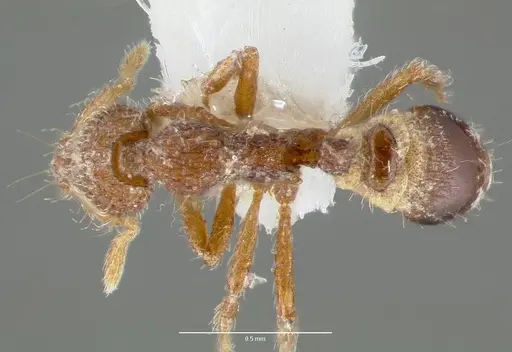
CASENT0900094
Visualizza su AntWeb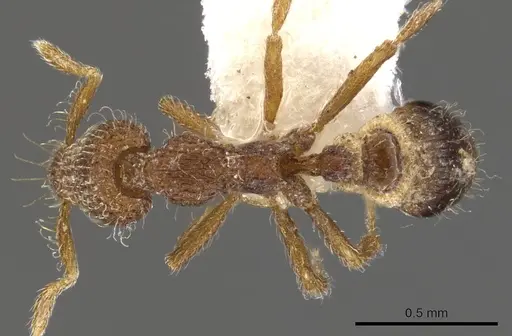
Letteratura
Caricamento mappa di distribuzione...Caricamento prodotti...