
Strongylognathus dao
- Nom. sci.
- Strongylognathus dao
- Tribù
- Crematogastrini
- Sottofamiglia
- Myrmicinae
- Autore
- Radchenko <i>et al.</i>, 2017
- Distribuzione
- Trovata in 0 paesi
Introduzione
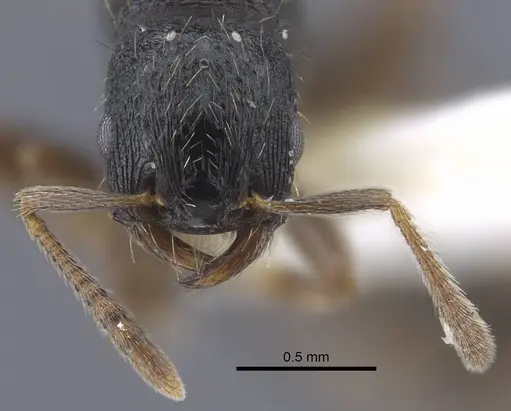
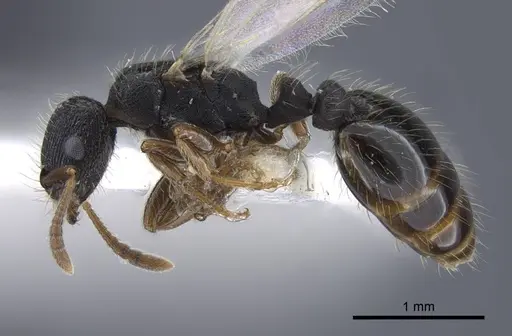
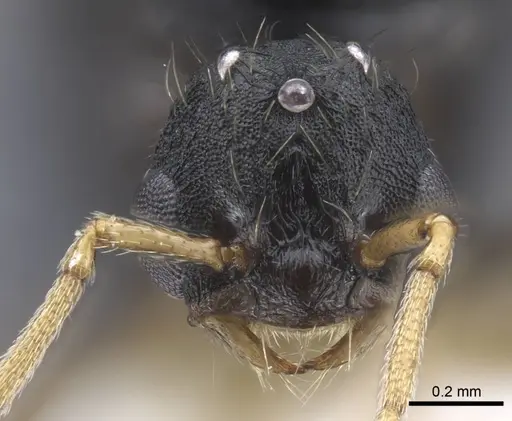
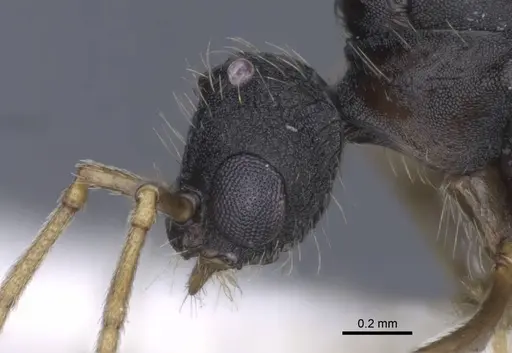
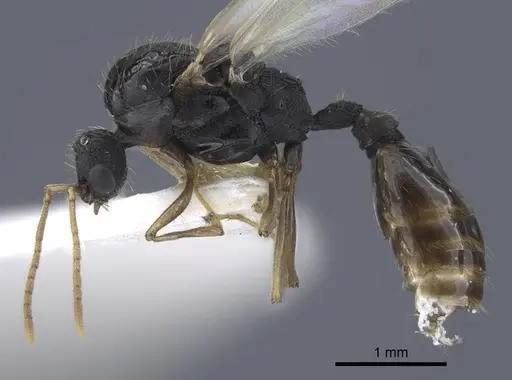
Strongylognathus dao is a tiny dulotic ant species from Inner Mongolia, China, belonging to the huberi species-group . Workers are very small with distinctive falcate (saber-shaped) mandibles without teeth, a dark reddish-brown to blackish-brown body, and numerous straight standing hairs on the head, temples, and genae . Queens are also remarkably small, with head and mesosoma sizes comparable to workers, a trait typical of specialized social parasites that rely on host workers . This species was only described in 2017,making it one of the more recently discovered Strongylognathus species . This ant is a social parasite. It lives entirely within nests of its host species, Tetramorium tsushimae, and raids neighboring Tetramorium colonies to steal their pupae and prepupae, which they raise as slave workers . Dulotic behavior was directly observed in the field: a raiding column of dozens of workers moved between nests and transported brood .
Quick Summary
- Difficulty: Expert
- Origin & Habitat: Inner Mongolia, China, Palaearctic steppe ecosystem at approximately 1085 m elevation, dominated by bunch grasses [1]. The area also hosts other ant species including Temnothorax nassonovi, Proformica mongolica, Lasius cf. alienus, and various Formica and Myrmica species [3].
- Colony Type: Dulotic social parasite. The colony is mixed: Strongylognathus dao queens and workers live within a Tetramorium tsushimae nest. Host workers perform all colony maintenance (foraging, nursing, nest building), while Strongylognathus workers function primarily as raiders that capture host brood [1][2].
- Size & Growth:
- Queen: size data unavailable, noted as very small, with head and mesosoma comparable to workers [1]
- Worker: size data unavailable, described as tiny, with head length less than 1 mm [1]
- Colony: Unknown, no colony size data available [1]
- Growth: Unknown, cannot be estimated from available data
- Development: Unconfirmed, no direct development data available for this species (Development has not been studied. As a dulotic species dependent on host colony resources, development may differ from independent ant species.)
- Antkeeping:
- Temperature: Unknown, no captive temperature data exists. Based on Inner Mongolian steppe habitat, it likely tolerates a range from cool to moderate, but specific guidance requires captive observation [1].
- Humidity: Unknown, no captive humidity data. Steppe environments are relatively dry, but the ants would have some moisture from the soil [1].
- Diapause: Unknown, no documented overwintering behavior. Inner Mongolia has harsh winters, so some form of cold tolerance or dormancy is likely, but it has not been confirmed [1].
- Nesting: This species cannot be kept independently, it requires a host Tetramorium tsushimae colony. Even then, successful captive maintenance has not been documented. Any housing would require a mixed-species setup with the host colony.
- Behavior: Strongylognathus dao is a specialized dulotic parasite. Workers do not forage for food themselves but instead raid neighboring Tetramorium colonies to steal pupae and prepupae [1]. Observed raiding behavior occurred in the morning after rainfall, when soil temperatures were still cool. Columns of dozens of workers moved rapidly between nests, transporting captured brood back to their own nest [1]. The species has saber-shaped mandibles adapted for combat and raiding. Escape risk is minimal given their tiny size and parasitic lifestyle, they remain within the host nest. Aggression is directed toward other Tetramorium colonies, not toward keepers. As a Myrmicinae ant, it likely uses a smear-type venom defense (flattened stinger) against arthropod opponents.
- Common Issues: requires a living host Tetramorium tsushimae colony, the parasite cannot survive without host workers., no documented captive breeding success exists for this species., obtaining both the parasite and host species may be legally or practically impossible outside China., workers cannot forage independently, they rely entirely on host workers for food and nest maintenance., tiny size and specialized requirements make this species completely unsuitable for beginners or even most experienced antkeepers.
Understanding the Dulotic Lifestyle
Strongylognathus dao is a dulotic ant, a specialized social parasite that raids other ant colonies to steal their brood, which they raise as slave workers [1][2]. Unlike temporary social parasites that only use host workers temporarily, dulotic species like S. dao permanently depend on their host. The host workers (Tetramorium tsushimae) perform all normal colony tasks: foraging, nursing brood, maintaining the nest, and caring for the parasite queen and her offspring. The Strongylognathus workers exist primarily as soldiers and raiders [1].
This lifestyle explains why the queens are so small, they don't need the large fat reserves typical of claustral founding queens because they don't found colonies independently. Instead, a newly mated queen must find and infiltrate an existing Tetramorium tsushimae nest, likely by mimicking the colony's chemical signature [1]. Once accepted (or after killing the host queen), she becomes a permanent parasite within the host colony.
Field Observations of Raiding Behavior
The only documented natural observations of S. dao behavior come from a dramatic raiding event observed on July 31,2017 in Inner Mongolia [1]. Researchers witnessed fighting between Strongylognathus and Tetramorium workers near two adjacent nest entrances. The area was littered with dead and dying ants, with Tetramorium workers appearing to block their own nest entrances.
Around 11:00 AM, a raiding column of dozens of S. dao workers left one nest entrance and rapidly entered another Tetramorium nest about 50 cm away [1]. Within minutes, the two nests were connected by ants traveling in both directions. Researchers observed S. dao workers carrying prepupae back toward their own nest. This behavior continued until increasing soil temperatures caused activity to cease around noon [1]. This observation confirms the species actively raids Tetramorium colonies to capture brood.
Why This Species Is Not Suitable for Most Antkeepers
Strongylognathus dao is one of the most challenging ants to keep, and not in a good way. Several factors make it essentially impossible for captive husbandry:
First, it requires a host colony. S. dao cannot survive without Tetramorium tsushimae workers to care for them. You cannot simply set up a founding queen and wait for workers, the queen needs to infiltrate an existing host nest [1].
Second, Tetramorium tsushimae itself must be obtained. This species has a limited distribution in East Asia, and may not be legally available or easily sourced in many countries.
Third, even if you obtain both species, the mixed-species colony would require extremely careful management to maintain the balance between parasite and host.
Fourth, no one has documented successful captive breeding of this species. The 2017 description represents the first scientific documentation of the species itself [1].
For these reasons, S. dao should be considered a species to appreciate from scientific papers rather than a goal for antkeepers.
Identification and Distinction from Related Species
Strongylognathus dao belongs to the huberi species-group, which distinguishes it from other Chinese Strongylognathus species in the testaceus-group (S. potanini and S. tylonus) [1]. Workers can be identified by several key features:
The species has distinctive standing hairs on the temples and genae (the sides of the head below the eyes), a trait that separates it from the similar S. koreanus, where these hairs are restricted to the occipital margin and corners [1]. S. dao is also darker in color (dark brown to blackish-brown) compared to the lighter orange-yellow S. koreanus.
The postpetiole (the second segment of the waist) is shorter, higher, and wider in S. dao compared to S. koreanus [1]. The species name 'dao' refers to the Chinese saber (dāo), which resembles the distinctive falcate, saber-shaped mandibles common to all Strongylognathus species [1].
Queens are very small, among the smallest recorded for any ant genus, with head lengths under 0.85 mm, making them barely larger than workers [1]. This size reduction is typical of highly specialized social parasites.
Frequently Asked Questions
Can I keep Strongylognathus dao as a pet ant?
No. Strongylognathus dao is a dulotic social parasite that cannot be kept independently. It requires a host colony of Tetramorium tsushimae to survive, and no documented method exists for successfully maintaining mixed colonies in captivity [1]. This species is not suitable for antkeeping.
What do Strongylognathus dao ants eat?
S. dao does not forage for food. As a dulotic parasite, the host Tetramorium workers do all the foraging and feeding. The Strongylognathus workers function primarily as raiders that steal host brood, not as foragers [1]. In captivity, even if a mixed colony were established, the host workers would need access to their normal diet of small insects and carbohydrates.
How big do Strongylognathus dao colonies get?
Colony size is unknown. No colony size data has been published. Given the parasitic lifestyle and very small queen size, colonies are likely smaller than typical independent ant species [1]. The mixed colonies would contain both Strongylognathus and host Tetramorium workers.
Do Strongylognathus dao ants sting?
Strongylognathus belongs to Myrmicinae, which includes many species with functional stingers. However, no specific information exists about stinging behavior for S. dao. Their primary defense appears to be their saber-shaped mandibles used in raids against host colonies [1]. Given their tiny size, any sting would be negligible to humans.
Where does Strongylognathus dao live?
S. dao is known only from Inner Mongolia, China, in the Palaearctic region [1]. It lives in steppe grassland ecosystems at approximately 1085 m elevation, always in association with its host species Tetramorium tsushimae [1]. The type locality is near Xilinhaote (Maodeng area).
Is Strongylognathus dao a good species for beginners?
Absolutely not. This species is completely unsuitable for beginners and even most experienced antkeepers. It cannot be kept without a host colony, has no documented captive breeding success, and was only described scientifically in 2017 [1]. There are many better ant species available for keeping.
How do Strongylognathus dao colonies form?
The founding behavior is unconfirmed, but like other dulotic ants, a newly mated queen likely infiltrates an existing Tetramorium tsushimae nest. She may kill or replace the host queen and become accepted into the colony through chemical mimicry [1]. This is fundamentally different from claustral founding where a queen seals herself in a chamber and raises her first workers alone.
What makes Strongylognathus dao different from other ants?
S. dao is one of only a few dulotic ant species known from Asia. Its defining characteristic is the complete dependence on a host species, the Strongylognathus workers cannot survive without host workers to care for them [1][2]. The tiny queen size, comparable to workers, is another indicator of this extreme specialization. The species also has distinctive saber-shaped mandibles that give it its name (dao means saber in Chinese) [1].
Why is Strongylognathus dao called a slave-making ant?
S. dao is dulotic, meaning it conducts slave raids on other ant colonies. Workers raid Tetramorium tsushimae nests, steal their pupae and prepupae, and bring them back to raise as slave workers [1]. These captured workers then integrate into the mixed colony and perform all the normal tasks, foraging, nursing, nest maintenance, effectively serving the Strongylognathus queen. This is different from some other parasites that simply exploit host workers without raising replacement workers.
Report an Issue
The current care sheet is based fully on literature. See inconsistencies, or something that's incorrect? Please , it will be resolved after review from an admin. Contributing to the blogs tab also helps providing information, to make us be able to further improve the caresheets. Thank you for your support!
References

Questa scheda di allevamento è concessa in licenza con CC BY-SA 4.0 .
Blog della comunità
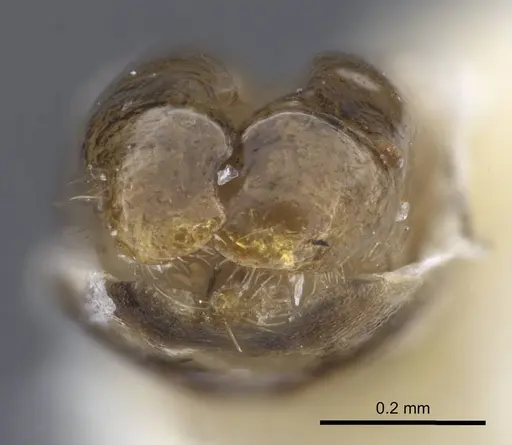
CASENT0916954
Visualizza su AntWeb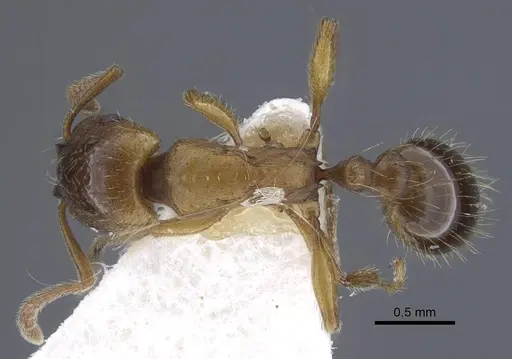
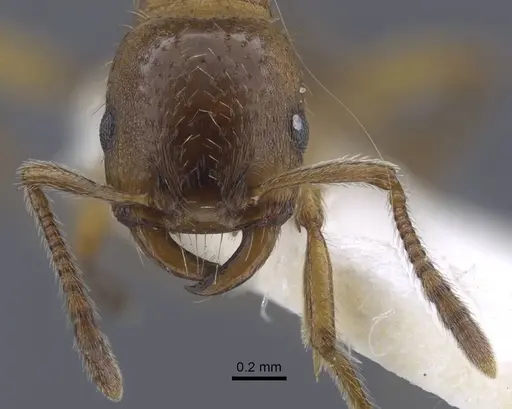
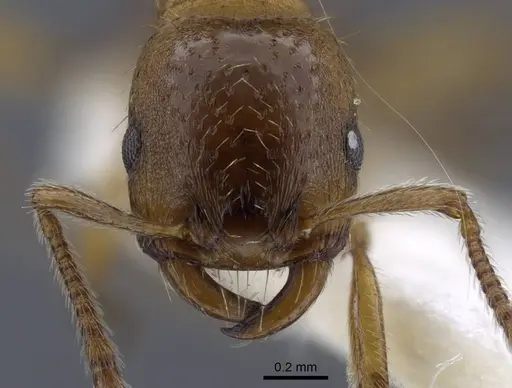
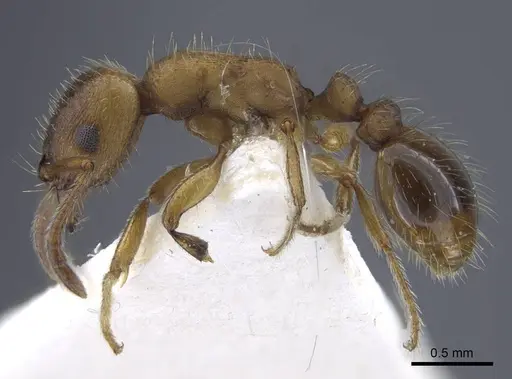
CASENT0916955
Visualizza su AntWeb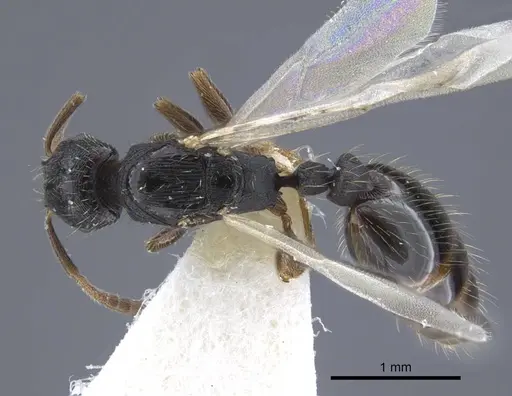
CASENT0916956
Visualizza su AntWeb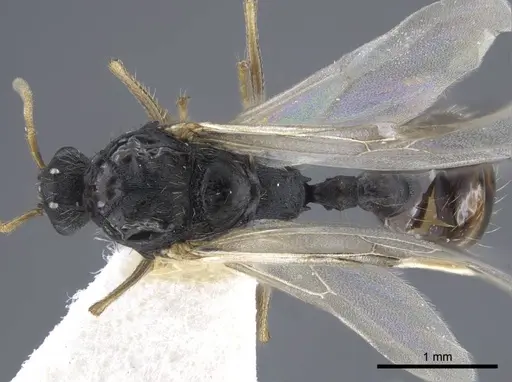
Letteratura
Caricamento mappa di distribuzione...Caricamento prodotti...