
Simopelta laevigata
- Nom. sci.
- Simopelta laevigata
- Tribù
- Ponerini
- Sottofamiglia
- Ponerinae
- Autore
- Mackay & Mackay, 2008
- Distribuzione
- Trovata in 0 paesi
Introduzione
Simopelta laevigata ants are about 4mm long with a smooth, glossy black body . The name 'laevigata' means 'smooth' in Latin, describing their polished exoskeleton . This sets them apart from most other Simopelta species, especially Simopelta manni which has a rougher head and pronotum . Only a handful of specimens have ever been collected, all from Colombian cloud forests at elevations between 1430-1950m . As a Ponerinae ant, they have a functional stinger and can deliver a painful sting if handled . Because so little is known about their biology, keeping them in captivity is uncharted territory even for experienced antkeepers.
Quick Summary
- Difficulty: Hard
- Origin & Habitat: Simopelta laevigata is found only in Colombia, specifically in the departments of Chocó, Huila, and Nariño [3]. It lives in tropical rainforests (cloud forests) at high elevations between 1430-1950 meters [1]. The type locality is Cueva de los Guácharos in Huila Province [5].
- Colony Type: Unknown. Only two worker specimens have ever been collected, one by hand and one from a leaf litter Winkler sample [1]. No colony structure data exists for this species.
- Size & Growth:
- Queen: Unknown, no queens have been collected or described [1]
- Worker: 4mm total length [1]
- Colony: Unknown, colony size has never been documented [1]
- Growth: Unknown
- Development: Unknown, no development data exists for this species (No brood development studies have been conducted. Related Simopelta species may provide rough estimates, but specific data is lacking.)
- Antkeeping:
- Temperature: Based on their high-elevation cloud forest habitat, aim for cool conditions around 18-22°C [1]. Avoid warm areas of your home, a cool room or small thermoelectric cooler may be needed in summer. Keep the nest dark and stable.
- Humidity: High humidity is essential, they come from perpetually damp cloud forests [1]. Keep the nest substrate consistently moist but not waterlogged. Provide a water tube or cotton wick for drinking. Good ventilation helps prevent mold while maintaining humidity.
- Diapause: Unknown. As a species from equatorial Colombia at high elevation, seasonal temperature changes are minimal. Whether they require any dormancy period is unstudied [1].
- Nesting: In nature they live in leaf litter and soil on humid forest floors [1]. In captivity, a test tube setup with moist substrate or a small naturalistic terrarium with damp soil may work. Keep the nesting area humid and dark.
- Behavior: Simopelta laevigata is a predatory ant, like others in the Ponerinae subfamily [4]. Workers likely hunt small invertebrates in the leaf litter. They have a functional stinger and can deliver a painful defense [4]. Their small size (4mm) means escape prevention is important, use fine mesh barriers and secure containers. They are not aggressive toward humans unless threatened, but their sting should be respected.
- Common Issues: no documented colonies have been kept in captivity, all care advice is inferred from habitat data [1], high humidity requirements increase mold risk if ventilation is inadequate, cool temperature needs (18-22°C) may clash with typical room conditions, requiring special equipment, sting can be painful, use proper handling tools to avoid envenomation [4], development timeline, queen biology, and colony structure are completely unknown, making it impossible to predict needs, extremely limited availability, only a handful of specimens known, so acquiring a queen may be impossible
Appearance and Identification
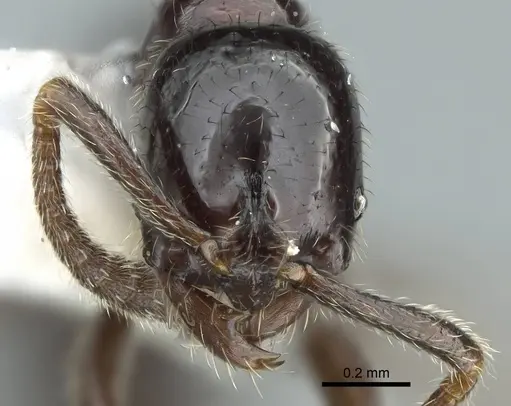
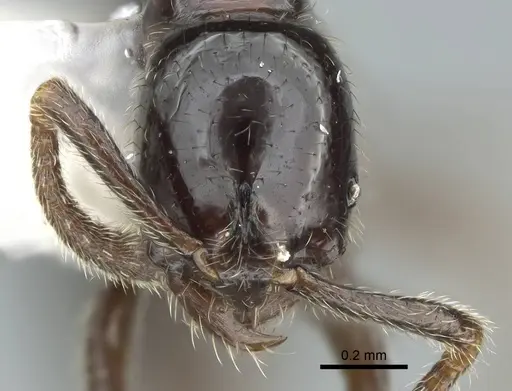
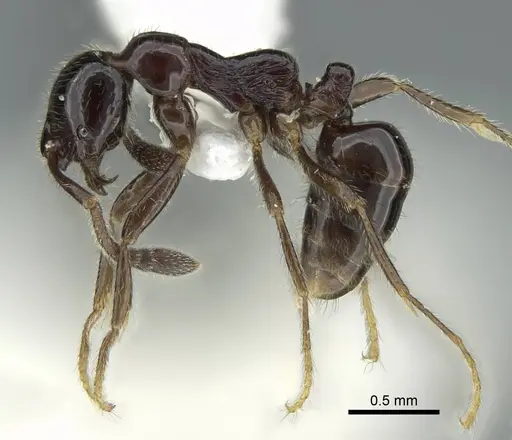
Simopelta laevigata workers reach about 4mm in total length [1]. Their most notable feature is a smooth, glossy black body, most body surfaces are polished and shiny, which is how they got the scientific name 'laevigata' meaning 'smooth' in Latin [1][2]. The mandibles have three teeth: two sharp ones near the tip and a thicker, more rounded basal tooth [1]. The eyes are moderately large and extend past the sides of the head [1]. Compared to the similar Simopelta manni, this species is slightly larger with a wider head and coarser punctures on the head surface [2]. This glossy appearance makes them distinctive among Simopelta species, which typically have more textured exoskeletons.
Distribution and Habitat
This species is endemic to Colombia, known only from three departments: Chocó, Huila, and Nariño [3]. It lives in tropical rainforests (cloud forests) at elevations between 1430-1950 meters above sea level [1]. The type locality is Cueva de los Guácharos in Huila Province [5]. These high-elevation habitats feature cool temperatures, frequent mist, and high humidity year-round. The specimens have been collected from leaf litter using Winkler extraction methods, indicating they live in the forest floor layer [1]. This restricted distribution and specialized habitat requirements make them particularly sensitive to environmental changes.
Temperature and Care
Based on their high-elevation cloud forest origin, Simopelta laevigata requires cool conditions, aim for 18-22°C [1]. This is significantly cooler than most tropical ant species, as they come from mountain cloud forests rather than lowland jungles. Avoid placing their nest in warm areas of your home. A small thermoelectric cooler or placement in a cool room may be necessary in summer. Temperature stability is important, avoid fluctuations. The nest should be kept in a dark, quiet location to mimic their natural leaf litter environment. Heating cables are not recommended given their cool requirements. Monitor the nest with a thermometer to ensure temperatures stay in range.
Humidity and Water
High humidity is essential for this species, they come from perpetually damp cloud forests at elevations above 1400m [1]. Keep the nest substrate consistently moist but never waterlogged. The substrate should feel damp to the touch. Provide a separate water tube or cotton wick for drinking access. Good ventilation is important to prevent mold while maintaining humidity, stagnant air causes problems. Mist the outworld occasionally but avoid direct spraying on the nest. A hygrometer can help you monitor humidity levels. The combination of high humidity and cool temperatures can be challenging to maintain without creating mold problems.
Feeding and Diet
As a Ponerinae ant, Simopelta laevigata is predatory and likely hunts small invertebrates in nature [4]. In captivity, offer small live prey such as fruit flies, pinhead crickets, small worms, and other tiny arthropods. Since no feeding data exists for this specific species, start with small live prey and observe what they accept. Protein should be the primary food source. Sugar water or honey may be accepted but is not a natural food source for this predatory species. Remove uneaten prey after 24-48 hours to prevent mold. Feed every 2-3 days, adjusting based on colony consumption.
Defense and Handling
Simopelta laevigata has a functional stinger as a member of the subfamily Ponerinae [4]. While not aggressive, they will sting if threatened or handled roughly. The sting is reportedly painful, so avoid bare-hand contact with workers. When working with the colony, use gentle tools and avoid shaking or disturbing the nest. Do not handle the ants directly. If you need to move them, use soft brushes or let them walk into transfer containers. Their small size (4mm) also means they can slip through small gaps, ensure all enclosures have secure, tight-fitting lids with fine mesh for any ventilation.
Frequently Asked Questions
How hard is Simopelta laevigata to keep?
This is an expert-level species due to very limited data and specific requirements. Only two specimens have ever been collected, so no captive breeding information exists. They require cool temperatures (18-22°C) and high humidity from cloud forest habitats. Unless you have experience with rare Ponerinae species, this is not recommended for beginners.
What do Simopelta laevigata ants eat?
As predatory Ponerinae ants, they likely eat small invertebrates. Offer small live prey like fruit flies, tiny crickets, and other micro-arthropods. Sugar sources may be accepted but should not be the primary food. No specific feeding data exists for this species.
Do Simopelta laevigata ants sting?
Yes. As a Ponerinae ant, they have a functional stinger and can deliver a painful sting if threatened. Handle with care and avoid bare-hand contact.
What temperature do Simopelta laevigata ants need?
Keep them cool at 18-22°C. This species comes from high-elevation cloud forests in Colombia where temperatures are moderate year-round. Avoid warm conditions.
How big do Simopelta laevigata colonies get?
Unknown. Only two worker specimens have ever been collected, and no colony data exists. Colony size estimates are not possible with current information.
Where is Simopelta laevigata found?
Only in Colombia, specifically the departments of Chocó, Huila, and Nariño. They live in tropical rainforests at 1430-1950m elevation.
Can I keep Simopelta laevigata in a test tube?
Since no queens have been caught, the best nest type is unknown. A test tube with moist cotton is a standard starting point for many ant species, but no captive data confirms suitability for this species. Maintain high humidity and cool temperatures if trying this setup.
How long does it take for Simopelta laevigata to develop from egg to worker?
Unknown. No development data exists for this species. The lack of basic biological studies makes precise care impossible.
Is Simopelta laevigata a good species for beginners?
No. This species is not recommended for beginners due to extremely limited availability, unknown colony structure, specific temperature and humidity requirements, and lack of captive breeding data. Only experienced antkeepers with access to rare species should attempt this.
Do Simopelta laevigata queens need hibernation?
Unknown. As a species from equatorial Colombia at high elevation, seasonal temperature changes are minimal. Whether they require any dormancy period is unstudied.
Report an Issue
The current care sheet is based fully on literature. See inconsistencies, or something that's incorrect? Please , it will be resolved after review from an admin. Contributing to the blogs tab also helps providing information, to make us be able to further improve the caresheets. Thank you for your support!
References

Questa scheda di allevamento è concessa in licenza con CC BY-SA 4.0 .
Blog della comunità
CASENT0914503
Visualizza su AntWeb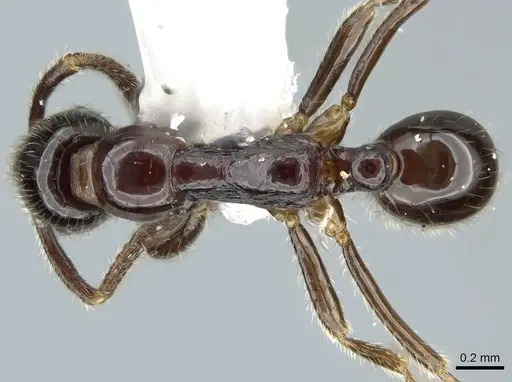
Letteratura
Caricamento mappa di distribuzione...Caricamento prodotti...