
Protanilla concolor
- Nom. sci.
- Protanilla concolor
- Tribù
- Leptanillini
- Sottofamiglia
- Leptanillinae
- Autore
- Xu, 2002
- Distribuzione
- Trovata in 0 paesi
Introduzione
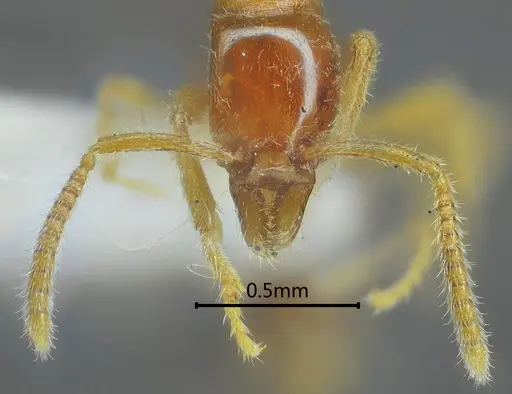
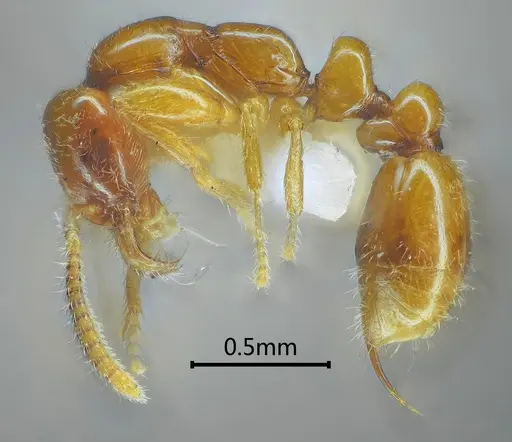
Protanilla concolor is a tiny ant from the Leptanillinae subfamily, known only from high-altitude forests in Yunnan Province, China . Workers are 2.9 mm in total length and have a uniform reddish-brown body that is smooth and shiny . The head is longer than wide and narrows toward the front, with long triangular mandibles that have 13 peg-like teeth . These ants nest directly in forest soils, specifically in mossy evergreen broad-leaf forests at around 1980 m elevation . The species is rarely collected and has almost no documented biology or captive care information.
Quick Summary
- Difficulty: Expert
- Origin & Habitat: Yunnan Province, China, high altitude (1980 m) mossy evergreen broad-leaf forests, nesting in soil [1][2]
- Colony Type: Colony structure is unconfirmed. Based on related Leptanillinae, likely single-queen colonies, but no data exists.
- Size & Growth:
- Queen: Unknown, no queen specimens have been described [1]
- Worker: 2.9 mm total length [2]
- Colony: Unknown, no colony size data available
- Growth: Unknown
- Development: Unknown, no direct measurements. Based on the tiny worker size and related Leptanillinae, possibly 4-8 weeks at optimal temperature, but this is entirely speculative. (No development data exists for this species. All related species are also poorly studied.)
- Antkeeping:
- Temperature: Unknown for this species. Given the high-altitude Yunnan habitat, cooler conditions (around 18-22 °C) are a reasonable starting point. Provide a gradient and observe the ants’ behavior.
- Humidity: High humidity expected, maintain the nest substrate consistently moist but not waterlogged, mimicking the damp forest floor [2].
- Diapause: Unknown, no seasonal data available. The high-altitude origin suggests some winter dormancy may occur, but specifics are unconfirmed.
- Nesting: Natural nests are in forest soil. In captivity, start with a small test tube with moist soil or a miniature Y‑tong nest with tight chambers scaled to the 2.9 mm workers.
- Behavior: Behavior is largely undocumented. Based on the genus, they are likely subterranean and forage within soil layers. Their tiny size and smooth cuticle indicate they are delicate and easily stressed. Escape prevention is critical, use fine mesh or airtight fittings because they can slip through very small gaps. Aggression is unknown but probably low due to their small size and specialized habitat.
- Common Issues: no captive care information exists, all advice is speculative, tiny size makes escape likely without extremely fine mesh barriers, high-altitude origin may make them sensitive to temperature extremes, slow growth or colony failure is common with unstudied species, wild-caught colonies may not adapt to captive conditions
Species Background and Identification
Protanilla concolor is a member of the Leptanillinae subfamily, one of the most poorly studied ant groups in Asia. It was described by Xu in 2002 from Yunnan Province, China [3][1]. The species is known only from high-altitude mountain forests at approximately 1980 m elevation [1][2]. The type specimen was collected from a soil sample in a mossy evergreen broad-leaf forest, confirming that these ants live in the forest floor. Workers are tiny, just 2.9 mm total length, with a uniform reddish-brown color (concolor means “one color”). The body is smooth and shining, and the mandibles are long, triangular, and armed with 13 peg-like teeth [2]. The petiolar node narrows dorsally with a slightly concave anterior face, and the postpetiolar node has an almost vertical anterior face [1]. These morphological features are used for identification but have no practical impact on captive care.
Natural Habitat and Distribution
This ant has an extremely limited known distribution, recorded only in Yunnan Province, southern China [1]. The type locality is the Peak of Nangongshan Mountain in Mengla County, at 1980 m elevation, making it a true high-altitude species [1][2]. It inhabits mossy evergreen broad-leaf forests and nests directly in the soil [2]. This habitat suggests that they prefer cool, humid, shaded conditions with stable temperatures. The high-altitude location also implies a seasonal climate with a distinct winter, meaning some form of diapause might occur, though this has never been studied. Because the distribution is so restricted and the habitat specialized, wild collection is difficult and captive establishment is extremely challenging.
Housing and Nest Setup
No captive care information exists for this species, so every recommendation is speculative. Start with a small test tube setup or a miniature Y‑tong nest with chambers sized to the 2.9 mm workers. Keep the nest substrate consistently moist but not waterlogged, aim for a texture like damp forest soil. Adding a thin layer of native soil or coco peat can help the ants feel more secure. Escape prevention must be excellent: use extremely fine mesh (e.g.,
Feeding and Nutrition
The natural diet of Protanilla concolor is completely unknown. Leptanillinae are generally thought to be predators of small soil arthropods, but this is unconfirmed. Based on the tiny size of the workers, offer very small live prey such as springtails, micro-mites, or newly hatched fruit fly larvae. Sugar sources (honey or sugar water) may or may not be accepted, try them but do not rely on them. Avoid overfeeding, leftover food can mold and harm the colony. Monitor acceptance and adjust accordingly. This species is purely experimental in terms of feeding.
Temperature and Seasonal Care
Temperature requirements are unknown. Given the high-altitude Yunnan habitat (18-22 °C seems a reasonable starting range). Avoid overheating, if workers appear sluggish, the temperature might be too low, if they avoid warm areas, it might be too high. Provide a temperature gradient. Diapause needs are unconfirmed, but the seasonal climate at 1980 m suggests that a cool winter period (approximately 10-15 °C for 2-3 months) could be beneficial. However, without data, this is pure speculation. Monitor the colony closely, if they remain active, maintain normal temperatures. This species should be considered an experimental organism with no established care protocols.
Challenges and Realistic Expectations
Keepers must understand that Protanilla concolor is one of the most challenging ant species to maintain in captivity because there is absolutely no documented care information. Every aspect of husbandry is speculative. Colonies may fail without obvious cause, this reflects our lack of knowledge, not the keeper’s skill. Wild-caught colonies may carry parasites or fail to adapt. Even if a colony establishes, long-term success is uncertain. This species is recommended only for expert antkeepers who are willing to experiment and accept failure. Success with this species would represent a significant contribution to antkeeping knowledge.
Frequently Asked Questions
How do I keep Protanilla concolor ants?
No established captive care protocol exists. Based on their natural habitat (high-altitude forest soils in Yunnan), use a small, moist nest setup at 18-22 °C and offer tiny live prey. All recommendations are speculative.
What do Protanilla concolor ants eat?
Diet is unknown. Based on related Leptanillinae, they likely accept tiny live prey such as springtails or micro-arthropods. Sugar sources may or may not be taken. Offer small prey and observe.
How big do Protanilla concolor colonies get?
Colony size is unknown, no data exists in scientific literature. The maximum size is entirely speculative.
Do Protanilla concolor ants sting?
Stinging ability is unknown. Given their tiny 2.9 mm size, any sting would likely be imperceptible to humans.
Are Protanilla concolor good for beginners?
No. This is an expert-level species with zero documented captive care information. Every aspect of care is speculative. Do not start with this species.
How long does it take for Protanilla concolor to develop from egg to worker?
Development timeline is unconfirmed. Based on very small worker size and related Leptanillinae, possibly 4-8 weeks at optimal temperature, but this is entirely estimated with no direct data.
Do Protanilla concolor need hibernation?
Diapause requirements are unknown. The high-altitude Yunnan origin suggests some winter dormancy may occur, but specifics are unconfirmed. Consider a cool period around 10-15 °C in winter if the colony seems to slow down.
Can I keep multiple Protanilla concolor queens together?
Colony structure is unconfirmed. No information exists on queen combination or colony founding behavior for this species. Not recommended given lack of data.
What size nest do Protanilla concolor need?
Use small chambers scaled to their tiny 2.9 mm workers. Standard test tubes or miniature Y‑tong nests are good starting points. Tight passages are better than open spaces.
Why are my Protanilla concolor dying?
Without established care protocols, diagnosing problems is extremely difficult. Common issues may include temperature stress, humidity problems, inappropriate food, or failure to adapt to captivity. This species may simply be unable to thrive in captive conditions.
Report an Issue
The current care sheet is based fully on literature. See inconsistencies, or something that's incorrect? Please , it will be resolved after review from an admin. Contributing to the blogs tab also helps providing information, to make us be able to further improve the caresheets. Thank you for your support!
References

Questa scheda di allevamento è concessa in licenza con CC BY-SA 4.0 .
Blog della comunità
ANTWEB1060535
Visualizza su AntWeb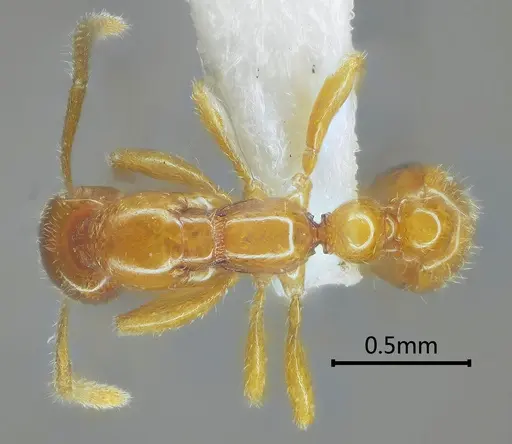
Letteratura
Caricamento mappa di distribuzione...Caricamento prodotti...