
Procryptocerus virgatus
- Nom. sci.
- Procryptocerus virgatus
- Tribù
- Attini
- Sottofamiglia
- Myrmicinae
- Autore
- Kempf, 1964
- Distribuzione
- Trovata in 0 paesi
Introduzione
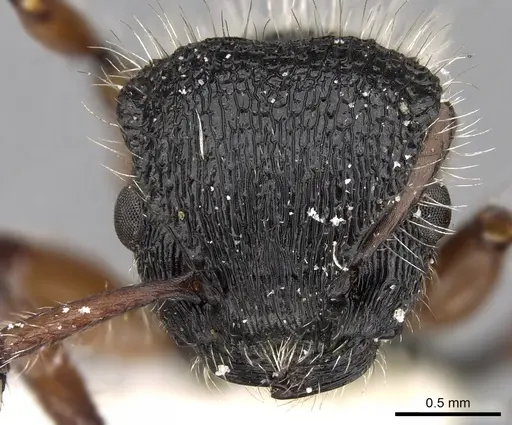
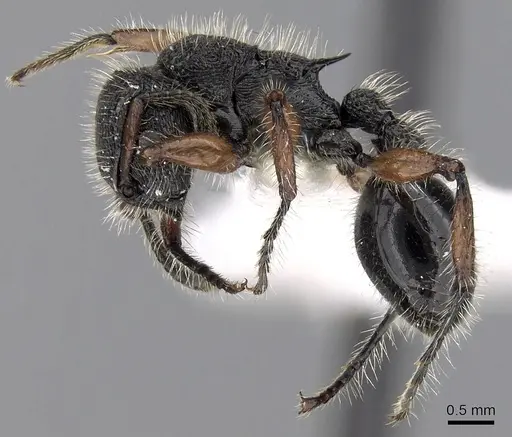
Procryptocerus virgatus is a small ant species native to the Neotropical region, documented in Ecuador at 1700 meters elevation and also recorded in Costa Rica . Workers have a deflexed vertex and costulate frons, which help distinguish them within the genus . Size data is unavailable as no total length measurements are provided in the literature. This species belongs to the tribe Cephalotini, relatives of turtle ants, and is adapted to highland forests.
Quick Summary
- Difficulty: Unknown, species rarely kept in captivity
- Origin & Habitat: Ecuador and Costa Rica, highland tropical forest at 1700m elevation [1][2]
- Colony Type: Unconfirmed, colony structure has not been documented in scientific literature
- Size & Growth:
- Queen: size data unavailable
- Worker: size data unavailable
- Colony: Unknown, no data available
- Growth: Unknown
- Development: Unknown, no data available (Based on related Cephalotini species, development may take 6-10 weeks at tropical temperatures, but this is an estimate only)
- Antkeeping:
- Temperature: Based on highland origin, likely prefers cooler temperatures around 18-22°C
- Humidity: Moderate humidity preferred, based on tropical highland habitat
- Diapause: Unknown, no data available
- Nesting: Likely nests in pre-existing cavities like dead wood, use Y-tong or plaster nests with small chambers
- Behavior: Based on related Procryptocerus species, likely non-aggressive and slow-moving. Escape risk is moderate due to small size, use standard mesh barriers.
- Common Issues: obtaining colonies is difficult due to rarity in the antkeeping hobby., no captive breeding data exists, making care requirements experimental., wild-caught colonies may not adapt to captive conditions., growth and development rates are unknown, complicating health monitoring., care requirements are inferred and may not be accurate for this species.
Species Identification and Distribution
Procryptocerus virgatus was described by W.W. Kempf in 1964 from worker specimens collected in Ecuador at approximately 1700 meters elevation [1]. The type locality is near Pastozo, Ecuador, collected on April 8,1958 [1]. Recent surveys also list this species in Costa Rica, suggesting a broader distribution [2]. The genus is distinguished by a deflexed vertex and costulate frons [3].
Natural History and Nesting
Procryptocerus virgatus is a highland Neotropical species found at elevations around 1700 meters in Ecuador [1]. Like other Procryptocerus species, these ants likely nest in pre-existing cavities such as dead wood or hollow twigs, typical for Cephalotini ants. Their highland origin suggests adaptation to cooler, more temperate conditions than lowland tropical ants.
Housing and Nest Setup
Since specific captive care data does not exist, housing recommendations are based on related Cephalotini species and natural history. A naturalistic setup with access to vertical spaces would mimic arboreal nesting preferences. Y-tong or plaster nests with narrow chambers scaled to small size are appropriate. Given highland origin, avoid overheating, room temperature (18-22°C) is likely ideal. Provide a moisture reservoir with good ventilation to prevent mold.
Feeding and Diet
The diet of Procryptocerus virgatus is not documented. Based on related Cephalotini and Myrmicinae patterns, they likely consume honeydew, nectar, and small insects. In captivity, offer sugar water continuously and protein sources like fruit flies or small mealworms 1-2 times per week. Remove uneaten prey within 24 hours.
Temperature and Seasonal Care
The 1700m elevation indicates adaptation to cooler conditions [1]. Start with temperatures of 18-22°C and monitor colony activity. Adjust based on behavior, clustered workers may prefer warmer, sluggish workers may need warmth. Diapause requirements are unknown, stable room temperature may suffice, but more research is needed.
Challenges and Limitations
Procryptocerus virgatus is poorly documented in antkeeping. There is no established captive breeding history or care protocols, making it experimental for advanced keepers. Obtaining colonies is difficult and may require field collection in Ecuador or Costa Rica, with legal and ethical considerations.
Frequently Asked Questions
How do I care for Procryptocerus virgatus ants?
Care is not well-established due to rarity. Based on highland origin, prefer cooler temperatures (18-22°C) and moderate humidity. Provide a naturalistic or Y-tong nest with small chambers, and feed sugar water plus small insects. This is an experimental species.
Where does Procryptocerus virgatus live in the wild?
Native to the Neotropical region, documented in Ecuador at 1700m elevation [1] and in Costa Rica [2]. They are highland forest ants likely nesting in pre-existing cavities.
What do Procryptocerus virgatus ants eat?
Specific diet is not documented. Based on related species, they likely consume honeydew, nectar, and small insects. In captivity, offer sugar water and small insects as protein.
How big do Procryptocerus virgatus colonies get?
Colony size is unknown, no scientific data exists on maximum size.
What temperature do Procryptocerus virgatus ants need?
Based on 1700m highland origin, they likely prefer cooler temperatures around 18-22°C. Avoid overheating.
How long does it take for Procryptocerus virgatus to develop from egg to worker?
Development time is unknown. Related Cephalotini species may take 6-10 weeks, but this is an estimate only.
Is Procryptocerus virgatus a good species for beginners?
No, this species is not recommended for beginners due to lack of captive care information and rarity.
Can I keep multiple Procryptocerus virgatus queens together?
Colony structure is unconfirmed, no data on queen number exists. Combining queens is not recommended without established protocols.
Where can I get Procryptocerus virgatus ants?
This species is not commercially available. Field collection in Ecuador or Costa Rica may be required, but legal and ethical challenges exist.
Report an Issue
The current care sheet is based fully on literature. See inconsistencies, or something that's incorrect? Please , it will be resolved after review from an admin. Contributing to the blogs tab also helps providing information, to make us be able to further improve the caresheets. Thank you for your support!
References

Questa scheda di allevamento è concessa in licenza con CC BY-SA 4.0 .
Blog della comunità
CASENT0280794
Visualizza su AntWeb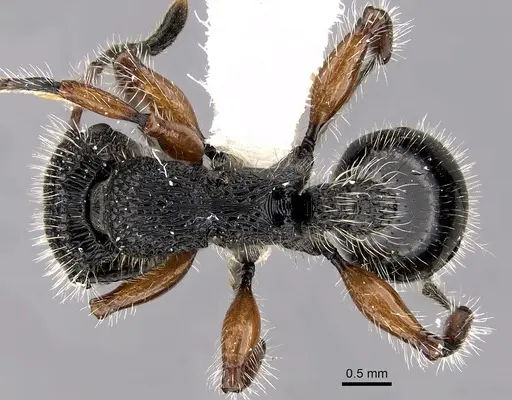
Letteratura
Caricamento mappa di distribuzione...Caricamento prodotti...