
Prionopelta menininha
- Nom. sci.
- Prionopelta menininha
- Tribù
- Amblyoponini
- Sottofamiglia
- Amblyoponinae
- Autore
- Ladino & Feitosa, 2020
- Distribuzione
- Trovata in 0 paesi
Introduzione
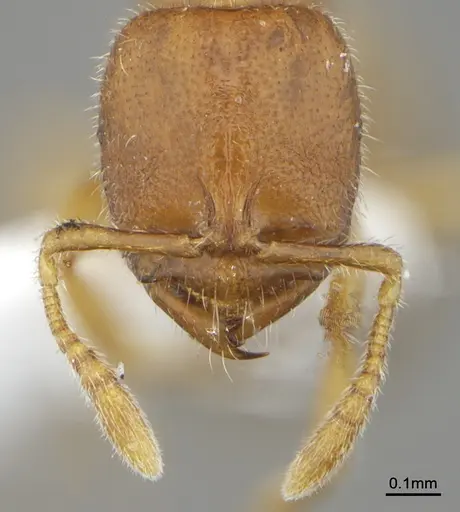
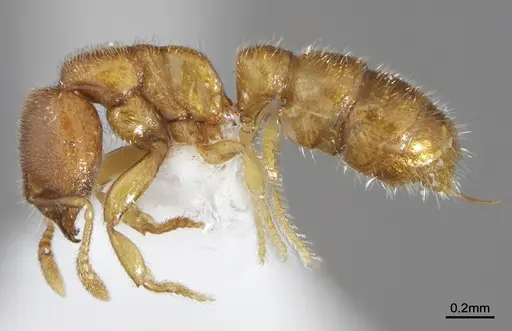
Prionopelta menininha is a tiny ant from the subfamily Amblyoponinae, described in 2020 from northeastern Brazil. Workers measure 1.58-1.76mm in total length and have a light brown body with deep punctate sculpturing . This species is known from dry forest areas in Bahia, Ceará, and Minas Gerais, where it lives in soil and leaf litter . The queen and male castes are unknown, and it can be distinguished from relatives by its evenly rounded clypeus .
Quick Summary
- Difficulty: Unknown, insufficient captive data
- Origin & Habitat: Dry forests of northeastern and southeastern Brazil (Bahia, Ceará, Minas Gerais) [1]. Specimens have been collected from pitfall and soil samples in dry forest areas [1][2].
- Colony Type: Unconfirmed, queen and reproductive castes have not been described [1].
- Size & Growth:
- Antkeeping:
- Temperature: Based on dry forest habitat [1], keep warm around 24-28°C and observe.
- Humidity: Based on dry forest habitat [1], keep substrate moderately dry to slightly moist.
- Diapause: Unknown, no seasonal data. Based on tropical origin [1], likely no diapause required.
- Nesting: Use small nest setups such as Y-tong or plaster nests with chambers scaled to worker size [1].
- Behavior: Prionopelta menininha is a cryptic, ground-dwelling species that forages in soil and leaf litter [1]. Based on subfamily Amblyoponinae, they are likely predatory on small soil micro-arthropods. Workers are not aggressive and rarely venture into the open. Their tiny size means escape prevention must be excellent, they can squeeze through gaps that seem impossible. They likely have a sting for defense, as typical of Amblyoponinae, but this is not specifically documented for this species.
- Common Issues: tiny size makes escape likely without fine mesh barriers., no captive breeding data exists, this species has never been kept in captivity., unknown founding behavior means you may not be able to establish colonies from wild queens., dry forest habitat requirements may be difficult to replicate accurately., very limited natural history data makes proper care uncertain.
Species Discovery and Taxonomy
Prionopelta menininha was only described in 2020 by Ladino and Feitosa, making it one of the newest ant species to receive a scientific name. The species was discovered in Brazil from specimens collected in dry forest areas, with the type locality being Gruta do Catão in Bahia state [1]. It belongs to the subfamily Amblyoponinae, a group of ants known for their unusual morphology and often cryptic lifestyles. This species can be distinguished from similar species like P. punctulata and P. tapatia by its evenly rounded clypeus (the area just in front of the antennae) and the specific shape of its subpetiolar process [1].
Natural History and Habitat
All known specimens of Prionopelta menininha have been collected from dry forest areas in northeastern Brazil using pitfall traps and soil samples [1]. This collecting method tells us they are ground-dwelling, subterranean ants that don't typically forage in the open. The dry forest habitat is important for care, these ants are not from humid rainforest environments but from regions with pronounced dry seasons.
Current State of Knowledge
This is one of the least-known ant species you might encounter in the antkeeping hobby. The queen caste has never been described, colony size is unknown, and no one has ever documented their founding behavior, diet preferences, or development timeline in captivity. What we do know is limited to worker morphology and the general geographic area where they live. [1]
Care Considerations
Workers are 1.58-1.76mm in total length [1], so escape prevention is critical, use fine mesh barriers on outworlds. Based on dry forest habitat [1], keep conditions warm and dry. Nesting should be in small chambers using Y-tong or plaster nests [1].
Frequently Asked Questions
How big do Prionopelta menininha ants get?
Workers are tiny at just 1.58-1.76mm total length. This makes them one of the smaller ant species kept in captivity. The queen size is unknown as the queen caste has not been described yet [1].
Where is Prionopelta menininha found?
This species is known from Brazil, specifically the states of Bahia, Ceará, and Minas Gerais in the northeastern and southeastern regions. They live in dry forest areas [1][2].
When was Prionopelta menininha discovered?
This is a very recently described species, it was formally named in 2020 by Ladino and Feitosa. Before that, specimens were likely collected but not recognized as a distinct species [1].
How do I identify Prionopelta menininha?
Workers have 11 antennomeres (most ants have 12), a light brown body with distinctive deep punctate sculpturing, and an evenly rounded clypeus. They are tiny at under 2mm. Identification typically requires examination under a microscope by someone familiar with the genus [1].
Report an Issue
The current care sheet is based fully on literature. See inconsistencies, or something that's incorrect? Please , it will be resolved after review from an admin. Contributing to the blogs tab also helps providing information, to make us be able to further improve the caresheets. Thank you for your support!
References

Questa scheda di allevamento è concessa in licenza con CC BY-SA 4.0 .
Blog della comunità
DZUP549778
Visualizza su AntWeb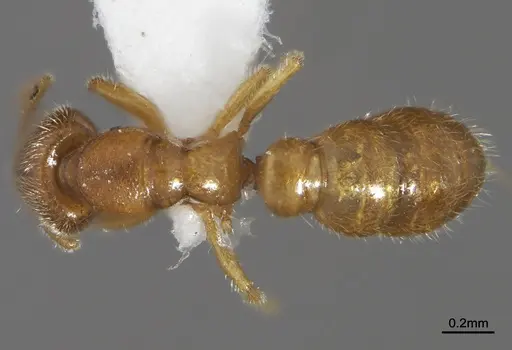
Letteratura
Caricamento mappa di distribuzione...Caricamento prodotti...