
Polyrhachis unicornis
- Nom. sci.
- Polyrhachis unicornis
- Sottogenere
- Campomyrma
- Tribù
- Camponotini
- Sottofamiglia
- Formicinae
- Autore
- Kohout, 2013
- Distribuzione
- Trovata in 0 paesi
Introduzione
Polyrhachis unicornis is a medium-sized ant native to Western Australia. Workers measure 6.90-8.62 mm in total length and are predominantly black with reddish-brown markings on the mandibles, clypeus, and legs. The species name refers to the single dorsal spine on the petiole, which is shorter and blunter than related species . This species is poorly documented; the queen, males, and immature stages have never been described . As a result, much about their biology and care remains unknown.
Quick Summary
- Difficulty: Medium
- Origin & Habitat: Western Australia, specifically savannah woodland habitats [1][2].
- Colony Type: Unconfirmed, colony structure has not been documented [1].
- Size & Growth:
- Queen: Size data unavailable, no measurements for queens exist.
- Worker: 6.90-8.62 mm [1]
- Colony: Unknown, no colony size data exists.
- Growth: Unknown, no development data exists.
- Development: Unknown, no data available. (Sexual forms and immature stages are unknown, making development timeline impossible to determine.)
- Antkeeping:
- Temperature: Temperature needs are unclear, start around 20-26°C and observe based on colony activity. This species is from a region with seasonal variation [2].
- Humidity: Provide a humidity gradient, mostly dry nest chamber with one small moist area. This matches their savannah woodland habitat [2].
- Diapause: Unknown, no data on diapause requirements. Based on geographic range, winter diapause may be beneficial, but unconfirmed.
- Nesting: Use Y-tong, plaster, or soil nests with chambers scaled to their size. Provide substrate for burrowing and mimic natural habitat with stones or wood in the outworld.
- Behavior: Workers are robust and not aggressive toward keepers but will defend their nest. They lack a functional sting and instead spray formic acid when threatened, as typical for Formicinae. Escape prevention is important due to their size, use standard barriers. Their large eyes suggest visual cues may be important [1].
- Common Issues: limited information makes care recommendations uncertain, this species has never been scientifically documented beyond worker morphology, queen and colony founding behavior is completely unknown, making it difficult to establish wild-caught colonies, no documented diet preferences, keepers must experiment with protein and sugar sources, slow growth or colony decline may occur if temperature and humidity are not suitable, but optimal conditions are unclear, availability is extremely limited, this species is rarely available in the antkeeping hobby
Appearance and Identification
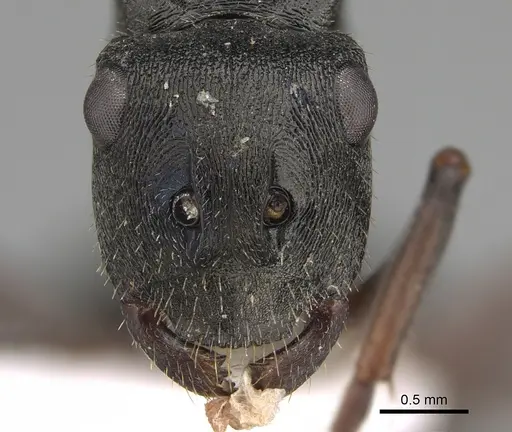
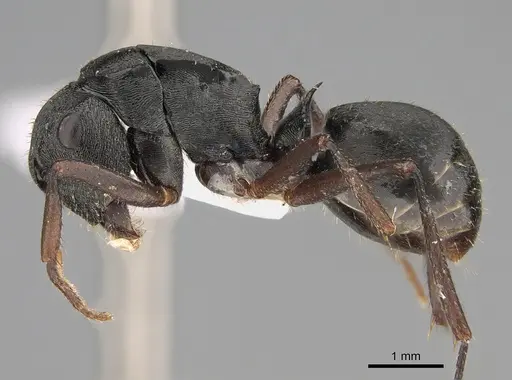
Polyrhachis unicornis workers are distinctive medium-sized ants measuring 6.90-8.62 mm in total length. They are primarily black with reddish-brown coloration on the mandibles, anterior portion of the clypeus, and all legs. The most distinguishing feature is the single, relatively short median spine on the petiole, which is blunt and sometimes slightly notched at the tip. They have large eyes that break the lateral outline of the head, and the pronotal humeri bear distinct blunt teeth. The body surface is finely striated [1].
Natural Habitat and Distribution
This species is endemic to Western Australia, where it inhabits savannah woodland environments. The savannah woodland features scattered trees with a grassy understory, representing a drier habitat compared to rainforests. Western Australia experiences a Mediterranean climate with hot, dry summers and mild, wet winters [1][2].
Housing and Nest Setup
For housing, use a setup appropriate for medium-sized ants. A Y-tong nest or plaster nest works well. Provide a water tube for humidity, but avoid overly wet conditions, these are not rainforest ants. In the outworld, include flat stones or pieces of wood to mimic their natural savannah habitat. They are active foragers, so provide adequate space. Escape prevention is important, use standard barrier methods like fluon on container rims [2].
Feeding and Diet
The diet preferences of Polyrhachis unicornis are not documented. Keepers must experiment with protein and sugar sources. Offer honey or sugar water as a constant energy source, and provide small insects like fruit flies or mealworms for protein. Remove uneaten food after 24-48 hours to prevent mold.
Temperature and Seasonal Care
Temperature needs are unclear. Start at room temperature (20-26°C) and adjust based on colony activity. Since this species is from Western Australia with seasonal variation, a cooler period in winter may be beneficial, but this is unconfirmed.
Challenges and Limitations
This is one of the least documented species in antkeeping. The queen has never been described, colony founding behavior is unknown, and we have no information on development times, colony size, or social structure. Keepers must accept significant uncertainty. Additionally, this species is rarely available due to its limited distribution.
Frequently Asked Questions
How long does it take for Polyrhachis unicornis to develop from egg to worker?
Unknown, no scientific data exists on their development timeline.
What do Polyrhachis unicornis ants eat?
Their diet is not documented. Keepers must experiment with sugar sources and small insects.
Do Polyrhachis unicornis ants need hibernation?
Unknown, no data on diapause requirements. Based on geographic range, winter diapause may be beneficial, but unconfirmed.
Are Polyrhachis unicornis good for beginners?
No, this species is not recommended for beginners due to the complete lack of documented care information.
How big do Polyrhachis unicornis colonies get?
Unknown, colony size has never been documented.
Can I keep multiple Polyrhachis unicornis queens together?
Not documented. The colony structure of this species is completely unknown.
What temperature should I keep Polyrhachis unicornis at?
Start at room temperature (20-26°C) and observe colony activity. Temperature needs are unclear.
Where is Polyrhachis unicornis found?
Western Australia, specifically in savannah woodland habitats [1][2].
How do I identify Polyrhachis unicornis?
Workers are 6.90-8.62 mm with a black body, reddish-brown mandibles, clypeus, and legs. The key feature is the single, short, blunt median spine on the petiole [1].
Report an Issue
The current care sheet is based fully on literature. See inconsistencies, or something that's incorrect? Please , it will be resolved after review from an admin. Contributing to the blogs tab also helps providing information, to make us be able to further improve the caresheets. Thank you for your support!
References

Questa scheda di allevamento è concessa in licenza con CC BY-SA 4.0 .
Blog della comunità
CASENT0887776
Visualizza su AntWeb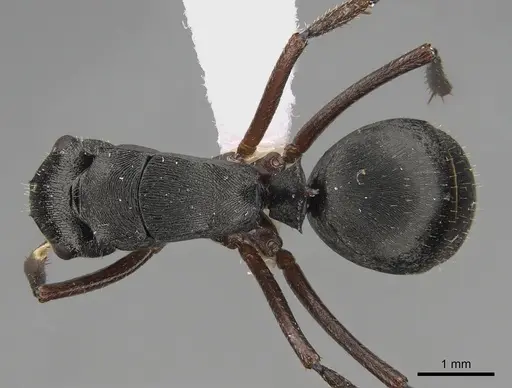
Letteratura
Caricamento mappa di distribuzione...Caricamento prodotti...