
Polyrhachis flavoflagellata
- Nom. sci.
- Polyrhachis flavoflagellata
- Sottogenere
- Myrmhopla
- Tribù
- Camponotini
- Sottofamiglia
- Formicinae
- Autore
- Karavaiev, 1927
- Distribuzione
- Trovata in 0 paesi
Introduzione
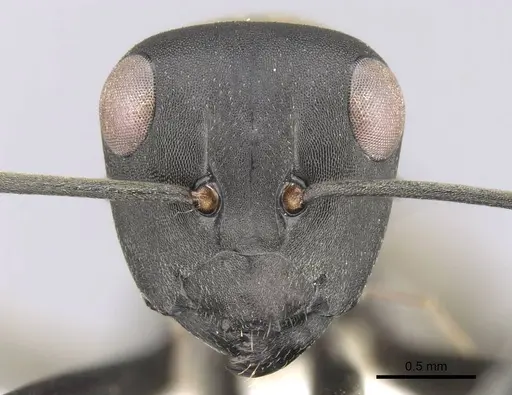
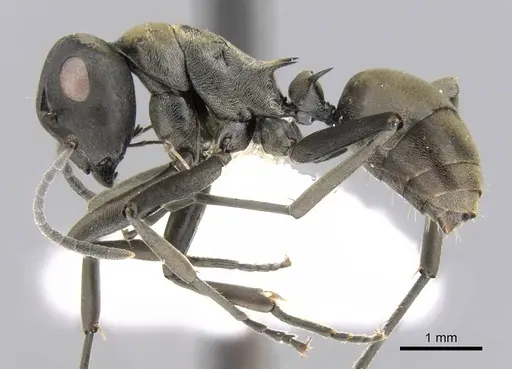
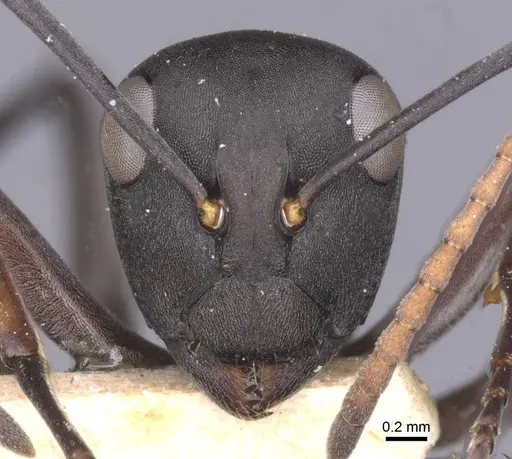
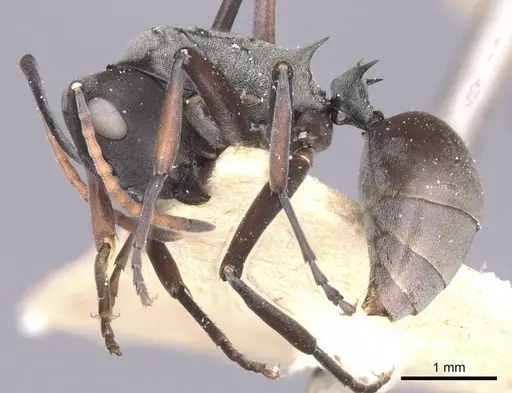
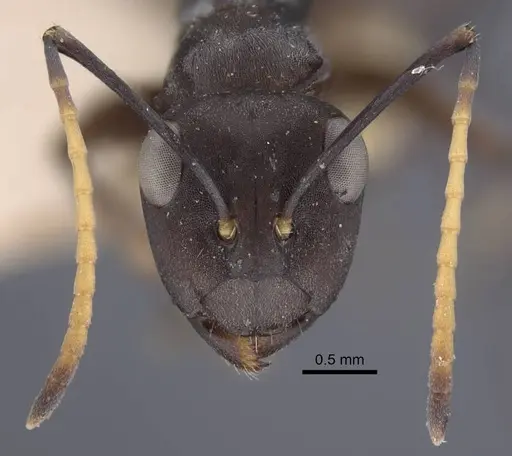
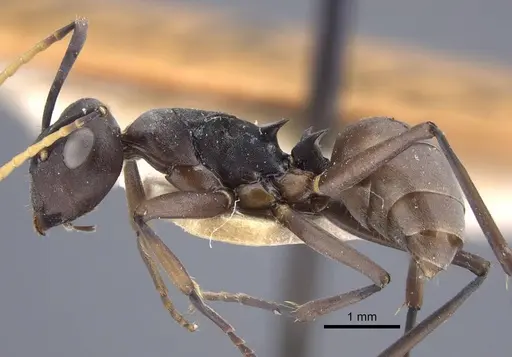
Polyrhachis flavoflagellata is a small to medium-sized arboreal ant. Workers are about 6.5 mm in body length . They have a bicolored appearance with a black body and light reddish-brown base of gaster and appendages . This species is found in the Indomalayan region, including Borneo, Java, Krakatau Islands, and West Malaysia . They belong to the flavoflagellata species group and nest arboreally using silk to bind leaves . This arboreal lifestyle makes them a unique choice for antkeepers who want to observe tree-dwelling behavior.
Quick Summary
- Difficulty: Medium
- Origin & Habitat: Indomalayan region, Borneo, Java, Krakatau Islands, West Malaysia. They live in tropical rainforests and are strictly arboreal [4][1][5].
- Colony Type: Colony structure is unconfirmed. Based on typical Polyrhachis patterns, likely single-queen colonies, but no specific research documents queen number for this species.
- Size & Growth:
- Queen: Size data unavailable.
- Worker: About 6.5 mm in body length [1].
- Colony: Unknown.
- Growth: Unknown.
- Development: Unconfirmed. Based on related tropical Polyrhachis species, estimate 6-10 weeks from egg to first worker at warm temperatures. (Development time is not directly studied for this species.)
- Antkeeping:
- Temperature: Keep warm, roughly 24-28°C, based on their tropical origin.
- Humidity: Maintain moderate to high humidity. Provide a water source and occasional misting.
- Diapause: No, as a tropical species, they do not require hibernation.
- Nesting: Arboreal setup required. Use a formicarium with branches, leaves, or silk-binding materials [5][6].
- Behavior: Workers are generally calm and non-aggressive. They defend by spraying formic acid, as typical for Formicinae. Escape risk is moderate due to climbing ability.
- Common Issues: arboreal setup is essential, these ants will not thrive in ground-based test tube setups., tropical warmth is required year-round, cold temperatures can weaken or kill colonies., escape prevention matters because they climb well and will explore any gap., silk-nesting behavior requires appropriate materials, provide leaves, twigs, or platforms they can bind together., wild-caught colonies may be difficult to establish, consider purchasing from a reputable breeder.
Housing and Nest Setup
Polyrhachis flavoflagellata requires an arboreal-focused setup. In the wild, these ants use silk to bind together leaves and twigs to create nests elevated above the ground [5][6]. For captive care, use a naturalistic setup with branches or a formicarium with elevated platforms. Avoid deep soil-filled nests. Ensure vertical space and materials for silk-building.
Temperature and Heating
Keep temperatures warm, roughly 24-28°C, based on their tropical origin. Use a heating cable if needed to maintain stability.
Feeding and Diet
Offer a varied diet: sugar water or honey for energy, and protein sources like small insects 2-3 times per week. Place food on elevated surfaces since they are arboreal foragers.
Humidity and Water
Maintain moderate to high humidity. Provide a constant water source and occasional misting.
Behavior and Observation
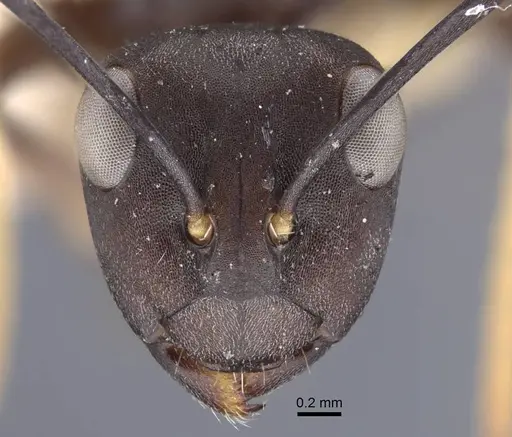
Workers are distinctive with a bicolored appearance and large heads relative to body size [3]. They are active foragers and calm toward keepers. Their defense involves spraying formic acid.
Colony Development
Little is known about specific development. Based on related species, expect slow initial growth during founding, with first workers emerging in 6-10 weeks at warm temperatures.
Frequently Asked Questions
Can I keep Polyrhachis flavoflagellata in a test tube setup?
A traditional test tube setup is not ideal. They are arboreal ants that need vegetation for silk-nesting. A temporary test tube can work for founding queens, but established colonies require an arboreal setup [5].
What is the best nest type for Polyrhachis flavoflagellata?
The best setup mimics their natural arboreal lifestyle. Use a formicarium with branches, leaves, or silk-binding materials [5][6].
How long does it take for the first workers to emerge?
Unconfirmed, but based on related tropical species, estimate 6-10 weeks from egg to first worker at warm temperatures.
Are Polyrhachis flavoflagellata good for beginners?
They are rated medium difficulty due to arboreal setup and warmth requirements. Beginners should ensure they can maintain tropical conditions.
Do Polyrhachis flavoflagellata need hibernation?
No, as a tropical species, they do not require hibernation and need warm conditions year-round.
What do Polyrhachis flavoflagellata eat?
They are omnivorous. Offer sugar water or honey constantly, and protein like small insects 2-3 times per week.
How big do Polyrhachis flavoflagellata colonies get?
The maximum colony size is unknown for this species.
Can I keep multiple queens together?
This has not been documented. It is safest to start with one queen per colony.
Why are my Polyrhachis flavoflagellata dying?
Common causes include cold temperatures, improper humidity, or an unsuitable setup. Ensure arboreal setup, warmth, and proper care.
Report an Issue
The current care sheet is based fully on literature. See inconsistencies, or something that's incorrect? Please , it will be resolved after review from an admin. Contributing to the blogs tab also helps providing information, to make us be able to further improve the caresheets. Thank you for your support!
References

Questa scheda di allevamento è concessa in licenza con CC BY-SA 4.0 .
Blog della comunità
CASENT0906782
Visualizza su AntWeb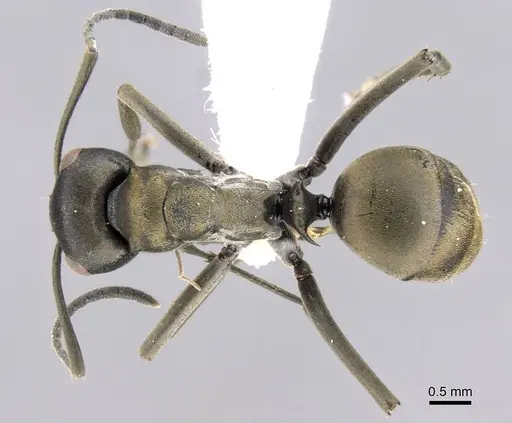
CASENT0912151
Visualizza su AntWeb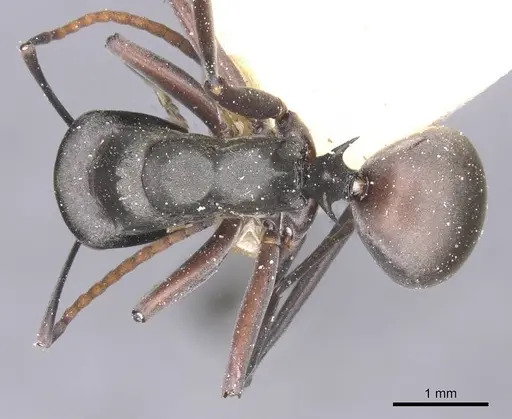
CASENT0917198
Visualizza su AntWeb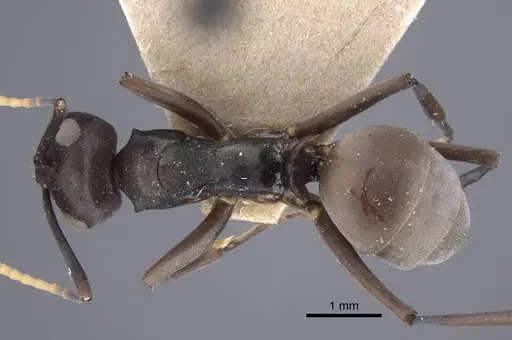
Letteratura
Caricamento mappa di distribuzione...Caricamento prodotti...