
Polyrhachis emmae
- Nom. sci.
- Polyrhachis emmae
- Sottogenere
- Myrmhopla
- Tribù
- Camponotini
- Sottofamiglia
- Formicinae
- Autore
- Santschi, 1920
- Distribuzione
- Trovata in 0 paesi
Introduzione
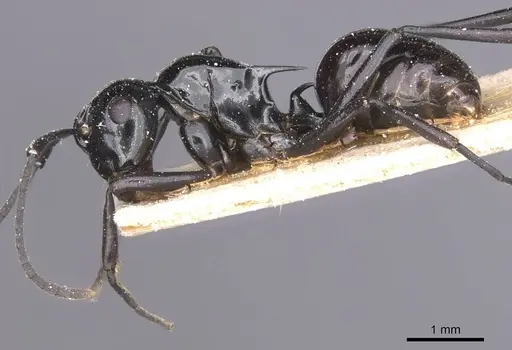
Polyrhachis emmae is a rare ant species endemic to Laos, specifically the Luang Prabang region . Workers belong to the subgenus Myrmhopla and display the spiny thorax typical of the genus Polyrhachis . Size data is unavailable, but workers likely fall within the typical range for the genus (~8-12mm - inferred from Polyrhachis genus) . The species was first described by Santschi in 1920 and remains poorly studied, with no recent physical specimens recorded in checklists . This species offers a unique challenge for advanced keepers due to its rarity and limited scientific documentation. You will need to rely on genus-level patterns and careful observation to meet its needs. Since direct research on Polyrhachis emmae does not exist, you must adapt general care guidelines and watch for species-specific behaviors.
Quick Summary
- Difficulty: Medium
- Origin & Habitat: Tropical forest regions in the Luang Prabang province of Laos [1][2][3].
- Colony Type: Colony structure is unconfirmed. Based on typical Polyrhachis patterns, colonies are likely monogyne (single-queen) [4].
- Size & Growth:
- Queen: Size data unavailable, inferred from Polyrhachis genus (~8-12mm) [4].
- Worker: Size data unavailable, inferred from Polyrhachis genus (~5-10mm) [4].
- Colony: Unknown, no colony size data available [1].
- Growth: Moderate, estimated from genus patterns.
- Development: Unknown, estimated 2-4 months based on tropical Polyrhachis patterns. (Development speed depends on stable warmth and humidity. No species-specific data exists.)
- Antkeeping:
- Temperature: Keep warm and stable, roughly 24-27°C. Tropical ants from Laos thrive in consistent warmth, but exact needs are unconfirmed.
- Humidity: Provide a humidity gradient. Keep the nest substrate damp but not soaked, and maintain moderate outworld humidity. Tropical forest species usually prefer stable moisture levels.
- Diapause: Unknown. Tropical species often skip winter dormancy, but you should monitor your colony's activity. If workers slow down in cooler months, a slight temperature drop may help, but forced cold is unnecessary.
- Nesting: Based on Polyrhachis nesting preferences, they likely prefer arboreal or semi-arboreal setups. Use a Y-tong (AAC) nest or a naturalistic setup with cork bark and twigs. Provide vertical climbing space and smooth escape barriers.
- Behavior: Workers are generally calm but will spray formic acid if threatened. They lack a functional sting and rely on biting and acid spraying for defense. Escape risk is moderate to high due to their climbing ability. Keep your setup secure with smooth barriers like fluon or petroleum jelly.
- Common Issues: limited availability makes sourcing queens difficult, lack of species-specific research forces reliance on genus estimates, tropical climate requirements demand consistent warmth year-round, slow colony growth tests keeper patience, wild-caught queens may struggle to adapt to captivity
Housing and Nest Setup
Set up your nest to match typical Polyrhachis preferences. A Y-tong (AAC) formicarium works well for observation and humidity control. You can also use a naturalistic setup with cork bark, twigs, and artificial foliage. These ants climb well, so add vertical structures and keep escape barriers smooth. Transition founding queens to a larger nest only after you see 15-20 workers. Do not rush the move, as stress can halt brood development.
Feeding and Diet
Feed your colony a mix of sugar sources and protein. Offer diluted honey water or sugar water daily for energy. Provide small insects like fruit flies, pinhead crickets, or chopped mealworms two to three times a week. Remove uneaten food within 24 hours to prevent mold. Watch how your workers accept food, as individual colonies may show preferences. Adjust feeding frequency based on brood load and worker activity.
Temperature and Humidity Management
Keep your nest in a warm, stable environment. Aim for 24-27°C using a heating cable on one side of the formicarium. This creates a gradient so workers can choose their preferred spot. Maintain moderate humidity by keeping the nest substrate damp but never waterlogged. Mist the outworld lightly if the air feels dry. Tropical ants from Laos do not need seasonal temperature drops, but you can lower the heat slightly if workers become lethargic during cooler months.
Colony Establishment and Growth
Raising a founding queen requires patience. She will likely seal herself in a chamber and raise her first workers using stored energy. Do not disturb the nest during this phase. Expect the first workers to emerge within two to four months. Once workers appear, start offering small food portions and monitor brood development closely. Colony growth will be gradual. Focus on stable conditions rather than forcing rapid expansion.
Frequently Asked Questions
How long does it take for Polyrhachis emmae to produce first workers?
Expect two to four months from egg to first worker at stable tropical temperatures. The queen will likely seal herself in during founding and raise the first brood alone. Keep the nest undisturbed during this period.
What do Polyrhachis emmae ants eat?
Offer sugar water or diluted honey for energy, and small insects like fruit flies or pinhead crickets for protein. Feed sugar sources daily and protein prey two to three times weekly. Remove leftover food within 24 hours to keep the outworld clean.
Do Polyrhachis emmae ants need hibernation?
Unknown. Tropical species often skip winter dormancy, but you should watch your colony's activity. If workers slow down in cooler months, a slight temperature drop may help, but forced cold is unnecessary.
Are Polyrhachis emmae good for beginners?
This species carries medium difficulty due to its rarity and lack of direct research. Experienced antkeepers familiar with tropical species will have an easier time. Start with more common ants before attempting this rare species.
How big do Polyrhachis emmae colonies get?
Colony size data is unavailable. Based on related Polyrhachis species, colonies likely reach up to several hundred workers over several years. Growth is moderate, so patience is required.
What temperature should I keep Polyrhachis emmae at?
Maintain 24-27°C in the nest area. Use a heating cable on one side to create a temperature gradient. Avoid sudden temperature swings and keep the environment consistently warm.
Can I keep multiple Polyrhachis emmae queens together?
Colony structure is unconfirmed for this species. Based on typical Polyrhachis patterns, single-queen colonies are most likely. Do not combine unrelated queens, as they will likely fight. Assume monogyne structure unless direct observation proves otherwise.
When should I move Polyrhachis emmae to a formicarium?
Keep founding queens in a test tube setup until the colony reaches 15-20 workers. Move them to a larger nest only after you see stable brood development and active foraging. Ensure the new nest has smooth escape barriers and appropriate humidity.
Where is Polyrhachis emmae naturally found?
This species is endemic to Laos, specifically the Luang Prabang region in northern Laos. It is a rare species known only from this limited geographic area in the Indomalaya region [1][2][3].
Report an Issue
The current care sheet is based fully on literature. See inconsistencies, or something that's incorrect? Please , it will be resolved after review from an admin. Contributing to the blogs tab also helps providing information, to make us be able to further improve the caresheets. Thank you for your support!
References

Questa scheda di allevamento è concessa in licenza con CC BY-SA 4.0 .
Blog della comunità
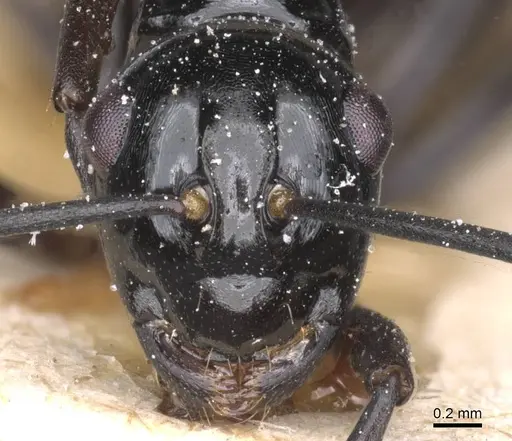
CASENT0912150
Visualizza su AntWeb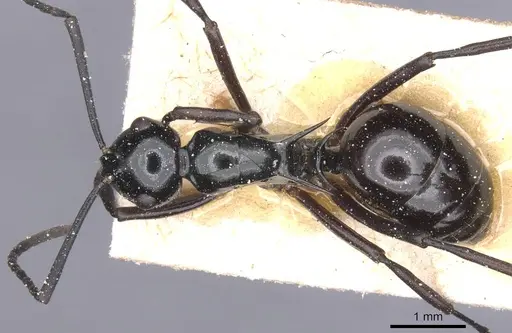
Letteratura
Caricamento mappa di distribuzione...Caricamento prodotti...