
Polyrhachis diana
- Nom. sci.
- Polyrhachis diana
- Sottogenere
- Myrma
- Tribù
- Camponotini
- Sottofamiglia
- Formicinae
- Autore
- Wheeler, 1909
- Distribuzione
- Trovata in 0 paesi
Introduzione
Polyrhachis diana is a medium-sized ant native to the Philippines, found on Luzon, Negros Oriental, and Mindanao . Workers measure 6.35-7.16 mm with a black body covered in dense, silvery pubescence . They have prominent pronotal spines directed forward and outward, and a petiole with two pairs of spines . This species belongs to the aculeata species-group within the Myrma subgenus, closely related to Polyrhachis latona from Taiwan and Polyrhachis murina from Borneo . Queens and males remain undescribed, so colony structure and reproductive biology are not documented.
Quick Summary
- Difficulty: Medium
- Origin & Habitat: Philippines (Luzon, Negros Oriental, Mindanao) in tropical forest environments [1]
- Colony Type: Unconfirmed, colony structure has not been documented in scientific literature
- Size & Growth:
- Queen: Unknown, queens have not been described scientifically
- Worker: 6.35-7.16 mm [1]
- Colony: Unknown, no colony size data available
- Growth: Unknown, no development data available
- Development: Unknown, no direct measurements exist. Based on typical Polyrhachis patterns, expect 6-10 weeks at tropical temperatures [3] (This is an estimate from related species, no specific studies exist for P. diana.)
- Antkeeping:
- Temperature: Keep at 24-28°C. As a tropical species from the Philippines [1], they need warm conditions. Use a heating cable to create a gradient.
- Humidity: Moderate to high humidity (60-80%). Keep nesting material slightly moist but not waterlogged, and provide a water tube]
- Diapause: No, this tropical species does not require hibernation. Keep temperatures stable year-round]
- Nesting: Use Y-tong (AAC) or plaster nests with tight chambers. They are ground-nesting, so horizontal setups work well]
- Behavior: Polyrhachis ants are generally calm and not aggressive toward keepers. They are active foragers but not defensive. Escape risk is moderate, ensure secure barriers]. Defense: They lack a functional sting and spray formic acid as a defense mechanism.
- Common Issues: queen and colony structure unconfirmed, you may need to locate a mated queen through nuptial flights or obtain an established colony, no specific diet data exists, start with sugar water and protein sources like mealworms, then observe preferences, tropical species sensitive to temperature drops, keep above 20°C to prevent lethargy or death, sparse scientific data means care is based on genus-level inference, be prepared to adjust based on your colony's behavior, only workers described, if you obtain a queen, her size and behavior may differ from related species
Appearance and Identification
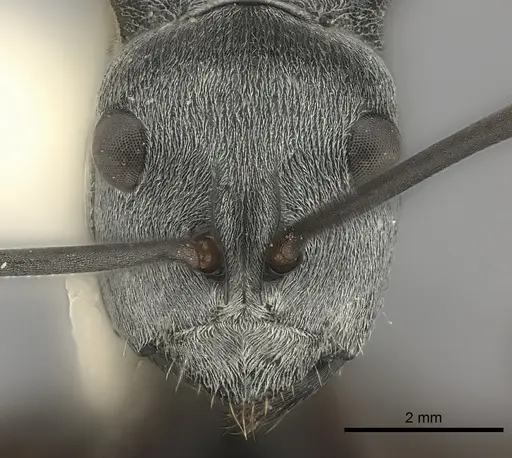
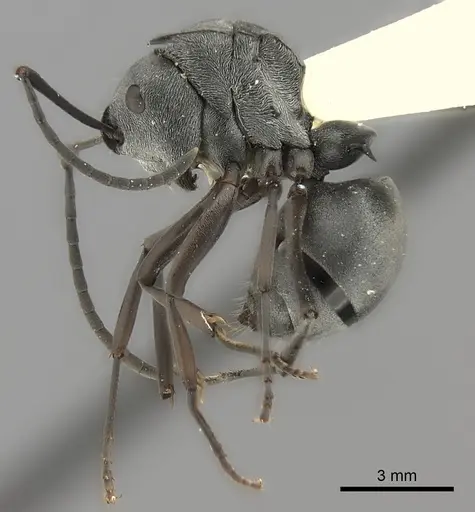
Polyrhachis diana workers are medium-sized at 6.35-7.16 mm [1]. They have a black body with dense, silvery pubescence that gives a frosted appearance [2]. Pronotal spines are straight and acute, directed forward and outward [2]. The petiole is broad with two pairs of spines: longer curved mesial spines and shorter lateral teeth [2]. Eyes are convex, especially when viewed from behind, distinguishing them from Polyrhachis latona [1]. Queens and males are undescribed.
Natural Distribution
This species is endemic to the Philippines, known from Luzon, Negros Oriental, and Mindanao [1]. The type locality is Butuan on Mindanao, collected in December 1907 [1]. They inhabit warm, humid tropical forests. In captivity, replicate these conditions with stable warmth and moderate humidity.
Housing and Nesting
Use Y-tong (AAC) or plaster nests with tight chambers for ground-nesting setups [3]. Ensure chambers are sized for their 6-7 mm body. A test tube setup works for founding colonies. Connect to an outworld for foraging. Use barrier gel or fluon for escape prevention.
Feeding and Diet
Specific diet data is not available. Offer sugar water or honey for energy, and protein like fruit flies or mealworms [3]. Provide fresh water in a tube. Feed every 2-3 days, removing uneaten prey after 24 hours.
Temperature and Humidity
Keep nest area at 24-28°C]. A heating cable creates a gradient. Avoid temperatures below 20°C. Aim for 60-80% humidity, keep nesting material moist but not waterlogged]. Mist the outworld occasionally.
Colony Establishment
Queens may be claustral, sealing themselves until workers emerge [3]. Provide a small chamber with moderate humidity and stable warmth. Do not disturb the queen. Once workers arrive, offer food. Growth may be slow due to lack of data.
Frequently Asked Questions
How long does it take for Polyrhachis diana to go from egg to worker?
No direct studies exist. Based on typical Polyrhachis development at tropical temperatures, expect 6-10 weeks [3].
What do Polyrhachis diana ants eat?
Specific diet data is not available. Offer sugar water and small insects like mealworms [3].
Do Polyrhachis diana ants need hibernation?
No, as a tropical species from the Philippines, they do not require hibernation [1].
Are Polyrhachis diana good for beginners?
This species is rated Medium difficulty. Lack of specific care data may require experimentation.
What temperature should I keep Polyrhachis diana at?
Keep nest temperatures between 24-28°C].
How big do Polyrhachis diana colonies get?
Colony size data is not available. Growth is expected to be slow.
Can I keep multiple Polyrhachis diana queens together?
Colony structure is unconfirmed. House queens separately until social structure is understood.
What type of nest should I use for Polyrhachis diana?
Y-tong (AAC) or plaster nests work well for ground-nesting setups [3].
Where is Polyrhachis diana found?
Polyrhachis diana is endemic to the Philippines, specifically Luzon, Negros Oriental, and Mindanao [1].
Report an Issue
The current care sheet is based fully on literature. See inconsistencies, or something that's incorrect? Please , it will be resolved after review from an admin. Contributing to the blogs tab also helps providing information, to make us be able to further improve the caresheets. Thank you for your support!
References

Questa scheda di allevamento è concessa in licenza con CC BY-SA 4.0 .
Blog della comunità
CASENT0217767
Visualizza su AntWeb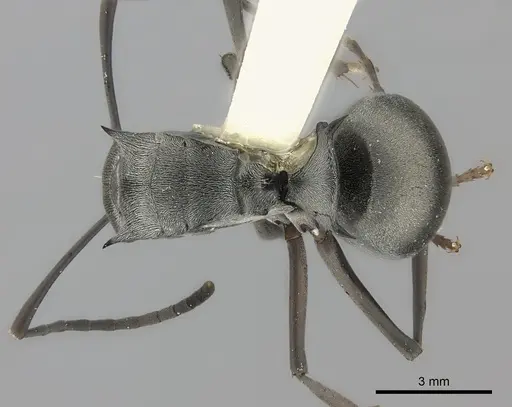
Letteratura
Caricamento mappa di distribuzione...Caricamento prodotti...