
Polyrhachis darlingtoni
- Nom. sci.
- Polyrhachis darlingtoni
- Sottogenere
- Hagiomyrma
- Tribù
- Camponotini
- Sottofamiglia
- Formicinae
- Autore
- Kohout, 2013
- Distribuzione
- Trovata in 0 paesi
Introduzione
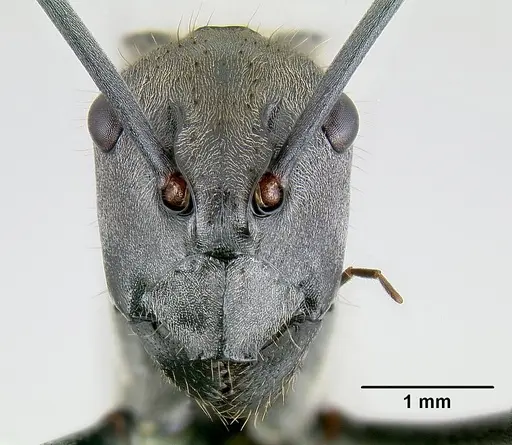
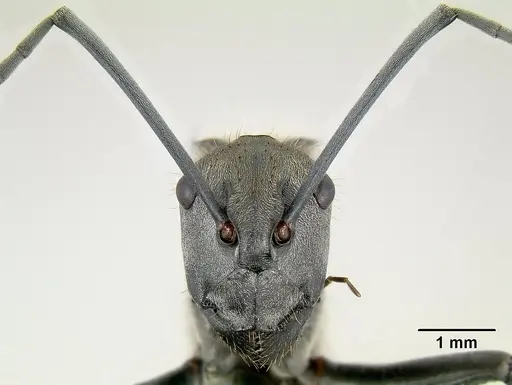
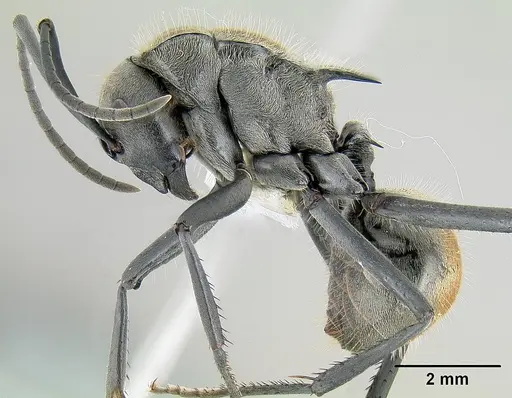
Polyrhachis darlingtoni is a large ant species with workers measuring around 10.5 to 11.8 mm in total length . Workers are entirely black except for dark reddish-brown mandibular teeth and joints . This species belongs to the trapezoidea species group in the Polyrhachis subgenus Hagiomyrma. You can identify them by their low petiole with a strongly sloping triangular top and short spines . The species was described in 2013 and is only known from two nearby sites in the McIlwraith Range on Cape York Peninsula, Queensland, Australia . This species nests on the ground under stones in Araucaria forest and low mixed forest . Workers carry fine golden hairs and silvery appressed pubescence that gives them a metallic look . As a member of the Polyrhachis genus, they have characteristic spines, though these are notably short in this species. We do not know how large their colonies grow or how they reproduce, since only workers have been described and sexual forms remain unknown .
Quick Summary
- Difficulty: Hard
- Origin & Habitat: McIlwraith Range, Cape York Peninsula, Queensland, Australia. They nest under stones in Araucaria forest and low mixed forest [1][2].
- Colony Type: Colony structure is unconfirmed since only workers have been described. Based on Polyrhachis patterns, they likely form single-queen colonies, but this needs verification.
- Size & Growth:
- Queen: Unknown, queens have not been described [2]
- Worker: ~10.5-11.8 mm total length [1]
- Colony: Unknown, no colony size data available
- Growth: Unknown
- Development: Unconfirmed, no development data exists for this species (Related Polyrhachis species typically take 6-10 weeks from egg to worker at tropical temperatures, but this is just an estimate.)
- Antkeeping:
- Temperature: Keep them warm, around 24-28°C. Cape York Peninsula stays warm year-round, so a stable tropical temperature works best. A slight gradient lets workers choose their preferred spot.
- Humidity: Keep the nest substrate consistently moist but not waterlogged. Their forest habitat has typical subtropical moisture, so a moderate humidity level with some drier areas is ideal.
- Diapause: Unlikely, tropical species from Cape York Peninsula probably do not need a true winter break. They may slow down slightly during cooler months in temperate regions.
- Nesting: Ground-nesting species that naturally lives under stones [1]. Use a soil chamber or a plaster/Y-tong nest with enough depth for them to dig. They do not need vertical arboreal setups.
- Behavior: They are generally docile and do not attack keepers. They lack a functional sting and instead spray concentrated formic acid from an acidopore when threatened. Their large size makes them less likely to escape through tiny gaps, but you still need standard escape prevention. They likely forage for nectar, honeydew, and small insects.
- Common Issues: limited biological data means most care advice relies on genus patterns rather than species-specific research, wild collection may be restricted due to their small natural range, founding behavior is unconfirmed, so establishing a new colony may require trial and error, tropical ants often develop slowly, so patience is necessary, escape prevention remains important despite their large size
Nest Preferences and Housing
Polyrhachis darlingtoni nests on the ground under stones in forest habitats [1]. You should provide a naturalistic setup with a soil chamber or a plaster/Y-tong nest. Give them enough substrate depth to dig chambers. Unlike some tree-dwelling Polyrhachis species, this one does not need vertical space or branches. A standard nest connected to an outworld works best. Keep the nest well-ventilated to prevent mold while maintaining moderate moisture.
Feeding and Diet
We do not know their exact diet, but Polyrhachis ants are typically omnivorous. You should offer sugar sources like honey water or sugar water constantly. Provide protein from small insects like fruit flies, mealworms, or crickets two to three times per week. Their large size allows them to handle bigger prey items. Remove uneaten insects after two days to keep the outworld clean.
Temperature and Seasonal Care
These ants come from tropical Cape York Peninsula, so they prefer warm conditions. Keep the nest around 24-28°C. A heating cable on one side creates a gradient so workers can move to their favorite spot. They likely do not need a true diapause period. If you live in a temperate region, maintain warm temperatures year-round. Avoid dropping below 20°C for long periods since they are not adapted to cool weather.
Behavior and Temperament
Specific behavior for this species is not well documented. Polyrhachis ants are usually less aggressive than ants like Camponotus or Solenopsis. Workers are moderately active foragers. They likely hunt on the ground or climb vegetation to collect honeydew from aphids. Their short spines and formic acid spray protect them from predators. They are not skittish and handle well if you move them carefully.
Acquiring This Species
Polyrhachis darlingtoni is rarely kept and very hard to find. The species was only described in 2013 and lives in a very small area of far north Queensland [2]. Wild collection requires permits and may be restricted. If you can find a colony, look for captive-bred stock from other keepers. Expect limited availability and potentially high prices. Document your observations carefully to help future keepers.
Challenges and Considerations
This species presents significant challenges because we lack biological data. Almost every care detail must come from genus patterns instead of species research. Beginners should stick to well-documented species. Experienced keepers who try this species should expect to experiment. The restricted natural range also means wild collection may face legal or ethical limits.
Frequently Asked Questions
How long does it take for Polyrhachis darlingtoni to raise first workers?
The timeline is unconfirmed. Related Polyrhachis species usually take 6-10 weeks from egg to worker at tropical temperatures around 26°C. Treat this as an estimate.
What do Polyrhachis darlingtoni ants eat?
Their exact diet is unknown. Offer sugar water or honey constantly. Provide protein from small insects like fruit flies or mealworms two to three times per week.
Are Polyrhachis darlingtoni ants good for beginners?
No. This species is not recommended for beginners. Almost all care advice relies on genus patterns rather than confirmed research. Start with species that have well-documented care requirements.
What temperature do Polyrhachis darlingtoni ants need?
Keep them around 24-28°C. A slight temperature gradient lets workers choose their preferred spot. Avoid temperatures below 20°C for extended periods.
Can I keep multiple queens together?
Colony structure is unconfirmed. Polyrhachis species are typically single-queen, but some species accept multiple queens. Without specific data on this species, do not combine unrelated queens.
How big do Polyrhachis darlingtoni colonies get?
Colony size is unknown. No data exists on maximum worker counts for this species. Related species likely reach several hundred workers over time, but this is just an estimate.
Do Polyrhachis darlingtoni ants need hibernation?
No. As a tropical species from Cape York Peninsula, they do not require a true diapause. Keep them warm year-round around 24-28°C.
What type of nest should I use for Polyrhachis darlingtoni?
Use a soil chamber or a plaster/Y-tong nest. This species nests on the ground under stones, so provide enough substrate depth for digging. A standard formicarium with a connected outworld works well.
Where is Polyrhachis darlingtoni found in the wild?
Only known from the McIlwraith Range on Cape York Peninsula in Queensland, Australia. They nest under stones in Araucaria forest and low mixed forest near Leo Creek Road and Lankelly Creek [1][2].
Why is Polyrhachis darlingtoni so rarely kept?
The species was only described in 2013 and has a very small natural range in far north Queensland. It has never been documented in the antkeeping hobby, and almost no biological data exists to guide captive care.
Is Polyrhachis darlingtoni aggressive?
Polyrhachis species are generally not aggressive. They are typically docile toward keepers and do not bite or spray acid unless directly threatened.
Report an Issue
The current care sheet is based fully on literature. See inconsistencies, or something that's incorrect? Please , it will be resolved after review from an admin. Contributing to the blogs tab also helps providing information, to make us be able to further improve the caresheets. Thank you for your support!
References

Questa scheda di allevamento è concessa in licenza con CC BY-SA 4.0 .
Blog della comunità
CASENT0106007
Visualizza su AntWeb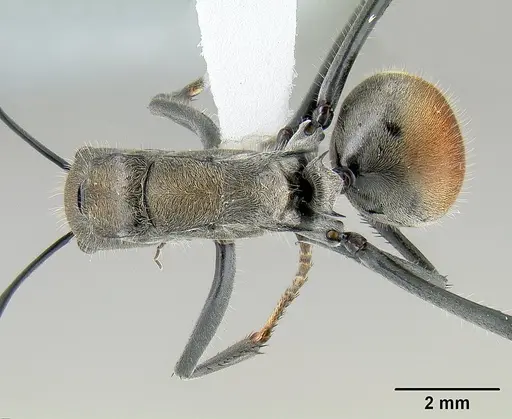
Letteratura
Caricamento mappa di distribuzione...Caricamento prodotti...