
Polyrhachis corporaali
- Nom. sci.
- Polyrhachis corporaali
- Sottogenere
- Cyrtomyrma
- Tribù
- Camponotini
- Sottofamiglia
- Formicinae
- Autore
- Santschi, 1928
- Distribuzione
- Trovata in 0 paesi
Introduzione
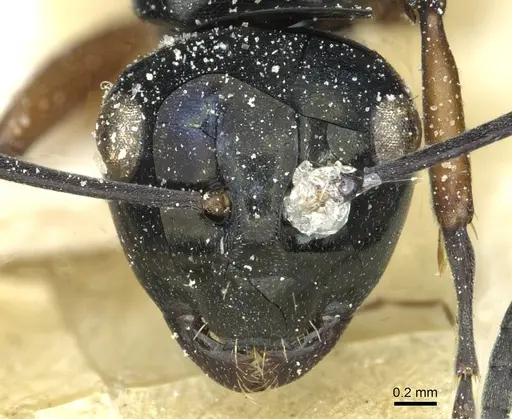
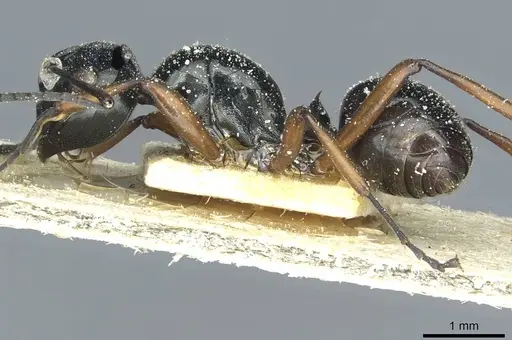
Polyrhachis corporaali is a small, dark ant species belonging to the subgenus Cyrtomyrma. Workers measure around 4 mm and are entirely black with a glossy appearance. The queen is larger at 6 mm . This species is known from India (Karnataka, West Bengal) and Indonesia (Sumatra) . Nothing is documented about this species' biology in the scientific literature, making it a true mystery species for antkeepers.
Quick Summary
- Difficulty: Hard
- Origin & Habitat: India (Karnataka, West Bengal) and Indonesia (Sumatra). Specific habitat preferences are unrecorded [2][1].
- Colony Type: Unconfirmed colony structure. Based on Polyrhachis patterns, likely single-queen colonies.
- Size & Growth:
- Antkeeping:
- Temperature: Unknown for this species. Start around 24-28°C and observe.
- Humidity: Unknown. Based on tropical distribution, keep nest substrate moist but not waterlogged.
- Diapause: Unknown. Tropical origin suggests year-round activity may be possible.
- Nesting: No natural nesting data. Related Polyrhachis often nest in vegetation or under bark. Use naturalistic setup with bark or Y-tong nest.
- Behavior: Completely unstudied. Based on genus-level, Polyrhachis are generally not aggressive and moderate foragers. Escape risk moderate due to 4mm size [1]. Defense: As a Formicinae, they lack a sting and spray formic acid.
- Common Issues: no biological data exists, care is speculative based on genus patterns., growth rate unknown, patience required., humidity requirements unconfirmed, monitor for desiccation., winter care unstudied, unclear if diapause needed., limited availability, this species is not recommended for beginners.
Why Keep Polyrhachis corporaali?
This species represents a genuine opportunity for antkeepers to contribute to our understanding of a virtually unknown species. Since nothing has been documented about its biology, behavior, or captive requirements, keeping Polyrhachis corporaali allows you to be a pioneer. Every observation you make adds to our collective knowledge. The species is small but attractive, workers are glossy black [1] and queens reach 6 mm [1]. Because it's rarely kept, finding established colonies is difficult, but this also makes it an interesting challenge for dedicated antkeepers who enjoy the exploratory aspect of husbandry.
Housing and Nest Preferences
No natural nesting data exists for this species, so we must infer from related Cyrtomyrma species. These ants are often found in forested habitats and may nest in vegetation, under loose bark, or in small cavities. For captivity, a naturalistic setup works well, provide bark pieces, cork, or small hollow stems as nest options. A Y-tong or plaster nest with good humidity retention is also appropriate. Keep some dry areas and some moist areas so the ants can choose their preferred humidity zone. Ensure the setup allows for climbing, Polyrhachis are semi-arboreal and appreciate vertical surfaces.
Feeding and Diet
Diet is unconfirmed for this specific species. Based on typical Polyrhachis behavior, they are omnivorous and likely forage for honeydew from aphids and scale insects, plus small insects for protein. Offer sugar water or honey as an energy source, and provide protein sources like small crickets, mealworms, or fruit flies. Observe what your colony accepts and adjust accordingly. Because nothing is documented, experimental feeding with various options will help determine preferences.
Temperature and Seasonal Care
No thermal data exists for this species. Its tropical distribution in India and Indonesia suggests warmth is important. Start around 24-28°C and monitor colony behavior, if workers cluster near any heat source, increase slightly, if they avoid heated areas, reduce temperature. A heating cable on one side of the nest can create a gradient. Whether diapause is required is completely unknown. Given its tropical origin, year-round activity at room temperature (around 22-26°C) may be appropriate, but some keepers report success with a brief winter reduction in activity even for tropical species.
Behavior and Observation
Since this species has never been scientifically studied in captivity, keeper observations are your best resource. Based on genus-level knowledge, expect moderate activity levels, not as frantic as some Formica but more active than sluggish Camponotus. Workers are likely to forage along surfaces and may tend aphids. The species is probably not particularly aggressive, but will defend the nest if threatened. Take detailed notes on your observations, feeding preferences, temperature tolerance, humidity preferences, and any unique behaviors. Your data may help future keepers significantly.
Frequently Asked Questions
How long does it take for Polyrhachis corporaali to produce first workers?
The egg-to-worker timeline is completely unknown for this species since no biological studies exist. Based on typical Polyrhachis patterns and its tropical distribution, a reasonable estimate is 6-10 weeks at warm temperatures (around 26°C). However, this is entirely speculative, your colony may be faster or slower.
What do Polyrhachis corporaali ants eat?
Diet is unconfirmed. Based on genus-level patterns, offer sugar water or honey for energy, plus protein sources like small crickets, mealworms, or fruit flies. Experiment to see what your colony accepts. Remove uneaten food to prevent mold.
What temperature do Polyrhachis corporaali need?
No specific data exists. Based on its tropical Asian distribution, start around 24-28°C. Observe your colony's behavior and adjust, if they avoid heated areas, reduce temperature, if they cluster near warmth, increase slightly.
Is Polyrhachis corporaali a good species for beginners?
No. This species is not recommended for beginners because absolutely no captive care data exists. Every aspect of its husbandry is speculative. Experienced antkeepers who enjoy experimentation and documenting new species may find it interesting.
How big do Polyrhachis corporaali colonies get?
Colony size is completely unknown. No wild colony data exists for this species. Expect moderate colony sizes based on worker size (4 mm), but exact maximums are undocumented.
Do Polyrhachis corporaali need hibernation?
Diapause requirements are unknown. Its tropical distribution suggests year-round activity may be possible, but this is unconfirmed. Some keepers provide a brief winter reduction in activity even for tropical species with unknown requirements.
Can I keep multiple queens together?
Colony structure is unconfirmed. Polyrhachis are typically single-queen species, but this has not been studied for P. corporaali. Do not combine unrelated foundress queens without documented evidence they can coexist.
What humidity do Polyrhachis corporaali require?
Humidity requirements are unconfirmed. Based on tropical distribution, moderate to high humidity is likely appropriate. Keep the nest substrate moist but not waterlogged, and provide both humid and drier areas for the ants to choose.
Where can I get Polyrhachis corporaali?
This is a rarely kept species with limited availability. You may need to connect with specialized antkeepers or dealers who focus on uncommon Asian Polyrhachis. Expect difficulty finding established colonies.
Report an Issue
The current care sheet is based fully on literature. See inconsistencies, or something that's incorrect? Please , it will be resolved after review from an admin. Contributing to the blogs tab also helps providing information, to make us be able to further improve the caresheets. Thank you for your support!
References

Questa scheda di allevamento è concessa in licenza con CC BY-SA 4.0 .
Blog della comunità
CASENT0912106
Visualizza su AntWeb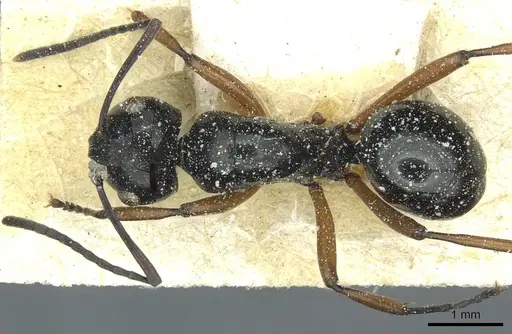
Letteratura
Caricamento mappa di distribuzione...Caricamento prodotti...