
Pheidole taivanensis
- Nom. sci.
- Pheidole taivanensis
- Tribù
- Attini
- Sottofamiglia
- Myrmicinae
- Autore
- Forel, 1912
- Distribuzione
- Trovata in 0 paesi
Introduzione
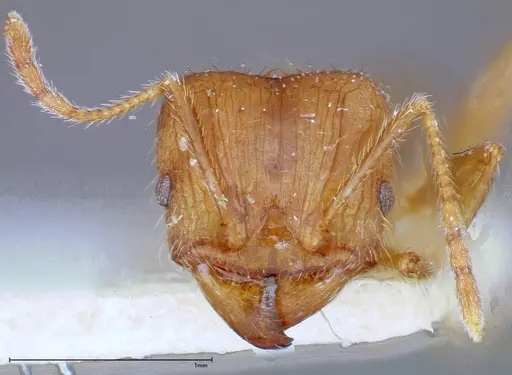
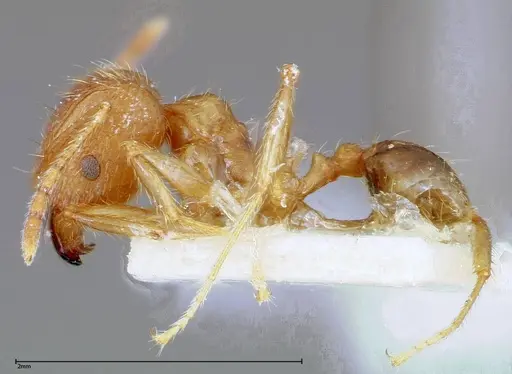
Pheidole taivanensis is a small ant species native to Taiwan and northern Thailand. Workers measure around 3.7 mm and feature a distinctive trapezoidal head that is shallowly excised (notched) at the back - a characteristic that sets this species apart from related Pheidole. They are reddish-yellow with brown-red markings on the head and a brown abdomen. This species is ground-nesting, found in both dry dipterocarp and mixed deciduous forests where they nest under leaf litter and in soil . They show seasonal variation in abundance, with specimen counts ranging from 875 per hectare in winter to 5,750 in summer .
Quick Summary
- Difficulty: Medium
- Origin & Habitat: Taiwan and northern Thailand (Chiang Mai: Doi Chiang Dao). Found in dry dipterocarp and mixed deciduous forests at ground level with leaf litter nesting habits [1][2].
- Colony Type: Unconfirmed, likely monogyne based on typical Pheidole patterns.
- Size & Growth:
- Queen: Unknown, not documented in available research
- Worker: ~3.7 mm [3]
- Colony: Unknown, not directly studied.
- Growth: Moderate, inferred from genus patterns
- Development: 6-8 weeks estimated based on typical Pheidole development at warm temperatures (Development time is estimated from genus-level data, specific measurements for this species are not available)
- Antkeeping:
- Temperature: Based on their tropical/subtropical origin (Taiwan, Thailand), keep at 22-28°C. Room temperature is likely suitable for most keepers.
- Humidity: They naturally nest in leaf litter and forest floors in relatively humid conditions. Keep substrate moderately moist but not waterlogged.
- Diapause: Unknown, their range includes areas with mild winters, so they may have reduced activity periods rather than true diapause.
- Nesting: Ground-nesting species that prefers soil nests with leaf litter cover. In captivity, a standard test tube setup works well, or a naturalistic formicarium with soil substrate. They do well with some cover and moderate humidity.
- Behavior: Pheidole taivanensis is a typical Pheidole species, non-aggressive toward humans, forages for seeds and small insects, and creates colonies with distinct major and minor workers. They are not known to be particularly aggressive or territorial. Escape risk is moderate, standard test tube barriers are usually sufficient for their size.
- Common Issues: workers dying outside the nest is normal, sick ants leave to protect the colony., slow to establish compared to some common species, patience needed during founding., limited availability in the antkeeping hobby makes this species harder to acquire.
Housing and Nest Setup
Pheidole taivanensis is a ground-nesting species that naturally lives in forest floors under leaf litter. In captivity, they adapt well to standard test tube setups, which work perfectly for the founding colony. As the colony grows, you can move them to a formicarium with a soil or plaster nest. They prefer some cover and darkness, so adding leaf litter or other hiding materials to the outworld helps them feel secure. A small water tube connected to the nest maintains humidity without over-wetting the substrate. Because they nest in leaf litter in the wild, they appreciate having some organic material in their nesting area [1].
Feeding and Diet
Like other Pheidole species, Pheidole taivanensis is omnivorous with a preference for protein sources and seeds. In captivity, they readily accept small insects like fruit flies, pinhead crickets, and mealworms. They also collect seeds, which they store as food, this is a common behavior in the Pheidole genus. Sugar sources like honey water or sugar water are typically accepted for energy. Feed protein prey 2-3 times per week, and keep a constant sugar water supply. Remove uneaten prey after 24 hours to prevent mold. Their small size means prey items should be appropriately sized, very small insects work best.
Temperature and Humidity
Coming from Taiwan and northern Thailand, this species prefers warm, moderately humid conditions. Keep temperatures in the 22-28°C range, room temperature (around 24°C) is ideal for most keepers. They can tolerate slightly cooler conditions but grow best in warmth. Humidity should be moderate, the nest substrate should feel damp but never waterlogged. Their natural habitat in forest floors maintains consistent moisture, so avoid letting the nest completely dry out. A small water tube or occasional misting of the outworld maintains appropriate humidity levels [1].
Colony Development
Pheidole taivanensis forms colonies with distinct major and minor workers, a characteristic of the genus. Major workers (soldiers) have larger heads and develop from specialized larvae. The colony starts with a single queen who seals herself in and raises the first brood alone. Once the first workers (nanitics) emerge, the colony grows steadily. Specific development times are not documented, but based on typical Pheidole patterns, expect 6-8 weeks from egg to first worker at optimal temperature. Colonies likely reach several thousand workers over time, though exact maximum size is unknown for this species.
Behavior and Foraging
This species shows typical Pheidole foraging behavior, workers search for food individually and recruit nestmates when they find good food sources. They are not aggressive toward keepers and rarely sting. Their small size (around 3.7 mm for workers) means they are not intimidating, and they go about their business quietly. In the wild, they are most active during warmer months, with peak abundance in summer (5,750 specimens per hectare) dropping significantly in winter (875 per hectare) [1]. This seasonal pattern suggests they are more active in warm conditions and may reduce activity during cooler periods.
Frequently Asked Questions
How long does it take for Pheidole taivanensis to have first workers?
Based on typical Pheidole development, expect 6-8 weeks from egg to first worker at optimal temperatures (around 24-26°C). Specific development data for this species is not available.
What do Pheidole taivanensis ants eat?
They are omnivorous, accepting small insects (fruit flies, pinhead crickets, mealworms), seeds, and sugar sources like honey water or sugar water. Protein prey should be offered 2-3 times per week.
What temperature do Pheidole taivanensis need?
Keep them at 22-28°C. Room temperature around 24°C is ideal. They come from subtropical Taiwan and Thailand, so they prefer warmth.
Are Pheidole taivanensis good for beginners?
Yes, they are considered easy to keep. They are adaptable, non-aggressive, and tolerate typical captive conditions well. The main challenge is finding them for sale since they are not common in the hobby.
How big do Pheidole taivanensis colonies get?
Exact colony size is unknown for this species, but typical Pheidole colonies reach up to several thousand workers. They are a medium-sized colony species.
Do Pheidole taivanensis need hibernation?
Their native range (Taiwan, Thailand) has mild winters, so true diapause is likely not required. They may have reduced activity in cooler conditions but do not need a cold hibernation period.
What type of nest is best for Pheidole taivanensis?
They are ground-nesting and prefer soil or plaster nests with moderate humidity. A test tube works for founding colonies. For established colonies, a naturalistic setup with soil substrate or a Y-tong/plaster formicarium works well.
Can I keep multiple Pheidole taivanensis queens together?
This has not been documented for this species. Based on typical Pheidole behavior, single-queen colonies are most common. Combining unrelated queens is not recommended without evidence they will accept each other.
Why are my Pheidole taivanensis dying?
Common causes include: substrate drying out (they need consistent moisture), temperatures too cold (below 20°C slows growth), mold from overfeeding or poor ventilation, and stress from too much disturbance during founding. Ensure moderate humidity and warmth.
Report an Issue
The current care sheet is based fully on literature. See inconsistencies, or something that's incorrect? Please , it will be resolved after review from an admin. Contributing to the blogs tab also helps providing information, to make us be able to further improve the caresheets. Thank you for your support!
References

Questa scheda di allevamento è concessa in licenza con CC BY-SA 4.0 .
Blog della comunità
FOCOL0252
Visualizza su AntWeb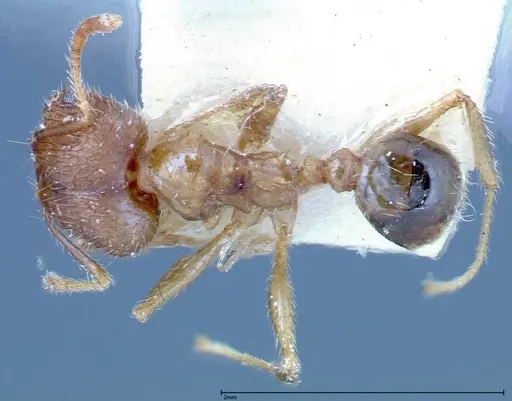
Letteratura
Caricamento mappa di distribuzione...Caricamento prodotti...