
Pheidole senilis
- Nom. sci.
- Pheidole senilis
- Tribù
- Attini
- Sottofamiglia
- Myrmicinae
- Autore
- Santschi, 1929
- Distribuzione
- Trovata in 0 paesi
Introduzione
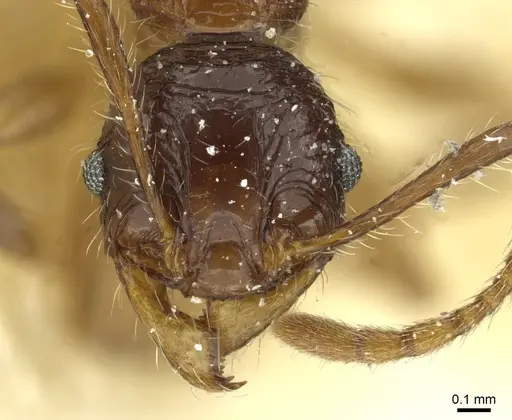
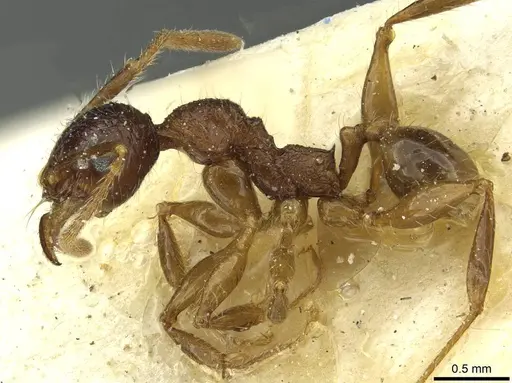
Pheidole senilis is a Neotropical ant species native to southeastern Brazil, found in the Atlantic Forest regions of Minas Gerais and São Paulo states. It nests in rotten wood in native forest habitats . Major workers are large for the genus with a reddish-brown body, and minor workers are smaller. The species name refers to the wrinkly head surface of major workers .
Quick Summary
- Difficulty: Medium
- Origin & Habitat: Native Atlantic Forest in Minas Gerais and São Paulo, Brazil. Found in rotting wood in forest habitats [1][2].
- Colony Type: Unconfirmed
- Size & Growth:
- Queen: Size data unavailable
- Worker: Size data unavailable
- Colony: Unknown
- Growth: Moderate
- Development: Estimated 6-10 weeks based on typical Pheidole development patterns (Development time is estimated for tropical species, exact timeline not studied for this species.)
- Antkeeping:
- Temperature: Keep at 24-28°C. As a tropical species, they require warm conditions [1].
- Humidity: Keep nest substrate moist but not waterlogged, with some drier areas available [1].
- Diapause: No, tropical species do not require hibernation [1].
- Nesting: In nature, they nest in rotten wood. In captivity, use test tubes for founding or Y-tong/plaster nests for established colonies [1].
- Behavior: Pheidole senilis is a generalist omnivore. Major workers defend the colony, while minors handle foraging. They are not particularly aggressive but will defend if threatened. Minor workers are small and can escape easily [1].
- Common Issues: escape prevention is critical due to small size of minor workers, tropical species requires consistent warmth to maintain brood development, colonies from native forest may need stable humid conditions, founding phase may be slow with claustral queens, wild-caught colonies may carry parasites that harm captive colonies
Housing and Nest Setup
Pheidole senilis naturally nests in rotten wood in Brazilian Atlantic Forest habitats [1]. For captive care, start colonies in test tubes for the founding phase. Once the colony grows, move to Y-tong or plaster nests with moisture retention. The nest material should retain moisture well, as these ants prefer humid conditions [1]. Add a water reservoir to maintain humidity. For the outworld, provide a simple space for food. Use tight-fitting lids and apply barriers to prevent escapes, as minor workers are very small [1].
Feeding and Diet
Pheidole senilis is a generalist omnivore, like most Pheidole species. In captivity, they accept protein sources like small insects and carbohydrates like sugar water or honeydew [1]. Feed protein-rich foods 2-3 times per week and provide constant access to sugar water. Remove uneaten food after 24 hours to prevent mold.
Temperature and Seasonal Care
As a tropical species from southeastern Brazil, Pheidole senilis requires warm temperatures year-round. Keep the nest area at 24-28°C. Temperatures below 20°C will slow metabolism and stop brood development. Use a heating cable on one side of the nest to create a gradient [1]. They do not require hibernation, maintain consistent warm conditions.
Colony Development and Growth
Pheidole colonies grow through a founding sequence where a claustral queen raises the first brood alone. First workers appear after an estimated 6-10 weeks at optimal temperature. After workers emerge, the queen focuses on egg-laying. Growth rate is moderate, and major workers develop once the colony reaches a certain size [1].
Behavior and Defense
Pheidole senilis exhibits typical Pheidole behavior: minor workers handle foraging and brood care, while major workers defend the colony. Major workers use their mandibles to defend, and the species has a functional stinger as part of the Myrmicinae subfamily defense mechanism. They are not overly aggressive but will bite if provoked. Workers are primarily crepuscular or nocturnal [1].
Frequently Asked Questions
How long does it take for Pheidole senilis to produce first workers?
First workers typically appear after 6-10 weeks at optimal temperature (24-28°C). This is an estimate based on typical Pheidole development patterns [1].
What temperature do Pheidole senilis ants need?
Keep them at 24-28°C. As a tropical Brazilian species, they require warm conditions year-round [1].
Can I keep multiple Pheidole senilis queens together?
Colony type is unconfirmed for this species. Pheidole species are often monogyne, but combining queens is not recommended without specific data.
What do Pheidole senilis ants eat?
They are generalist omnivores. Feed small insects for protein and sugar water or honey for carbohydrates [1].
How big do Pheidole senilis colonies get?
Colony size is unknown for this species, as no specific data is available.
Do Pheidole senilis need hibernation?
No. As a tropical species from Brazil, they do not require hibernation or diapause [1].
What type of nest is best for Pheidole senilis?
They naturally nest in rotten wood. For captivity, use test tubes for founding colonies, then transition to Y-tong or plaster nests with moisture retention [1].
Why are my Pheidole senilis escaping?
Minor workers are very small and can squeeze through tiny gaps. Use excellent escape prevention with tight-fitting lids and barriers [1].
Is Pheidole senilis good for beginners?
This species is rated as medium difficulty due to the need for consistent warmth and humidity, and escape risk from small workers.
Report an Issue
The current care sheet is based fully on literature. See inconsistencies, or something that's incorrect? Please , it will be resolved after review from an admin. Contributing to the blogs tab also helps providing information, to make us be able to further improve the caresheets. Thank you for your support!
References

Questa scheda di allevamento è concessa in licenza con CC BY-SA 4.0 .
Blog della comunità
CASENT0913336
Visualizza su AntWeb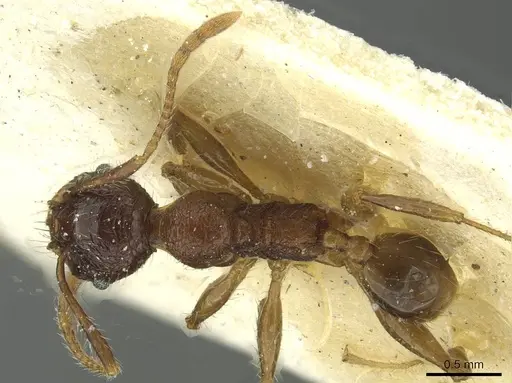
Letteratura
Caricamento mappa di distribuzione...Caricamento prodotti...