
Parasyscia dominula
- Nom. sci.
- Parasyscia dominula
- Sottofamiglia
- Dorylinae
- Autore
- Wilson, 1959
- Distribuzione
- Trovata in 0 paesi
Introduzione
Parasyscia dominula is a small ant species in the subfamily Dorylinae, commonly known as army ants. The species is distributed across the Oceanian region . Based on Dorylinae patterns, these ants are likely hypogaeic, living and foraging underground, and are predatory hunters .
Quick Summary
- Difficulty: Medium
- Origin & Habitat: Oceanian region (Pacific islands) [1]. Based on Dorylinae patterns, likely tropical and humid habitats [2].
- Colony Type: Based on Dorylinae patterns, likely monogyne (single queen colonies) [2].
- Size & Growth:
- Queen: Size data unavailable
- Worker: Size data unavailable
- Colony: Unknown, no data on colony size for this species
- Growth: Moderate, inferred from Dorylinae patterns [2]
- Development: Estimated 6-8 weeks at tropical temperatures, inferred from Dorylinae patterns [2] (Development timeline is inferred from Dorylinae patterns, not directly studied for this species)
- Antkeeping:
- Temperature: Keep warm, roughly 24-28°C, based on tropical Dorylinae patterns [2]
- Humidity: Keep substrate consistently moist but not waterlogged, based on hypogaeic habits [2]
- Diapause: No diapause required, as tropical species [2]
- Nesting: Y-tong or test tube setups with moist substrate, based on Dorylinae nesting preferences [2]
- Behavior: Based on Dorylinae patterns, cryptic and shy, avoiding light. Escape risk is high due to small size, use fine mesh barriers [2].
- Common Issues: escape prevention is critical due to very small size, use fine mesh barriers, high humidity requirements can lead to mold if ventilation is poor, predatory diet requires live prey, which may be hard to source
Housing and Nest Setup
Set up a humid, dark nest using Y-tong or test tube with moist substrate. Connect to an outworld for feeding. Use fine mesh to prevent escapes due to small size [2].
Feeding and Diet
As predatory ants, offer live prey like fruit flies or springtails. Remove uneaten prey to prevent mold [2].
Temperature and Humidity
Maintain warm temperatures around 24-28°C and high humidity with moist substrate [2].
Behavior and Observation
Workers are cryptic and spend most time underground. They emerge during feeding times to hunt [2].
Frequently Asked Questions
How long does it take for Parasyscia dominula to produce first workers?
Estimated 6-8 weeks from egg to first worker at optimal temperatures, based on Dorylinae patterns [2].
Can I keep Parasyscia dominula in a test tube?
Yes, test tubes work well for founding colonies and small colonies. Keep the tube covered to block light and maintain humidity [2].
What do Parasyscia dominula eat?
They are predatory and require live small invertebrates like fruit flies or springtails [2].
Are Parasyscia dominula good for beginners?
They are considered medium difficulty due to escape risk and need for live prey, but manageable with experience [2].
How big do Parasyscia dominula colonies get?
Colony size is not documented for this species [2].
Do Parasyscia dominula need hibernation?
No, as a tropical species, they do not require hibernation [2].
Why can't I see my Parasyscia dominula ants?
This is normal, they are cryptic, hypogaeic ants that prefer dark environments [2].
When should I move Parasyscia dominula to a formicarium?
You can keep them in a test tube setup long-term if small. Move to a larger setup only if the colony becomes crowded [2].
Can I keep multiple Parasyscia dominula queens together?
This has not been documented. Based on Dorylinae patterns, single-queen colonies are likely [2].
Report an Issue
The current care sheet is based fully on literature. See inconsistencies, or something that's incorrect? Please , it will be resolved after review from an admin. Contributing to the blogs tab also helps providing information, to make us be able to further improve the caresheets. Thank you for your support!
References

Questa scheda di allevamento è concessa in licenza con CC BY-SA 4.0 .
Blog della comunità
CASTYPE06886
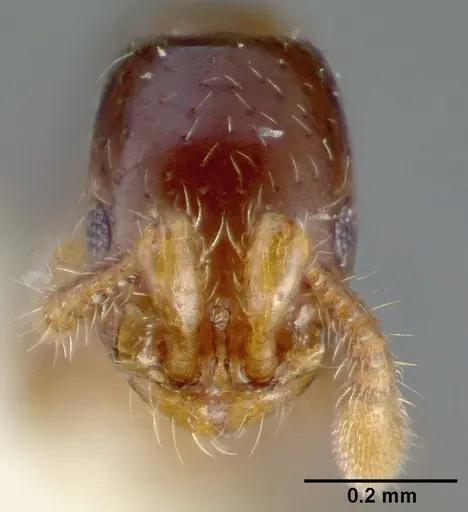
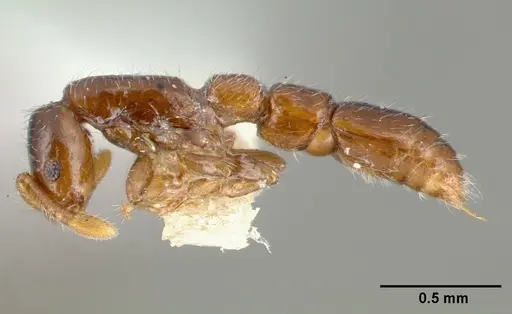
Visualizza su AntWeb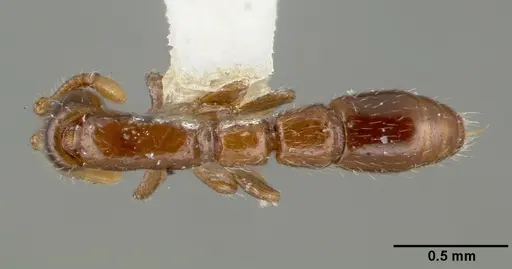
Letteratura
Caricamento mappa di distribuzione...Caricamento prodotti...