
Nesomyrmex grisoni
- Nom. sci.
- Nesomyrmex grisoni
- Tribù
- Crematogastrini
- Sottofamiglia
- Myrmicinae
- Autore
- Forel, 1916
- Distribuzione
- Trovata in 0 paesi
Introduzione
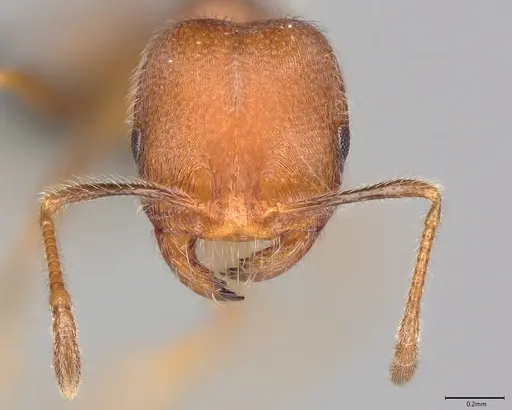
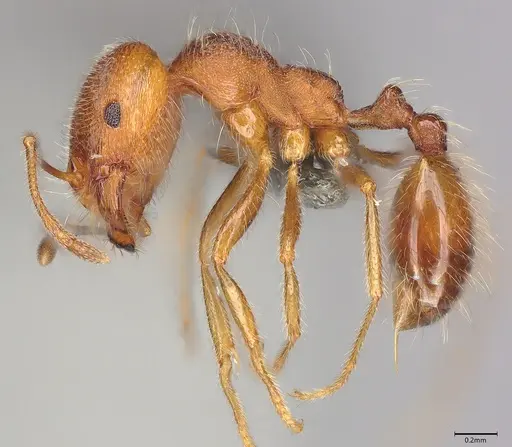
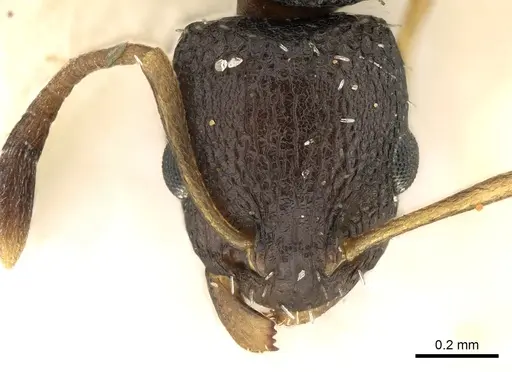
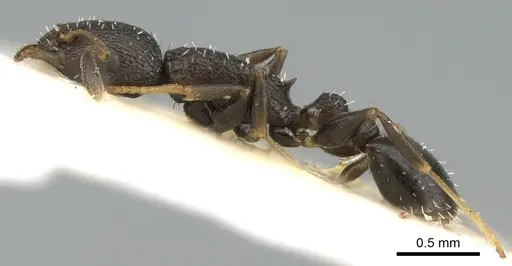
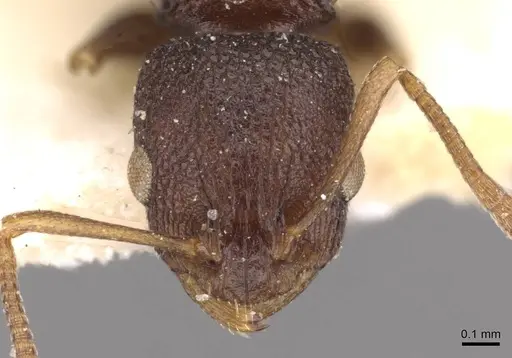
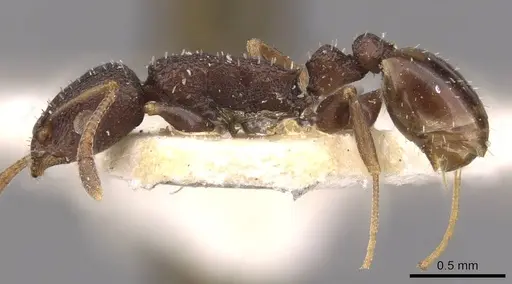
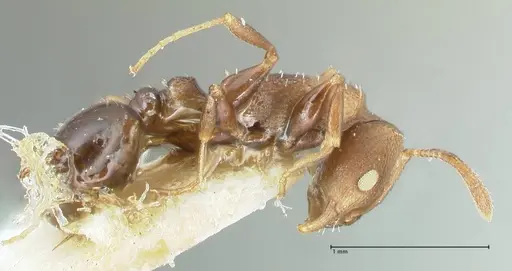
Nesomyrmex grisoni is a tiny myrmicine ant native to Central African rainforests. Workers measure 2.9-3.4mm in total length and are uniformly dark brown to black in color, distinguishing them from their close relative Nesomyrmex angulatus which is yellow . They have 12-segmented antennae, short propodeal spines, and a distinctive flat profile across the mesosomal dorsum with no visible metanotal groove . This species belongs to the angulatus species group and is known only from the Central African Republic, Democratic Republic of Congo, and Ghana . These ants live on vegetation in rainforest habitats, suggesting they may be semi-arboreal or nest in elevated locations rather than in soil . Very little is known about their specific colony structure, founding behavior, or captive care requirements, making them a species for experienced antkeepers willing to experiment with conditions.
Quick Summary
- Difficulty: Hard
- Origin & Habitat: Central African rainforests (Democratic Republic of Congo, Central African Republic, Ghana), lives on vegetation in humid forest habitats [1]
- Colony Type: Colony structure is unconfirmed. Based on typical Nesomyrmex patterns, likely single-queen colonies, but this has not been documented.
- Size & Growth:
- Queen: size data unavailable, no documented measurements [1]
- Worker: 2.9-3.4mm [1]
- Colony: size data unavailable, no colony size data available
- Growth: Unknown, no development data exists
- Development: Unconfirmed, no direct measurements exist. Based on typical Myrmicinae patterns in tropical conditions, estimate 6-10 weeks at optimal temperature. (Development timeline is unconfirmed. This is an estimate based on related species in the genus.)
- Antkeeping:
- Temperature: Keep warm and stable, roughly low-to-mid 20s°C. This range is inferred from their rainforest habitat in Central Africa, they likely need stable warmth similar to other tropical Myrmicinae [1].
- Humidity: High humidity required, rainforest dwellers need consistently moist nest substrate. Keep the nest substrate damp but not waterlogged. Provide a water tube for drinking access.
- Diapause: Unlikely, being a tropical species from Central Africa, they probably do not require a diapause period. Maintain warm conditions year-round.
- Nesting: Likely prefers arboreal or elevated nesting sites given their vegetation-dwelling nature. A small Y-tong (AAC) or plaster nest with narrow chambers scaled to their tiny 3mm size would work. Keep chambers tight, these small ants can escape through tiny gaps.
- Behavior: Temperament is not well-documented, but Nesomyrmex species are generally not aggressive. They are small and likely docile. Foraging style is unknown but they probably forage on vegetation for small arthropods and honeydew. Escape prevention is critical, at only 3mm, they can squeeze through remarkably small gaps. Use fine mesh barriers and ensure all connections are sealed. As Myrmicinae, they have a modified stinger but at this size they cannot effectively penetrate human skin.
- Common Issues: escape prevention is critical due to their tiny 3mm size, they can slip through standard test tube plugs, no documented feeding behavior exists, their exact diet in captivity is unknown, humidity control is challenging, rainforest species suffer in dry conditions, colony size is unknown so growth expectations are unclear, no established captive breeding protocols exist, this is a challenging species for experienced keepers
Natural History and Distribution
Nesomyrmex grisoni is known only from three Central African countries: the Democratic Republic of Congo, Central African Republic, and Ghana [1]. This extremely limited distribution makes wild colonies difficult to obtain. They live on vegetation in rainforest habitats, which distinguishes them from many ground-nesting ant species [1]. The species was originally described as Nesomyrmex grisoni by Forel in 1916 and was later transferred to the genus Nesomyrmex by Bolton in 2003 [1]. Within the angulatus species group, N. grisoni is morphologically very similar to N. angulatus, the two species are only separable by body color, with N. grisoni being dark brown to black while N. angulatus is yellow [1].
Identification and Morphology
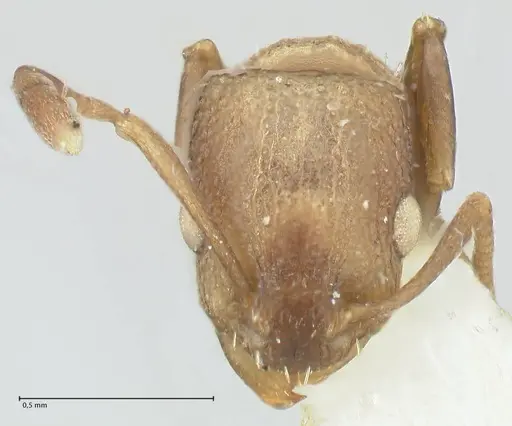
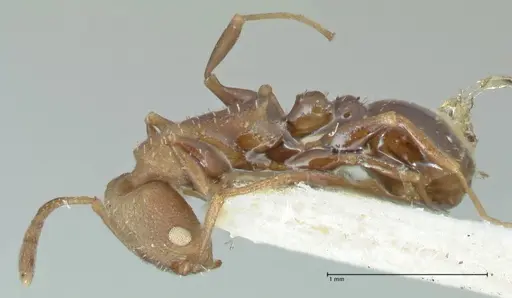
Workers of N. grisoni are tiny, measuring 2.9-3.4mm in total length [1]. They have 12-segmented antennae and lack frontal carinae, which are ridges found near the antennae in many ant species [1]. The mesosomal dorsum forms a single, uninterrupted flat surface without any trace of the metanotal groove, this is a key identifying feature [1]. Propodeal spines are present and relatively short [1]. The petiolar peduncle is short, and the body is covered with fine reticulate-punctate sculpture overlaid with rugulae that form a distinct network pattern [1]. Their uniform dark brown to black coloration distinguishes them from all other species in the angulatus group.
Housing and Nest Setup
Given their vegetation-dwelling nature in rainforest habitats, these ants likely prefer humid conditions with access to vertical or elevated spaces. A small Y-tong (AAC) or plaster nest with chambers scaled to their tiny 3mm size works best. The chambers should be narrow and tight, these small ants are expert escape artists. Use a water tube attached to the nest for humidity maintenance and drinking access. Because they live on vegetation, you might consider adding small twigs or leaves to the outworld to simulate their natural arboreal environment. Escape prevention must be excellent, standard test tube cotton plugs may need to be supplemented with fine mesh barriers.
Feeding and Diet
The exact dietary preferences of N. grisoni have not been documented in scientific literature. As small Myrmicinae ants living in rainforest vegetation, they likely forage for tiny arthropods and likely consume honeydew from aphids or scale insects. For captive care, offer small protein sources like fruit flies, pinhead crickets, or small mealworms. Sugar water or honey water may be accepted, especially if they are tending aphids. Start with small prey items and observe acceptance. Given their tiny size, prey should be appropriately sized, much larger prey may not be tackled. Remove any uneaten prey within 24-48 hours to prevent mold.
Temperature and Humidity Requirements
As a tropical rainforest species from Central Africa, N. grisoni requires warm and humid conditions. Maintain temperatures in the range of 24-28°C, this is warmer than typical room temperature for most homes. A small heating cable or mat on one side of the nest can help maintain warmth if your room temperature is below this range. Humidity should be high, around 70-85% relative humidity. This can be achieved by keeping the nest substrate moist (not waterlogged) and maintaining a water tube. Mist the outworld occasionally but avoid letting water pool. Good ventilation is important to prevent mold while maintaining humidity.
Challenges and Experienced Care
Nesomyrmex grisoni is not a species for beginners. There is extremely limited scientific data on their biology, meaning you will largely be experimenting with conditions rather than following established protocols. Colony size, founding behavior, development timeline, and social structure are all unconfirmed. Wild-caught colonies may be the only option for obtaining this species, and they may have parasites or stress from collection. Before acquiring this species, ensure you have experience with other Myrmicinae and can maintain the high humidity and temperature these rainforest ants require. Document your observations carefully, any captive breeding success would contribute valuable knowledge to the antkeeping community.
Frequently Asked Questions
How long does it take for Nesomyrmex grisoni to produce first workers?
The egg-to-worker timeline is unconfirmed for this species. Based on typical Myrmicinae development in tropical conditions, estimate 6-10 weeks at optimal temperature (24-28°C). However, this is an educated guess rather than documented fact.
Can I keep Nesomyrmex grisoni in a test tube?
A test tube setup can work for founding colonies, but due to their tiny 3mm size, ensure excellent escape prevention. Standard cotton plugs may need to be supplemented with fine mesh. The test tube should have a water reservoir for humidity.
What do Nesomyrmex grisoni ants eat?
Their exact diet is undocumented. Offer small protein sources like fruit flies, tiny crickets, or small mealworms. Sugar water or honey water may be accepted. Start with small prey and remove uneaten food within 24-48 hours.
Are Nesomyrmex grisoni good for beginners?
No. This is a challenging species due to the complete lack of documented captive care information. There are no established protocols for housing, feeding, or breeding this ant. Only experienced antkeepers should attempt this species.
Do Nesomyrmex grisoni ants sting?
Being Myrmicinae, they have a stinger, but at 3mm in size, they are too small to penetrate human skin effectively. They are not considered dangerous to humans.
Do Nesomyrmex grisoni need hibernation?
Unlikely. As a tropical rainforest species from Central Africa, they probably do not require a diapause period. Maintain warm, humid conditions year-round.
How big do Nesomyrmex grisoni colonies get?
Maximum colony size is unknown. No scientific data exists on colony size for this species. Expect small to moderate-sized colonies based on their tiny worker size.
Can I keep multiple Nesomyrmex grisoni queens together?
This is unconfirmed. The colony structure (monogyne vs polygyne) has not been documented. Do not attempt combining unrelated queens without documented evidence that they can found colonies pleometrotically.
What temperature do Nesomyrmex grisoni need?
Keep them warm at 24-28°C. This is inferred from their Central African rainforest habitat. Use a heating cable or mat if your room temperature is below this range.
Why are my Nesomyrmex grisoni dying?
Common causes include: low humidity (rainforest species suffer in dry conditions), temperatures outside their 24-28°C range, escape through tiny gaps, stress from wild collection, or parasites. Ensure high humidity, warm temperatures, and excellent escape prevention.
Report an Issue
The current care sheet is based fully on literature. See inconsistencies, or something that's incorrect? Please , it will be resolved after review from an admin. Contributing to the blogs tab also helps providing information, to make us be able to further improve the caresheets. Thank you for your support!
References

Questa scheda di allevamento è concessa in licenza con CC BY-SA 4.0 .
Blog della comunità
CASENT0770223
Visualizza su AntWeb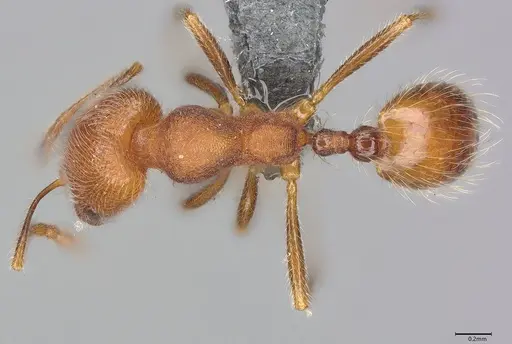
CASENT0906194
Visualizza su AntWeb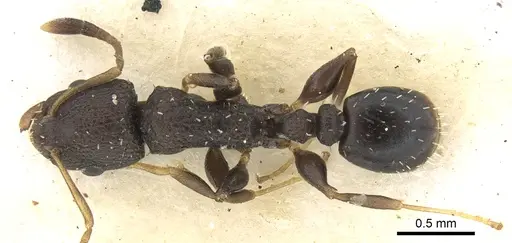
CASENT0908994
Visualizza su AntWeb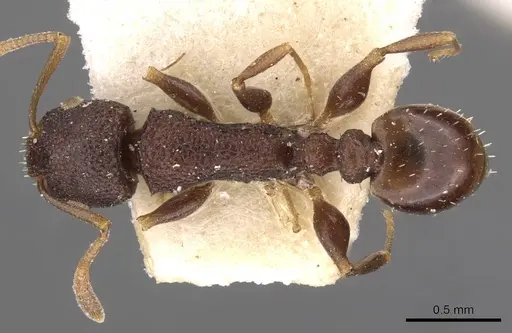
FOCOL2043
Visualizza su AntWeb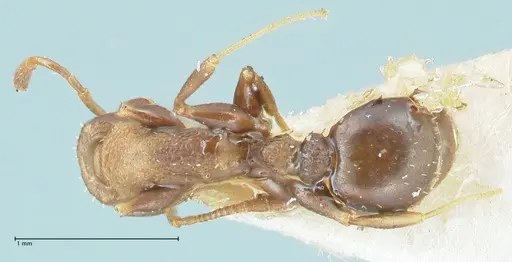
Letteratura
Caricamento mappa di distribuzione...Caricamento prodotti...