
Neoponera billemma
- Nom. sci.
- Neoponera billemma
- Tribù
- Ponerini
- Sottofamiglia
- Ponerinae
- Autore
- Fernandes <i>et al.</i>, 2014
- Distribuzione
- Trovata in 0 paesi
Introduzione
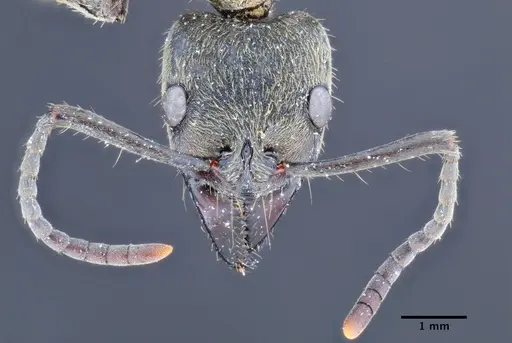
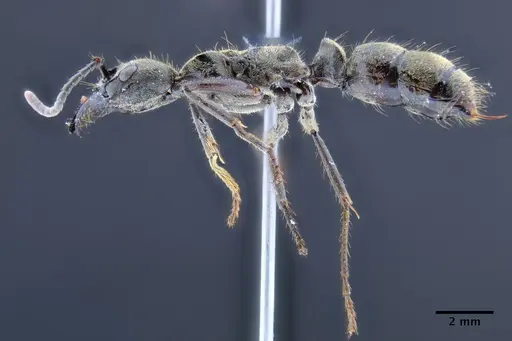
Neoponera billemma is a large Ponerine ant native to Brazil, specifically found in the states of Pará, Goiás, and São Paulo. Workers are substantial ants with a distinctive appearance featuring strong transverse striae (grooves) on the clypeus and a deeply concave anterior face on the petiole. The integument is black with golden pubescence covering the antennae and body surfaces. Queens are similar in appearance but slightly larger with well-developed ocelli. This species was formally described in 2014,making it one of the newer additions to the ant-keeping hobby, and its complete biology remains undocumented in scientific literature.
Quick Summary
- Difficulty: Expert
- Origin & Habitat: Neotropical Brazil, found in Pará, Goiás, and São Paulo states [1]. The specific habitat type is unknown, but Neoponera species typically inhabit forest environments in tropical regions.
- Colony Type: Unknown colony structure, no colony structure data exists for this species.
- Size & Growth:
- Queen: size data unavailable, inferred from Neoponera genus (~15-18mm)
- Worker: size data unavailable, inferred from Neoponera genus (~12-15mm)
- Colony: Unknown, no colony size data exists for this species
- Growth: Unknown, no development data exists for this species
- Development: Unknown, no direct measurements exist for this species. (Development timeline is unconfirmed. Ponerine ants typically have longer development than many other ant subfamilies.)
- Antkeeping:
- Temperature: No specific data exists. Based on Neoponera genus patterns and Brazilian origin, aim for 24-28°C with a slight gradient.
- Humidity: No specific data exists. Based on Neotropical Ponerine patterns, maintain moderate to high humidity with a moist nest substrate.
- Diapause: Unknown, no seasonal data exists. Brazilian species may not require true hibernation.
- Nesting: No natural nesting observations exist. Based on related species, likely nests in soil or rotting wood in forest floor habitats. In captivity, a naturalistic setup with soil or a Y-tong/plaster nest with moisture works well.
- Behavior: No behavioral observations are documented for this species. Ponerine ants are typically predatory with a potent sting. They are generally more defensive and may be aggressive when threatened. Workers are likely active foragers. Escape prevention should be moderate, these are large ants but not particularly known for aggressive escaping.
- Common Issues: biology is completely unknown, this is a recently described species with no published care information., no confirmed colony structure means uncertainty about queen numbers and colony dynamics., growth and development timelines are unconfirmed, making it difficult to assess progress., limited availability, this species is rarely available in the antkeeping trade., no established feeding protocols, keepers must experiment with appropriate prey sizes.
Species Identification and Appearance
Neoponera billemma is a distinctive large ant that can be identified by several key morphological features. Workers have strong transverse striae on the clypeus (the plate covering the front of the head), and the anterior face of the petiole is lightly striate below and deeply concave. This concave petiole face helps distinguish it from similar species. The ants are black overall with extensive golden pubescence covering the antennal scapes and body surfaces. The mandibles have approximately 15 teeth along the masticatory border. Queens are similar but slightly larger in body dimensions and possess three well-developed ocelli on the top of the head. Males have never been collected for this species. [1]
Distribution and Collection History
This species is known only from Brazil, with confirmed records from three states: Pará (the type locality at Benevides, Morelândia), Goiás, and São Paulo (Rio Claro). The original type series was collected between 1980 and 2000,with the holotype worker collected on June 16,1988 in Pará. The species was formally described in 2014 by Fernandes, De Oliveira, and Delabie, originally placed in the genus Pachycondyla before being transferred to Neoponera. The limited distribution data suggests this may be a species with a relatively restricted range within Brazil. [1]
Housing and Nesting
No specific nesting observations exist for this species in the wild. However, Neoponera species are typically ground-nesting ants that prefer forest floor habitats. For captive care, a naturalistic setup with a deep soil layer works well, as these are larger ants that appreciate space to dig and forage. A Y-tong or plaster nest with moisture chambers can also work, provided the chambers are appropriately sized for their large body size. Given their Brazilian origin and the Ponerine tendency toward humid environments, maintain consistent substrate moisture without waterlogging. A water tube or small water dish should be provided as a drinking source.
Feeding and Diet
No specific dietary observations exist for this species. As a Ponerine ant, Neoponera billemma is almost certainly predatory. In captivity, offer appropriate-sized live prey such as cockroach nymphs, crickets, mealworms, and other insects. The prey size should be scaled to the ant's large size. Based on related species, they likely accept protein-rich foods as their primary nutrition. Sugar sources may or may not be accepted, some Ponerines will take honey or sugar water, while others are strictly predatory. Experiment cautiously with sugar sources but do not rely on them.
Temperature and Seasonal Care
No specific temperature requirements have been documented for this species. Based on its origin in tropical Brazil and typical Neoponera genus patterns, aim for temperatures in the warm range of 24-28°C. A slight temperature gradient allows the ants to self-regulate. Room temperature in most homes (20-24°C) may be acceptable, but warmer conditions likely support better activity and potentially faster development. Since this species comes from Pará, Goiás, and São Paulo, all relatively warm regions of Brazil, it likely does not require a true hibernation period.
Behavior and Temperament
No specific behavioral observations exist for this species. However, Ponerine ants in general are known for being more defensive and having a potent sting. Neoponera billemma almost certainly possesses a functional stinger and can deliver a painful sting if threatened or handled roughly. These ants should be observed rather than handled. Workers are likely active foragers that hunt for prey. Based on related species, colonies are probably moderately active with workers patrolling the foraging area regularly. Escape prevention is important, while these large ants cannot squeeze through tiny gaps, they are strong and can push loose lids off poorly secured enclosures.
Frequently Asked Questions
How long does it take for Neoponera billemma to produce first workers?
The development timeline is completely unconfirmed for this species, no scientific data exists. Based on typical Neoponera patterns, expect several months from egg to worker at optimal temperature, but this is a rough estimate only.
What do Neoponera billemma ants eat?
No specific dietary data exists for this species. Based on related Neoponera species, they are predatory and should be fed appropriately-sized live insects such as cockroach nymphs, crickets, and mealworms. They may accept sugar water or honey experimentally, but protein prey should be the primary food source.
Are Neoponera billemma ants dangerous?
As a Ponerine ant, this species almost certainly has a functional stinger and can deliver a painful sting. While no specific observations exist for this species, Ponerine stings are typically painful and can cause localized irritation. These ants should not be handled and should be treated with appropriate caution.
What temperature do Neoponera billemma ants need?
No specific requirements exist. Based on their Brazilian origin, aim for warm conditions around 24-28°C. A gradient allowing the ants to choose their preferred temperature is ideal.
Is Neoponera billemma a good species for beginners?
No. This species is not recommended for beginners. It was only described in 2014,meaning no established care protocols exist. Complete biological information is lacking. This species is best suited for experienced antkeepers who can adapt to unknown parameters.
How big do Neoponera billemma colonies get?
Colony size data does not exist for this species. Based on related Neoponera species, colonies may reach several hundred workers at maturity, but this is an estimate only.
Do Neoponera billemma queens need to hibernate?
No specific data exists. Based on their tropical Brazilian origin, a true hibernation period is unlikely necessary.
Can I keep multiple Neoponera billemma queens together?
The colony structure is unconfirmed for this species. No data exists on whether they are single-queen or multi-queen colonies. Combining unrelated queens is not recommended without specific knowledge of their social structure.
What makes Neoponera billemma different from other Ponerines?
This species is distinguished by its strong transverse striae on the clypeus and the deeply concave anterior face of the petiole. It was only described in 2014,making it one of the newer scientifically described ant species available in the hobby. Its complete biology remains unknown, making it a species for advanced keepers interested in discovering and documenting its care requirements.
Where can I get Neoponera billemma ants?
This species is very rare in the antkeeping trade. It was only described in 2014 and has a limited distribution in Brazil. Availability is likely extremely limited to nonexistent in most markets.
Report an Issue
The current care sheet is based fully on literature. See inconsistencies, or something that's incorrect? Please , it will be resolved after review from an admin. Contributing to the blogs tab also helps providing information, to make us be able to further improve the caresheets. Thank you for your support!
References

Questa scheda di allevamento è concessa in licenza con CC BY-SA 4.0 .
Blog della comunità
INPAHYM033262
Visualizza su AntWeb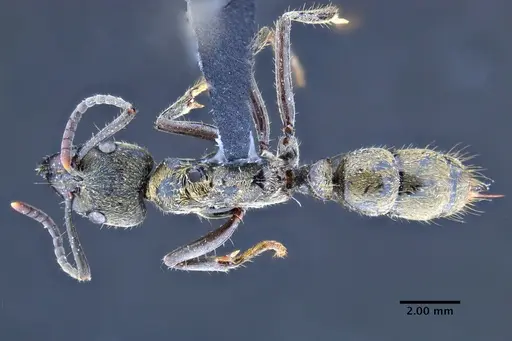
Letteratura
Caricamento mappa di distribuzione...Caricamento prodotti...